
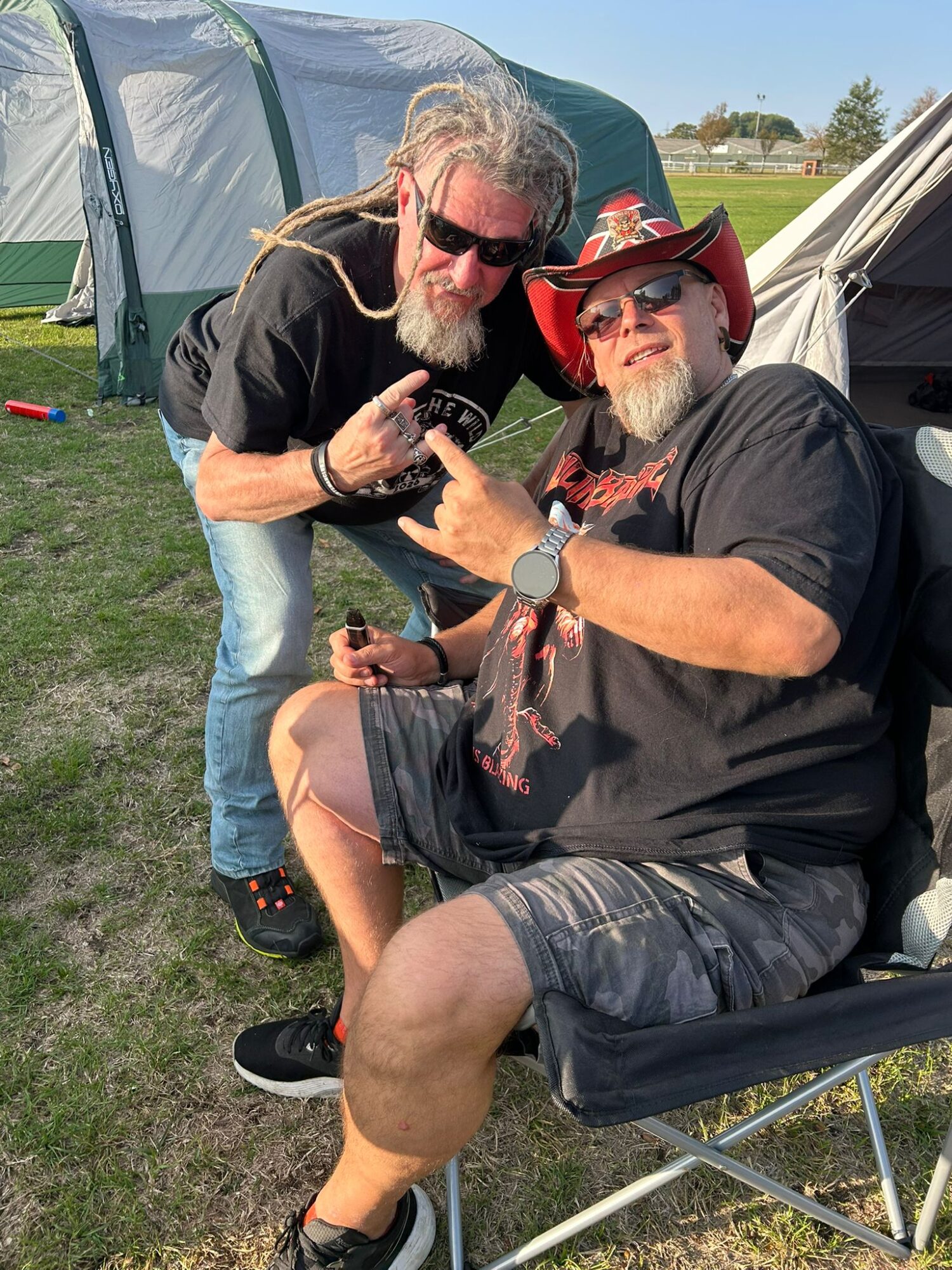
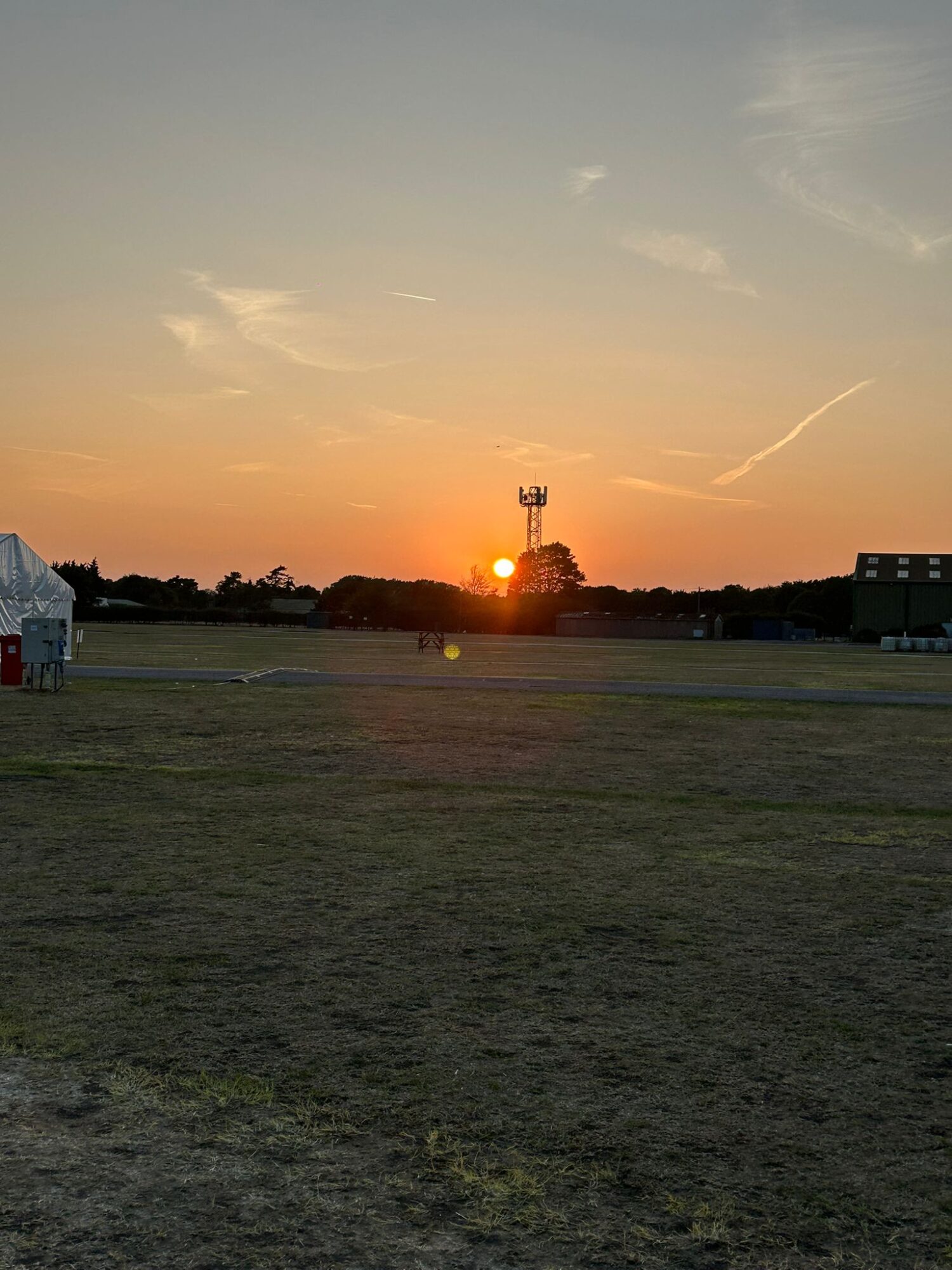
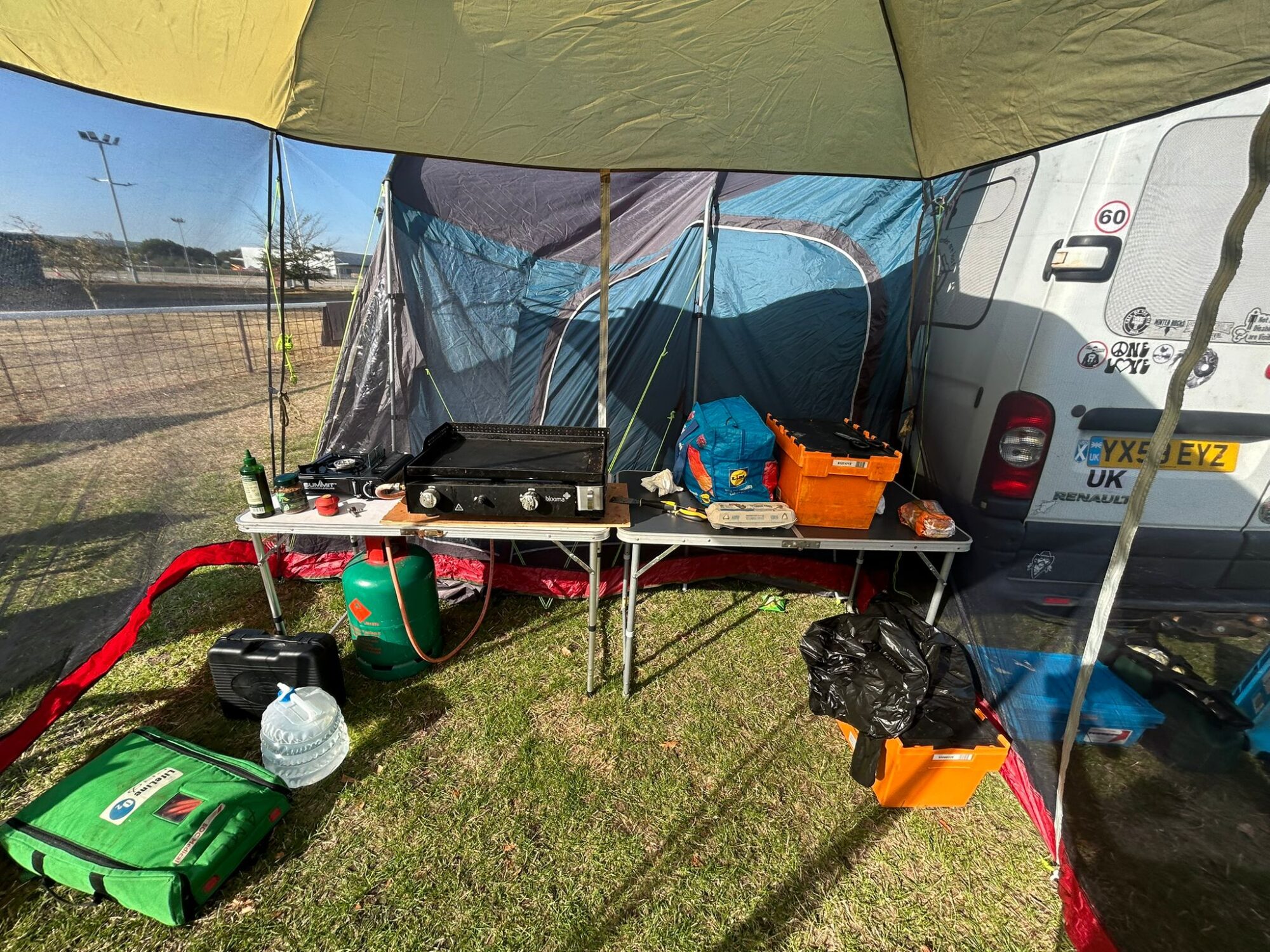
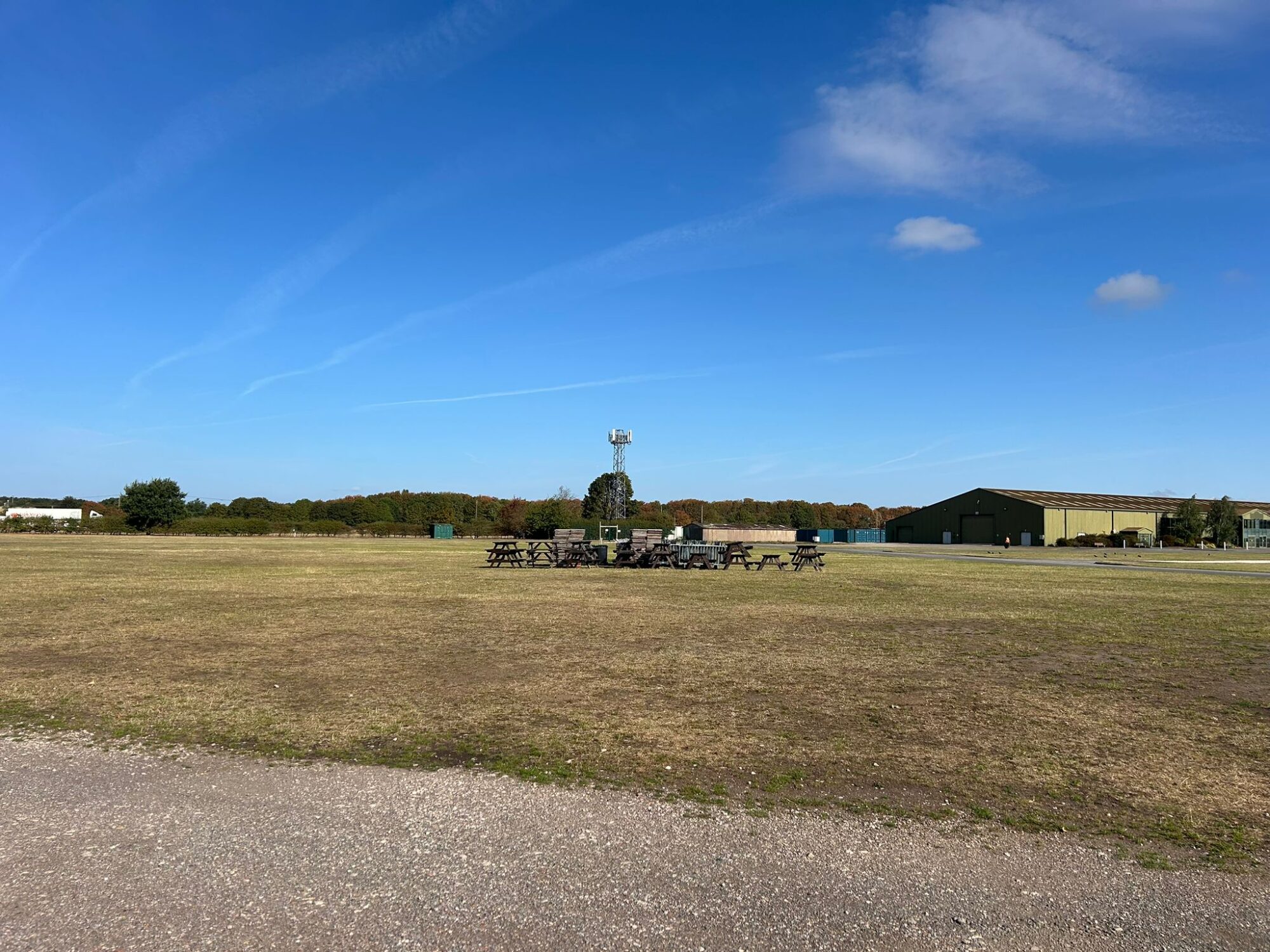
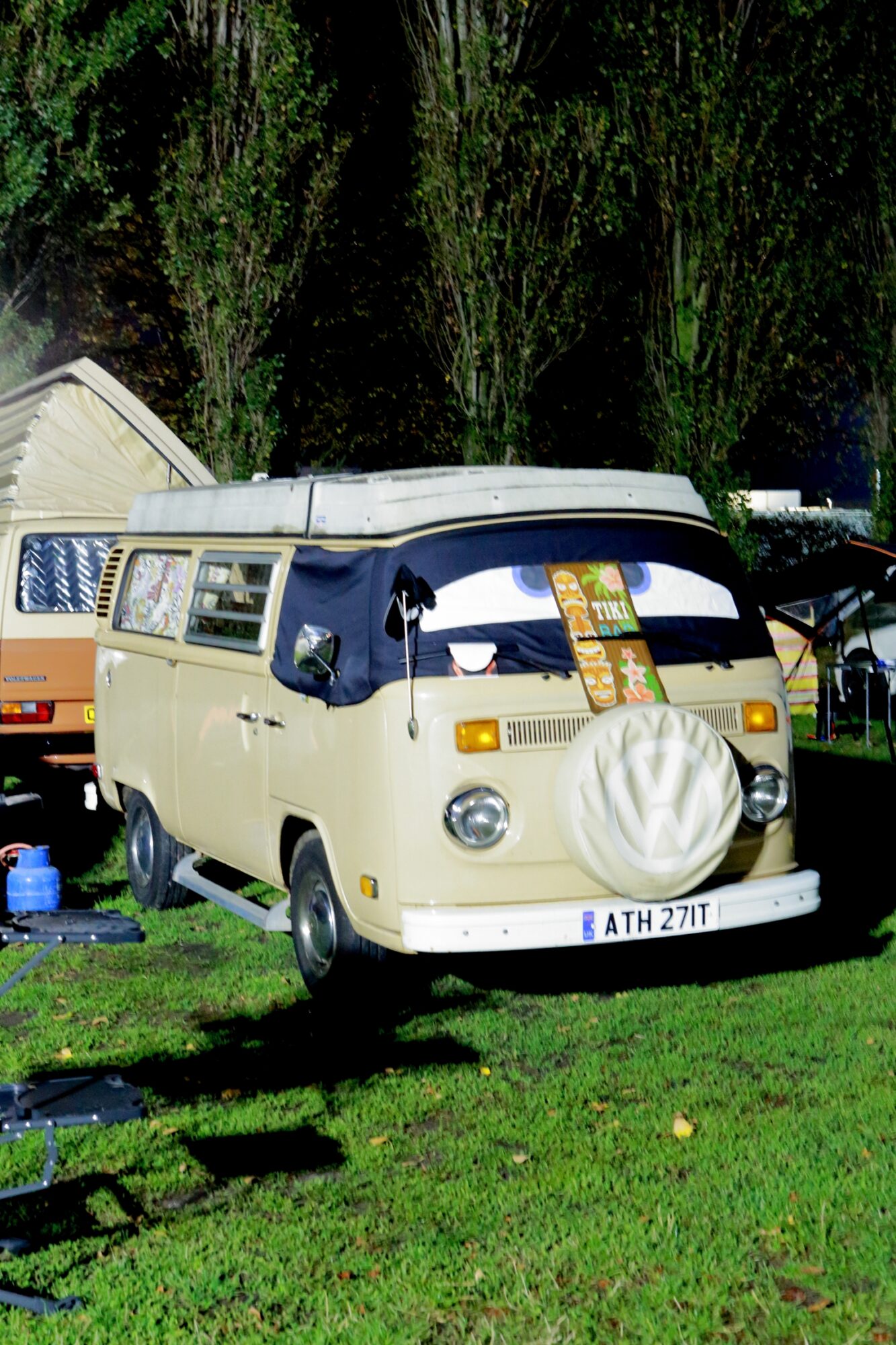
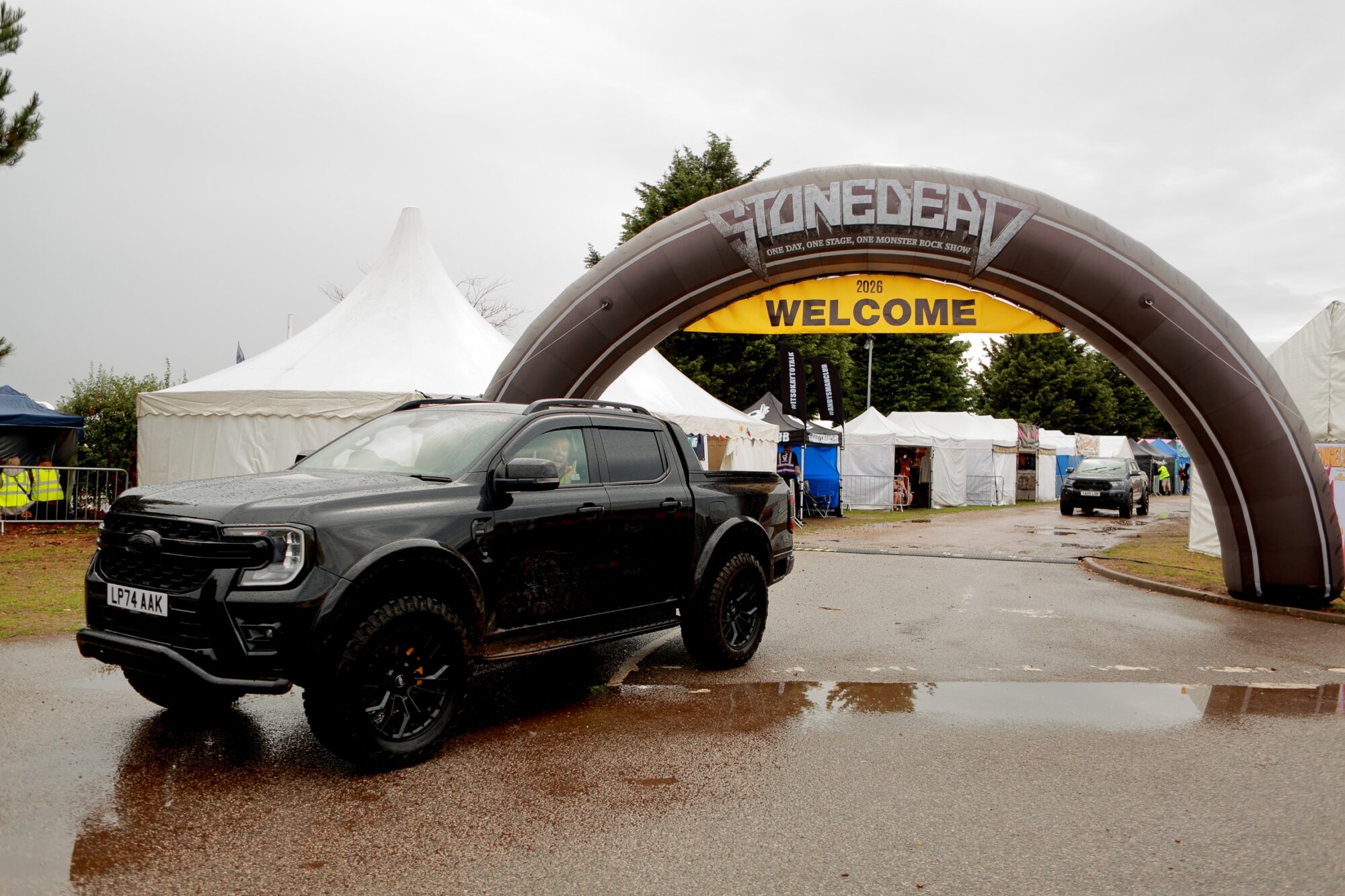
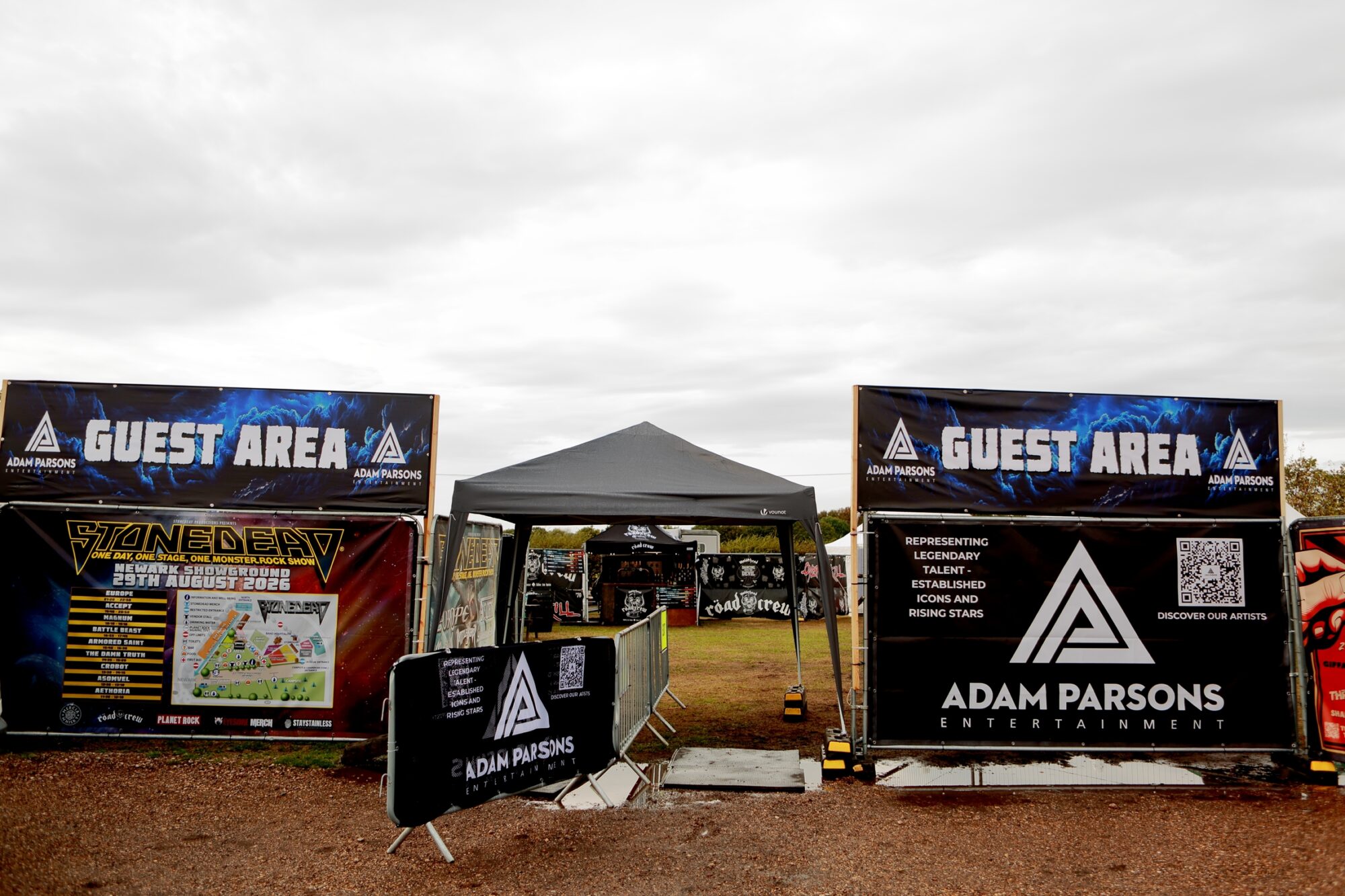
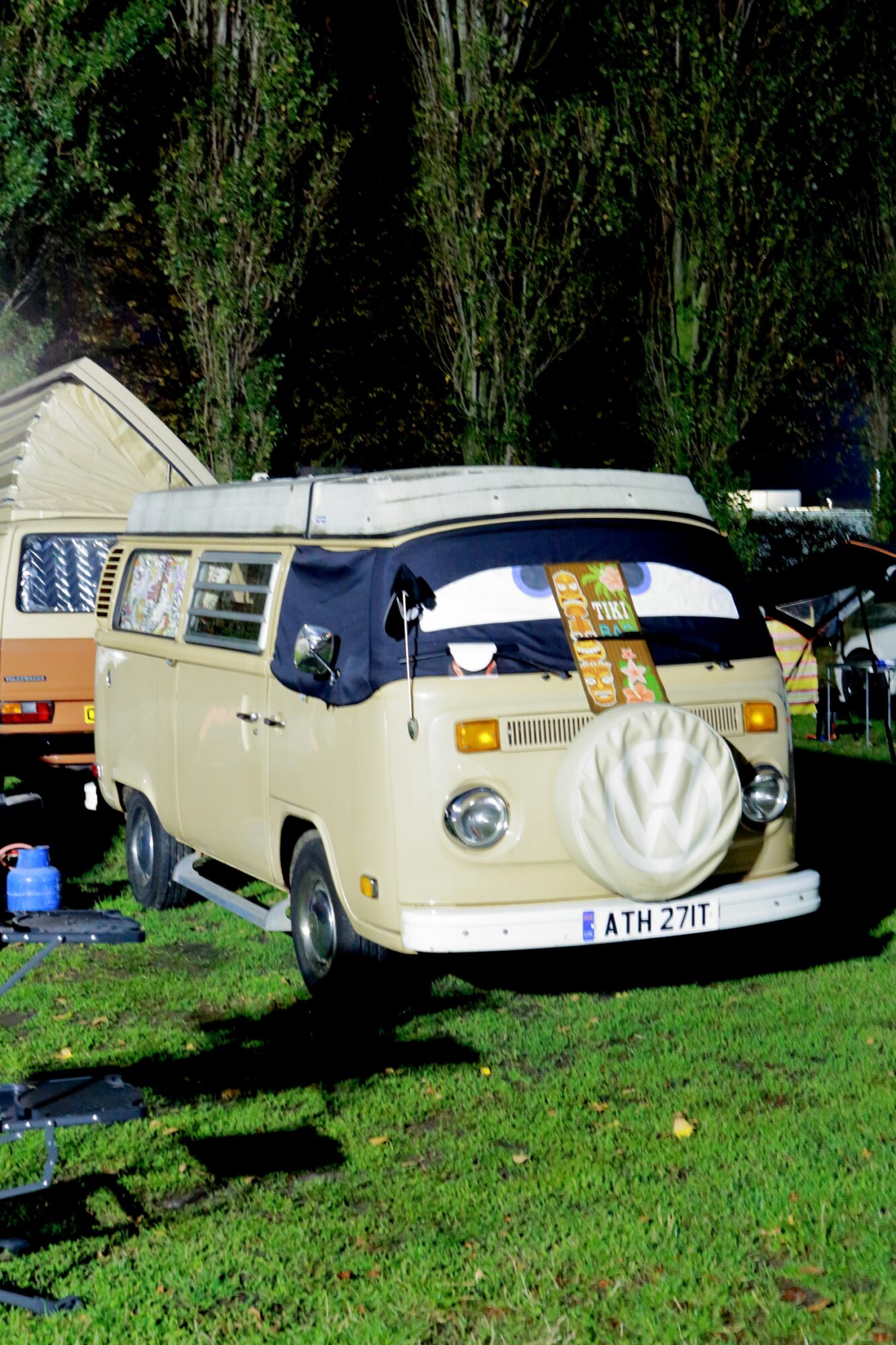
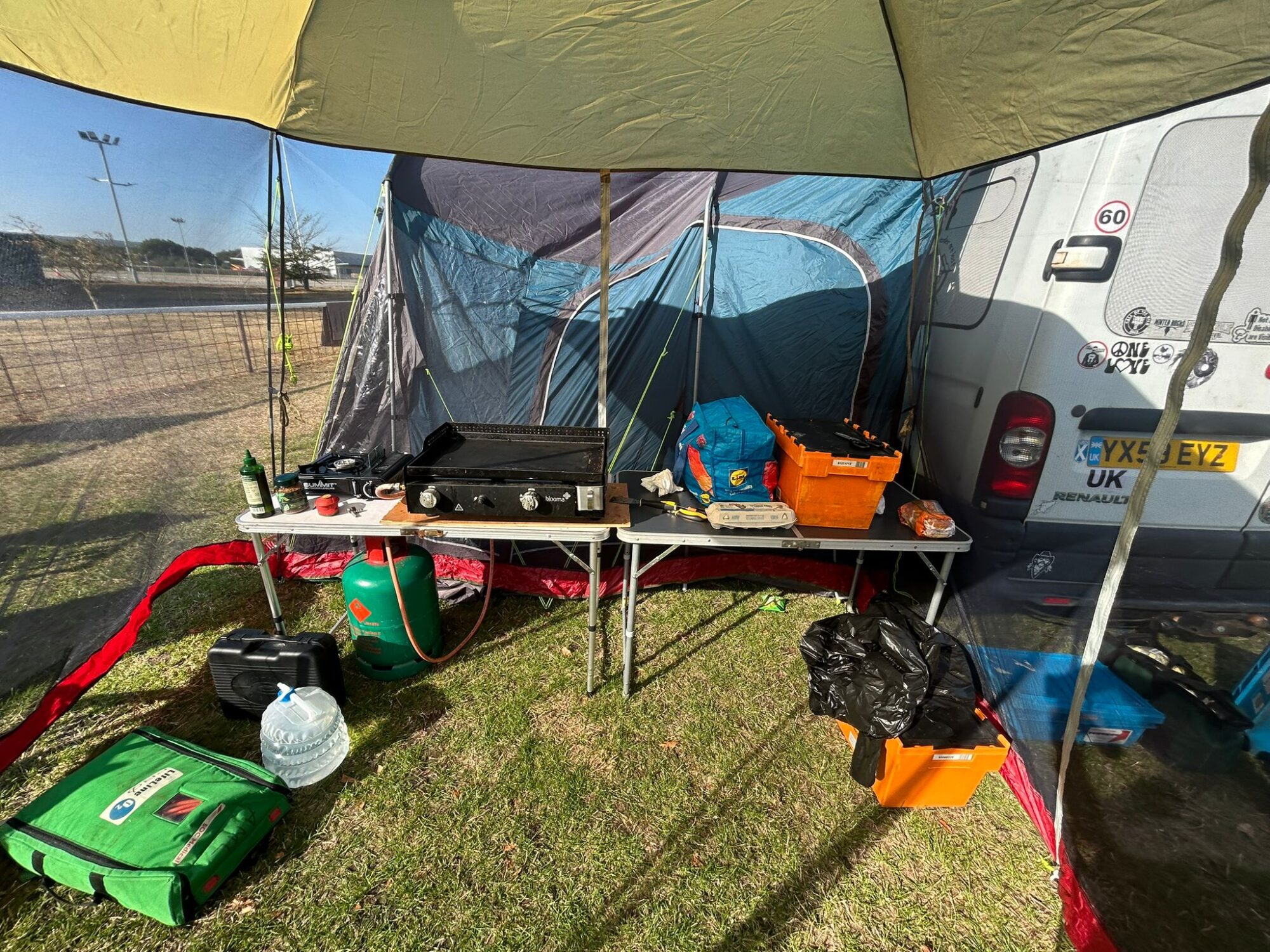
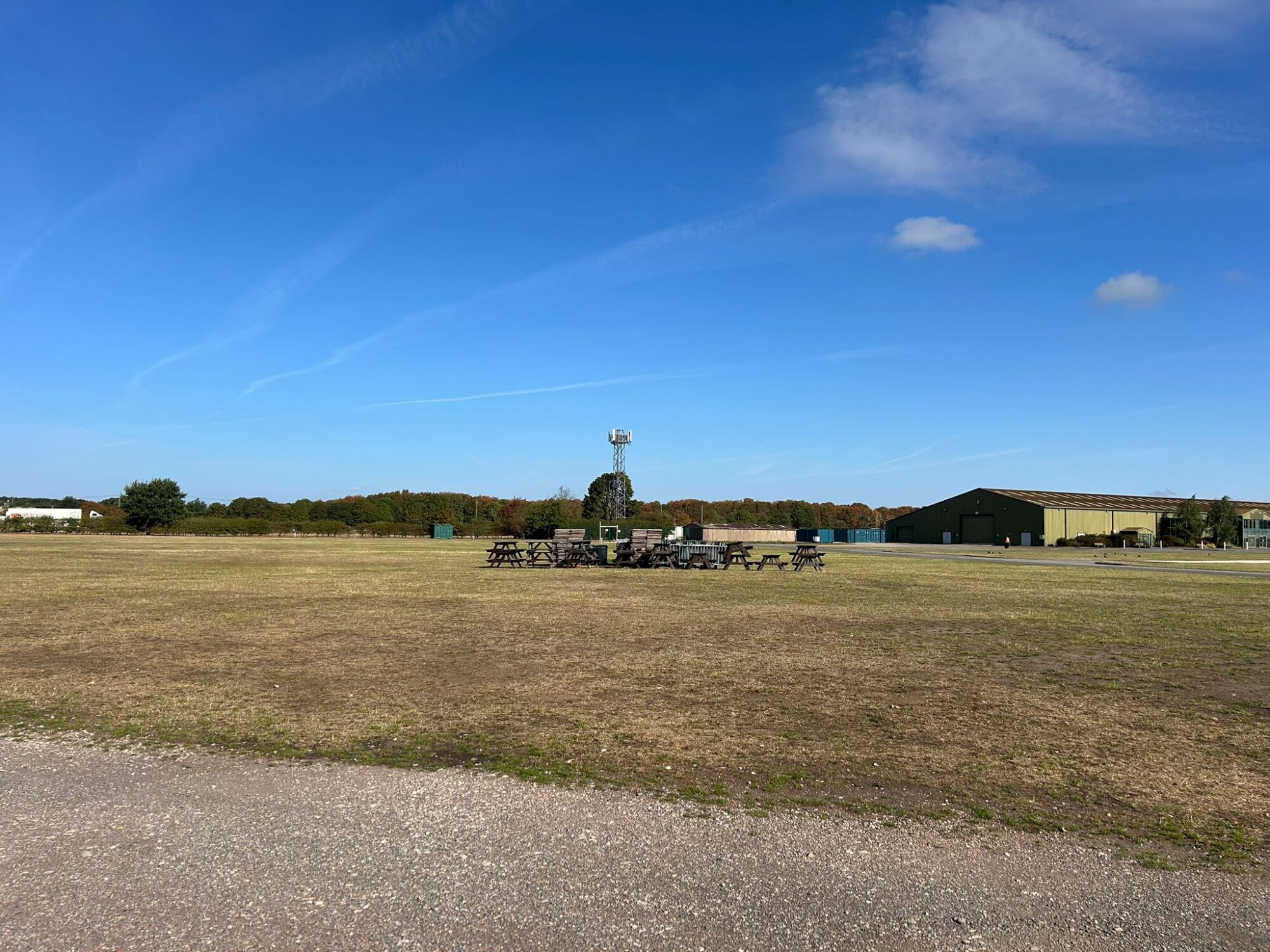
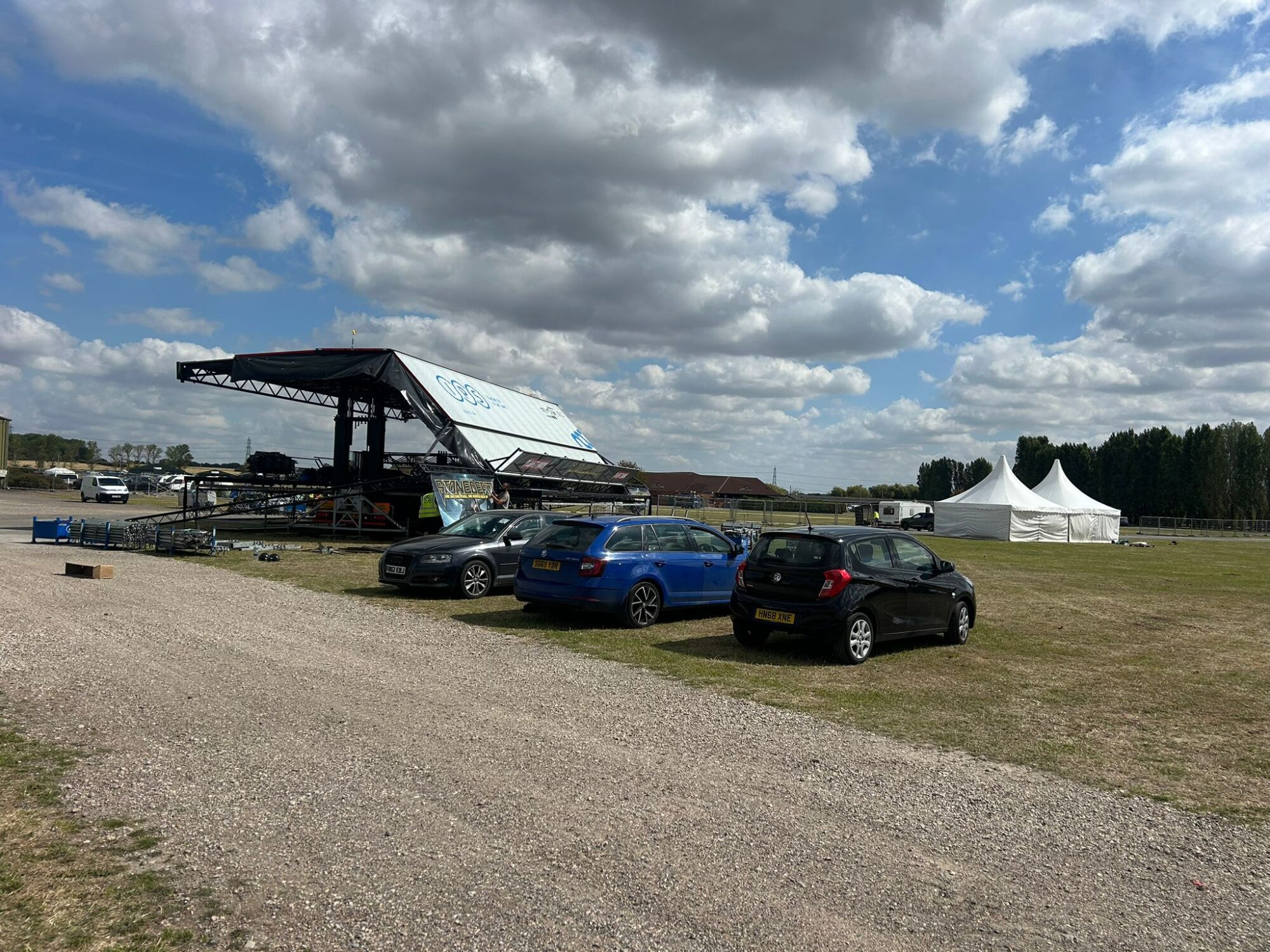
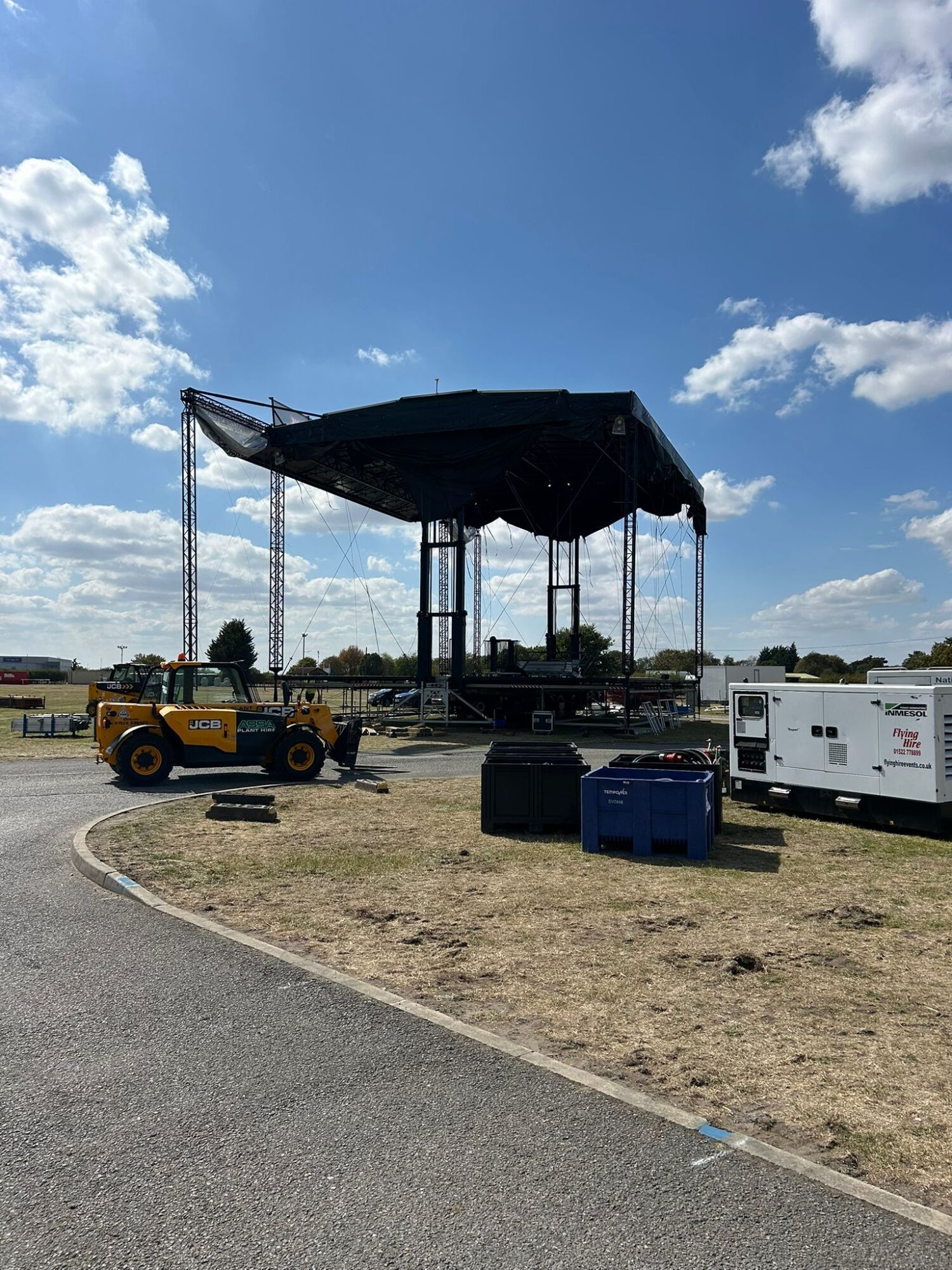
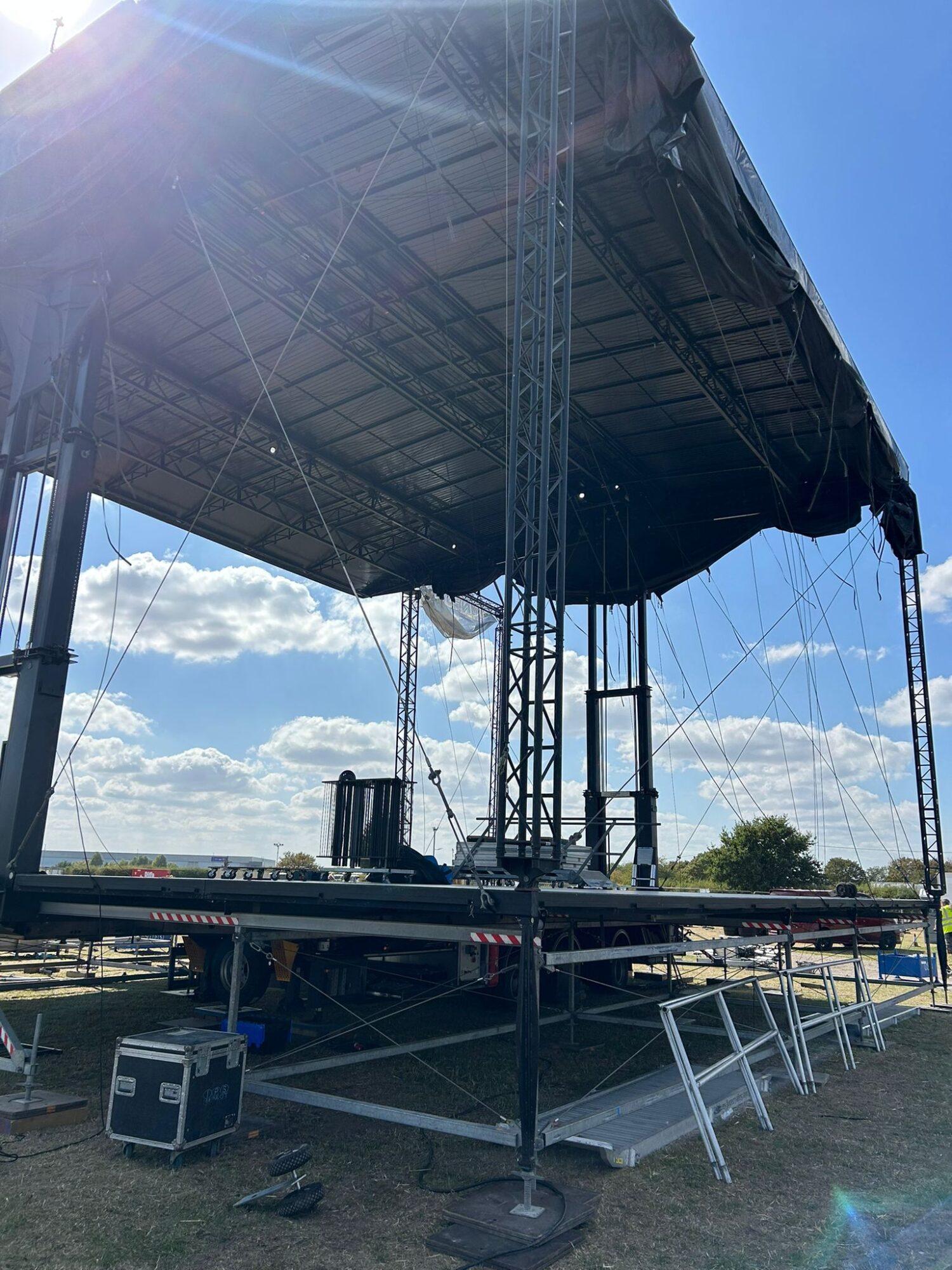
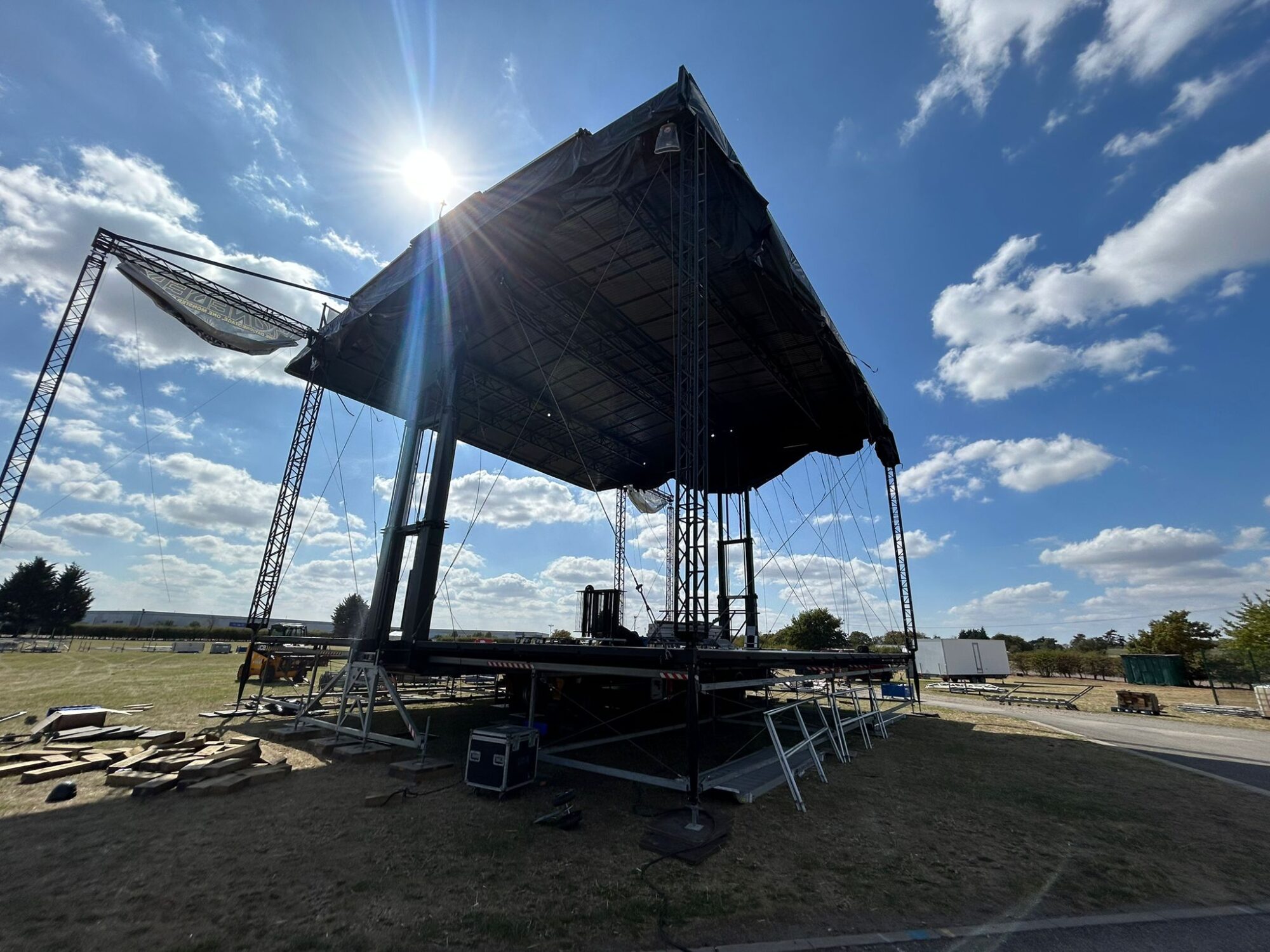
By the time we arrived at Newark Showground’s main gate late Sunday afternoon and entered our gate code to gain access, there really was no rush to do anything other than get ourselves settled in for the week ahead. One of the luxuries of arriving before the hard work begins is being able to take your time, and that’s exactly what we did. Our awning, which is almost the same size as the camper itself, went up first, instantly doubling our living space for the week. With the sleeping arrangements sorted, clothes unpacked and everything stowed away where it needed to be, we turned our attention to creating what would become our home from home. The outdoor kitchen was assembled, the gas-powered hotplate was tested, and before long the unmistakable smell of Jacko’s barbecue was drifting across the site. As the evening sun began to disappear, we settled into our chairs with a few drinks and enjoyed one last genuinely relaxed evening before the workload ramped up. It was hard to believe that within a few days this corner of Newark Showground would be transformed into a fully functioning festival site. At that point, apart from a few build crew vehicles and stacks of equipment waiting to be deployed, there was little indication that thousands of rock fans would soon be arriving for one of the UK’s most popular independent rock festivals.
Monday 24 August: Fencing, Fencing and More Fencing.
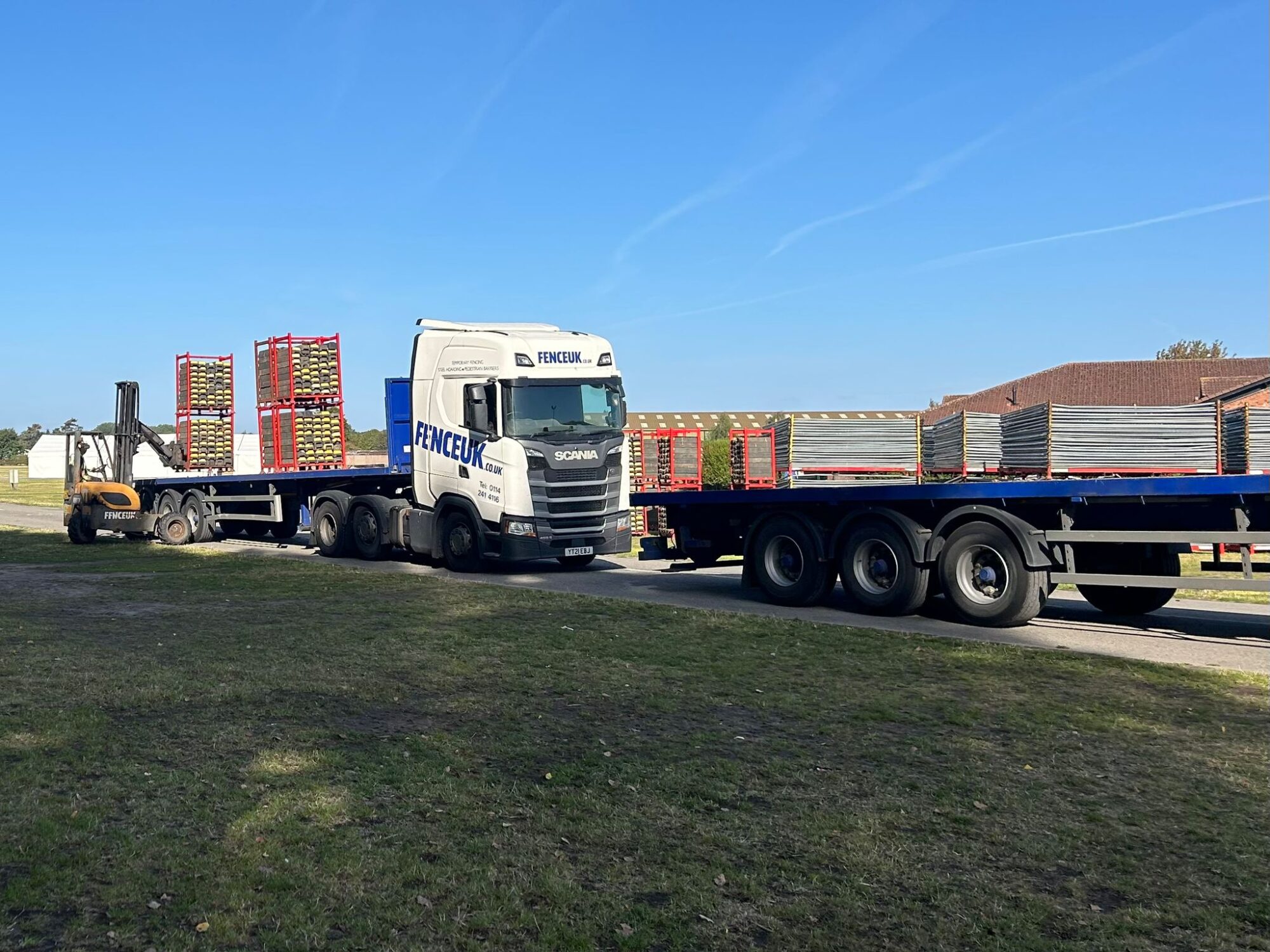
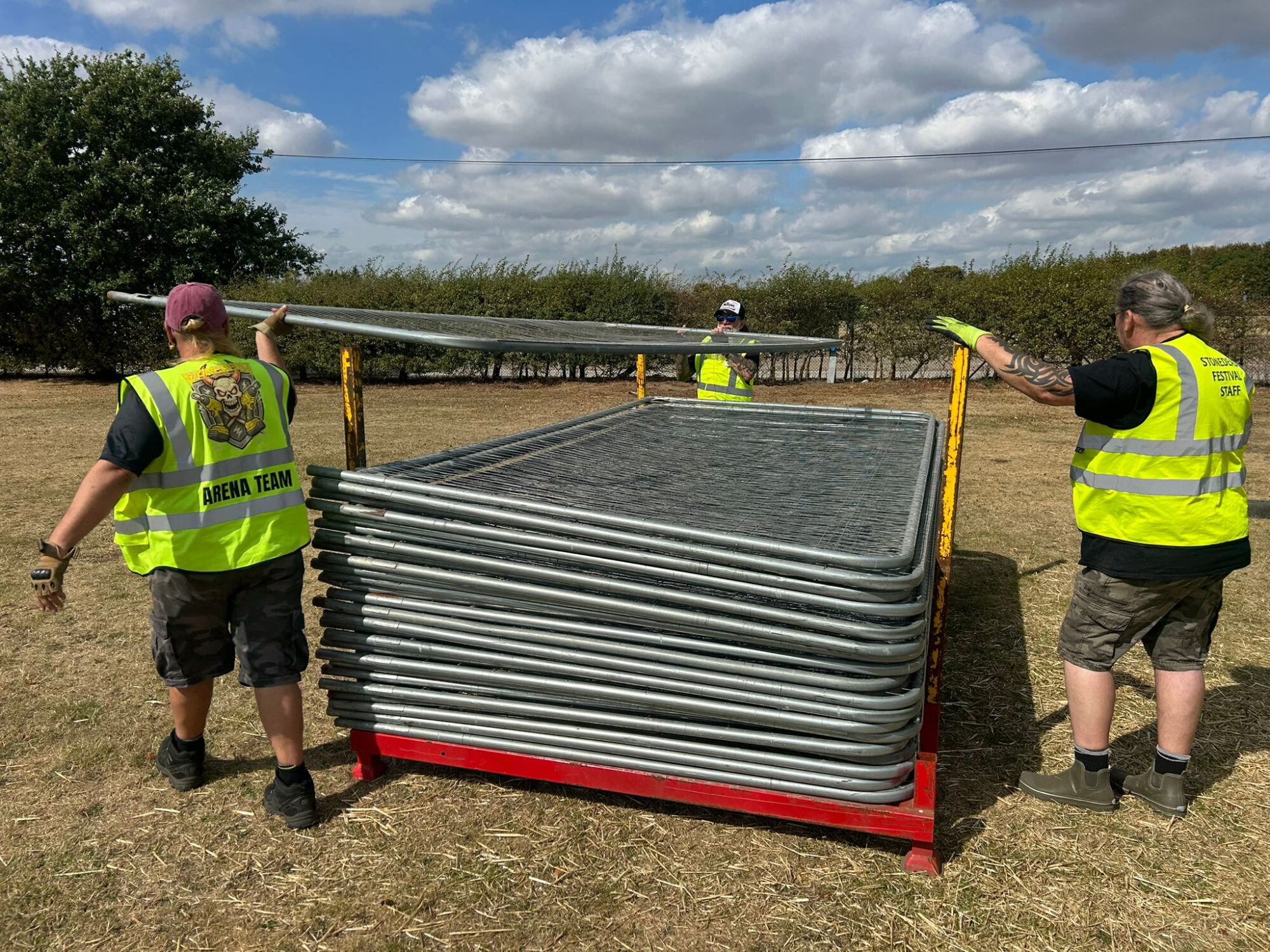
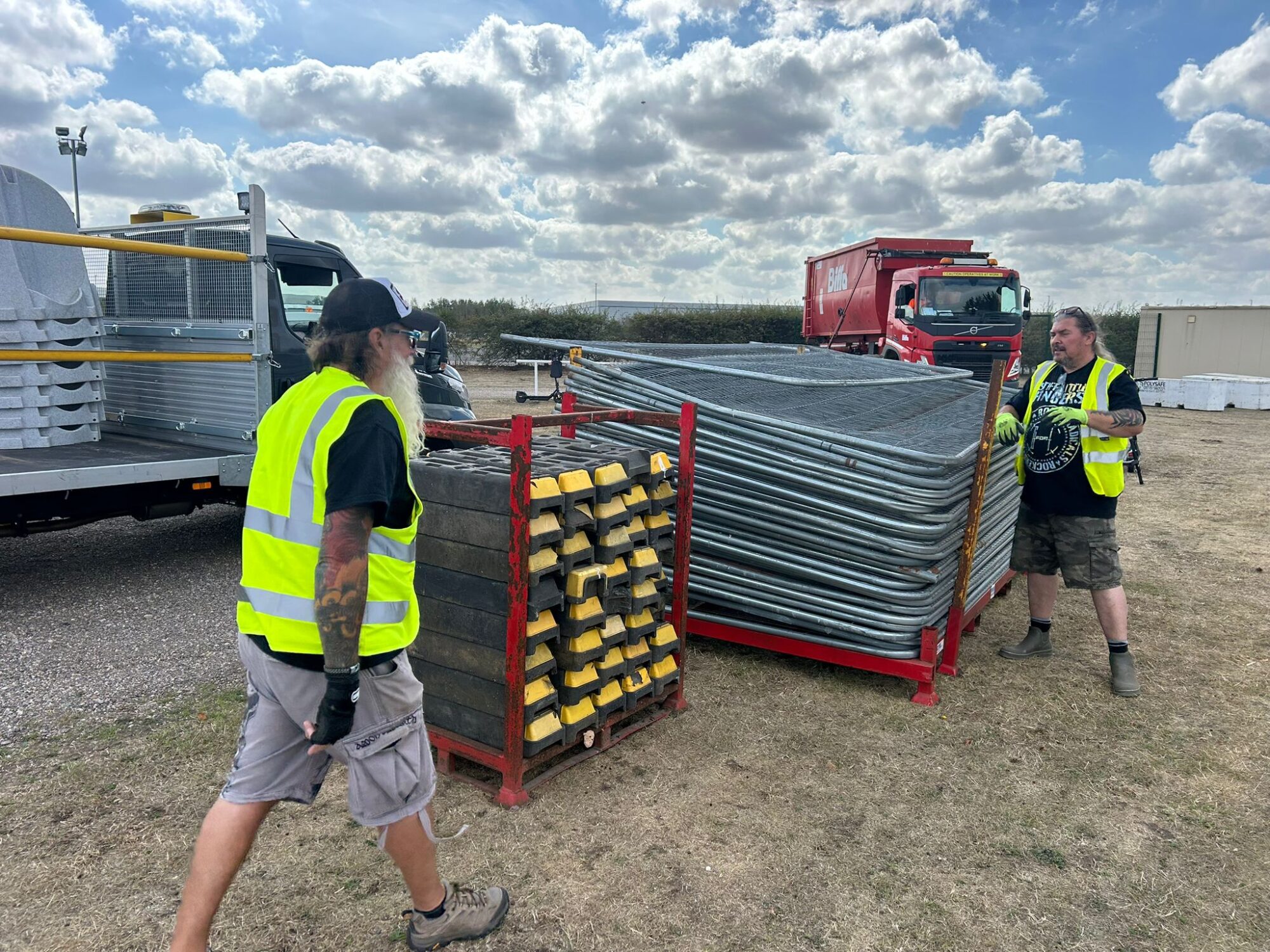
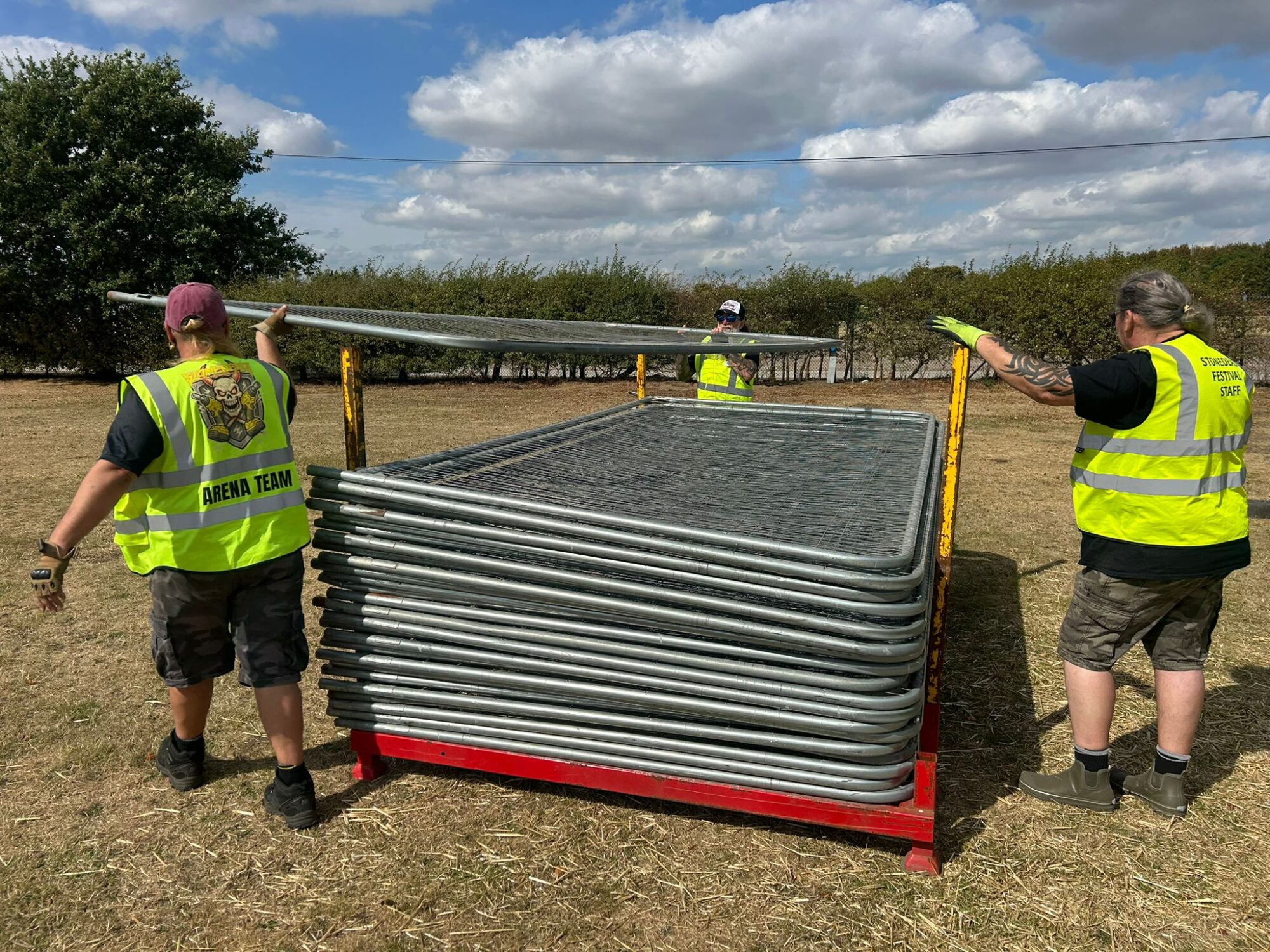
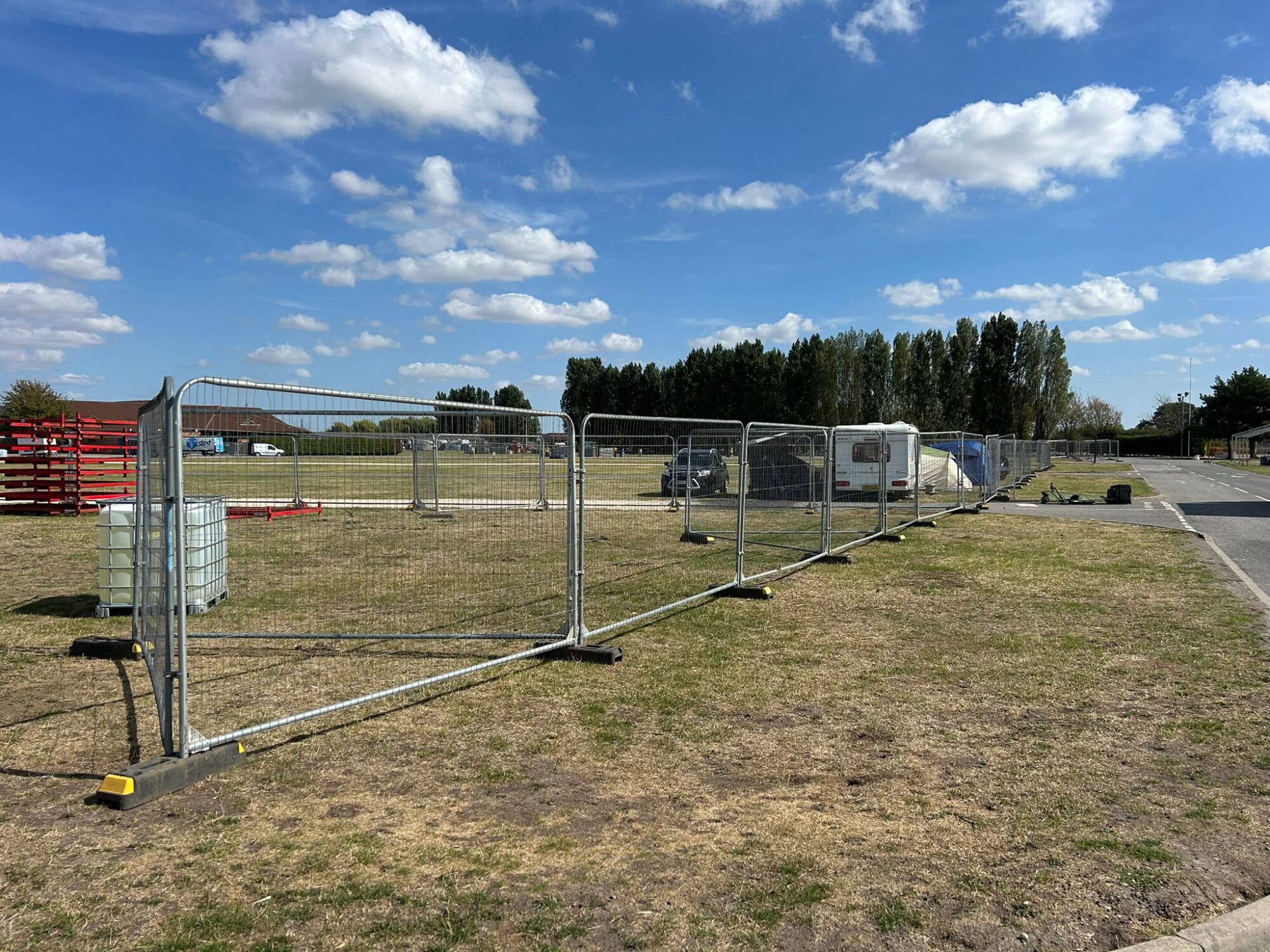
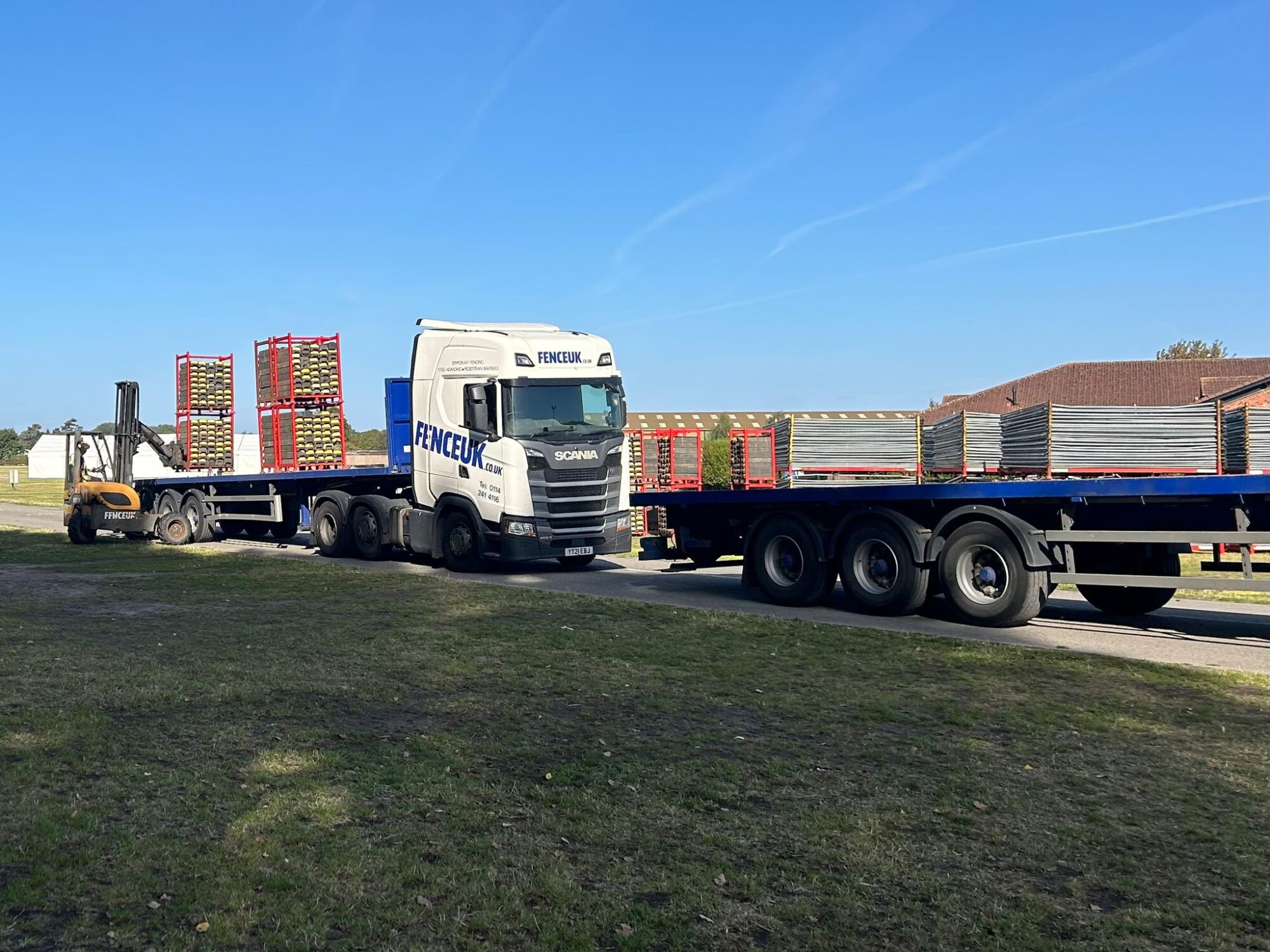
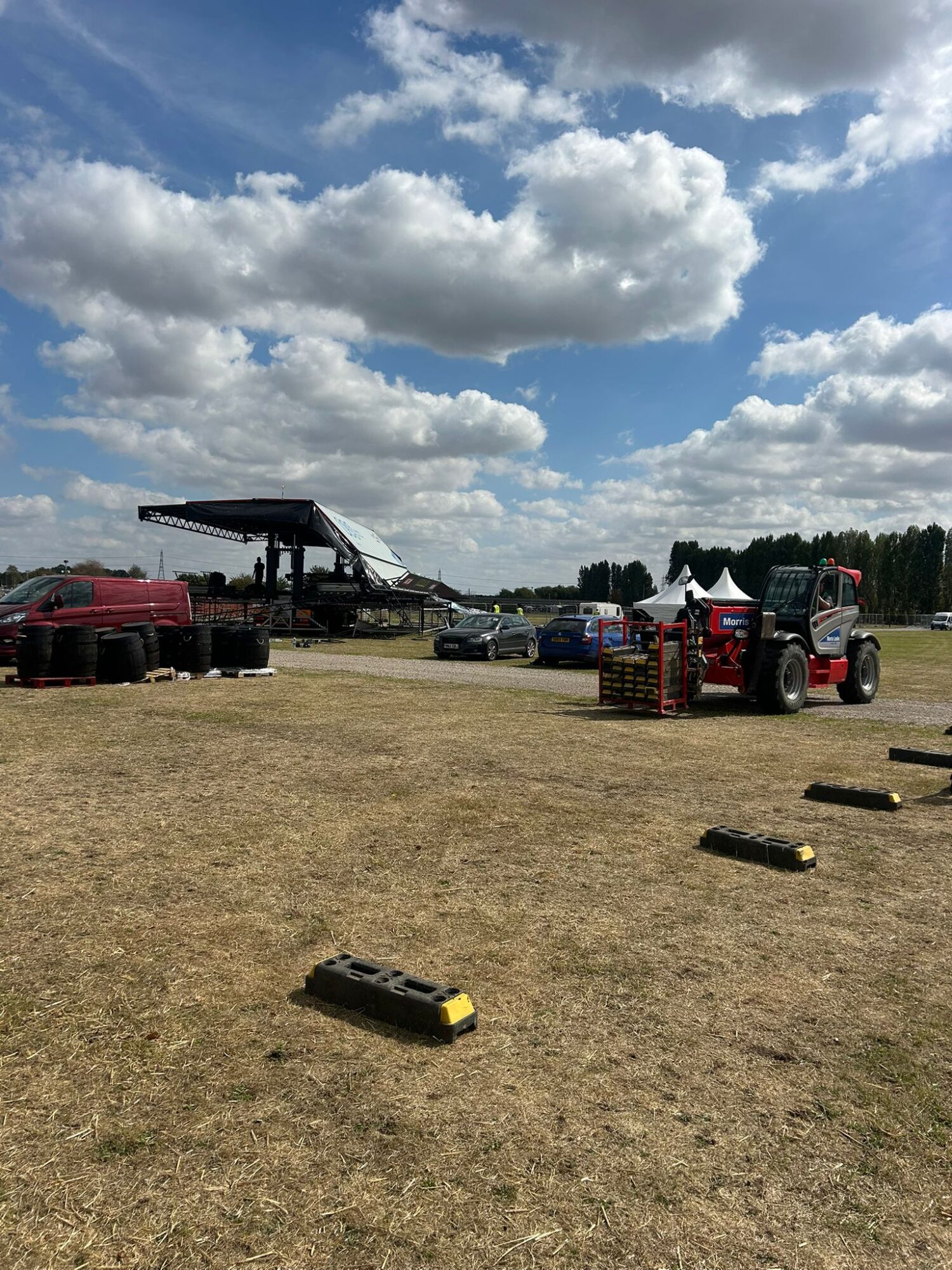
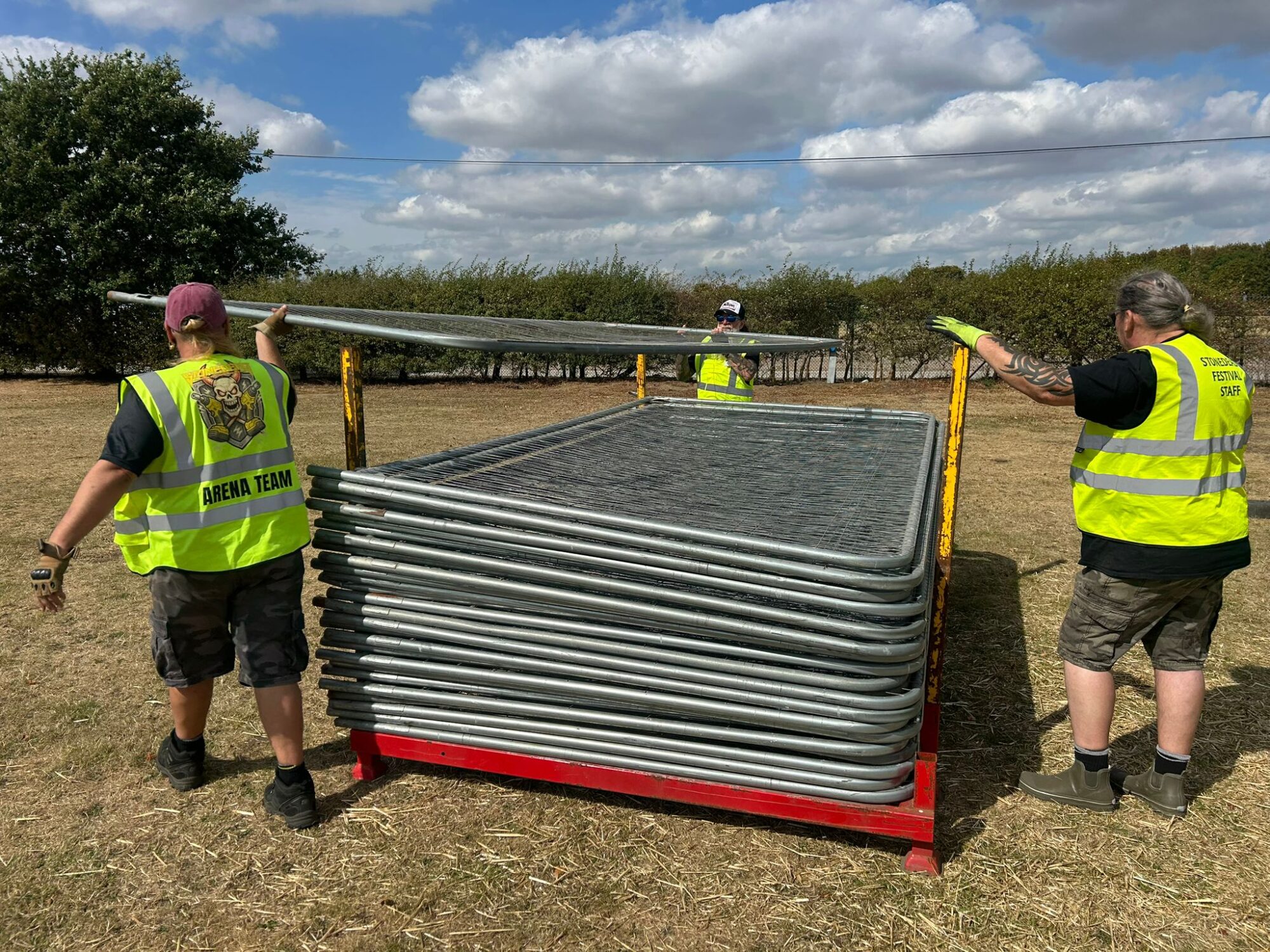
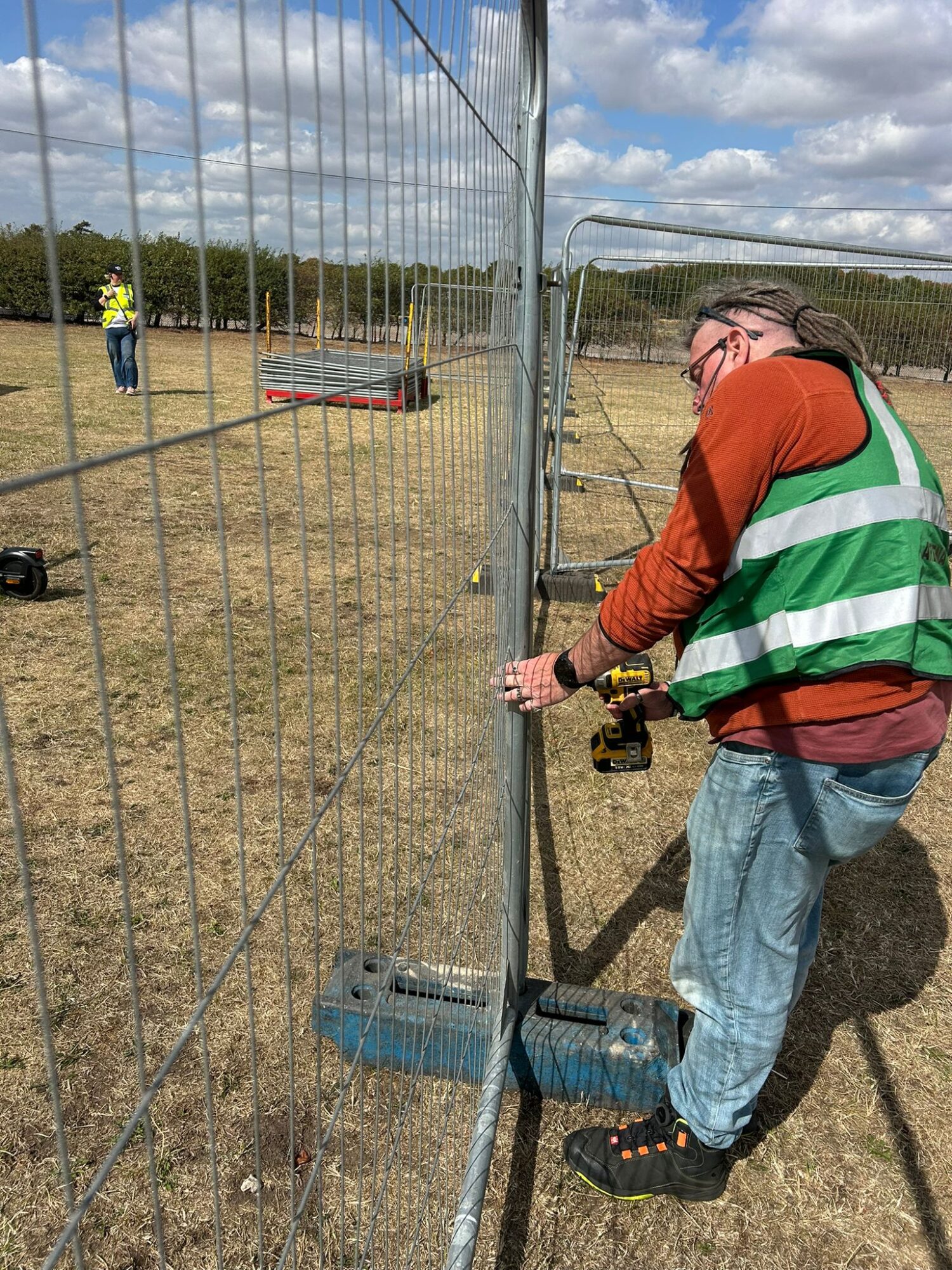
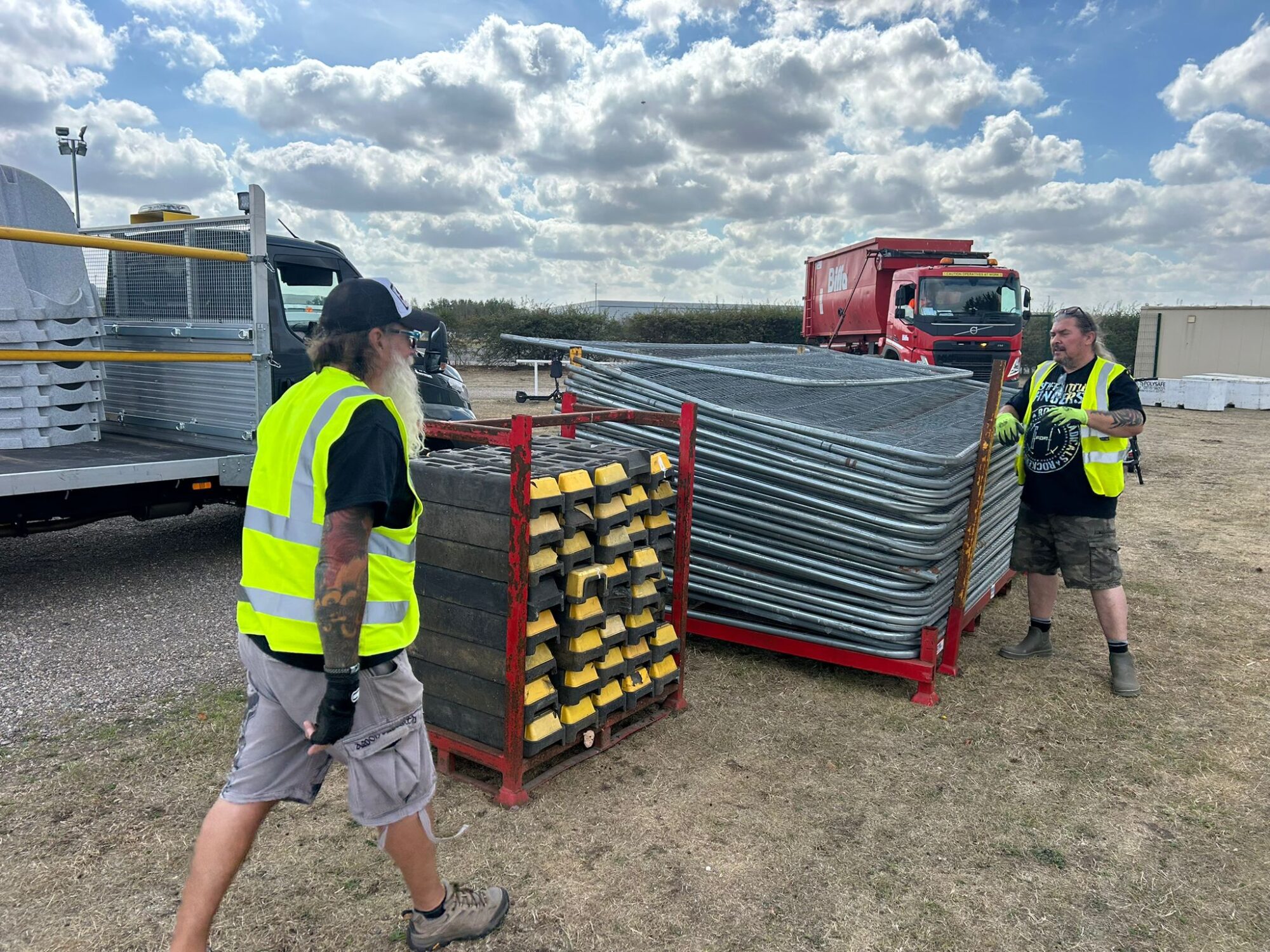
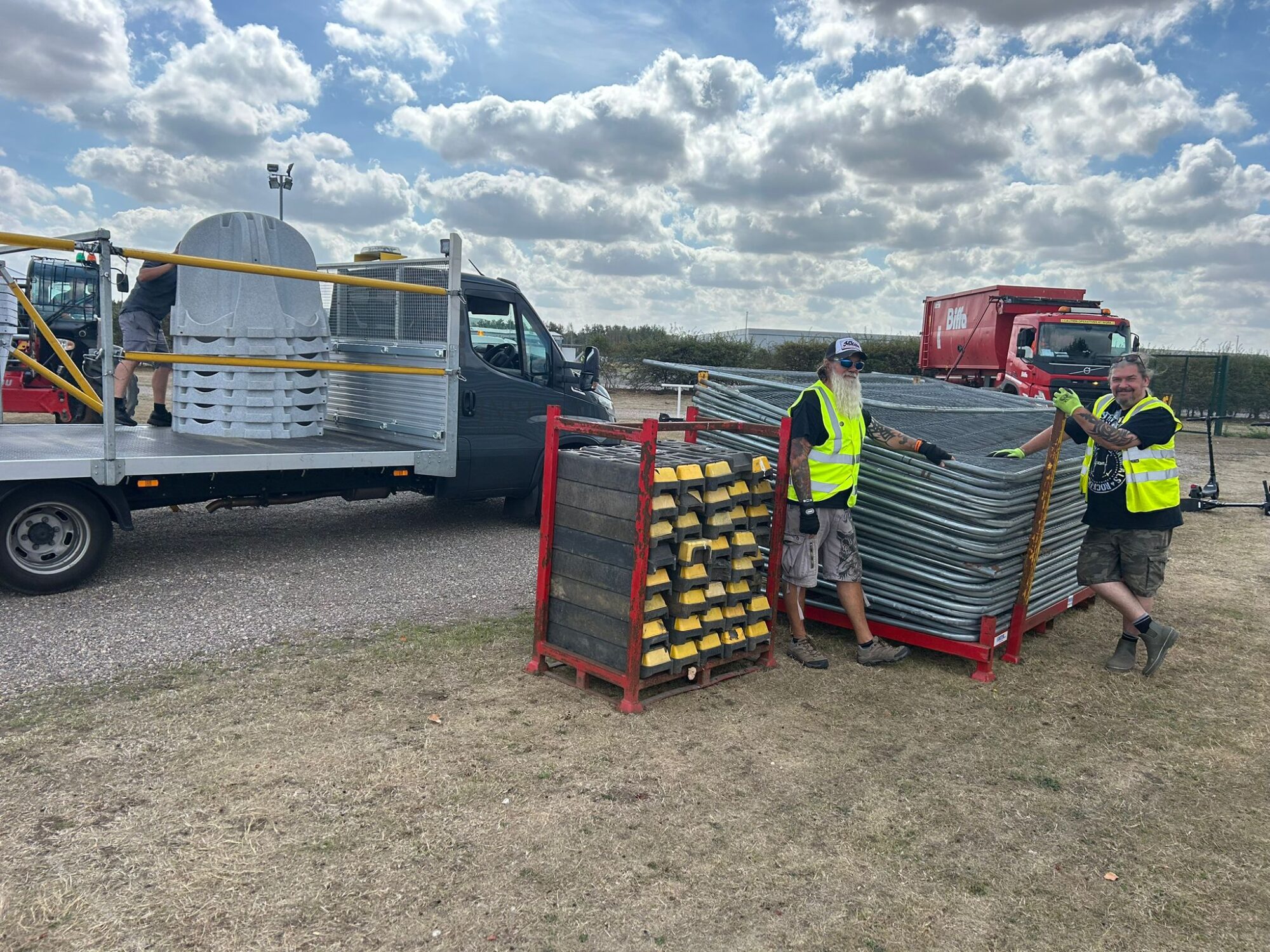
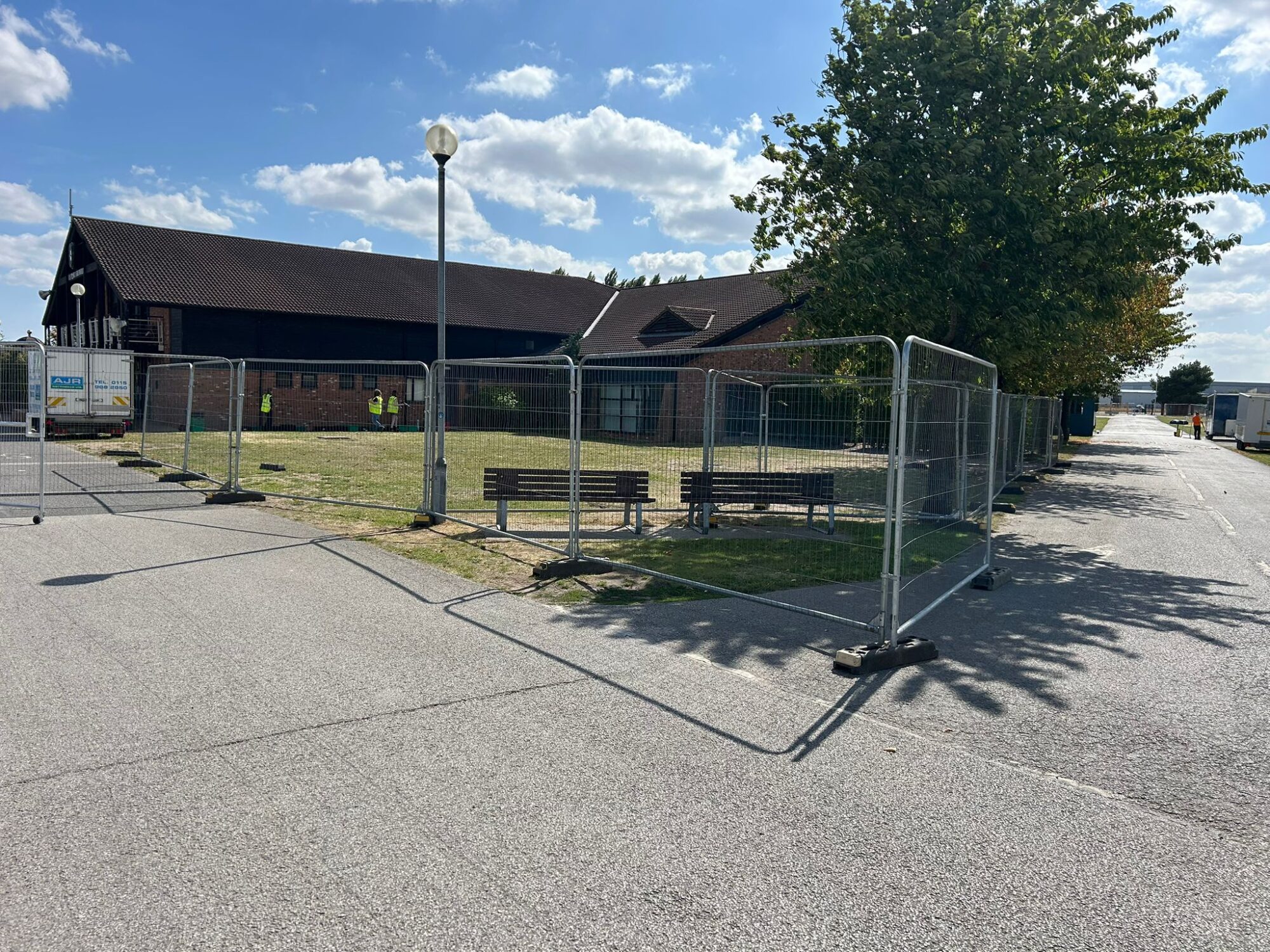
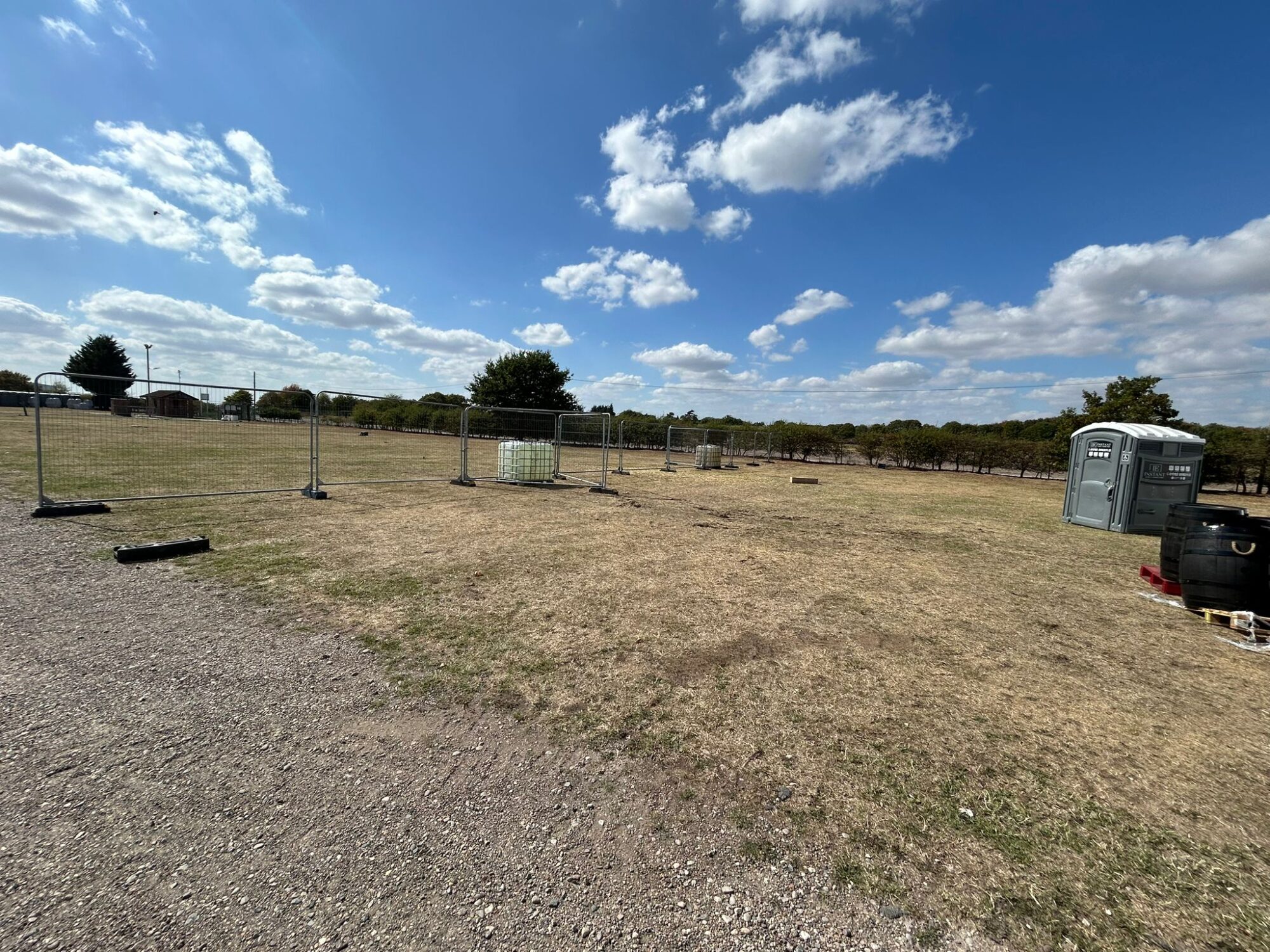
The leisurely pace of Sunday disappeared the moment Monday morning arrived. Fortunately, much of the equipment had already been dropped on site, including the Heras fencing panels, feet and clips that would become our constant companions for the next few days. With everything ready to go, we got started early and spent virtually the entire day building runs of fencing across the site. It’s one of those jobs that sounds straightforward until you’re actually doing it. Hundreds of panels need positioning, connecting, straightening and securing, often across uneven ground. By midday it already felt like we’d been at it for a week. Fortunately for us, the stage crew were hungry for work, had little to do stage-wise at that point, and were more than happy to lend a hand with the fencing. Their help and enthusiasm took a lot of the sting out of the afternoon as they mucked in with several fencing runs around what would eventually become the stage crew’s boneyard and surrounding areas. The hours slipped by panel after panel until eventually, at around 6:30pm, we called it a day. Tired, dusty and feeling every mile we’d walked, we headed back to camp for food and a well-earned evening off our feet.
Tuesday 25 August: Building Site Routine Begins.
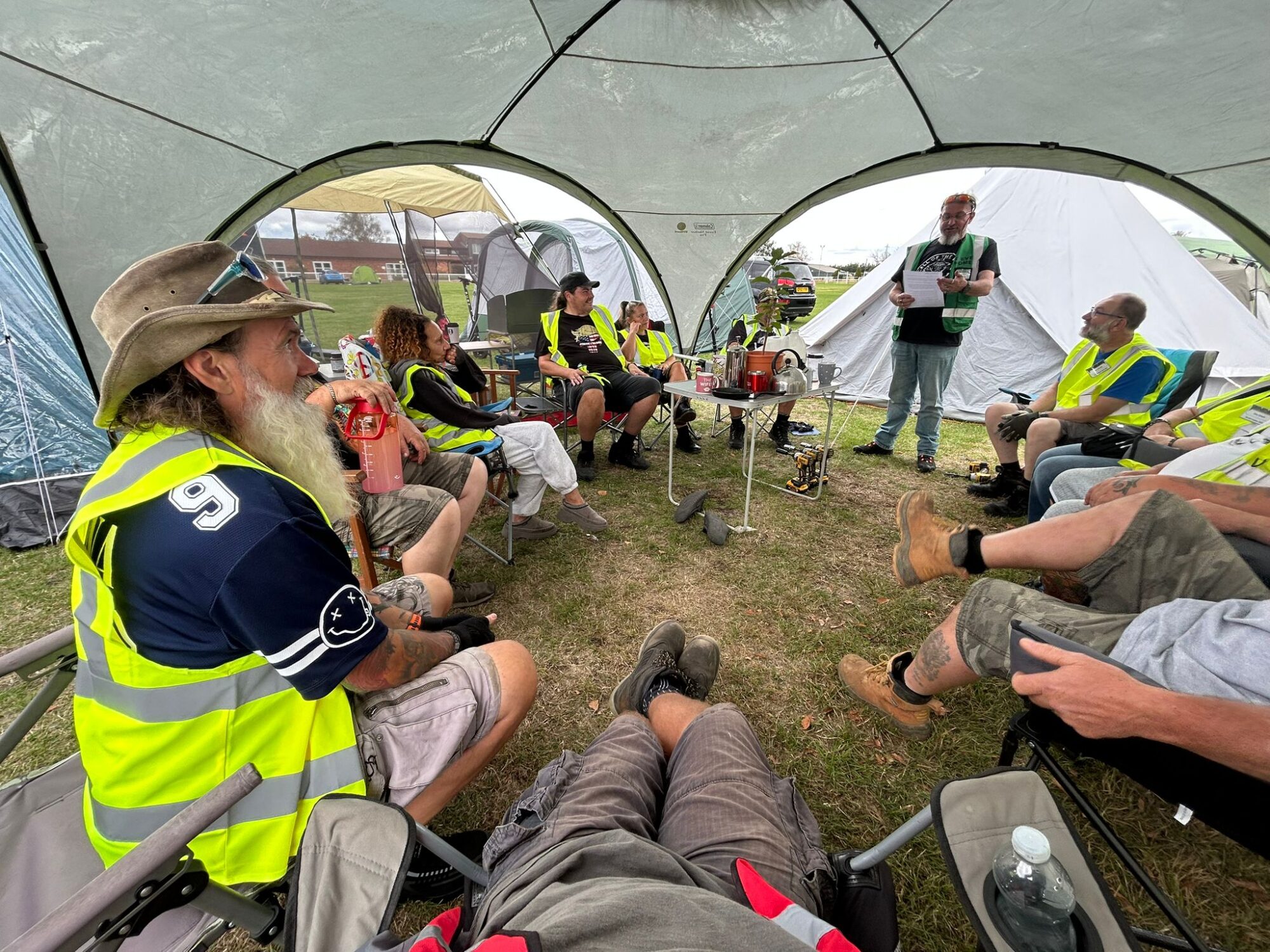
Tuesday followed a similar pattern, although now the site was beginning to develop a rhythm. The first of what would become our daily 8am briefings took place at Festival HQ. These meetings set the agenda for the day, updated everyone on progress across the site and highlighted any new priorities that needed attention. Of course, no morning briefing was complete without breakfast afterwards. Back at camp, the hotplate was fired up once again and quickly earned its place as the best camping purchase I’ve ever made. Bacon and egg barms cooked in the open air somehow taste infinitely better than they ever do at home, especially when you’ve got a long day’s work ahead of you. The rest of the day was spent continuing the relentless fencing programme. It might not be glamorous work, but every section completed brought the site one step closer to becoming a festival.

Wednesday 26 August: Infrastructure Arrives.
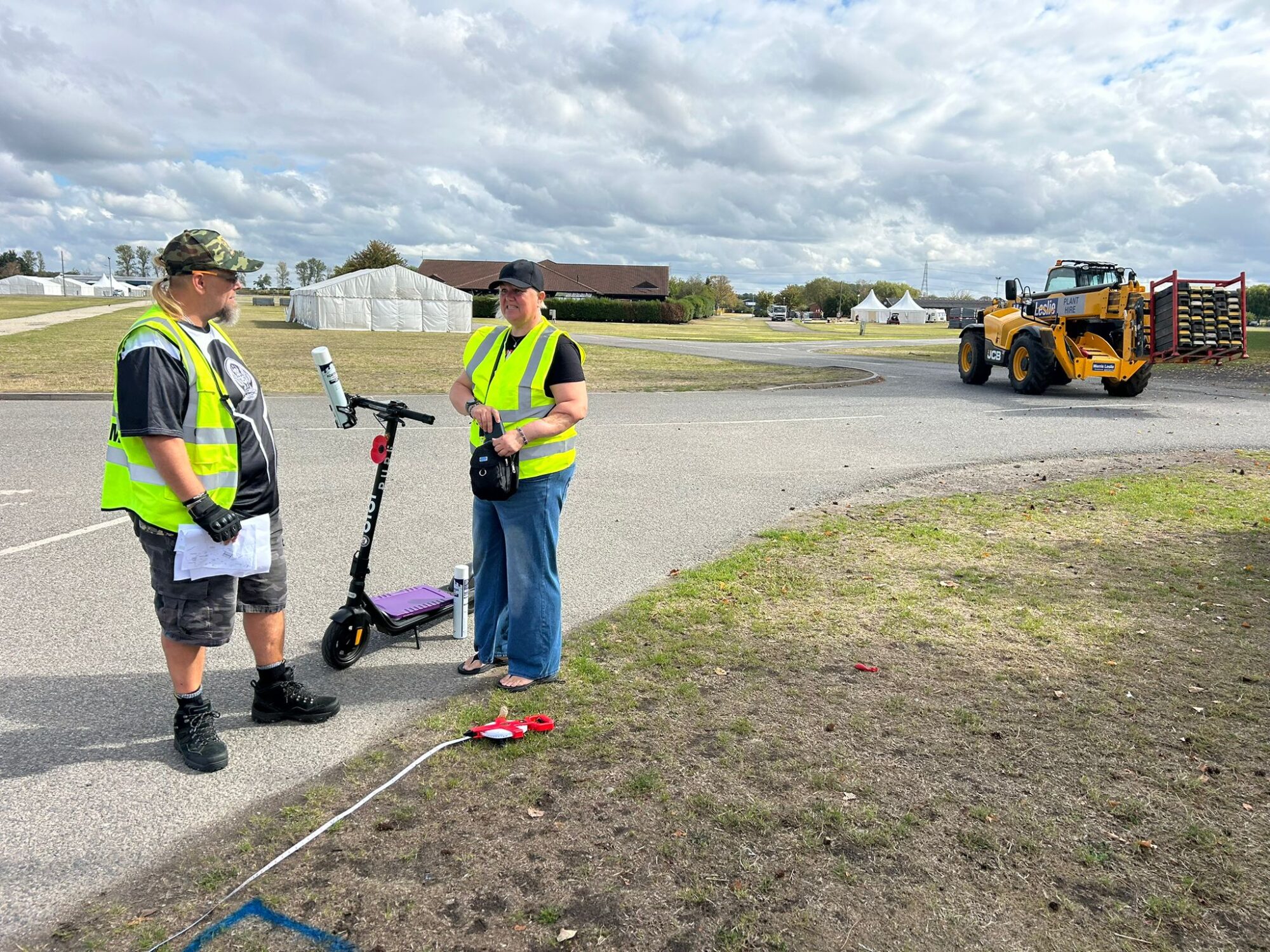
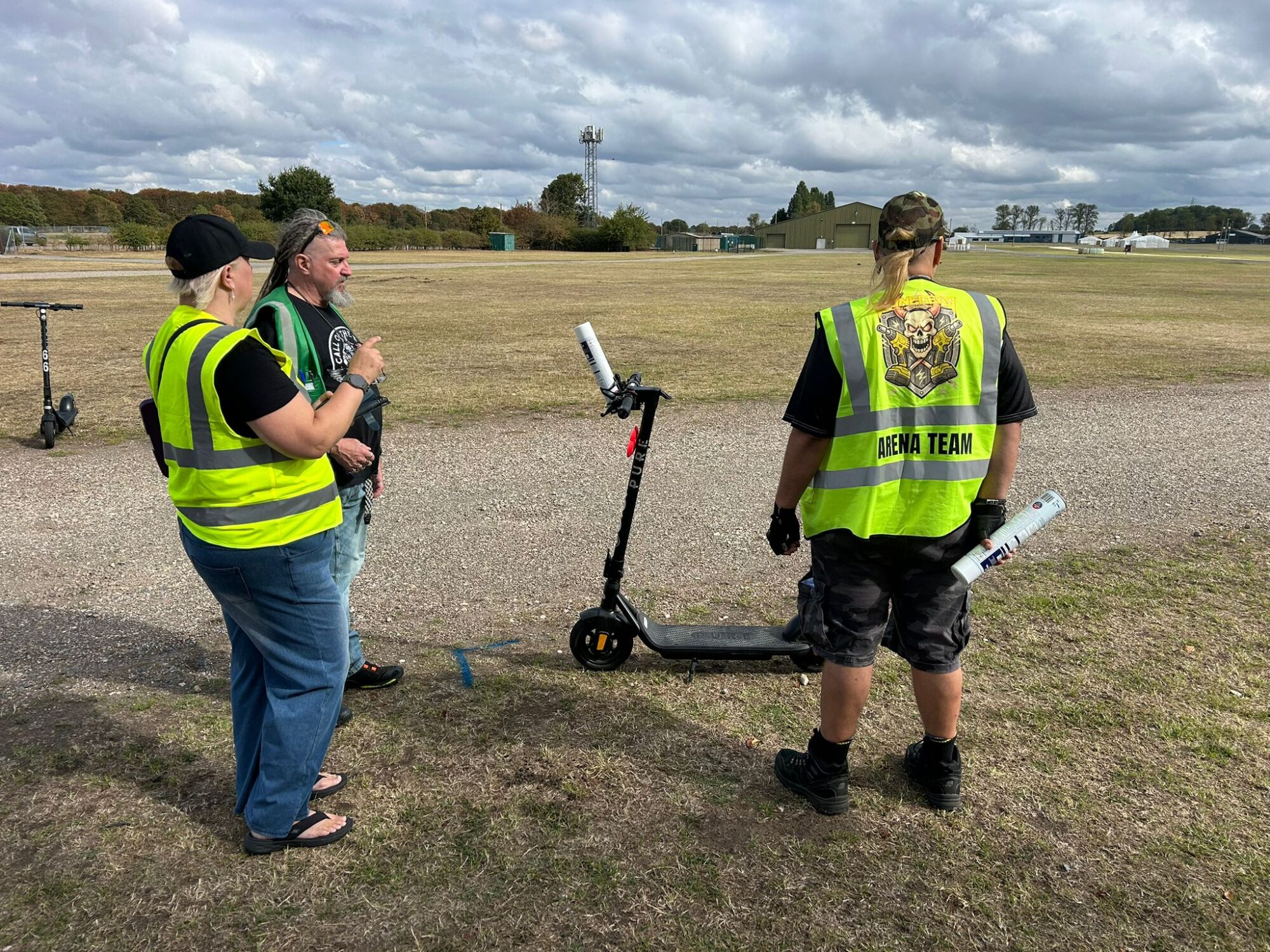
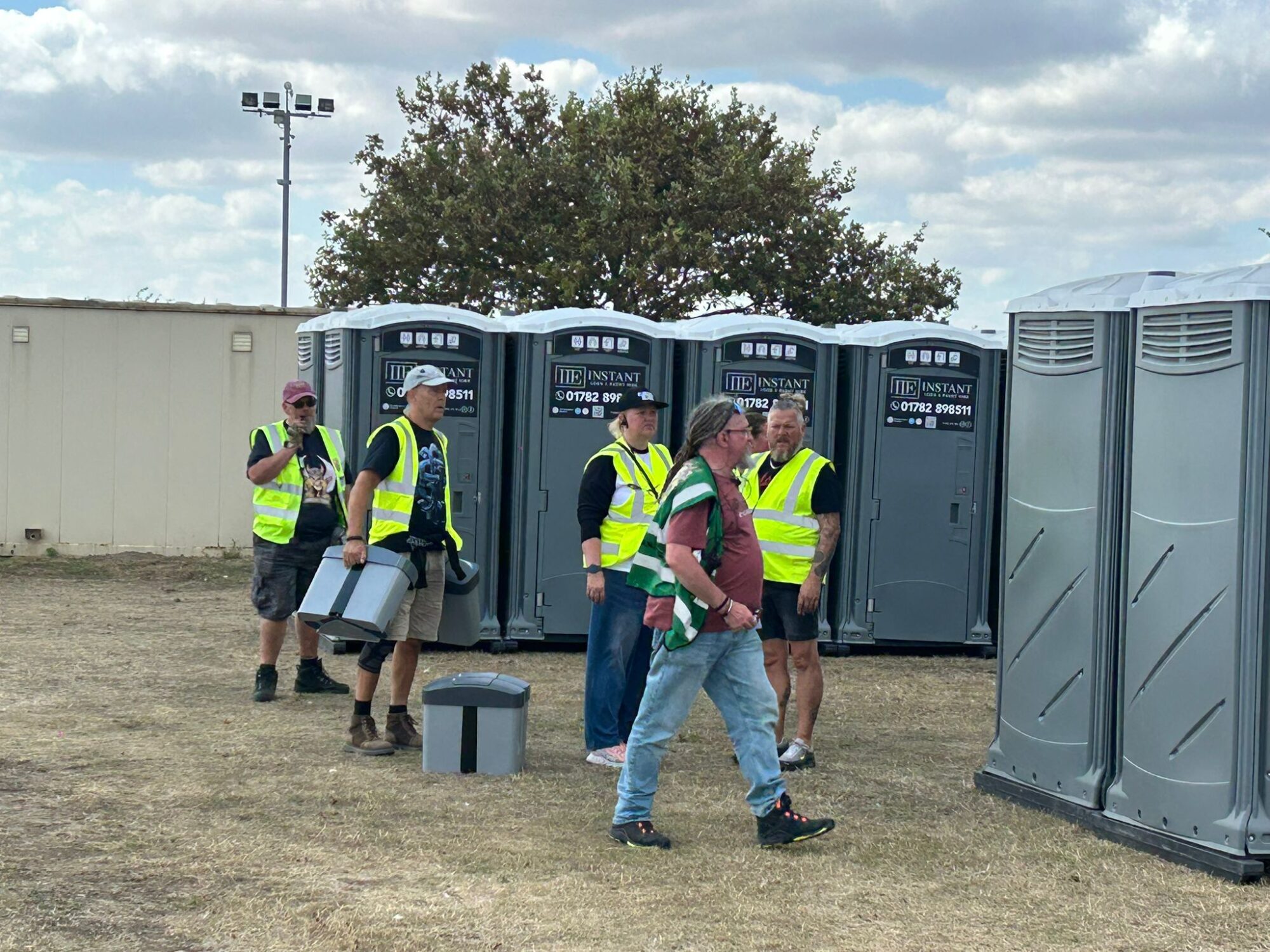
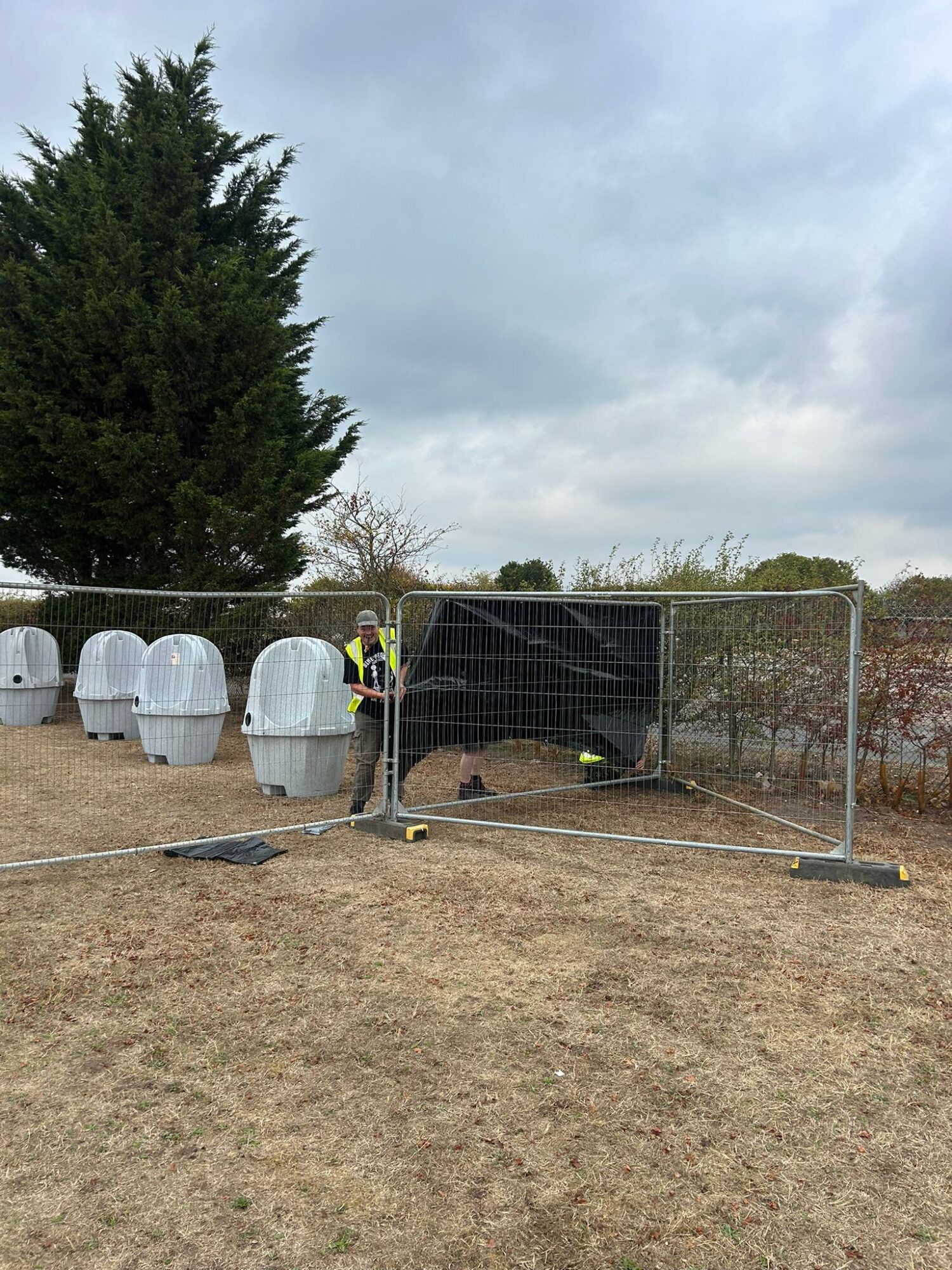
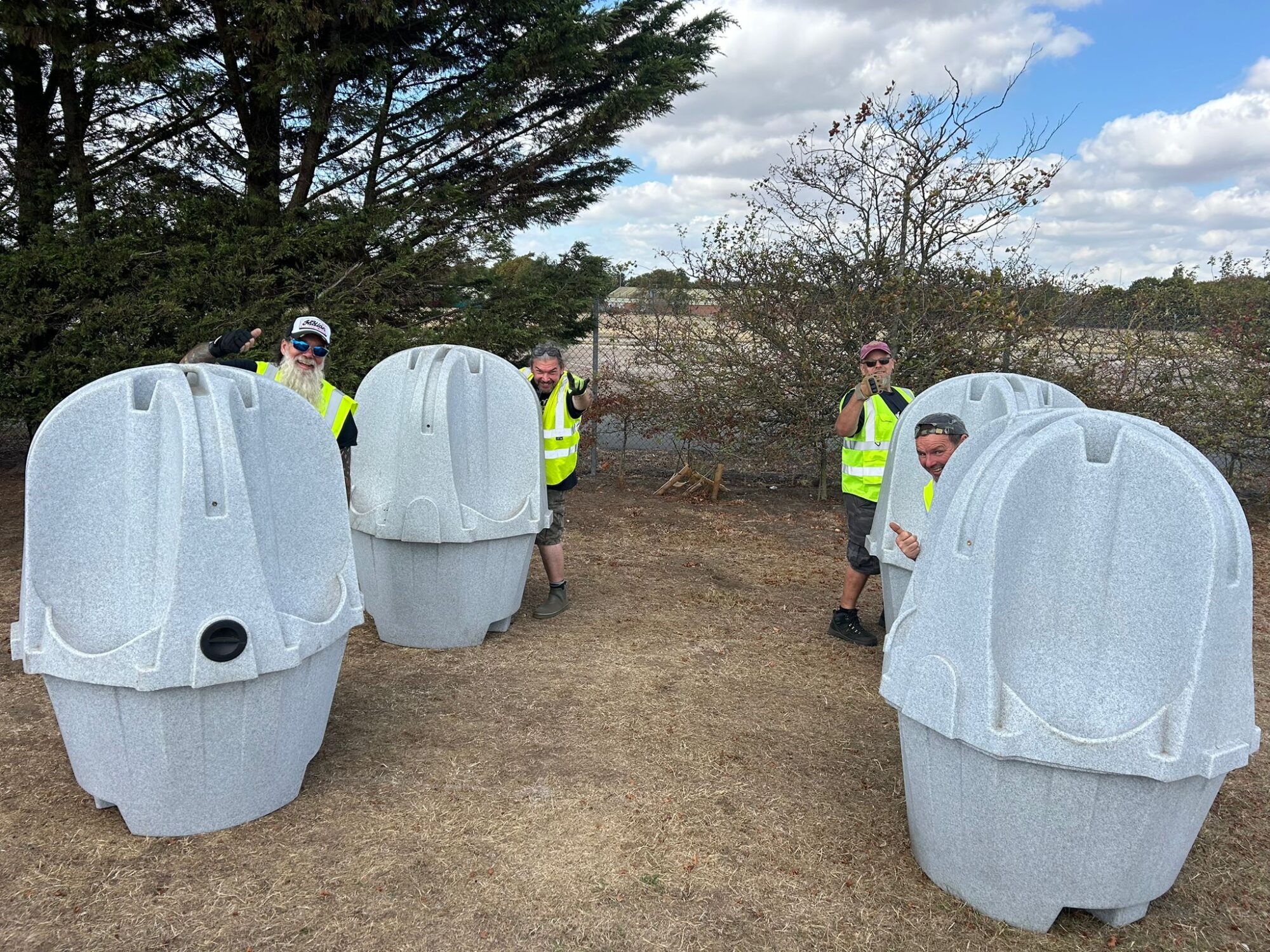
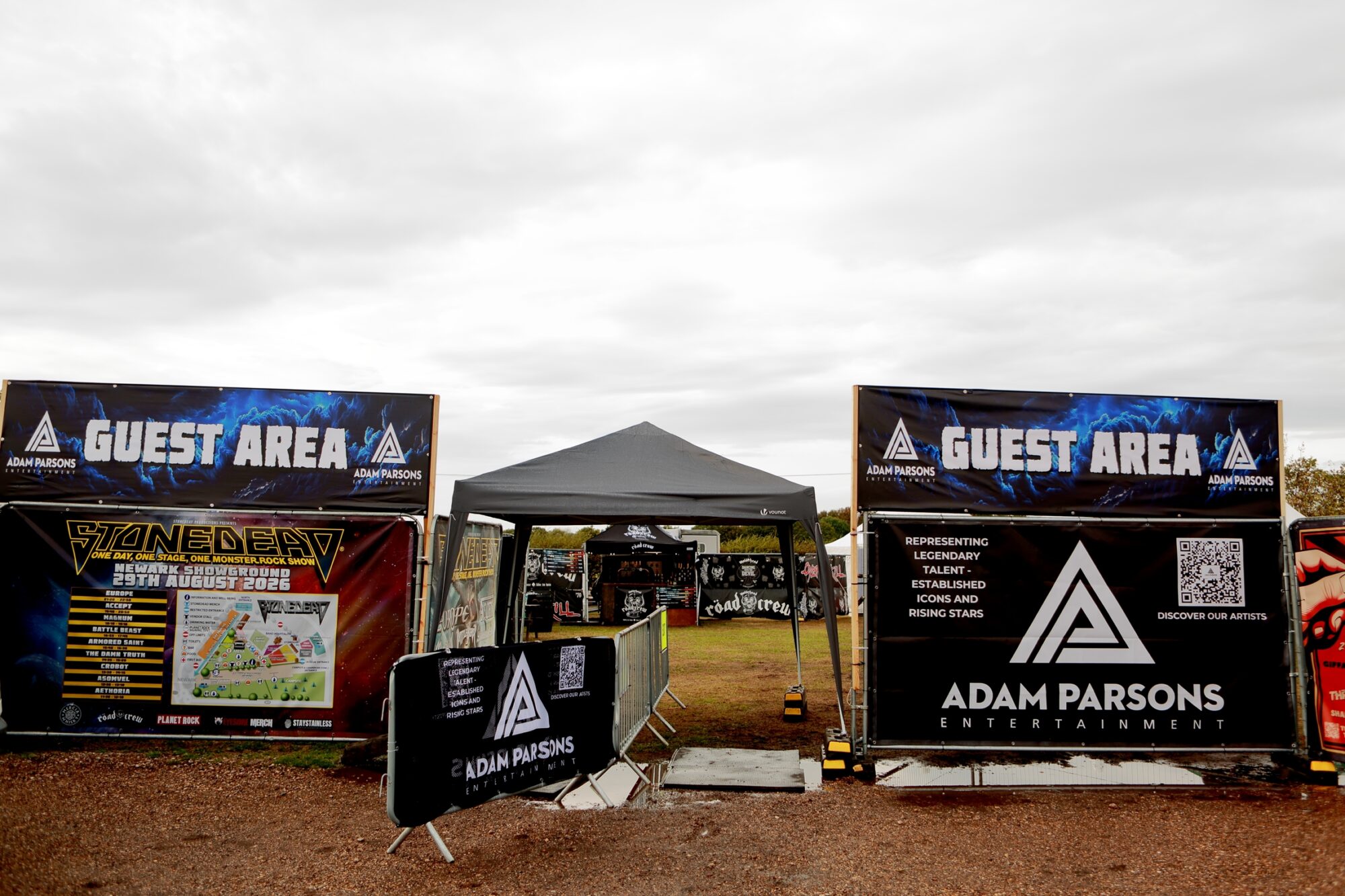
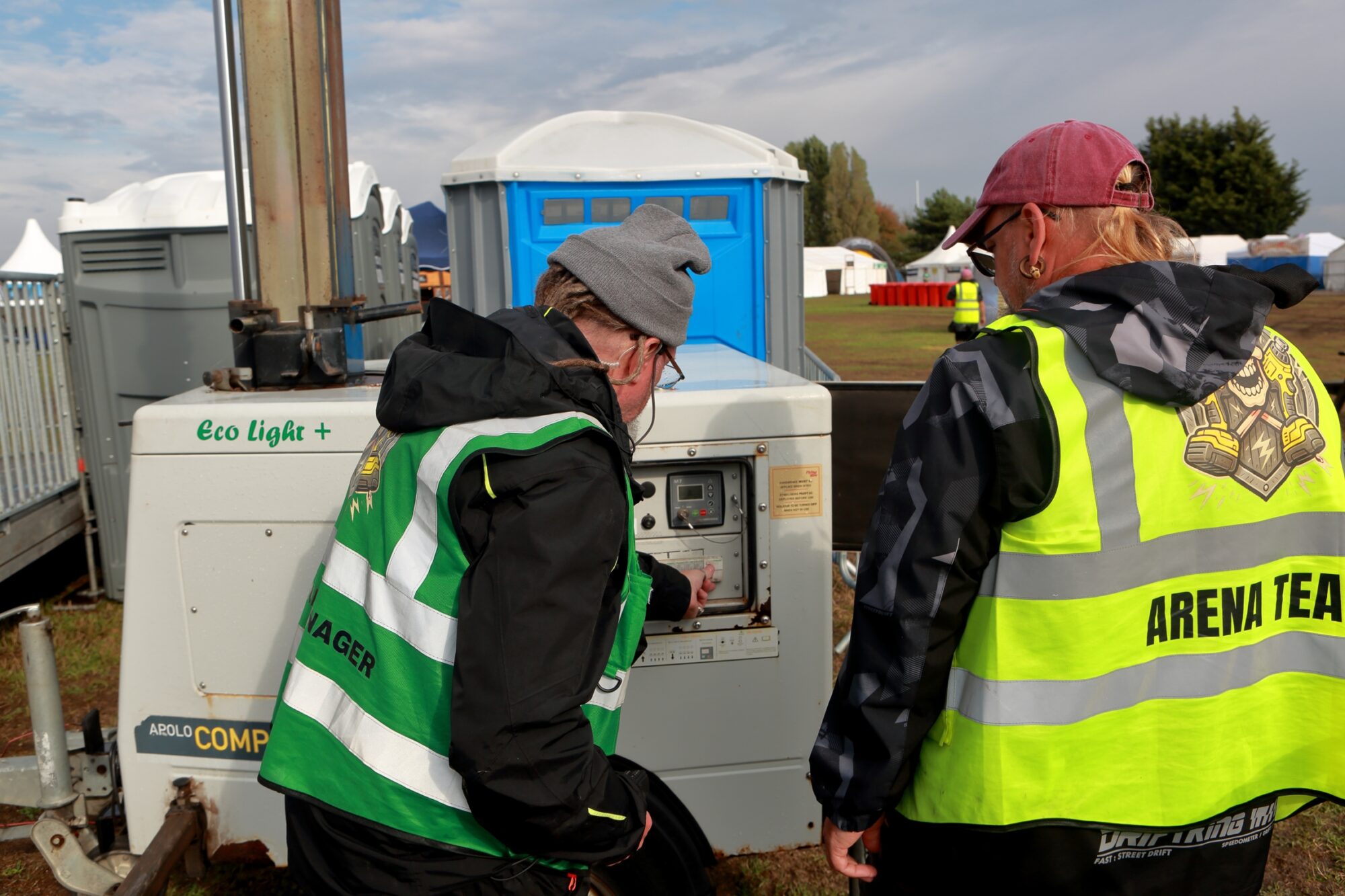
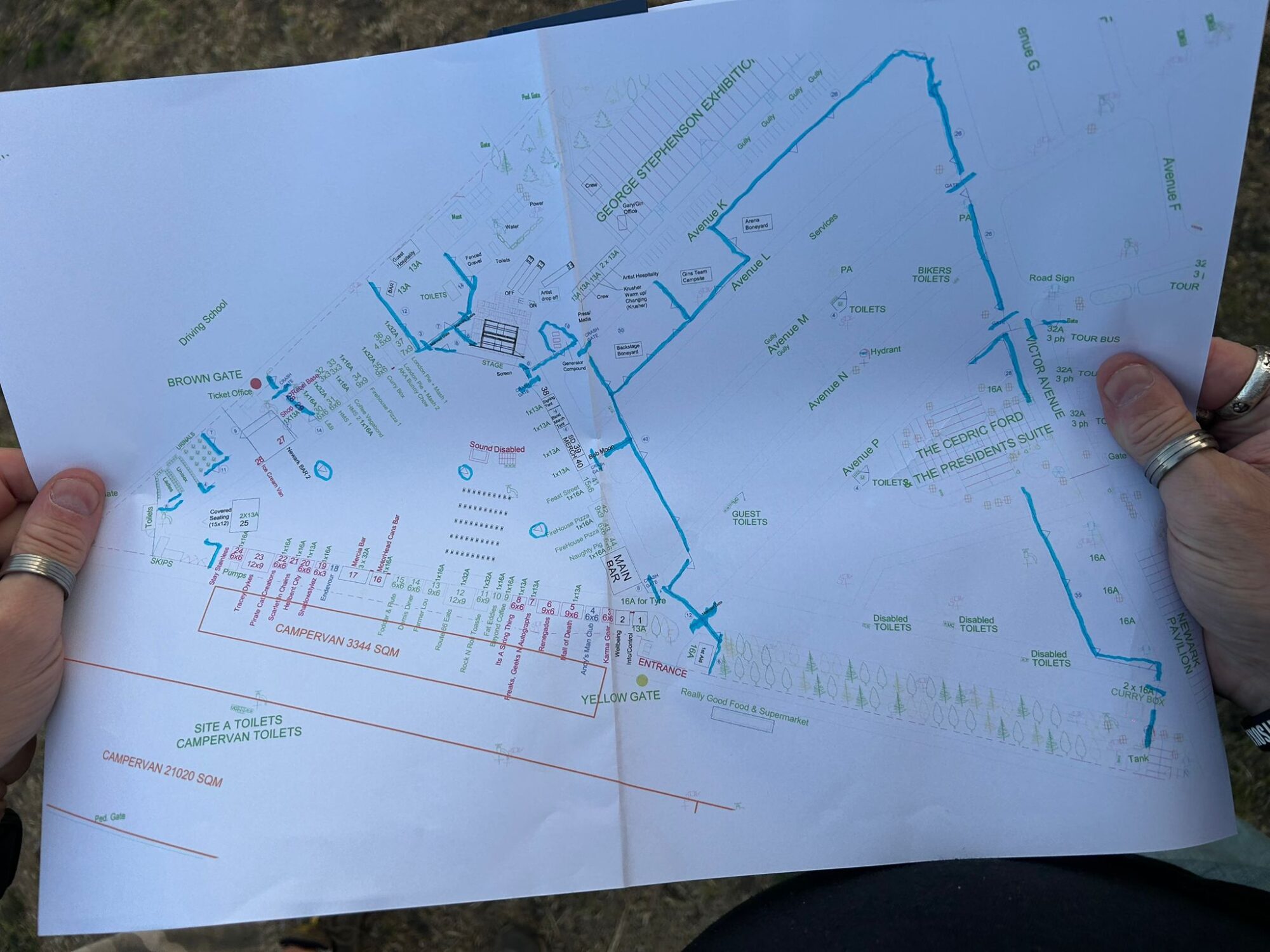
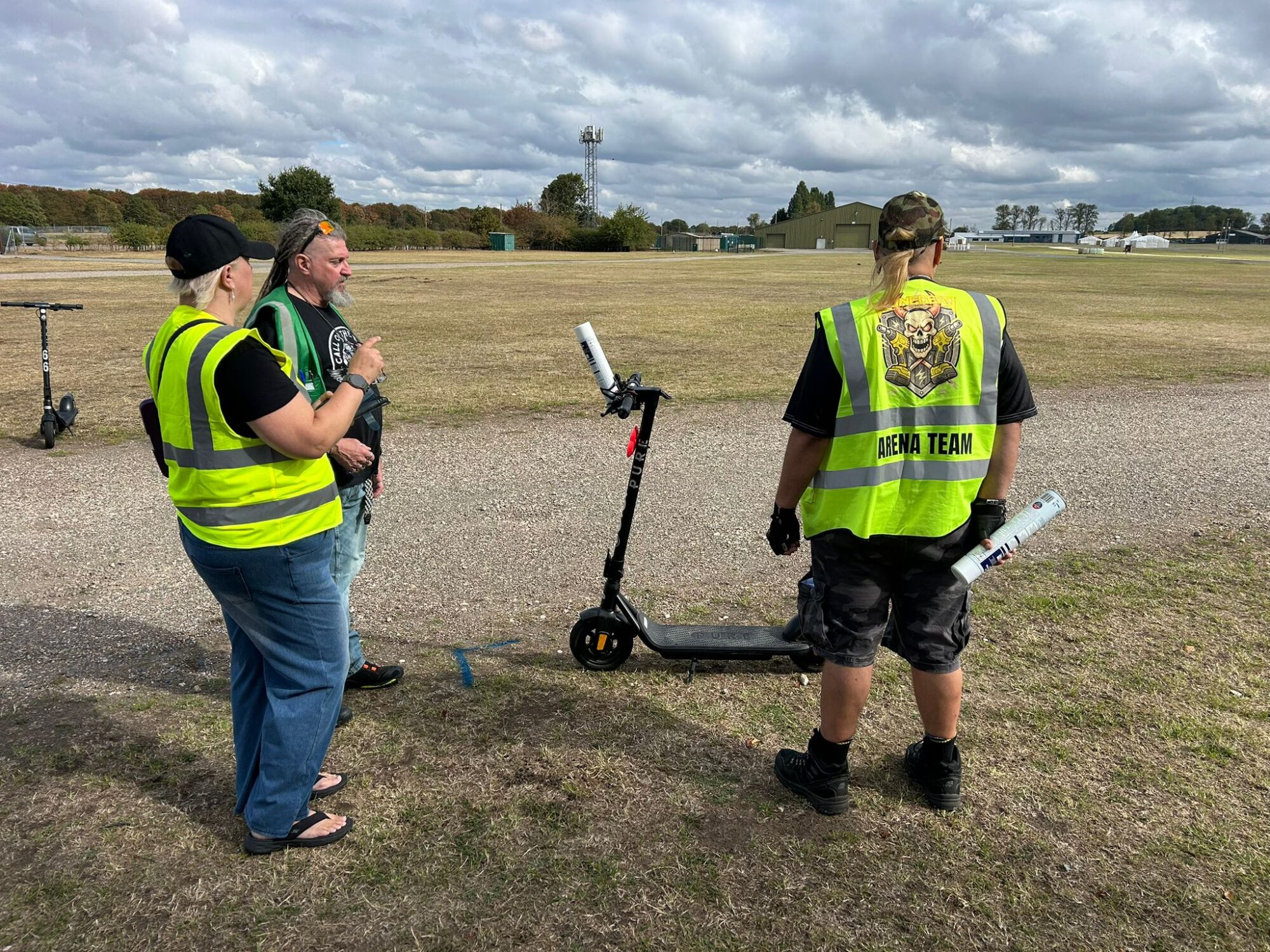
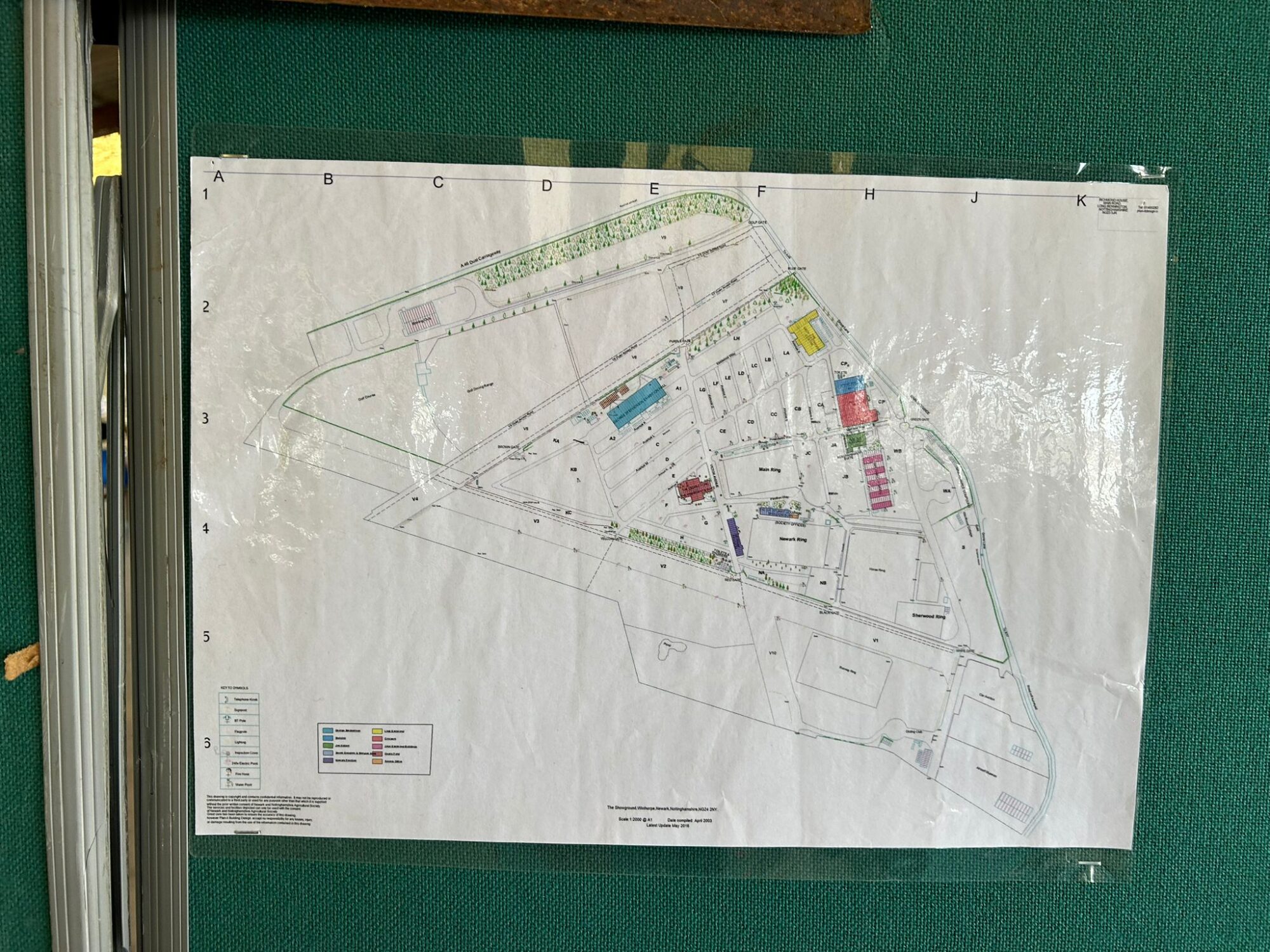
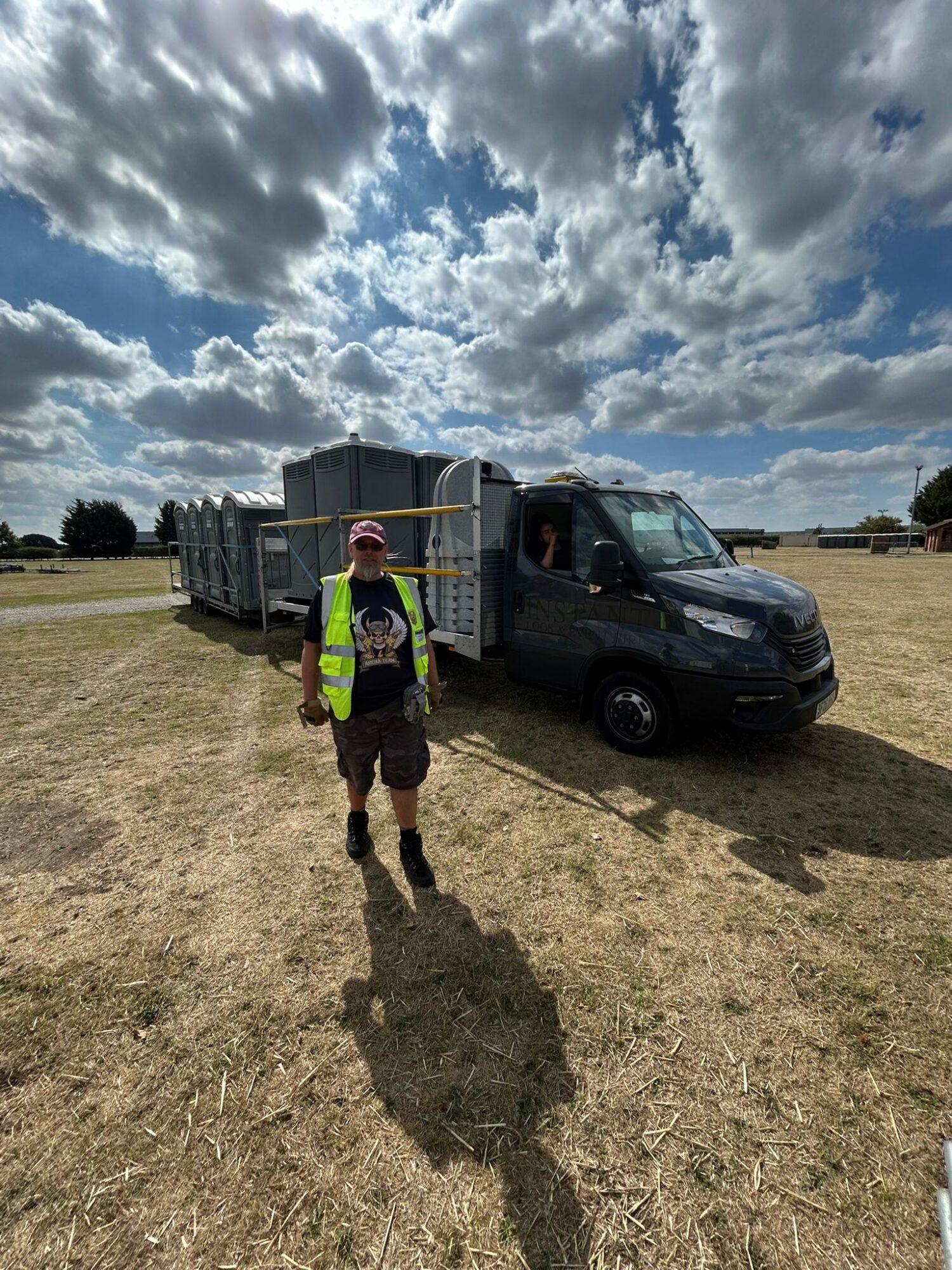
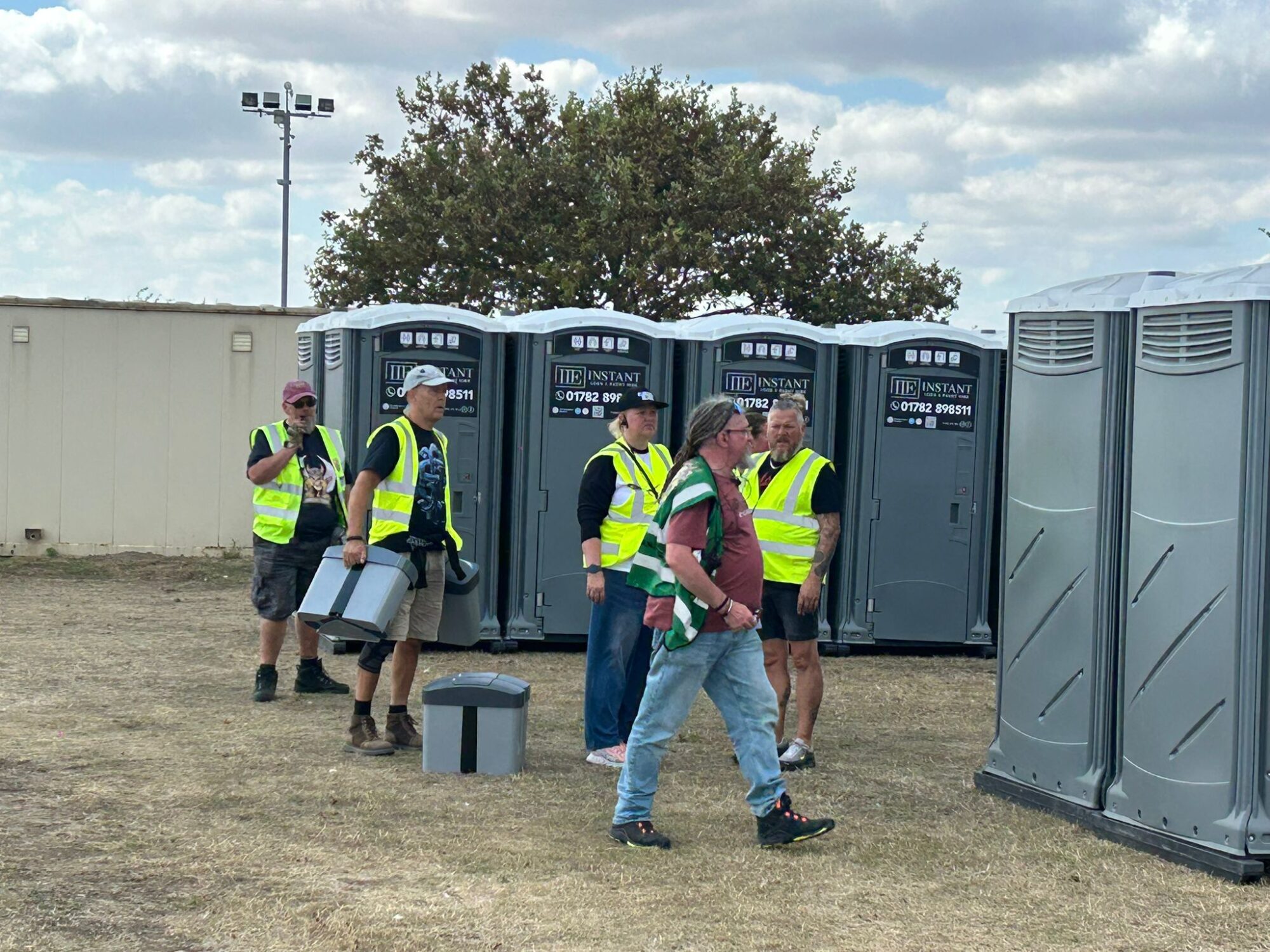
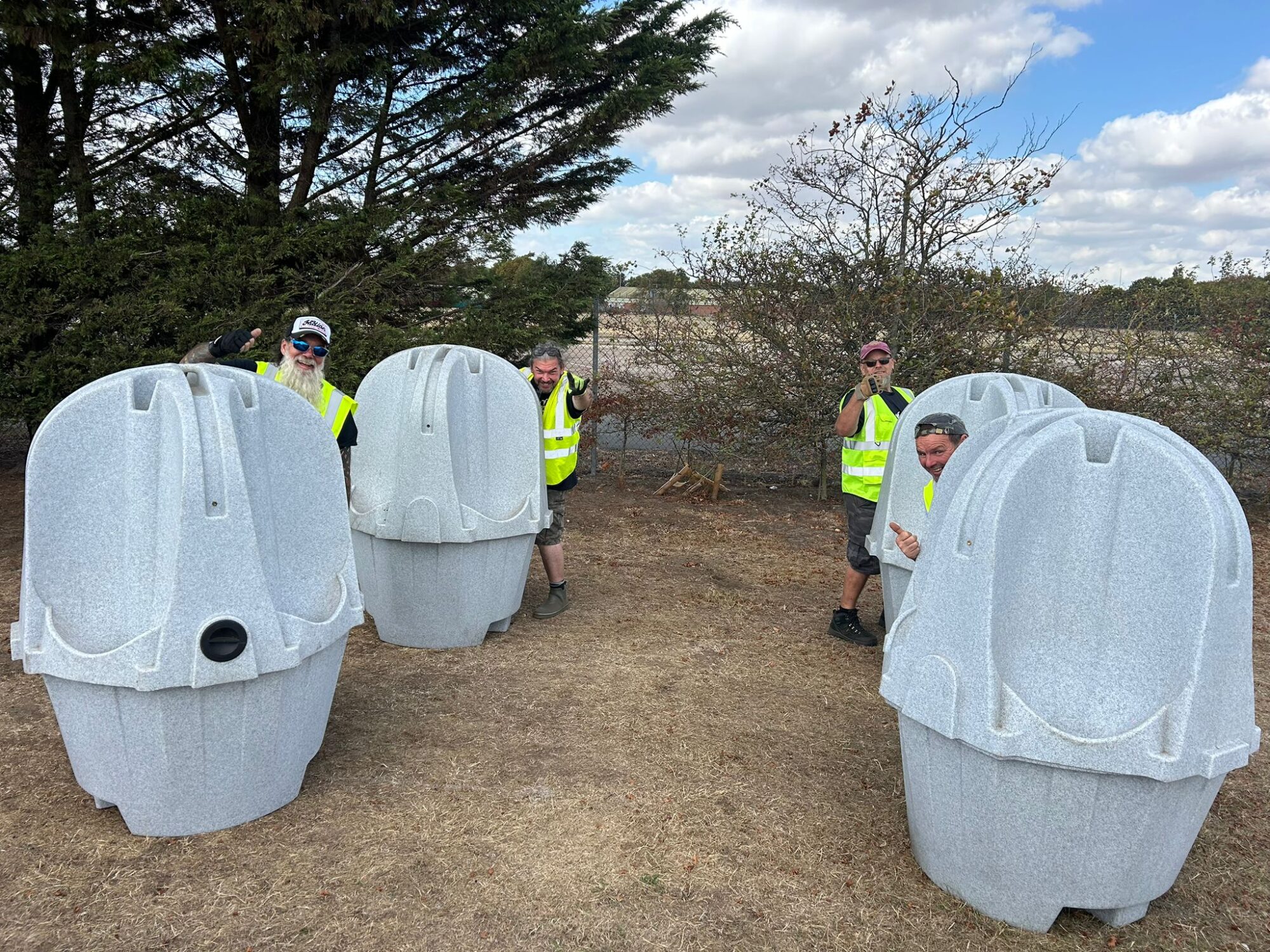
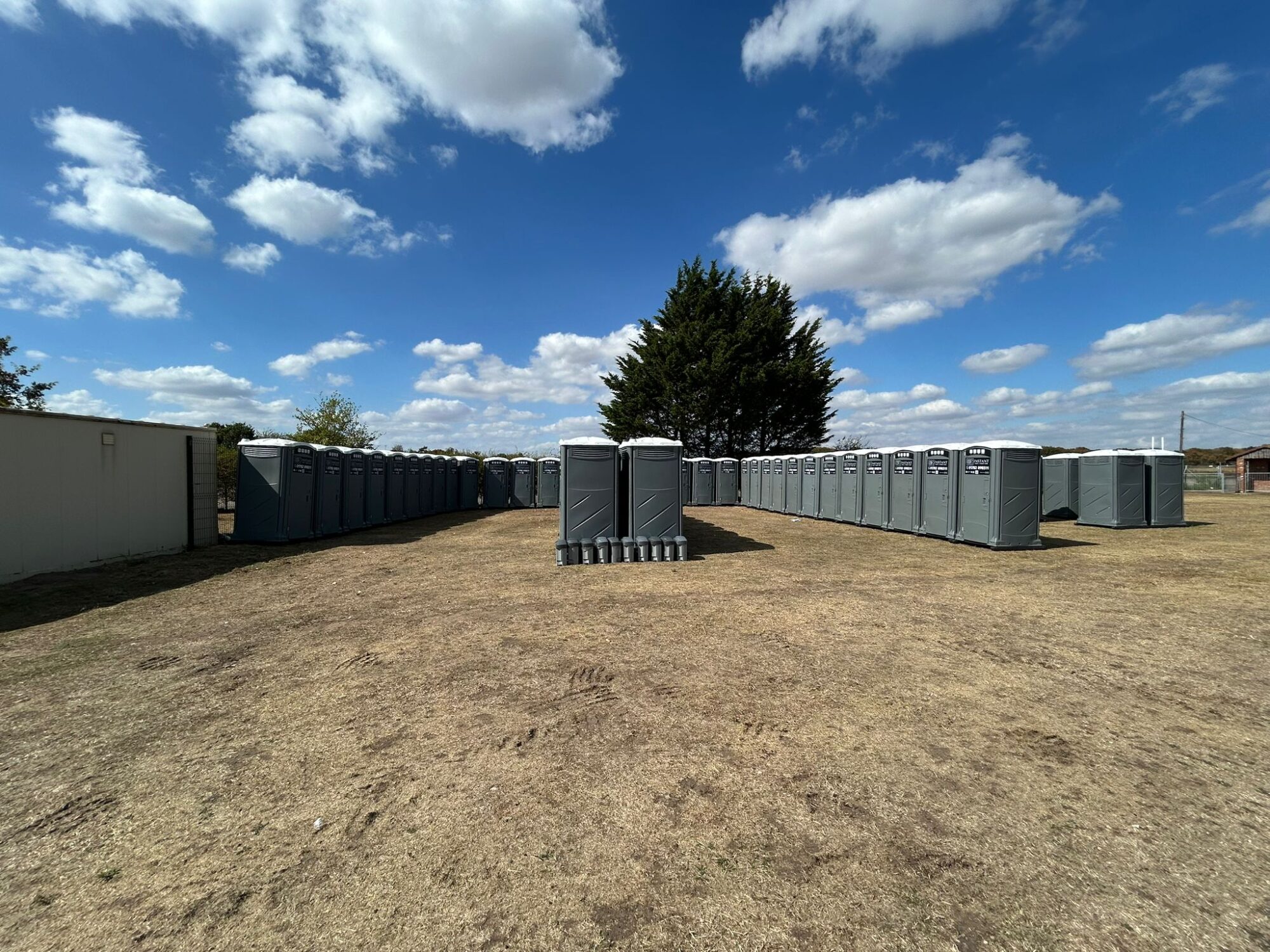
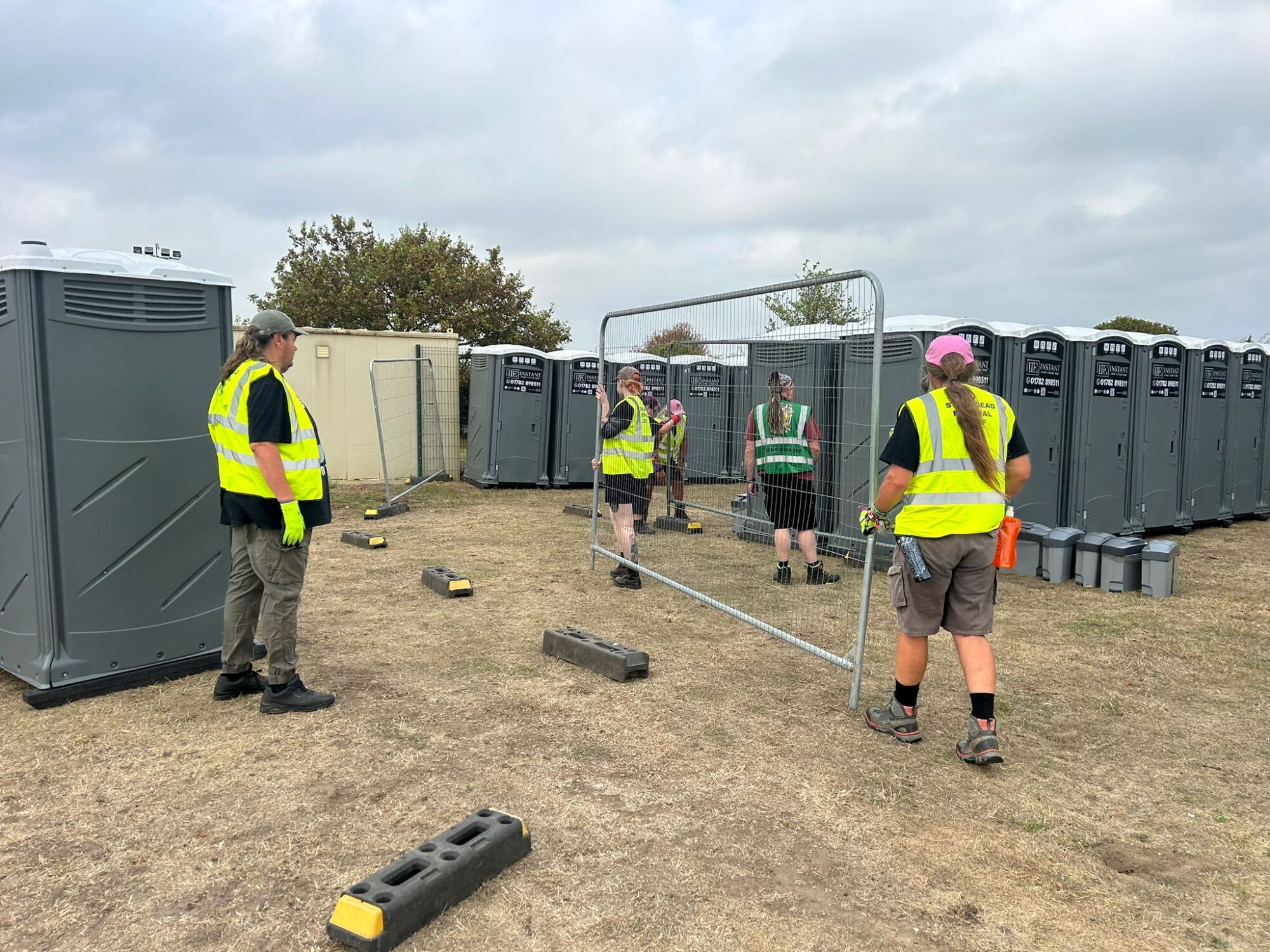
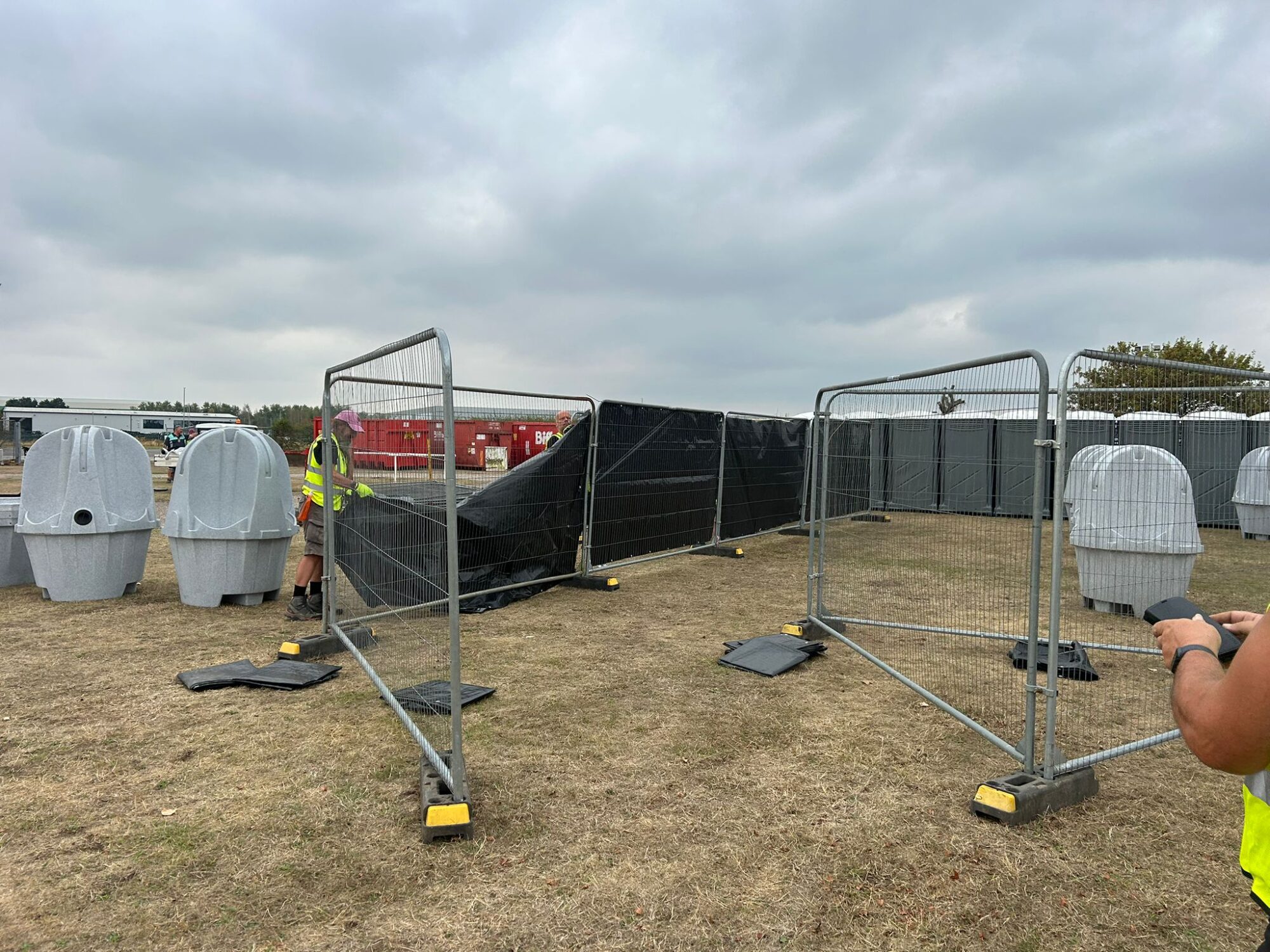
Wednesday marked the point where the empty field started looking more recognisably like an event site. The toilets and urinals arrived throughout the day and needed positioning in their designated locations. Once in place, they all required fencing and tarping to provide privacy for festival goers. That meant yet more runs of fencing, more clips and more panels to move around site. At the same time, advertising boards, directional signage and information triangles began appearing around the venue. Areas that had simply been marked on maps and plans were suddenly becoming real, and perhaps most significantly, the first vendors began arriving. Until then, it had largely been the build crew and contractors working away in relative isolation. Seeing our first trader arrive brought with it the first real sense that the festival itself was approaching. There was finally movement beyond construction. The transformation from field to festival was gathering pace. The reality is that “putting up fencing” only tells part of the story. As the Arena Team, we’re responsible for much of the infrastructure that allows the festival to function. Vendors need spaces allocating and securing, VIP areas need creating, security zones need establishing, bin compounds need positioning and public walkways need defining. We also create the vehicle and pedestrian access points that allow the site to operate safely and efficiently once thousands of people begin arriving. Once the arena opens, our responsibilities continue throughout the weekend. As festival goers enjoy the music, food and drink, bins quickly fill and need constantly servicing, emptied and replaced to keep the site clean and safe. The fencing often becomes the framework that ties all those individual elements together, gradually turning an empty field into a working event site. What makes the role particularly rewarding is seeing just how much trust is placed in the volunteers carrying it out. Every task contributes directly to the experience of the people attending the festival, and by the time the gates open, there’s a real sense of pride in knowing you’ve helped create something that thousands of people will enjoy over the weekend.
Thursday 27 August: Rain, Rain and More Rain.
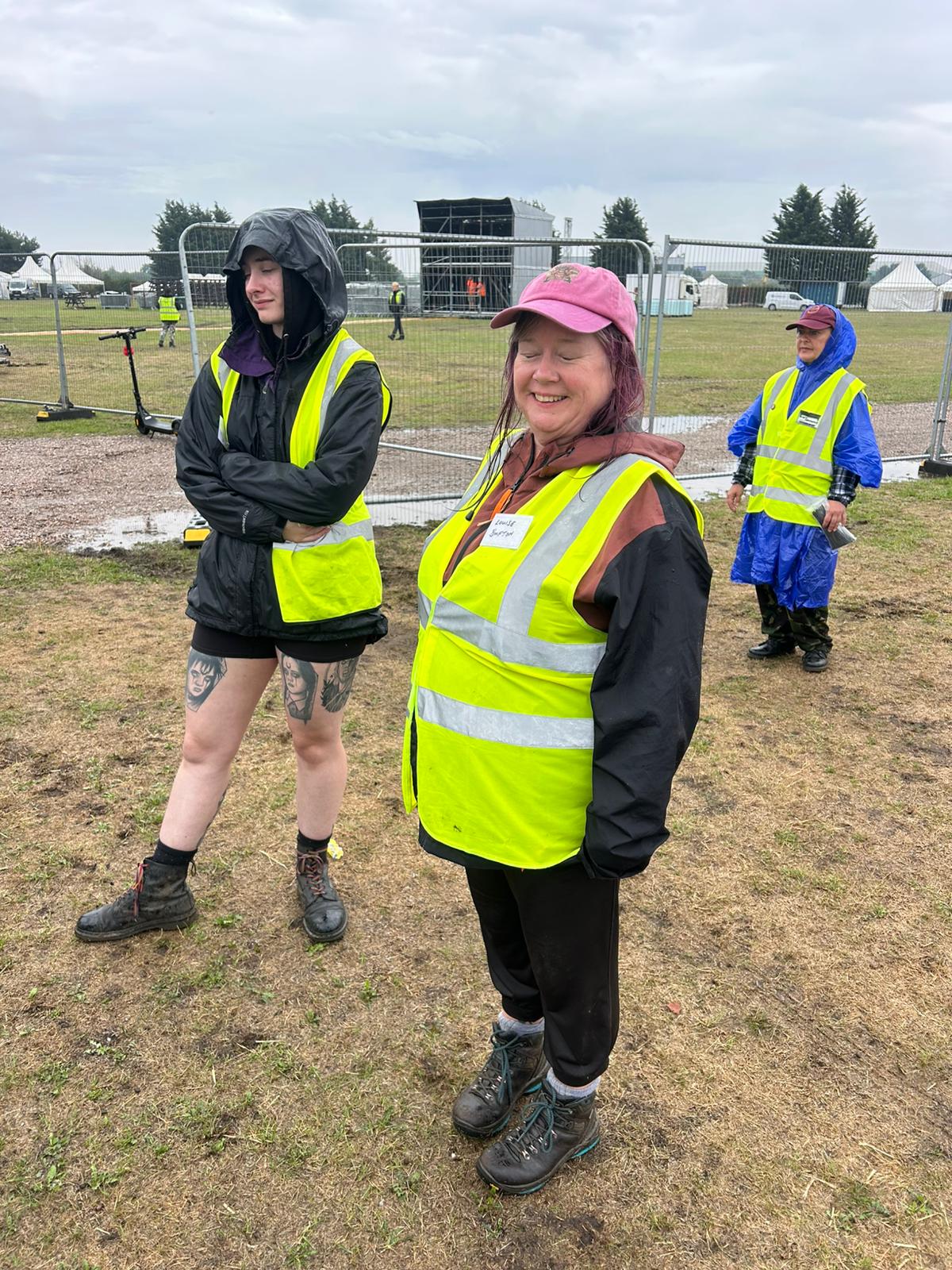
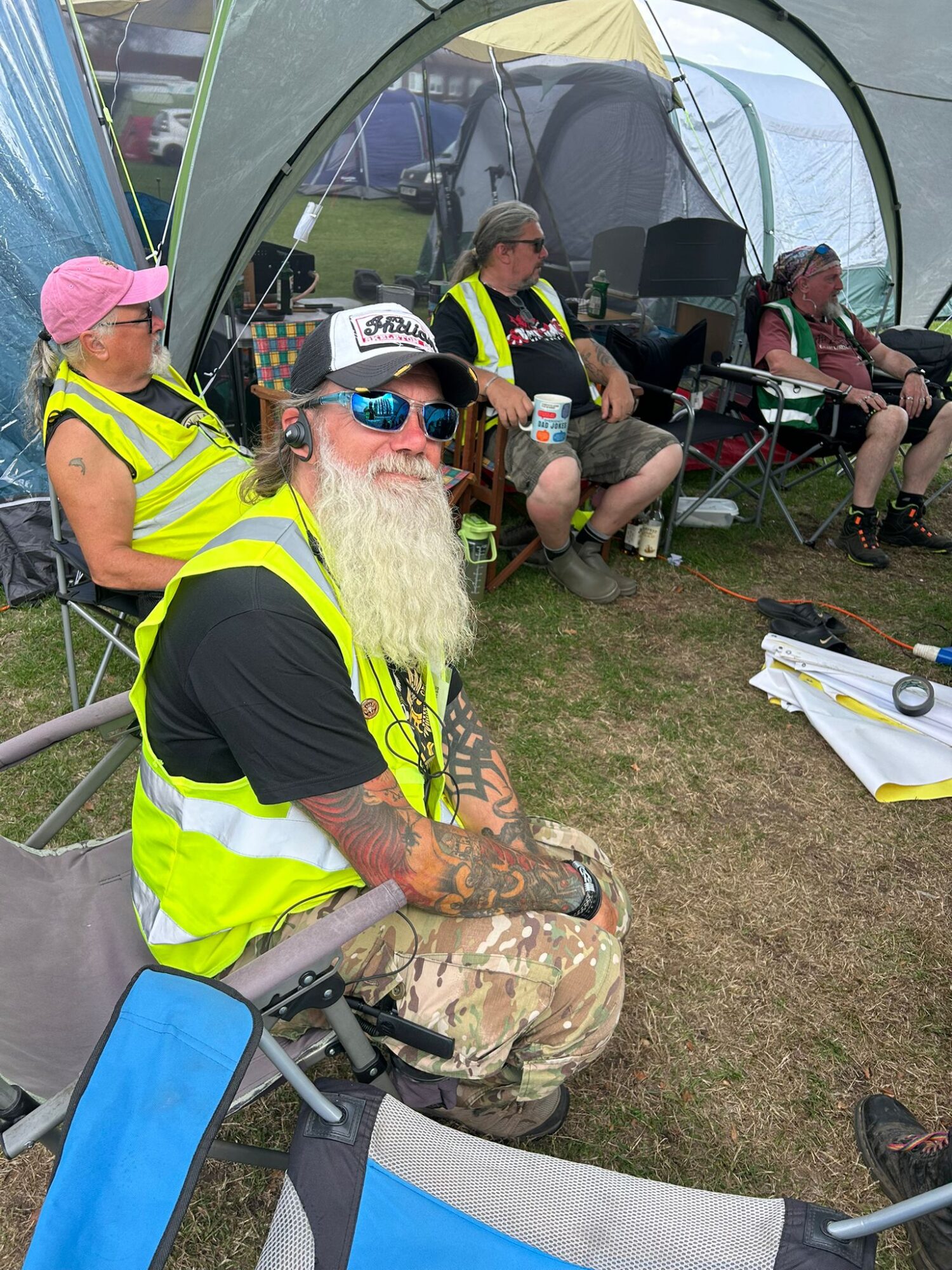
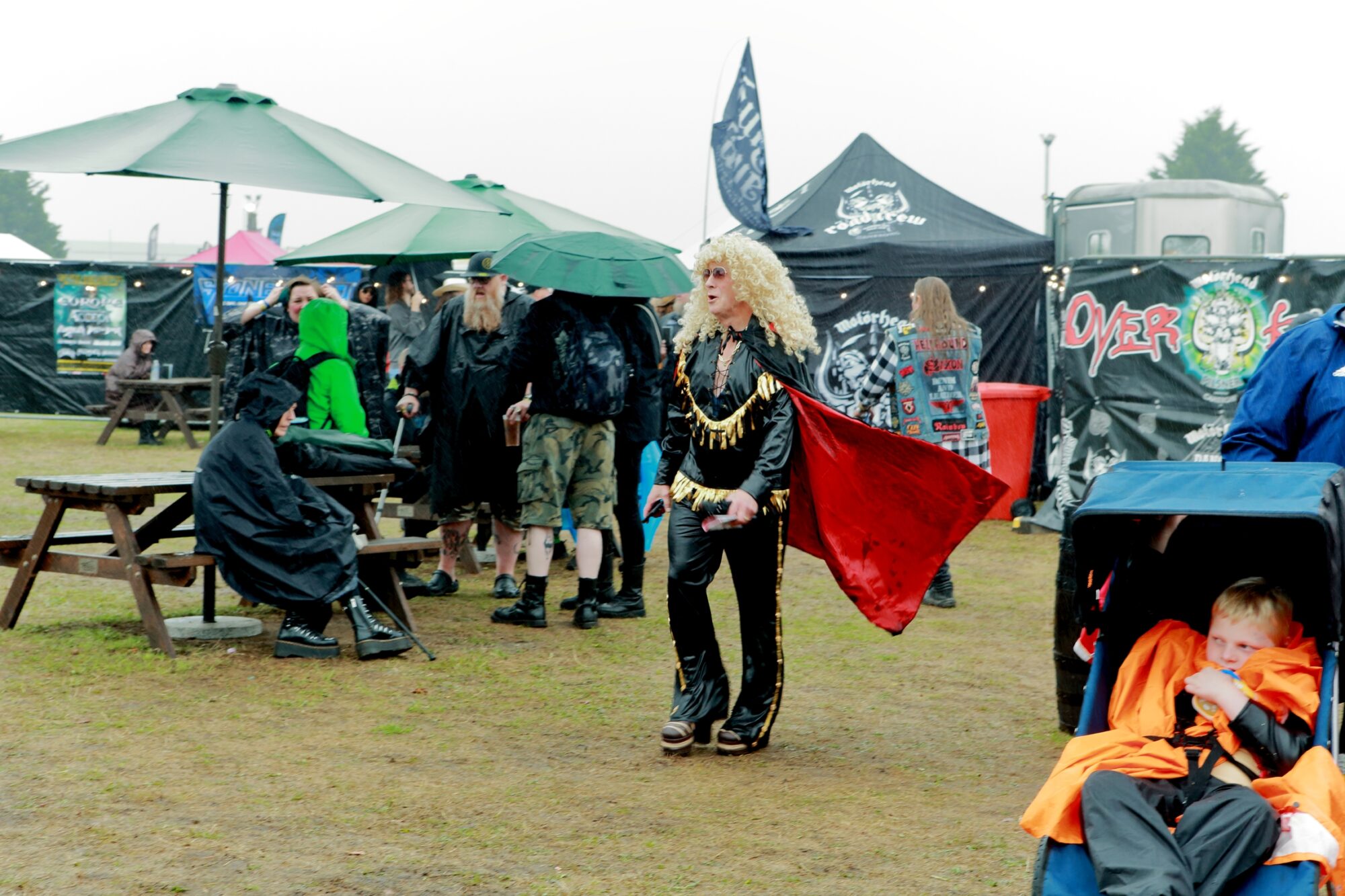
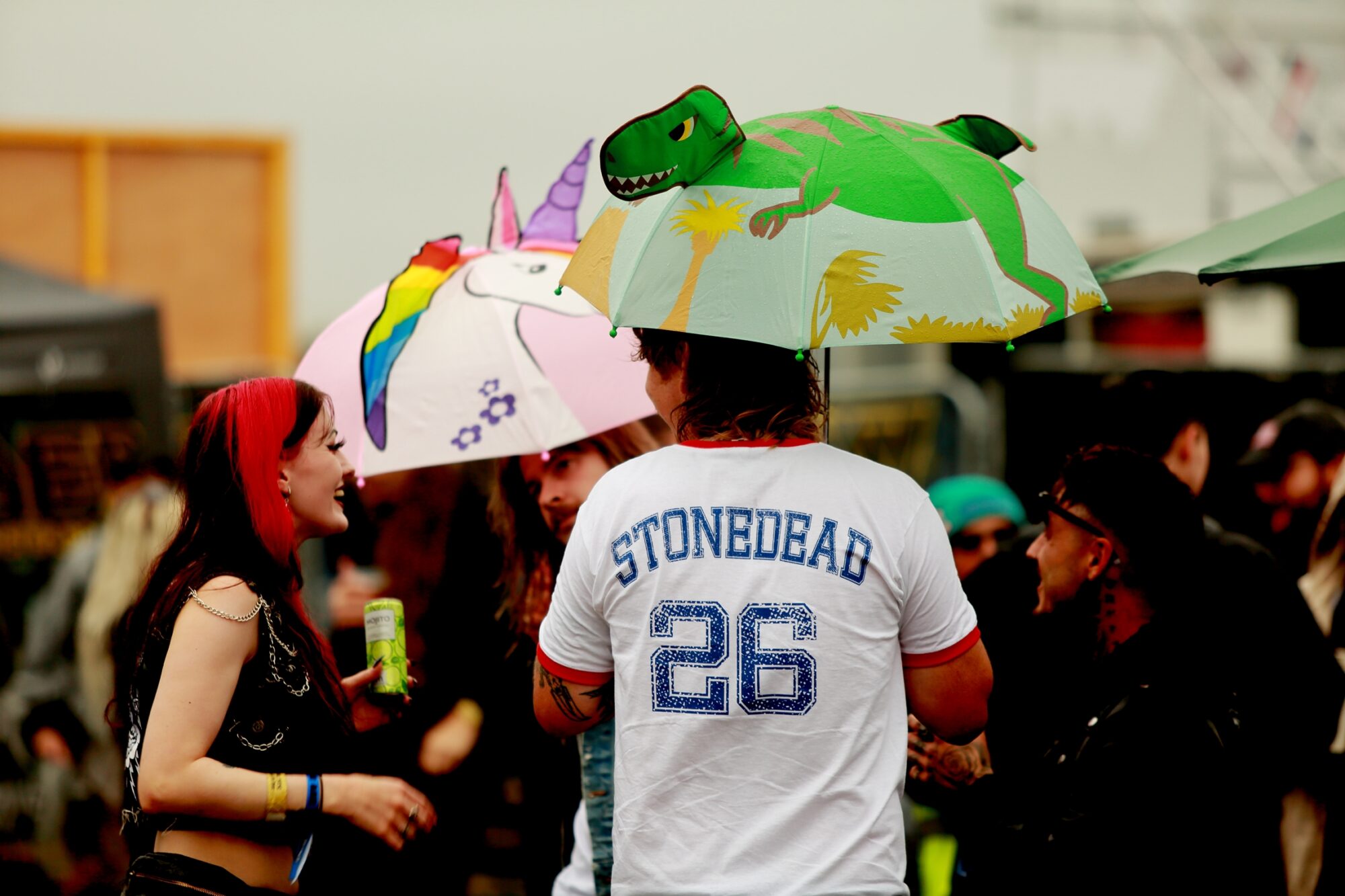
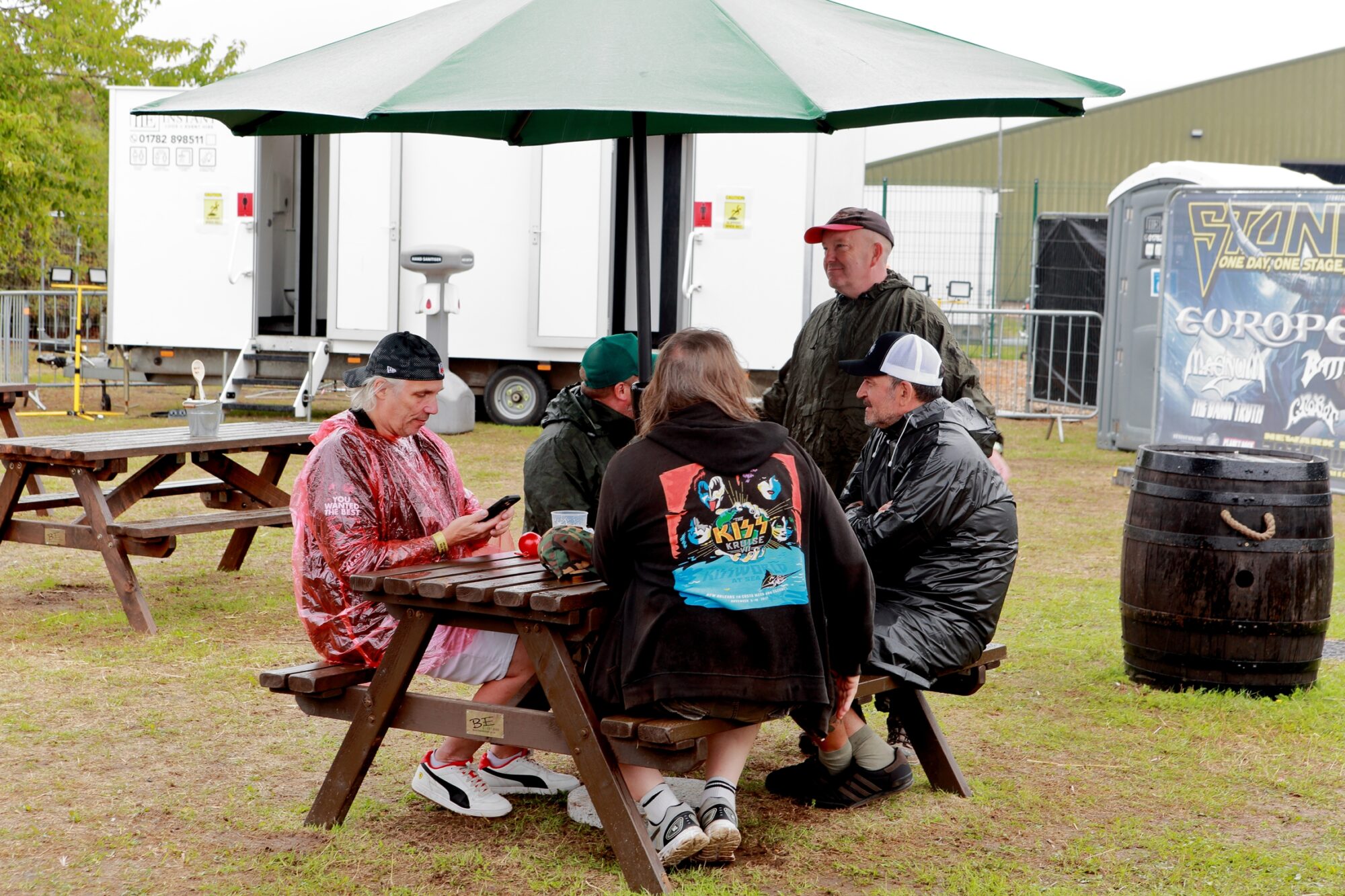
Then came the rain. Not the occasional shower or brief downpour that you can work around, but relentless, steady rain that seemed determined to stay for the entire day. The irony was that it remained surprisingly warm. Waterproofs quickly became more of a liability than a solution. The very thought of pulling on waterproof trousers was enough to make me sweat, so I accepted my fate early on and stuck with shorts, a T-shirt and a hi-vis vest. Once you’re soaked through, there comes a point where resistance feels pointless. You’re wet, you’re staying wet, and all you can do is keep cracking on, and despite the conditions, work continued. Festival sites don’t stop because of the weather and deadlines don’t move simply because the skies have opened. Late that evening, however, the weather finally gave us something back. As darkness settled over the site, an impressive thunder and lightning display lit up the whole sky. Watching it from camp was one of those moments that reminded us there are occasionally perks to spending a week living in a field.

Friday 28 August: Final Preparations.
Friday continued the week’s weather theme, although thankfully the rain was a little less persistent than it had been the previous day. Our attention turned to final adjustments and problem-solving. The addition of tarps and advertising scrims had altered the wind loading on some fencing runs, causing panels to lean, shift or become unstable. That meant revisiting sections we’d already completed and strengthening them with additional support. Triangles were added approximately every five panels to increase stability and ensure everything remained safe ahead of the public arriving. As frustrating as it can be revisiting completed work, it’s all part of preparing a site properly. Better to spend a few extra hours fixing potential problems than spend the weekend dealing with actual ones.
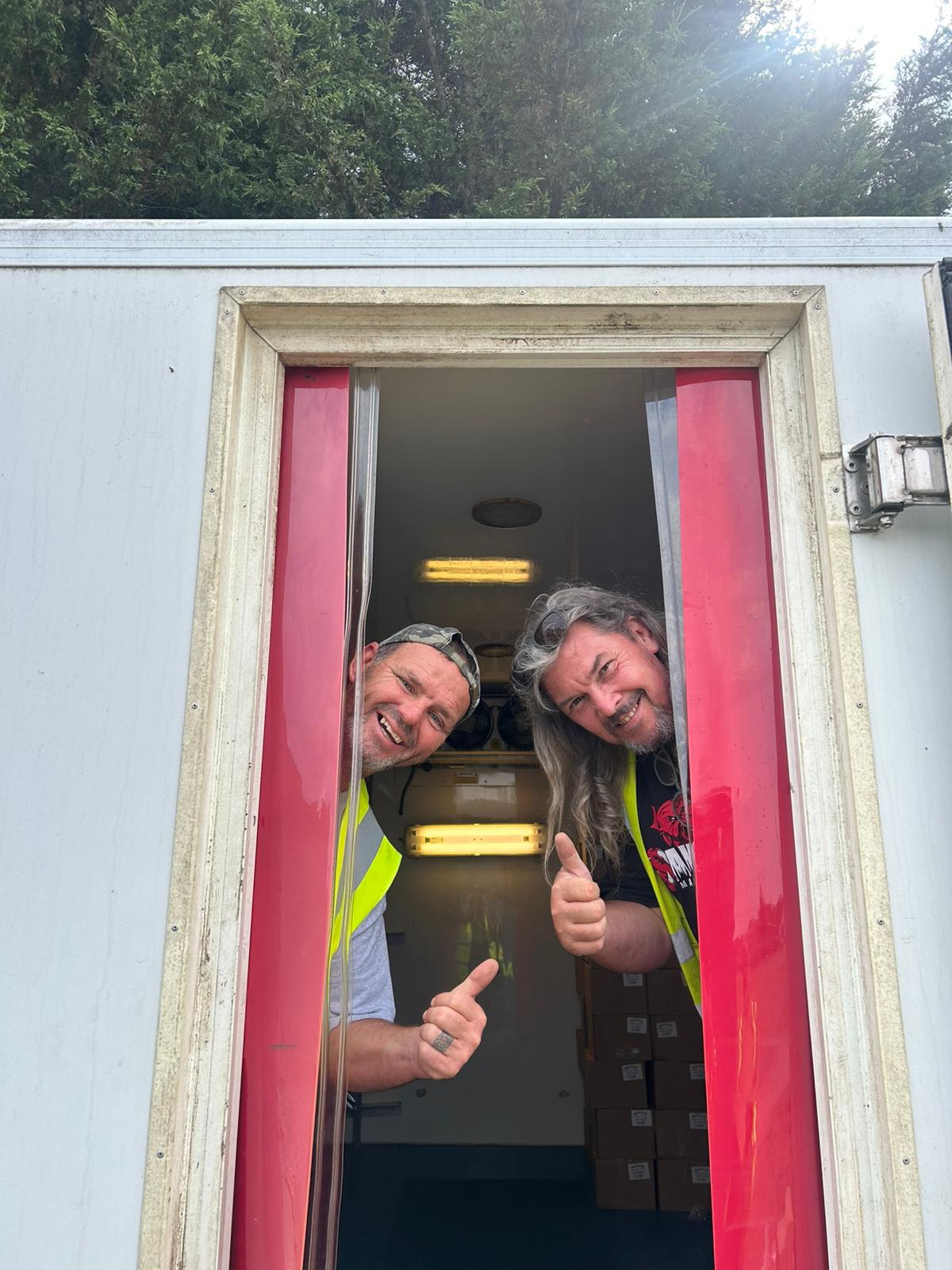
Looking back across the week, it’s staggering to think just how much temporary infrastructure had gone into the site. Between Monday and Friday, our team erected just shy of two kilometres of Heras fencing. It’s one of those figures that doesn’t sound particularly remarkable until you remember that every panel had to be unloaded, carried into position, clipped together and secured by hand. What had greeted us as an empty field on Sunday evening had become a fully functioning festival site in less than a week.


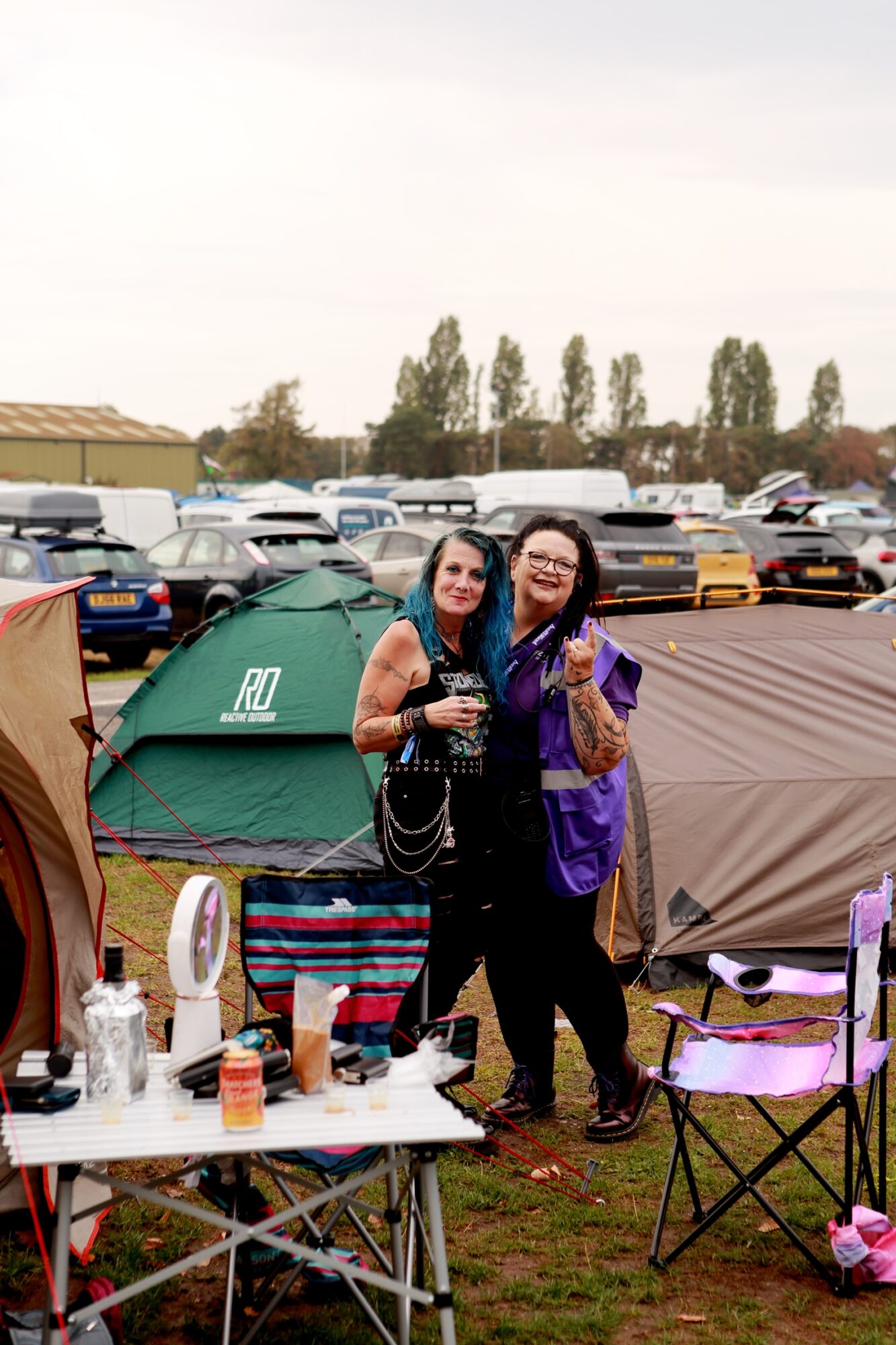
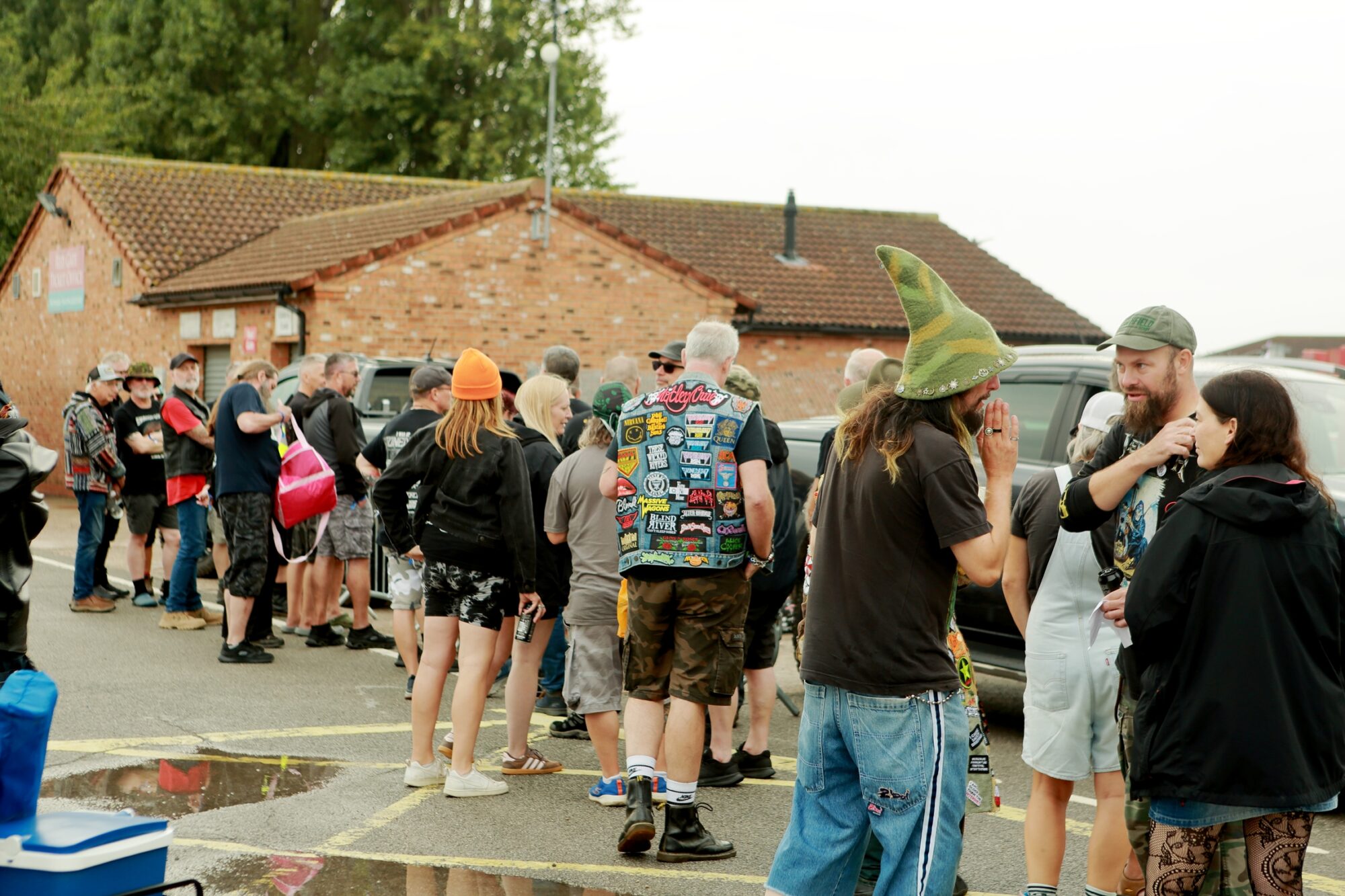
Then came the milestone everyone had been working towards. At around 12:30pm, the gates finally opened to the paying public, allowing campers to arrive and begin creating a temporary town of tents, campervans and gazebos across the site. There is always something satisfying about watching an empty field gradually fill with people who have been counting down to the weekend for months. The arena itself wouldn’t open until 6pm, but the atmosphere noticeably changed as soon as the first festival goers started arriving. After five days of planning, lifting, building, fencing and adapting, the event had finally begun.


From Empty Field to Festival.
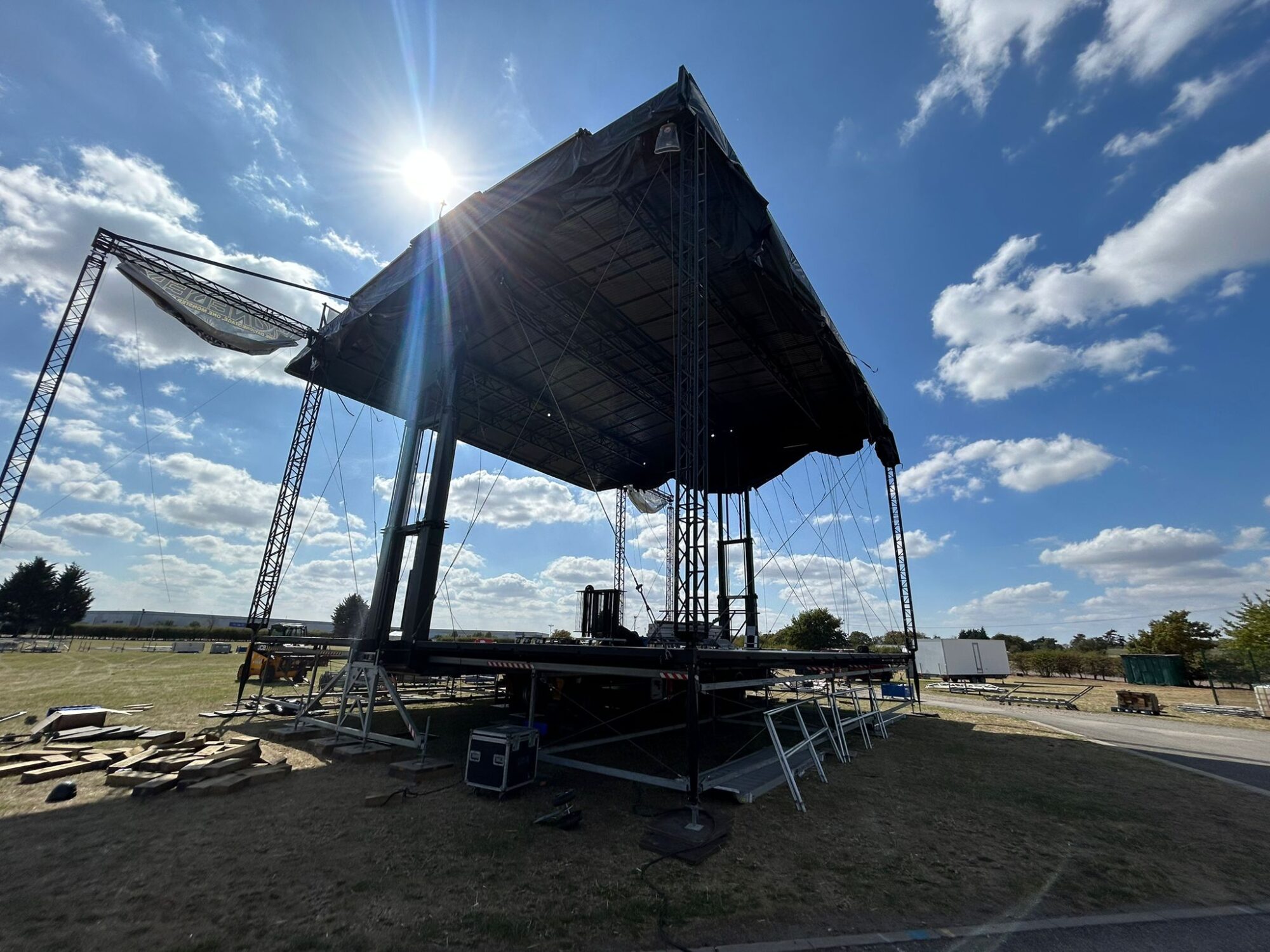
By Friday evening, the transformation was complete. What had greeted us at Newark Showground on Sunday as little more than open space and scattered equipment was now a working festival site, ready to welcome thousands of rock fans for a weekend of live music. The crowds arriving through the gates would see a festival ready to go: traders serving food and drinks, clearly marked walkways, secure areas, toilets in place, bin stations positioned where they were needed and an arena prepared for the first night’s entertainment. What many wouldn’t see was the effort that had gone into making all of that possible during the preceding week, and for the Arena Team, the role had involved far more than simply erecting fencing. We had helped create the structure that would allow the festival to operate safely and smoothly throughout the weekend. Every fenced compound, vendor location, VIP area, pedestrian route and security zone formed part of a much bigger picture. The hard work was far from over, but standing back and seeing a fully functioning festival where an empty field had stood just a few days earlier brought a genuine sense of achievement. Every muddy boot, soaked T-shirt, early start and aching muscle had played its part in making Stonedead happen. As festival goers enjoyed the music, food, drink and atmosphere throughout the weekend, few would realise just how much work had gone on behind the scenes in the days beforehand. For those of us on the Arena Team, however, it was immensely satisfying to see Newark Showground transformed from an empty showground into Stonedead Festival, knowing we’d helped build the infrastructure that made the whole event possible. Once the arena opened, the nature of the work changed completely. During the build, much of our time had been spent creating the infrastructure that would allow the festival to function. Once the bands started playing, however, my focus shifted to keeping everything running smoothly.
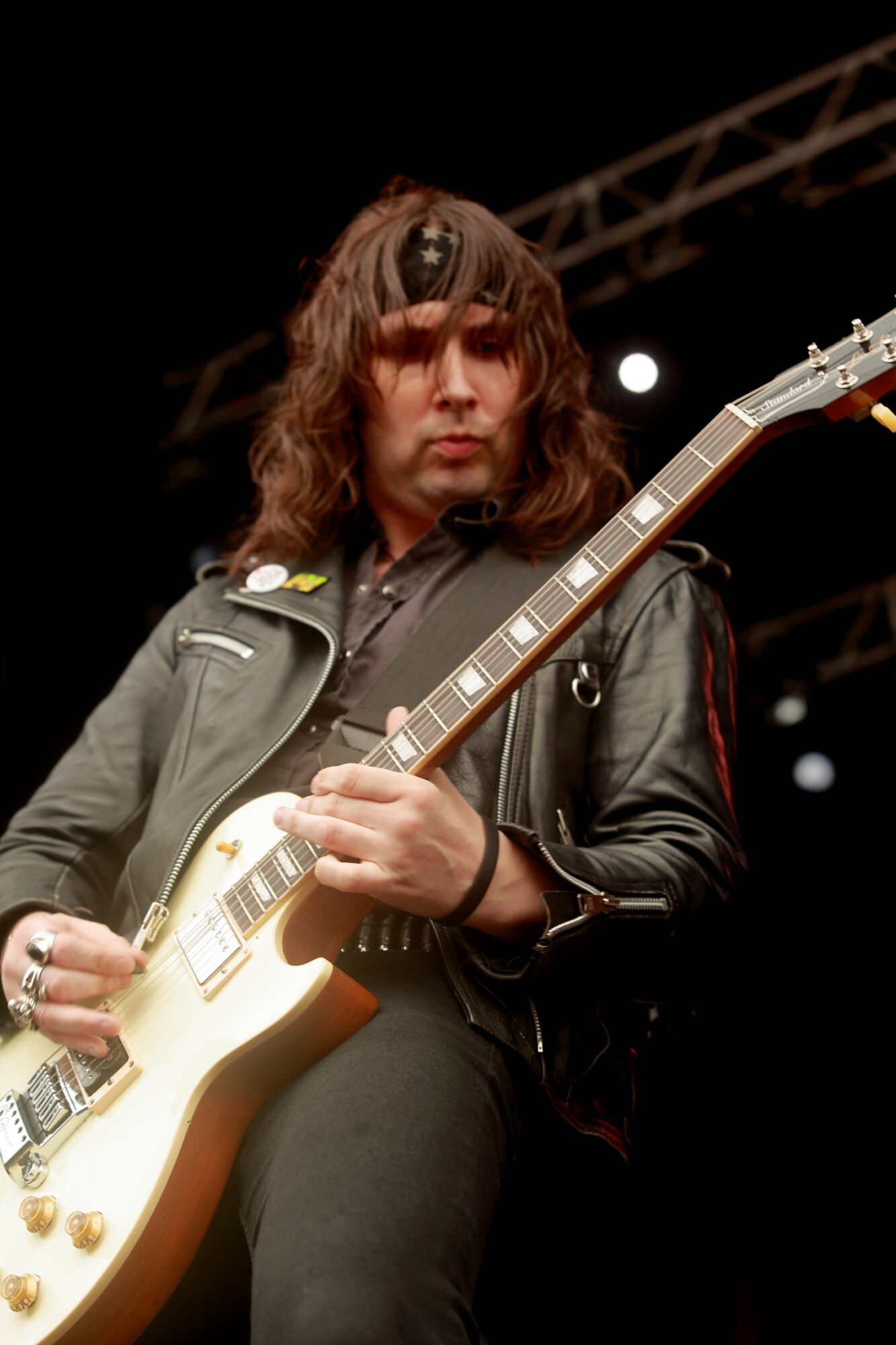
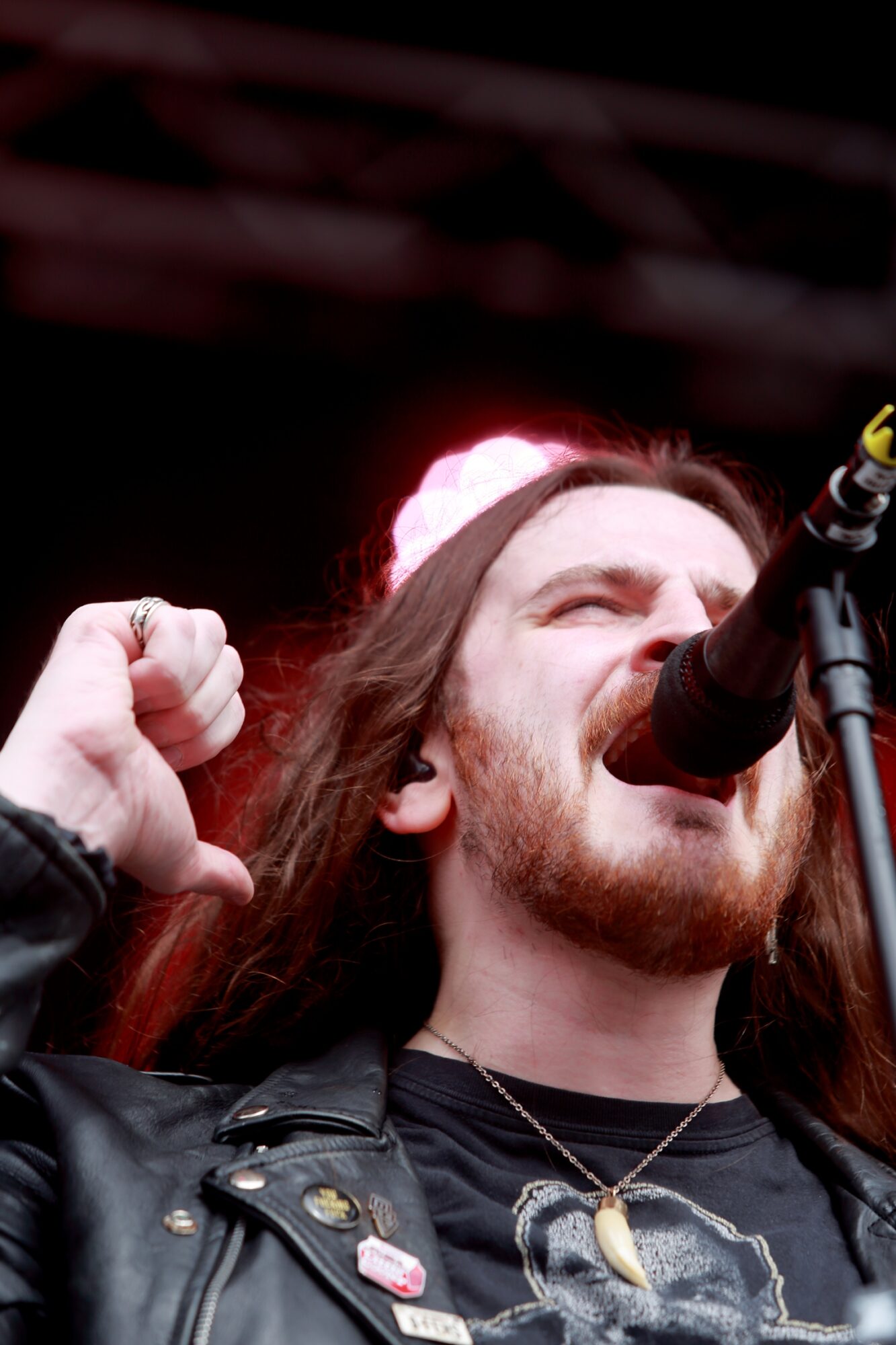
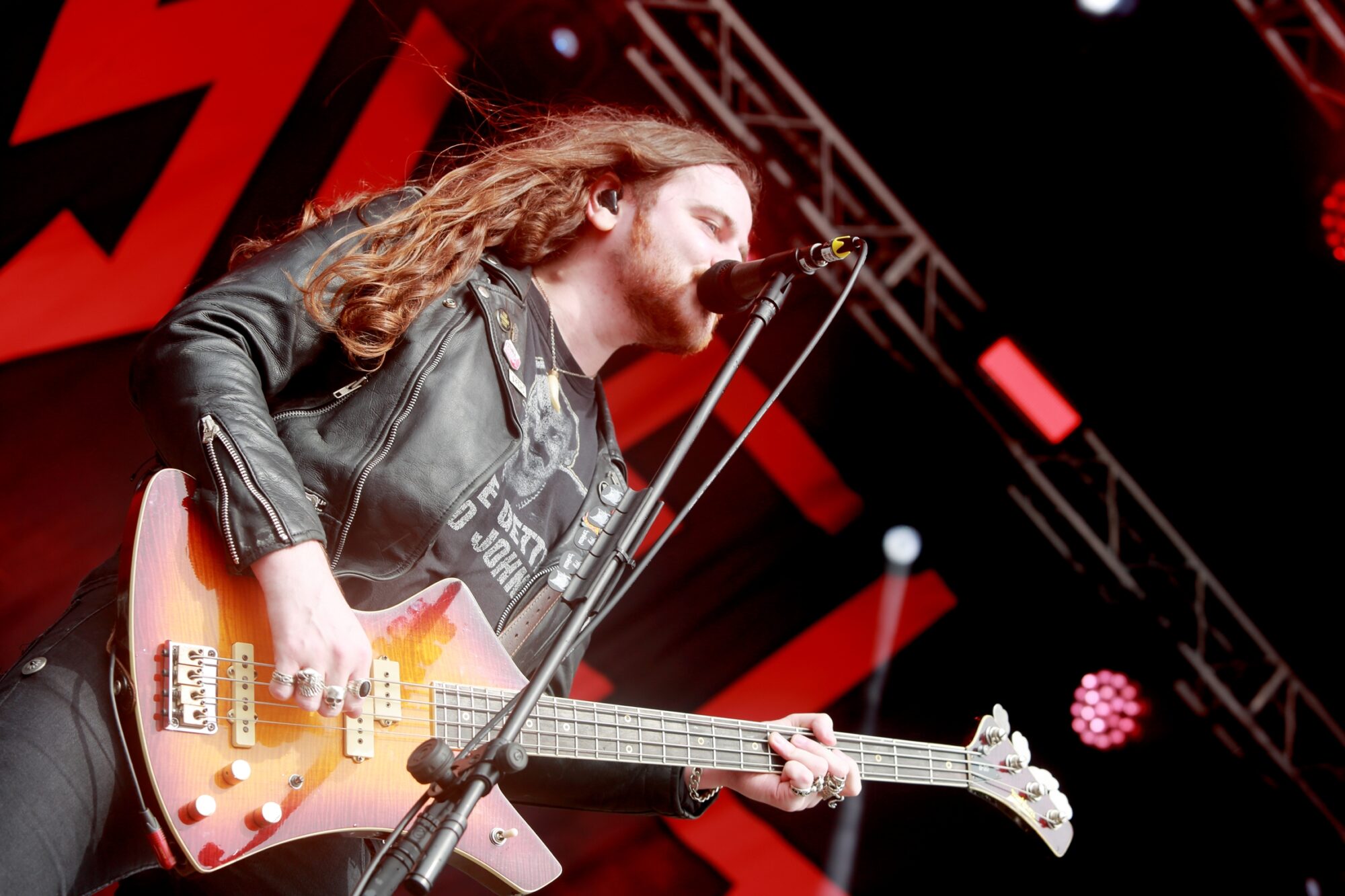
One minute I might be servicing bins overflowing with discarded food containers and empty drinks cups and cans in the VIP area, the next I’d be heading back to the photo pit to shoot the first three songs from another band’s set, before popping into Production to drop some food off for my wife. There was rarely a chance to stand still for long, but that variety was part of what made my little contribution so enjoyable. No two hours were ever quite the same.



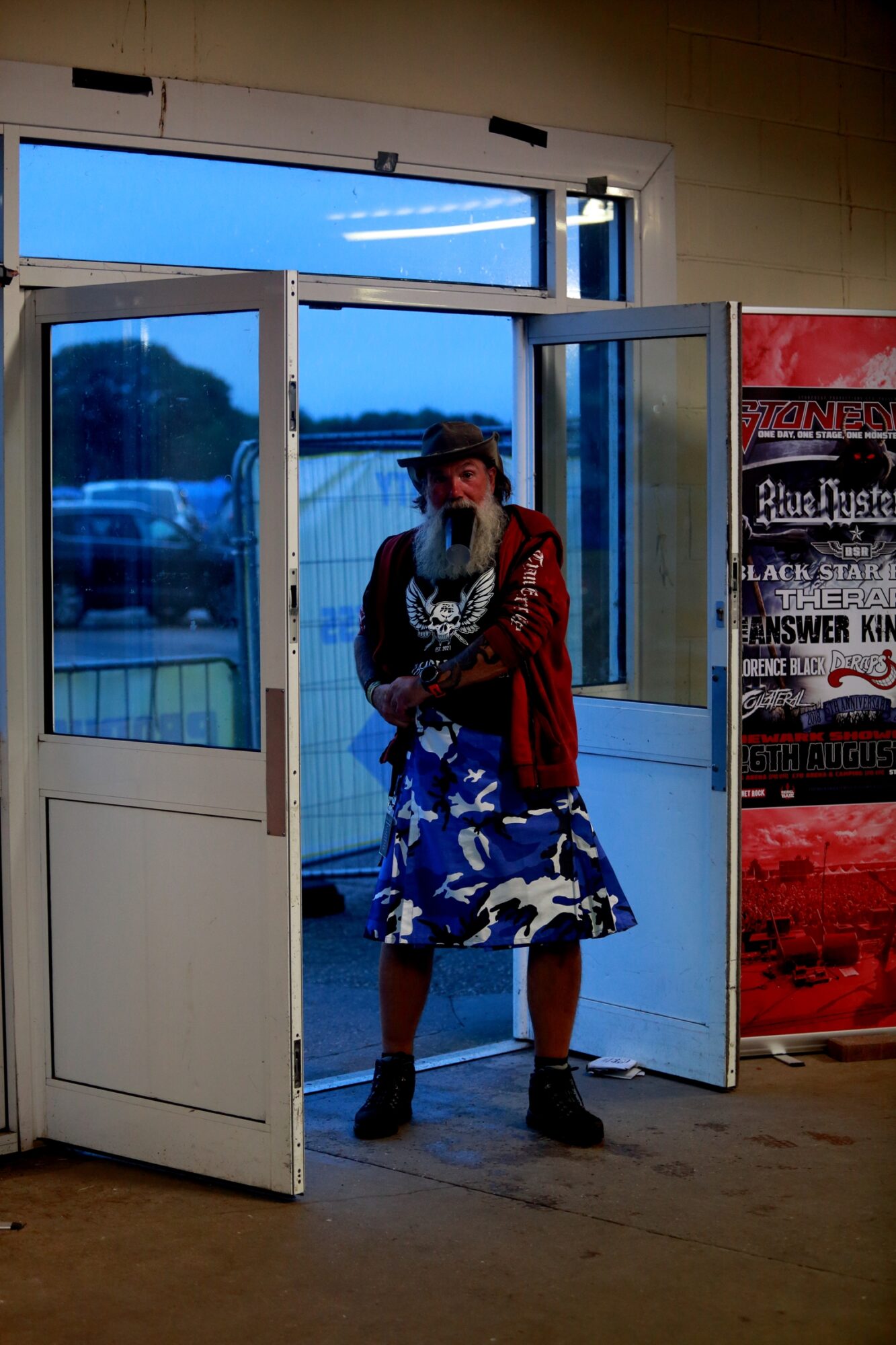
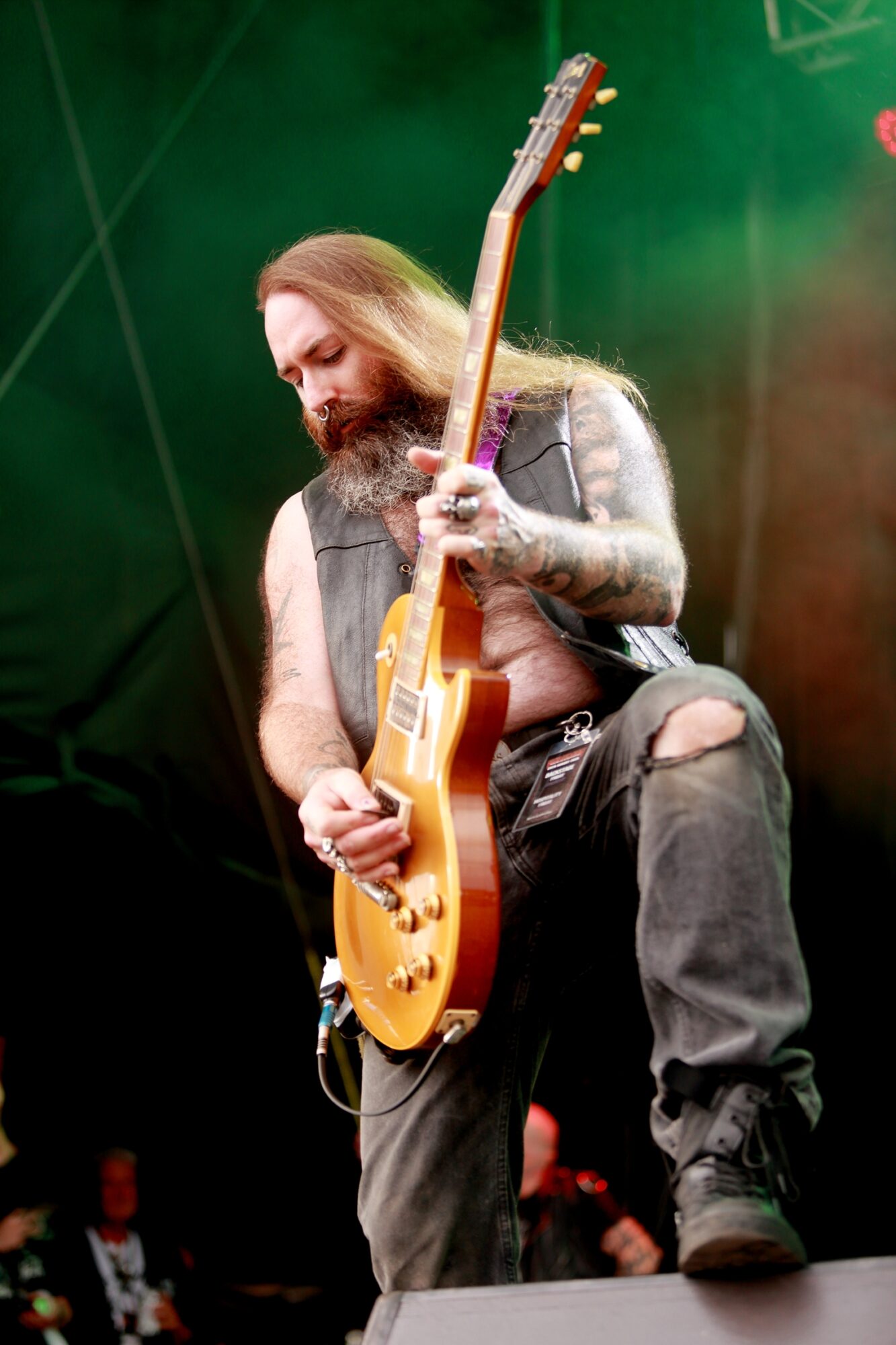
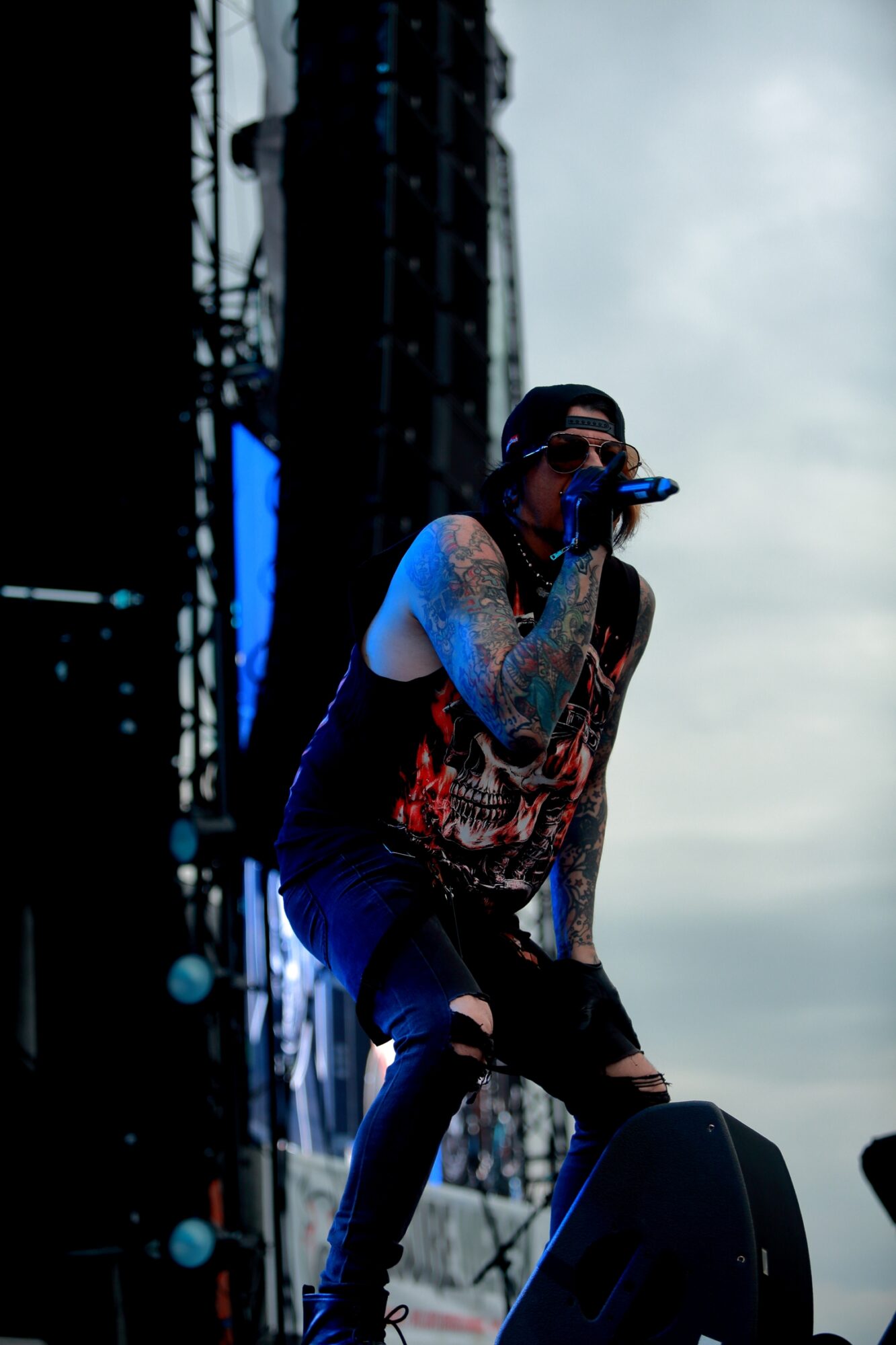
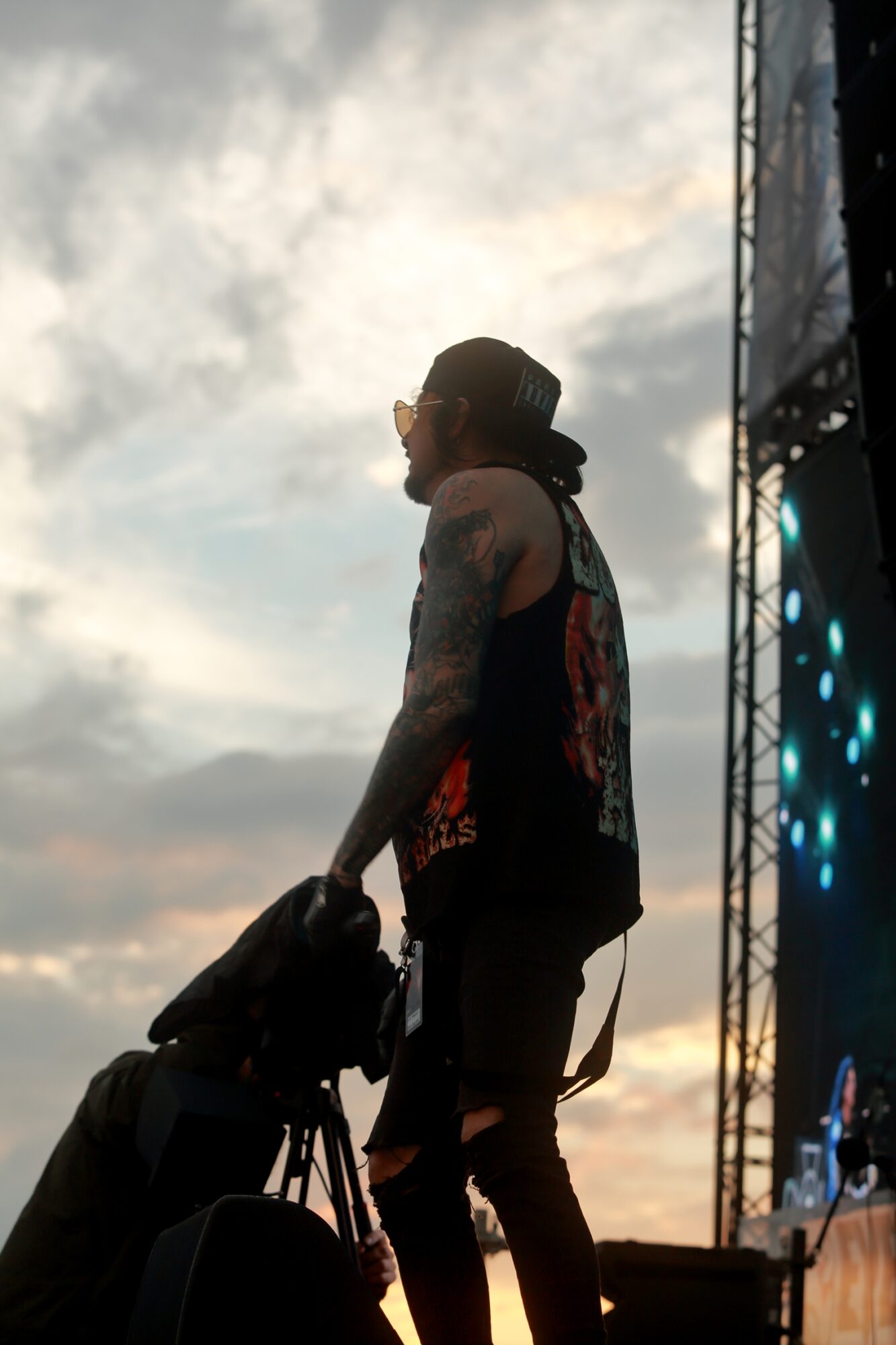
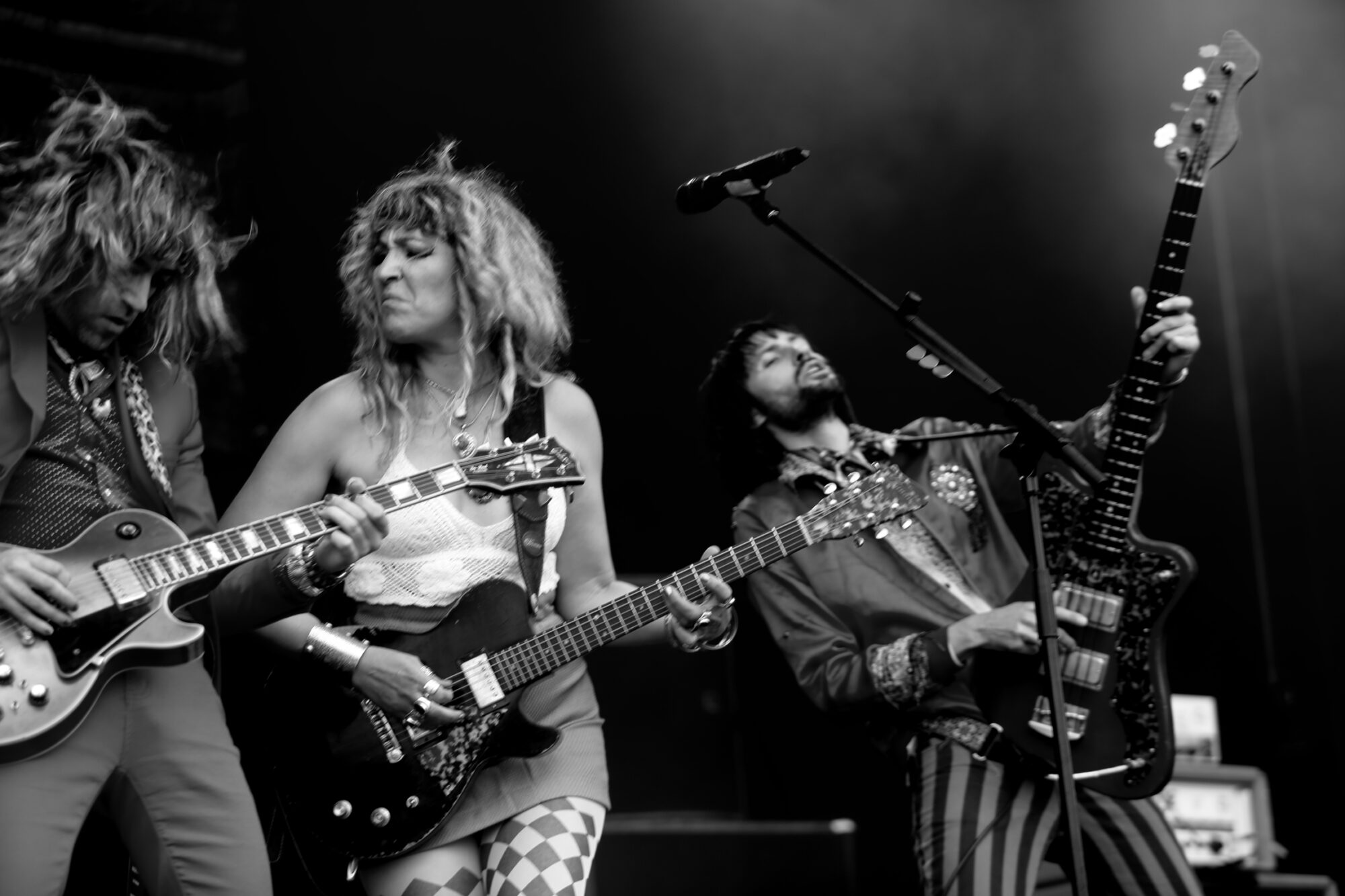
One unexpected highlight this year was spending time around the photographers working in the pit. Festival photographers can sometimes appear intimidating from a distance, but this year’s tog contingent turned out to be an exceptionally friendly and chatty bunch. Between sets there was always time for a conversation, a laugh or a story from another festival somewhere in the country. It added another layer to the sense of community that makes Stonedead such a special event to be part of.
Friday Night Party.
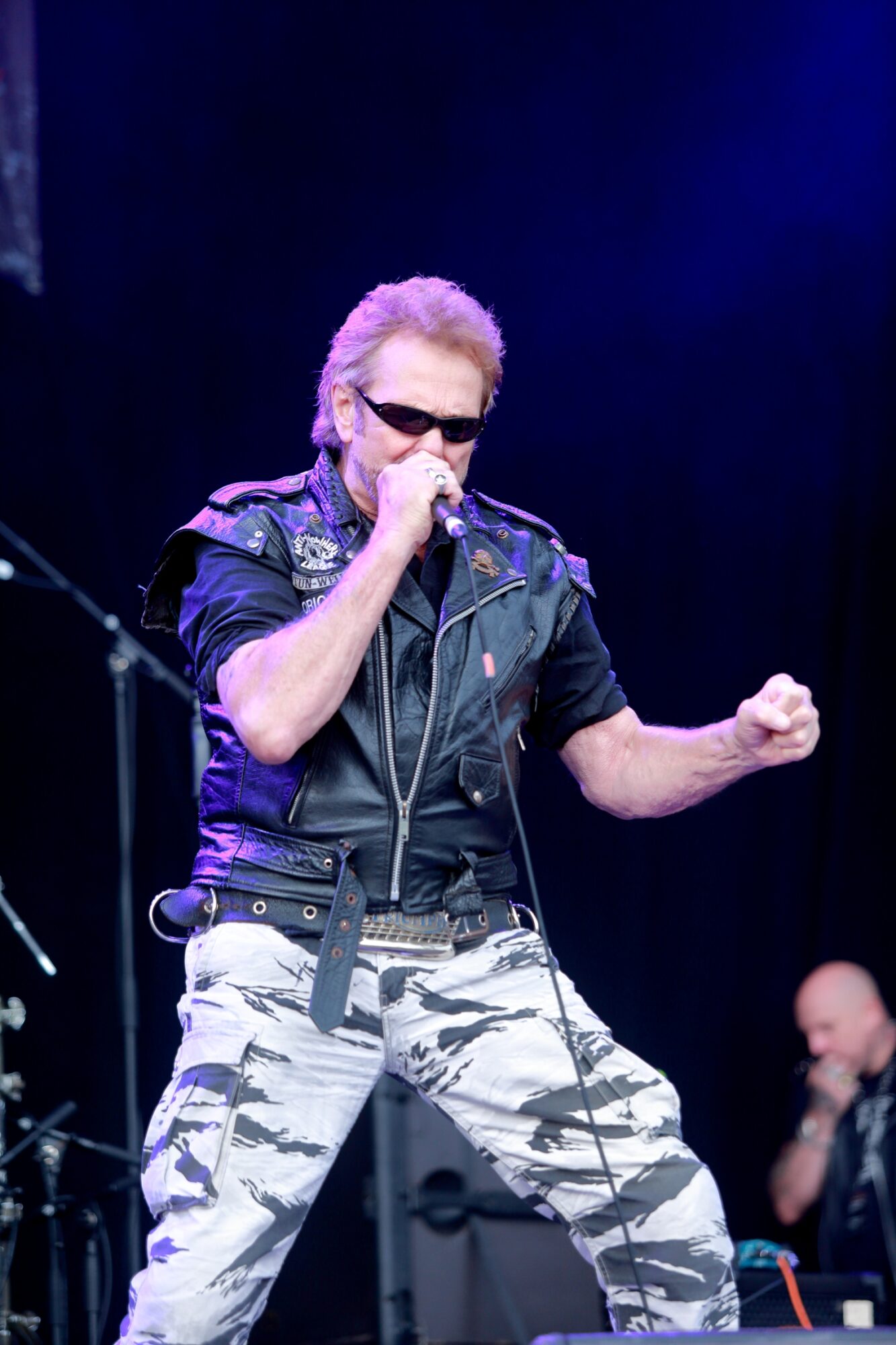
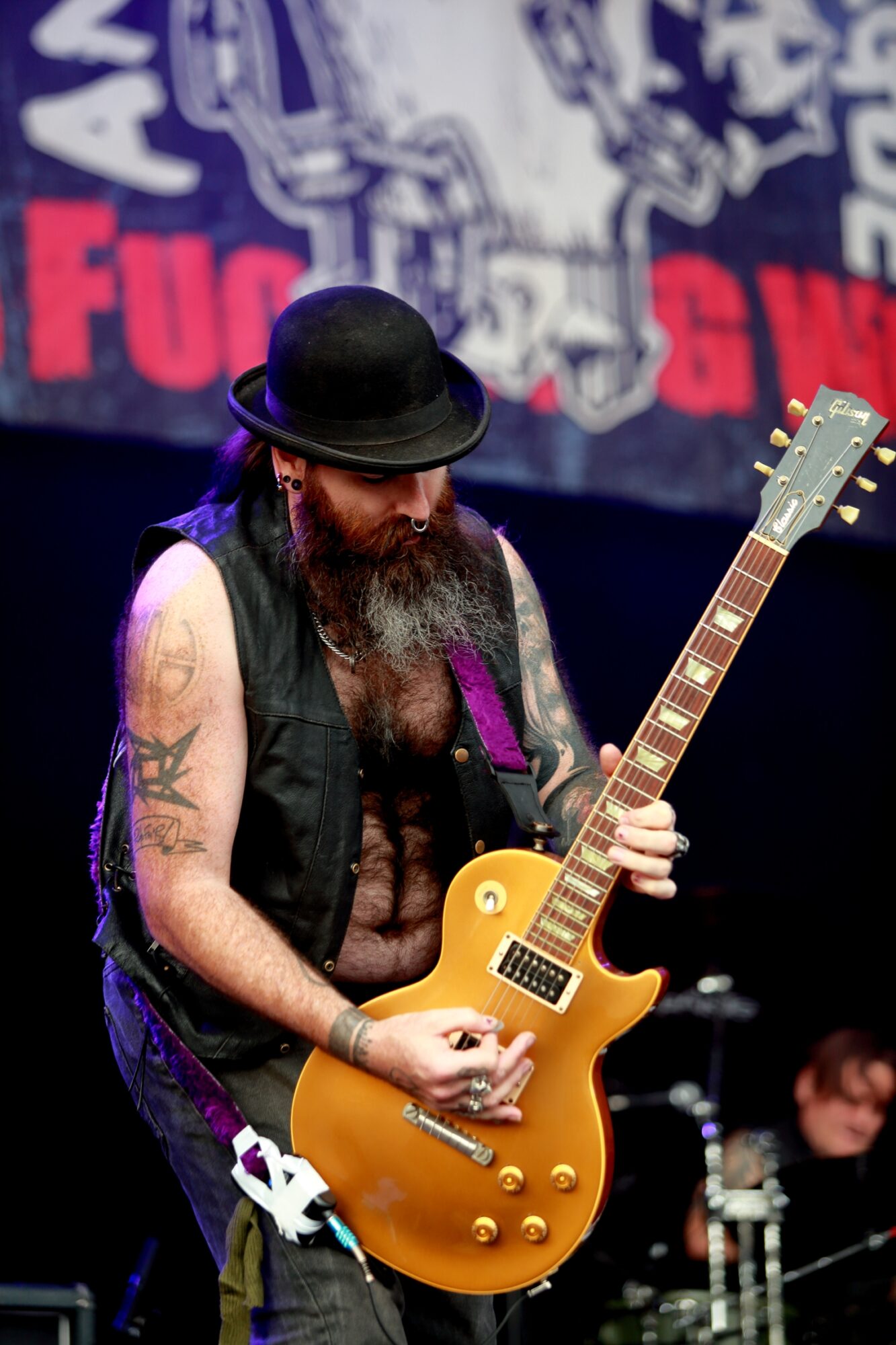
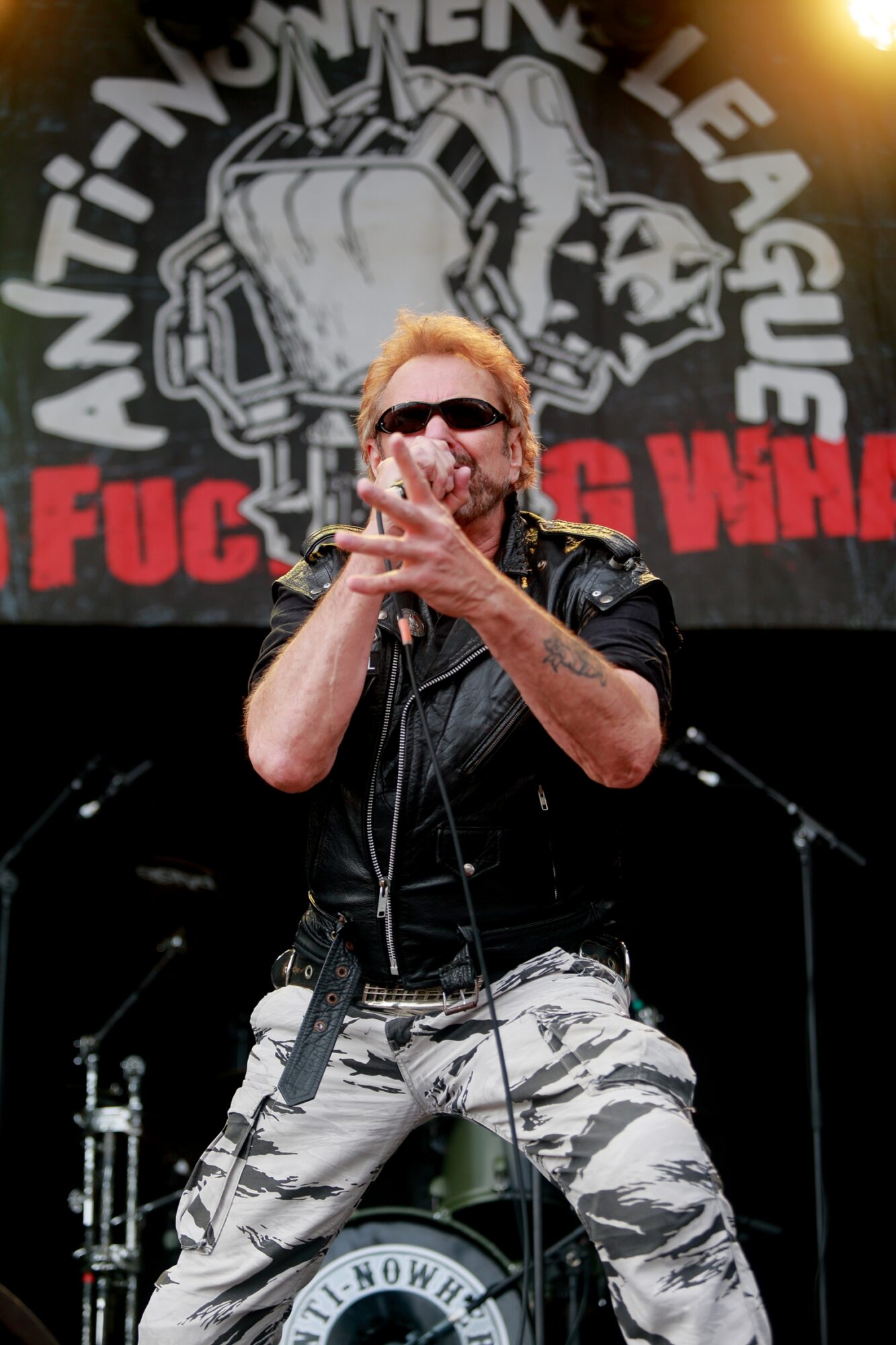
The Friday Night Party could scarcely have started in more fitting fashion. Anti-Nowhere League have never been a band concerned with polish or refinement, and Newark Showground was all the better for it. The punk veterans arrived carrying the kind of attitude that cannot be manufactured and certainly cannot be learned. Their set felt like controlled chaos; ragged around the edges, gloriously loud and completely unapologetic.

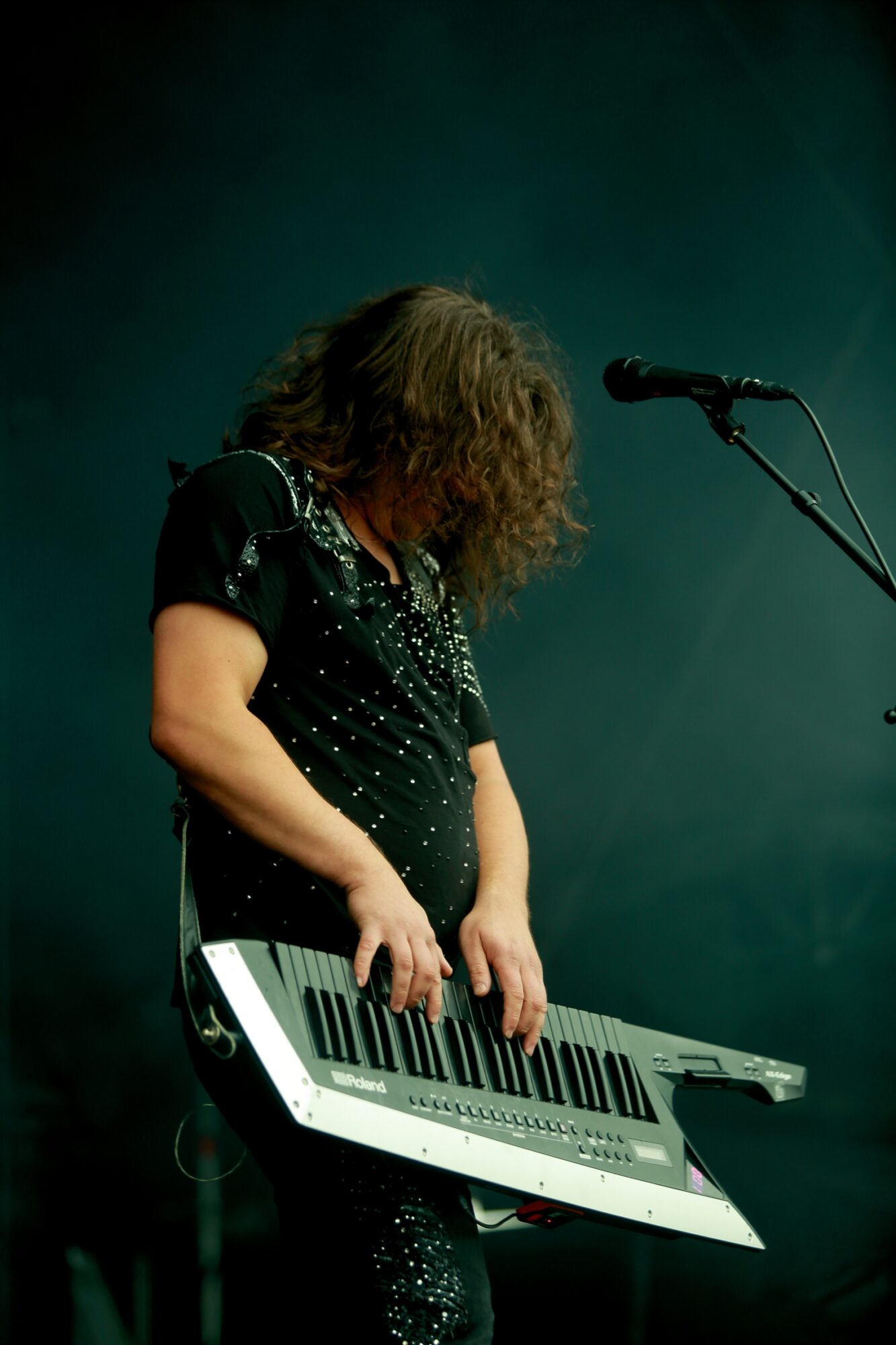
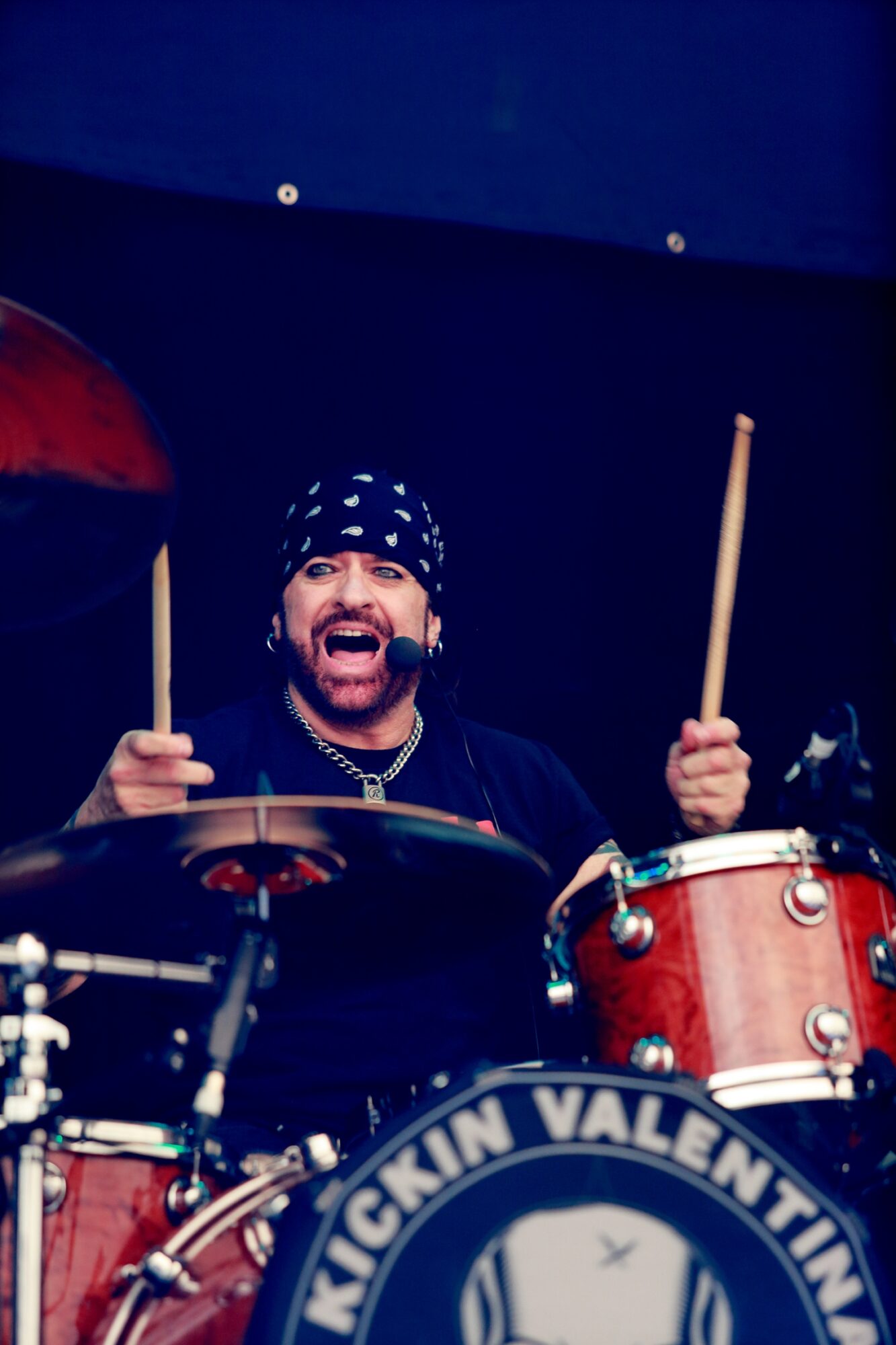
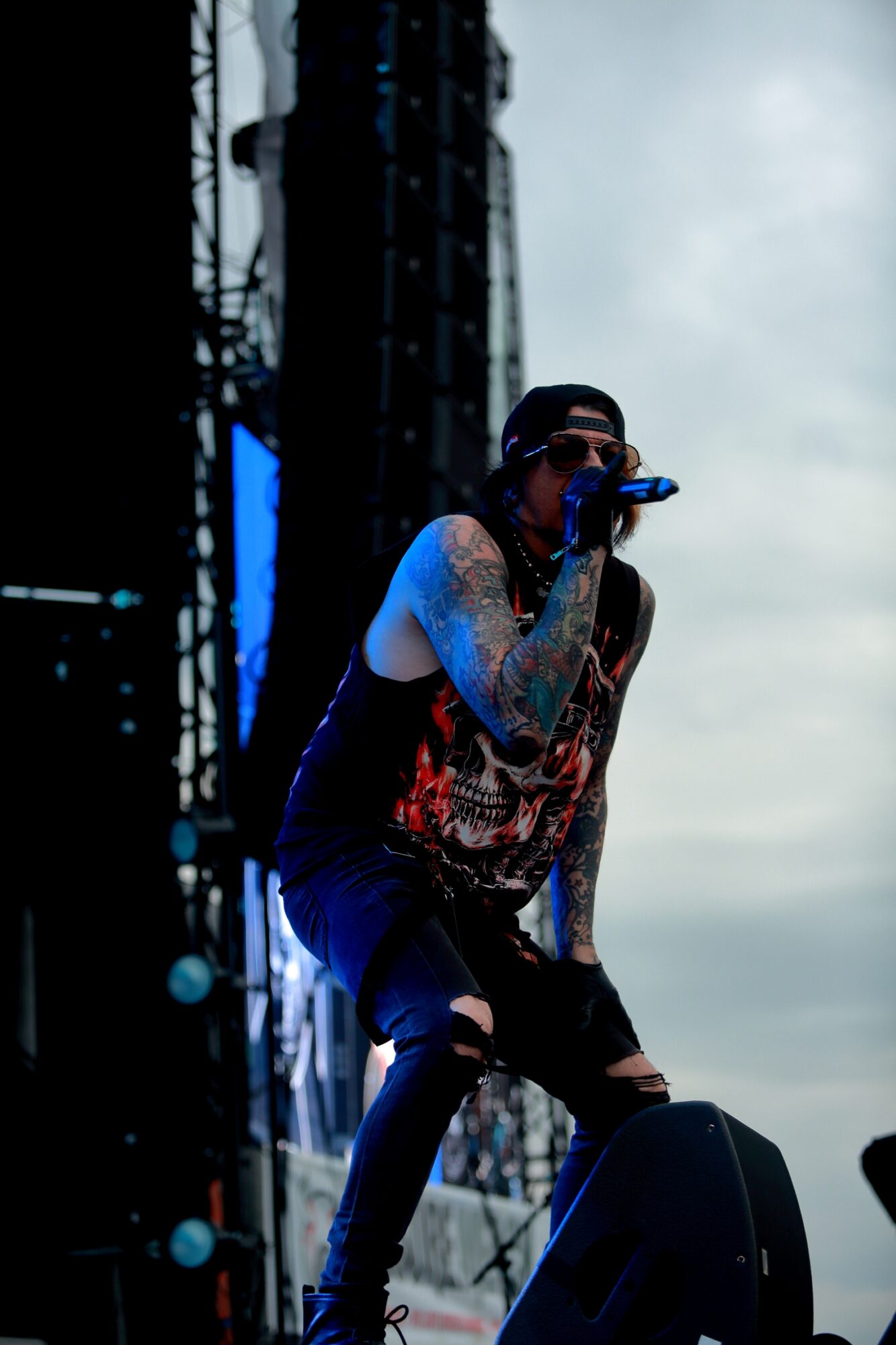
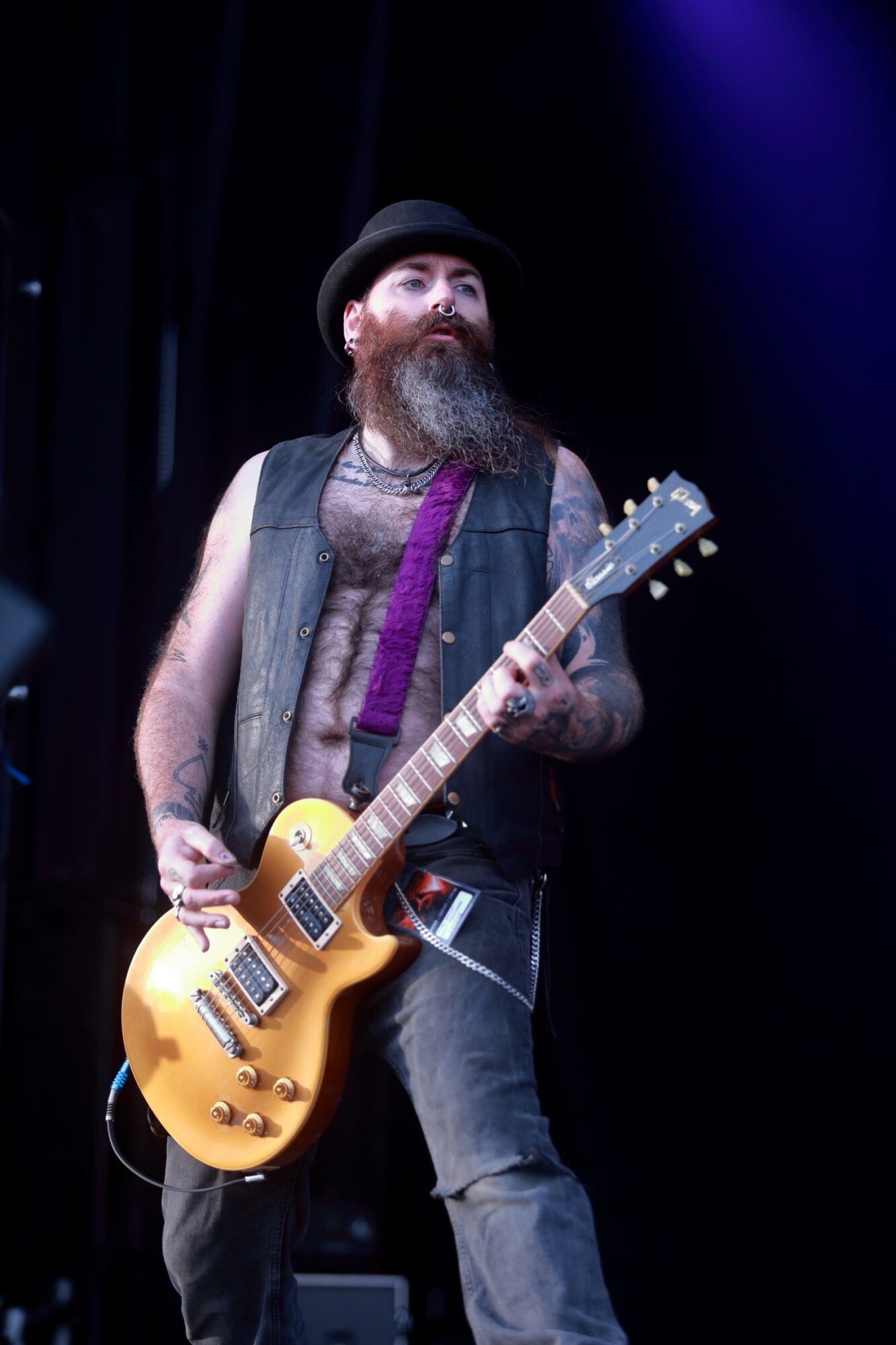
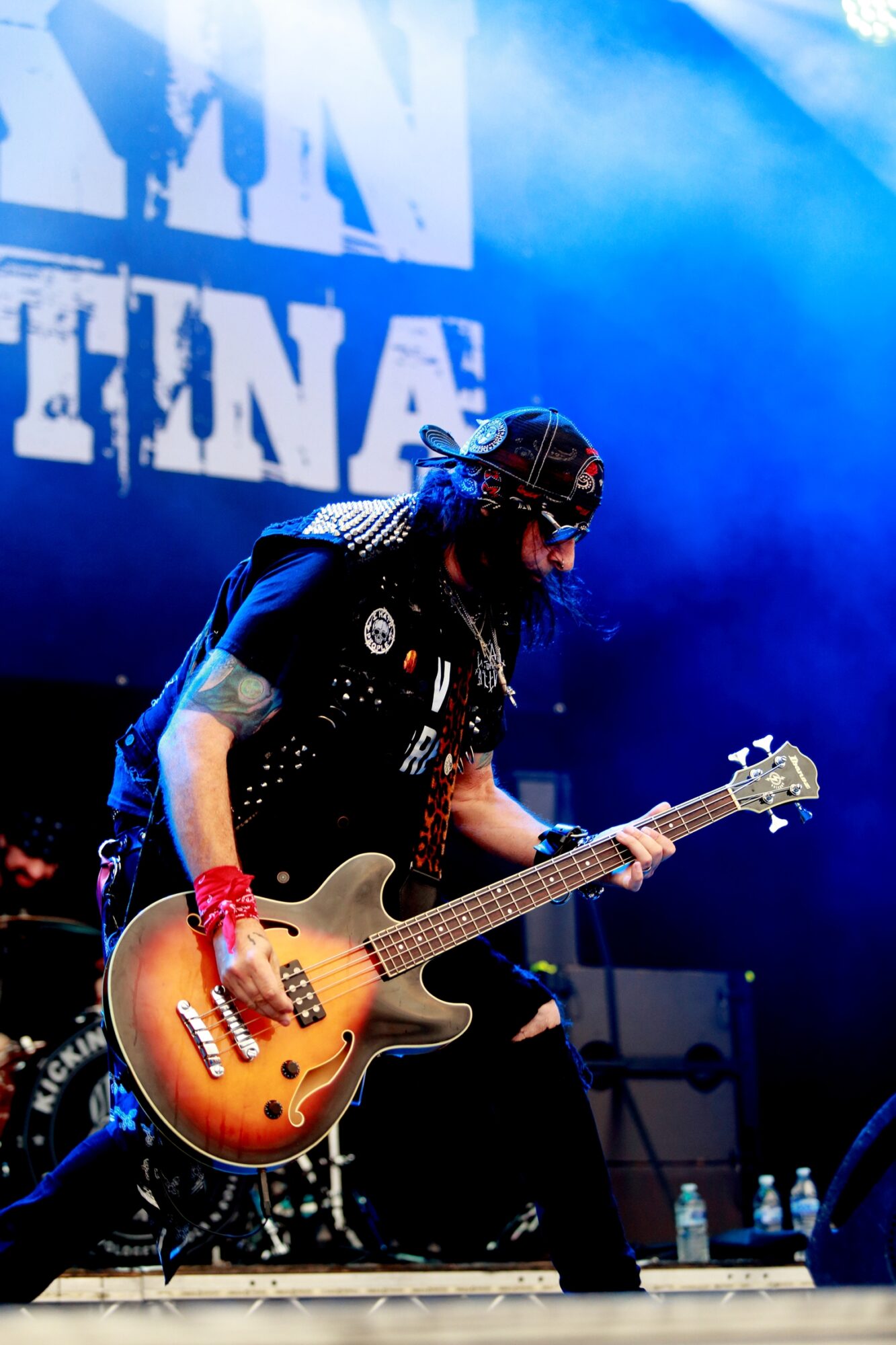
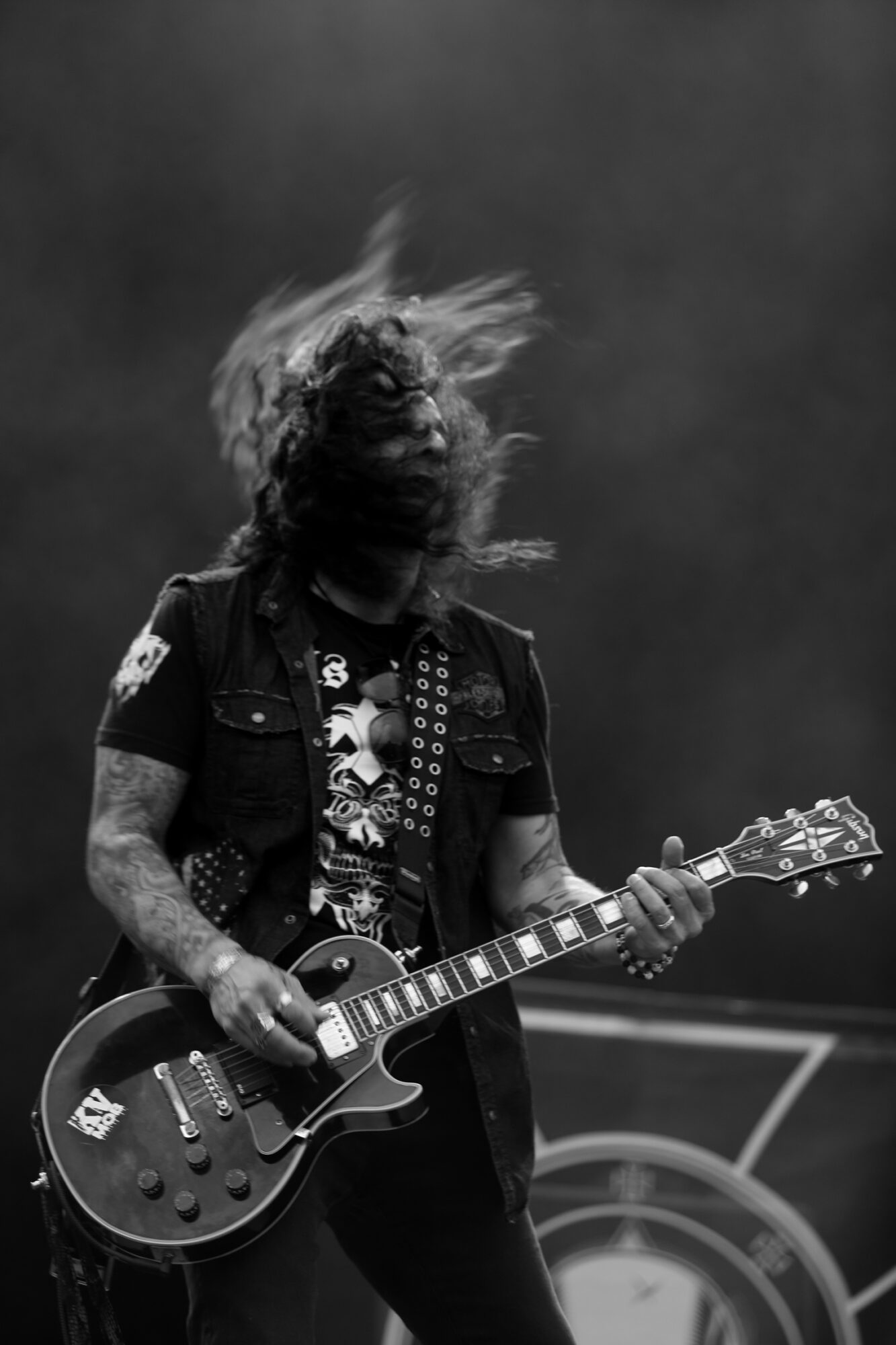
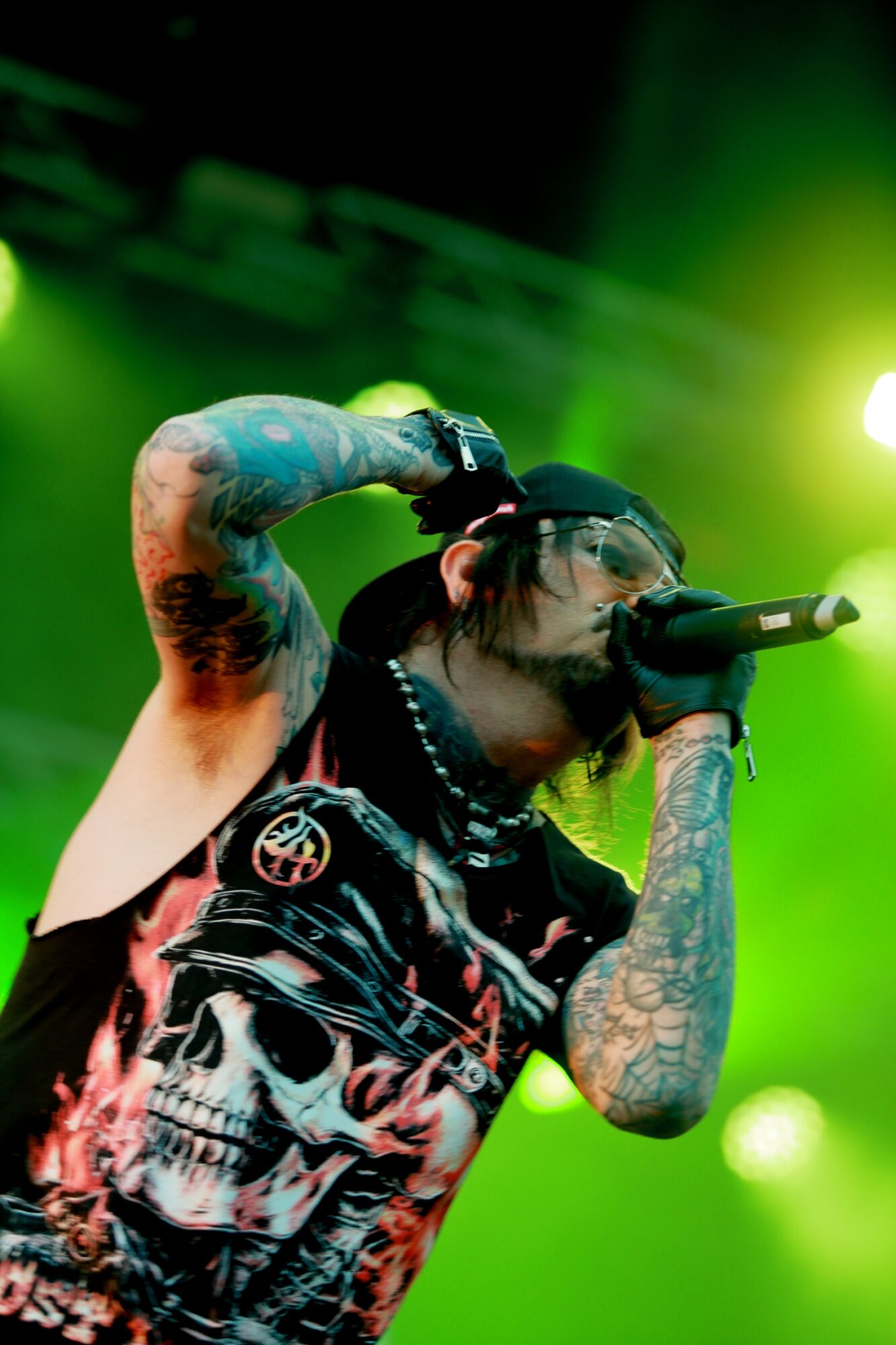
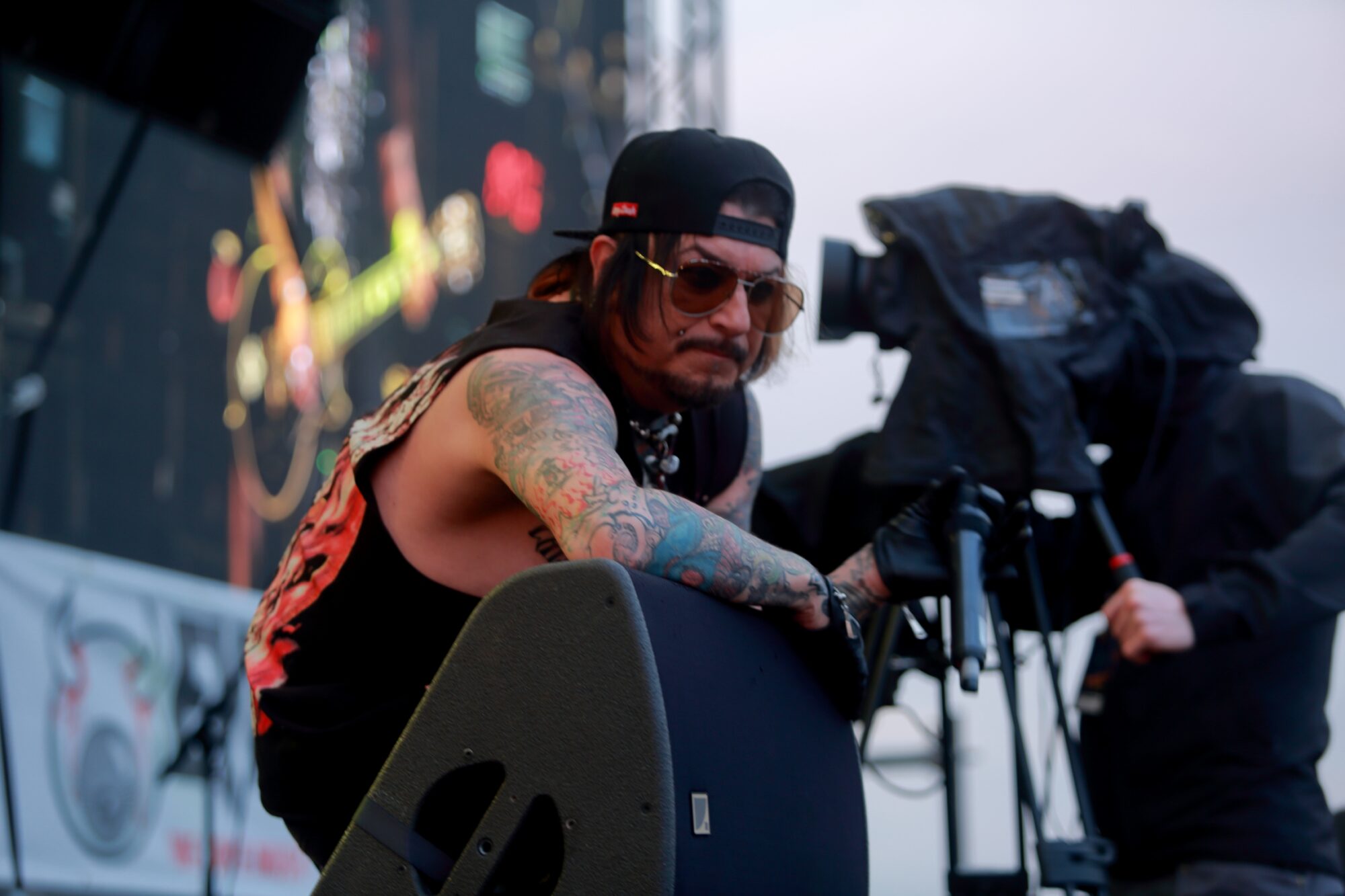
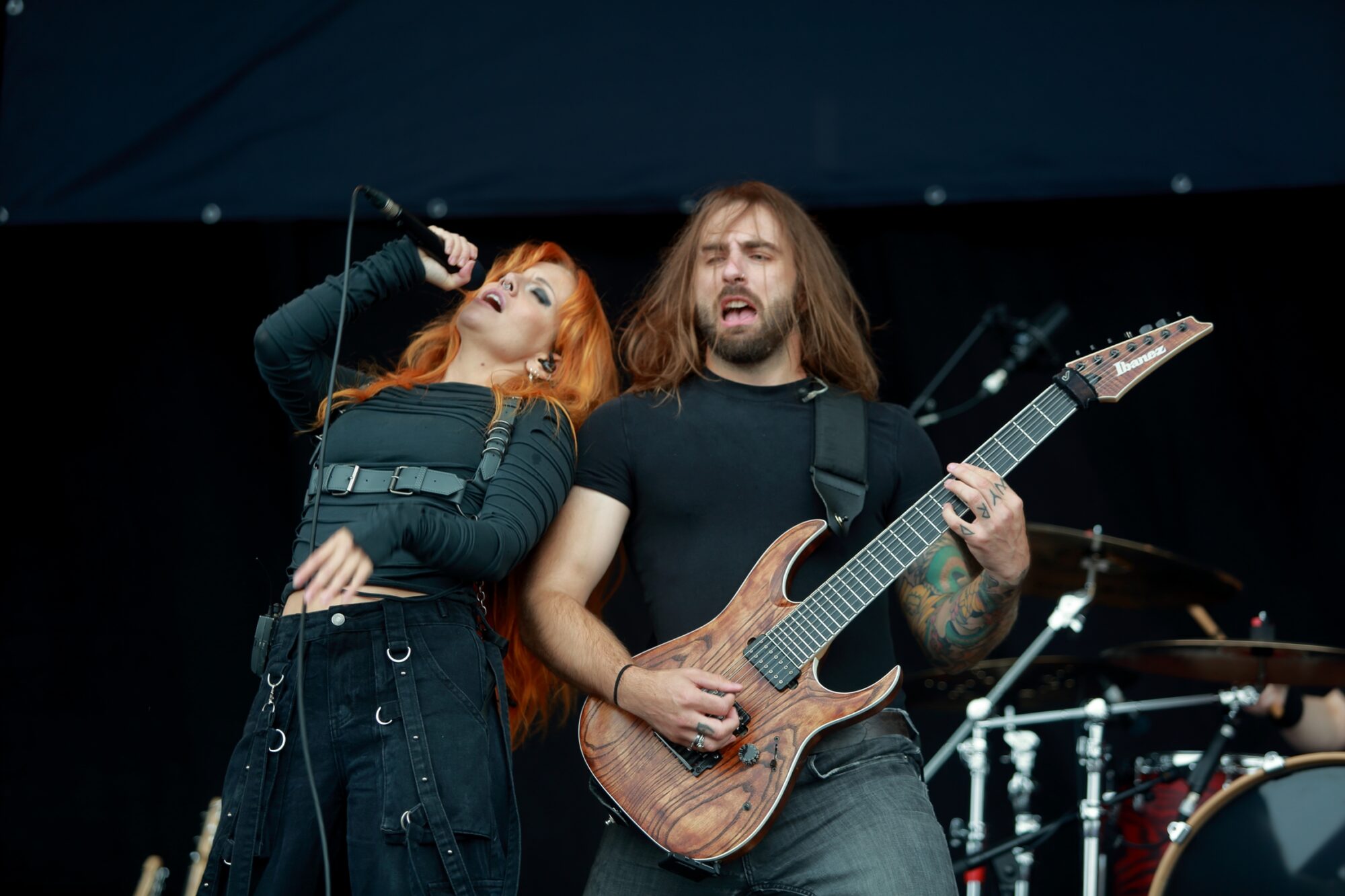
If Anti-Nowhere League opened the party, Kickin’ Valentina made sure it stayed in full flow. The Atlanta quartet delivered a set overflowing with big hooks, heavyweight riffs and the sort of infectious rock and roll spirit that’s impossible to resist. There were no elaborate gimmicks or unnecessary distractions, just four musicians enjoying themselves and encouraging everyone in front of the stage to do exactly the same.


There are nostalgia acts, and then there are bands that remind you exactly why the music became legendary in the first place. Kings of Thrash delivered an absolute masterclass in old-school metal, unleashing wave after wave of razor-sharp riffs with an intensity that never relented.
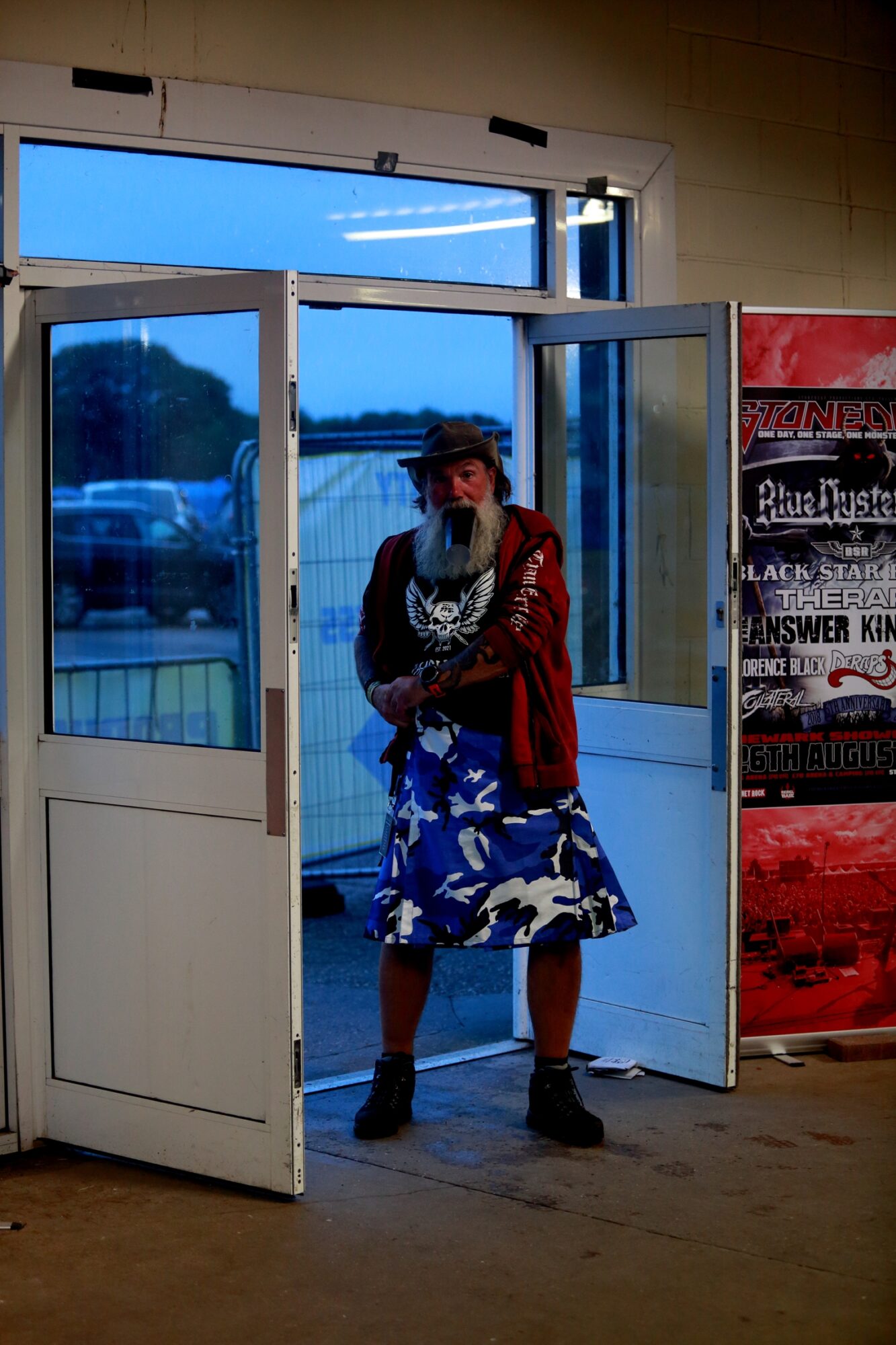
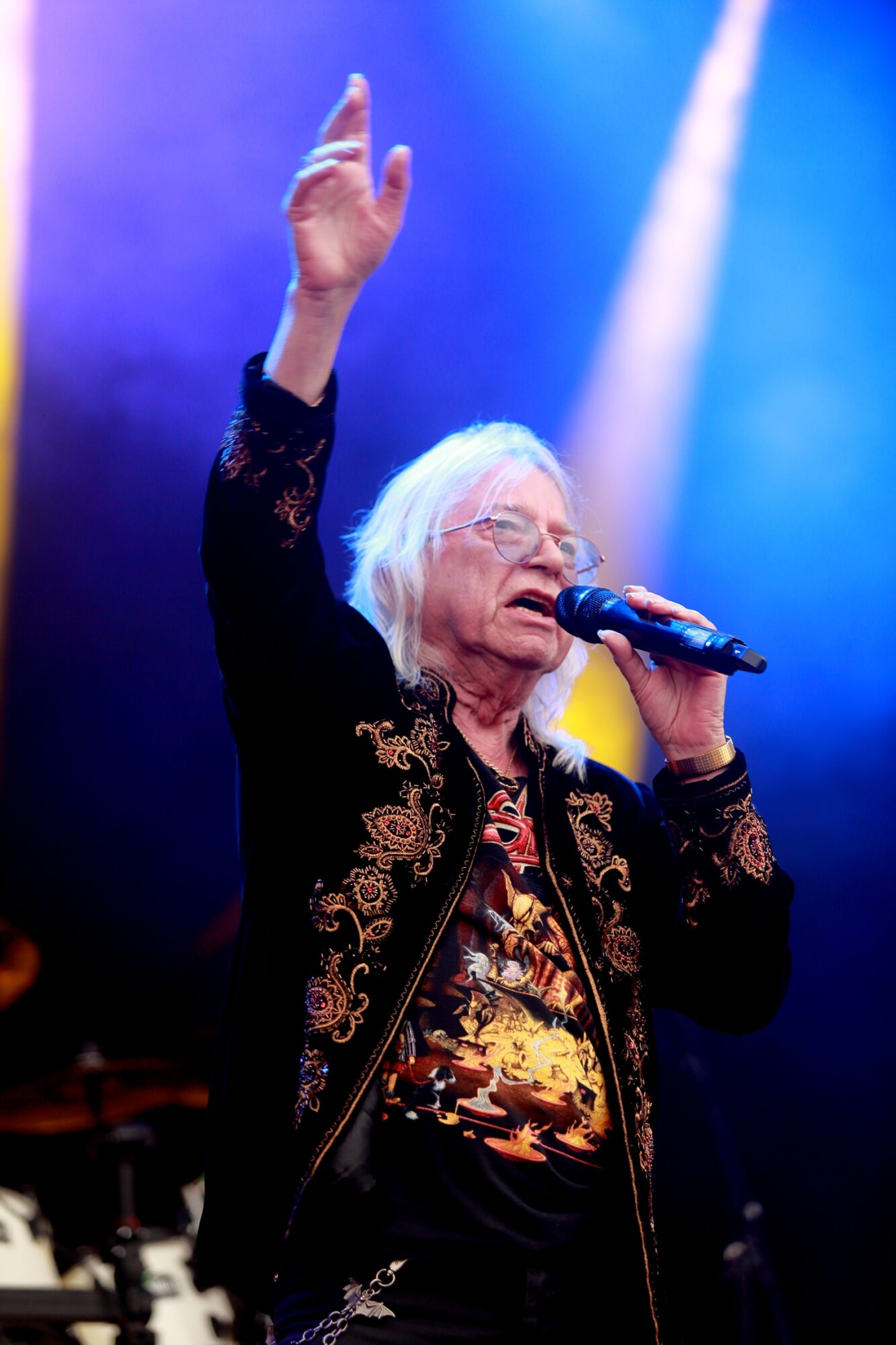
Saturday: One Stage, One Audience, One Monster Rock Show
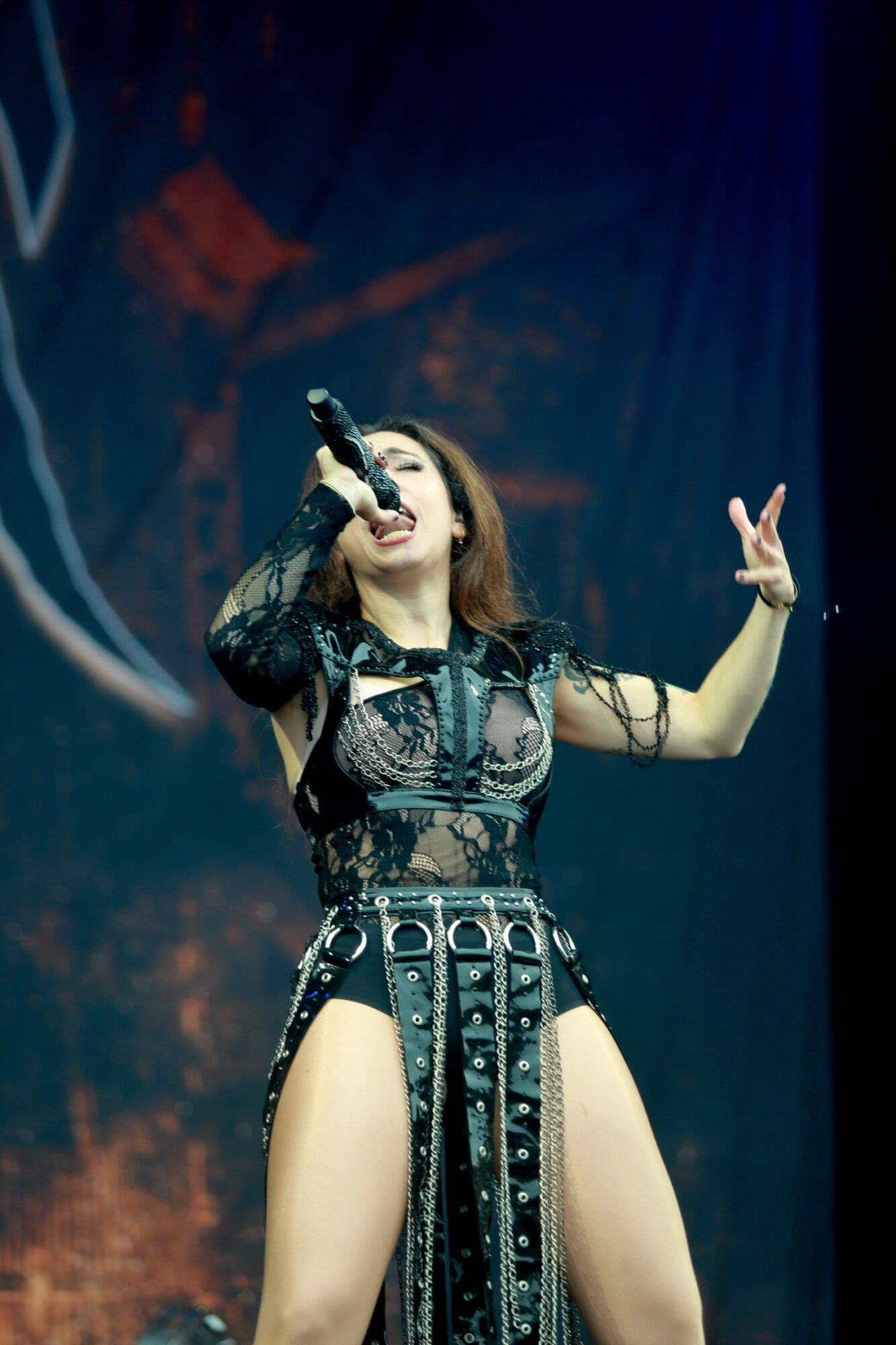
Opening a festival is never an easy assignment. As gates continue to admit the latest arrivals and many attendees are still finding their bearings, the first band often faces the challenge of winning over a crowd that hasn’t quite settled into festival mode. Aethoria showed little concern for any of that. From the outset, they attacked their set with confidence and enthusiasm, ensuring that those who had made an early start were rewarded. Their appearance served as a reminder of one of Stonedead’s greatest strengths, which for me is its willingness to champion emerging talent alongside established names. By the time they left the stage, the arena was noticeably fuller and the day felt properly underway.


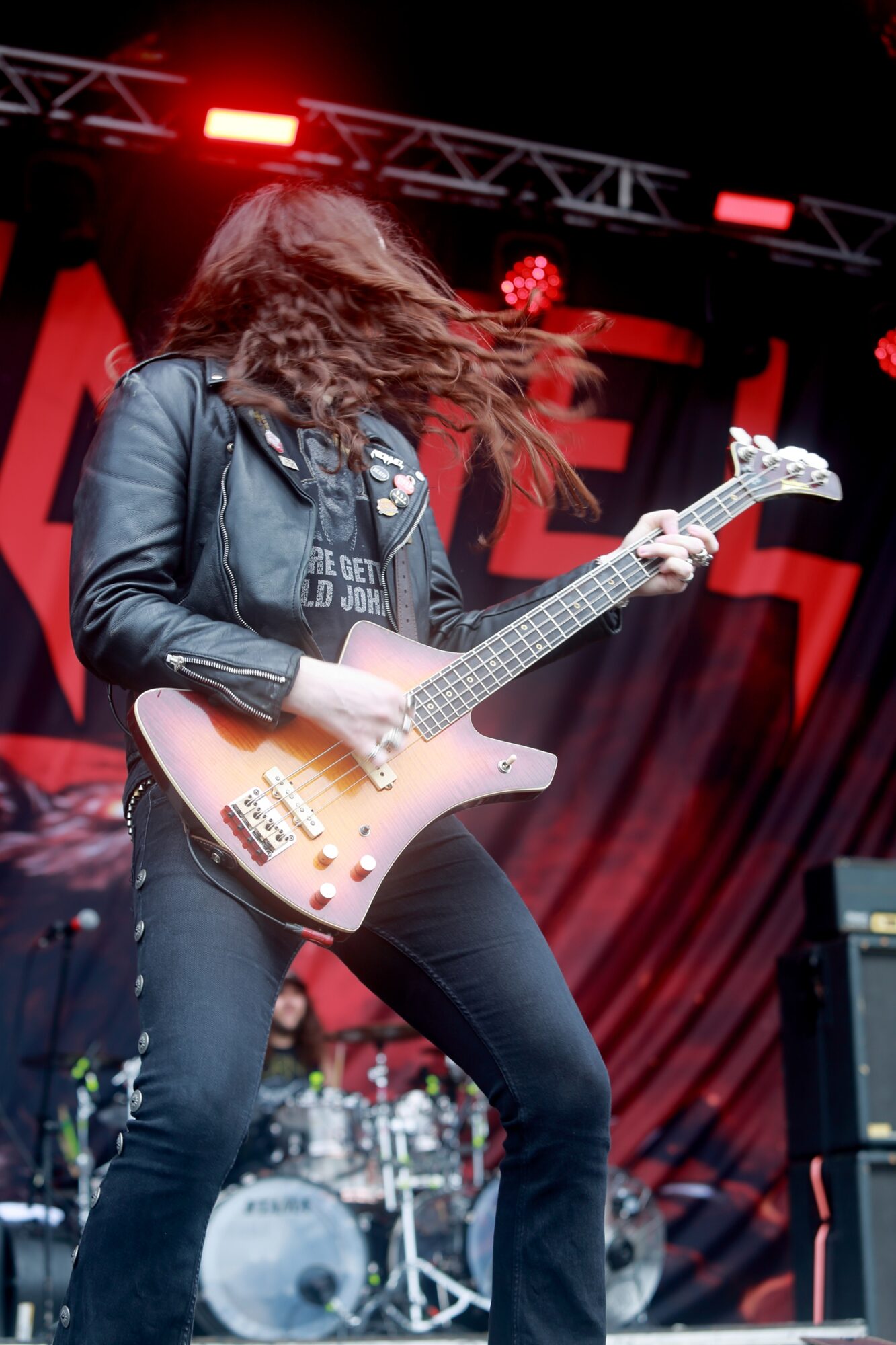
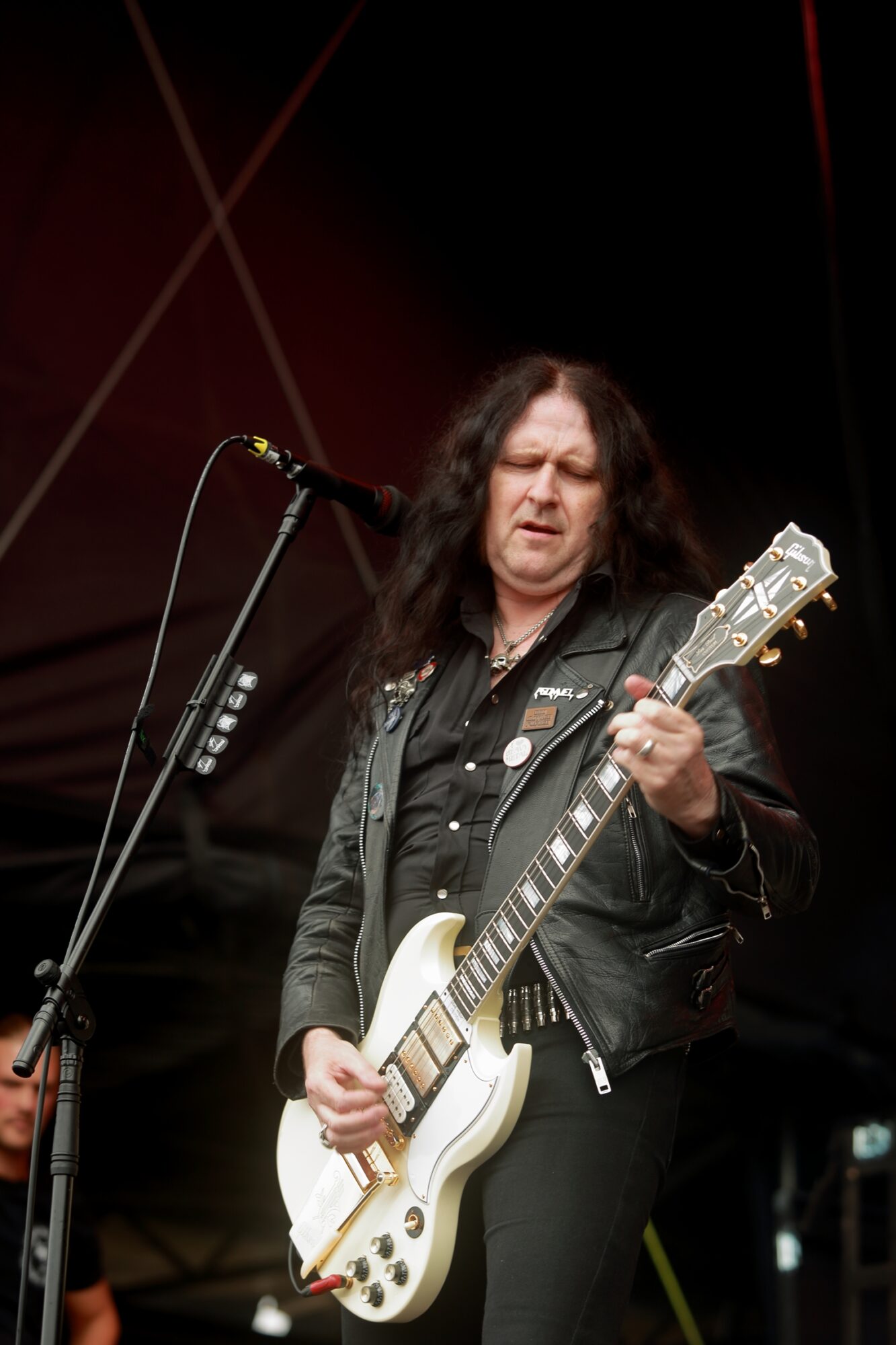
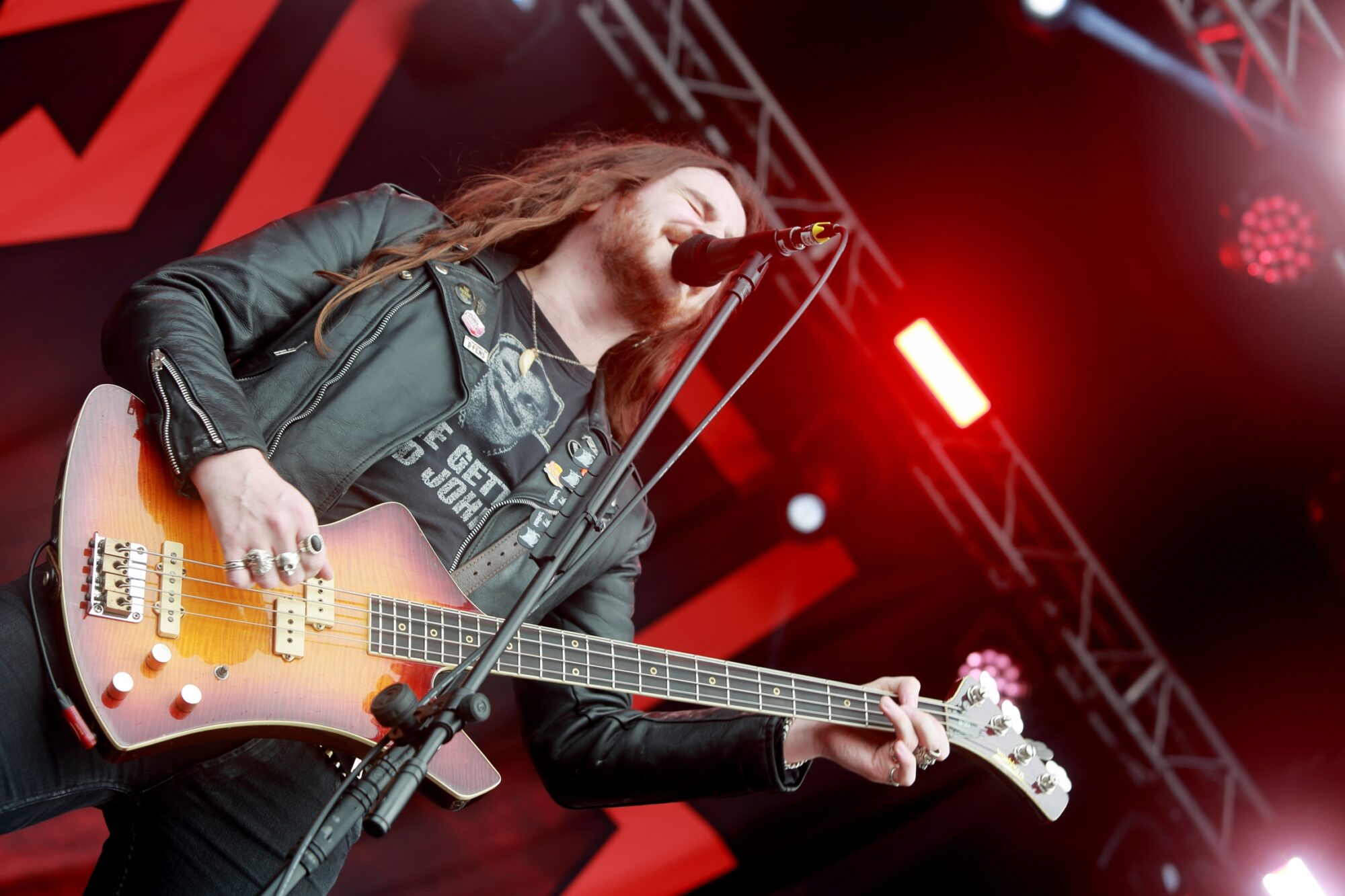
If Aethoria got the wheels turning, Asomvel firmly put their foot on the accelerator. Their performance delivered exactly the sort of no-frills heavy metal that has always found a home at festivals like Stonedead. Built around pounding rhythms, driving bass lines and a relentless sense of momentum, their set felt like a throwback to an era when rock and metal were gloriously uncomplicated. There was little interest in subtlety. This was all about volume, energy and good old-fashioned headbanging, and the audience responded accordingly.

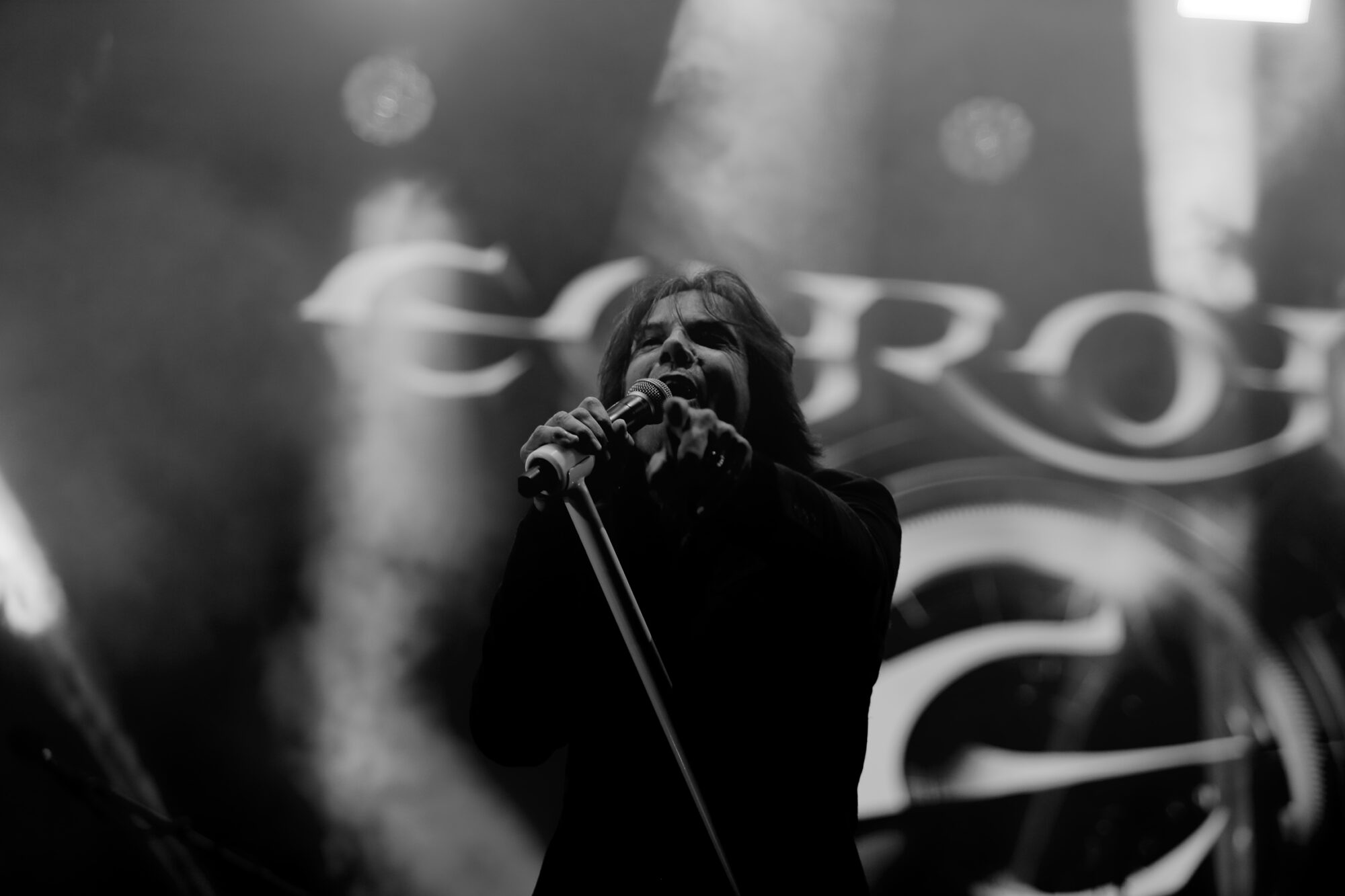
Crobot brought an entirely different flavour to the afternoon. Where the previous bands had relied on sheer force, Crobot’s strength lay in their groove. Their songs rolled effortlessly across the arena, combining heavyweight riffs with an infectious sense of fun that drew people steadily towards the stage. The Pennsylvania outfit seemed completely at home on the Stonedead bill. Their performance struck an ideal balance between power and accessibility, proving that a band doesn’t need to play flat-out all the time to command attention.
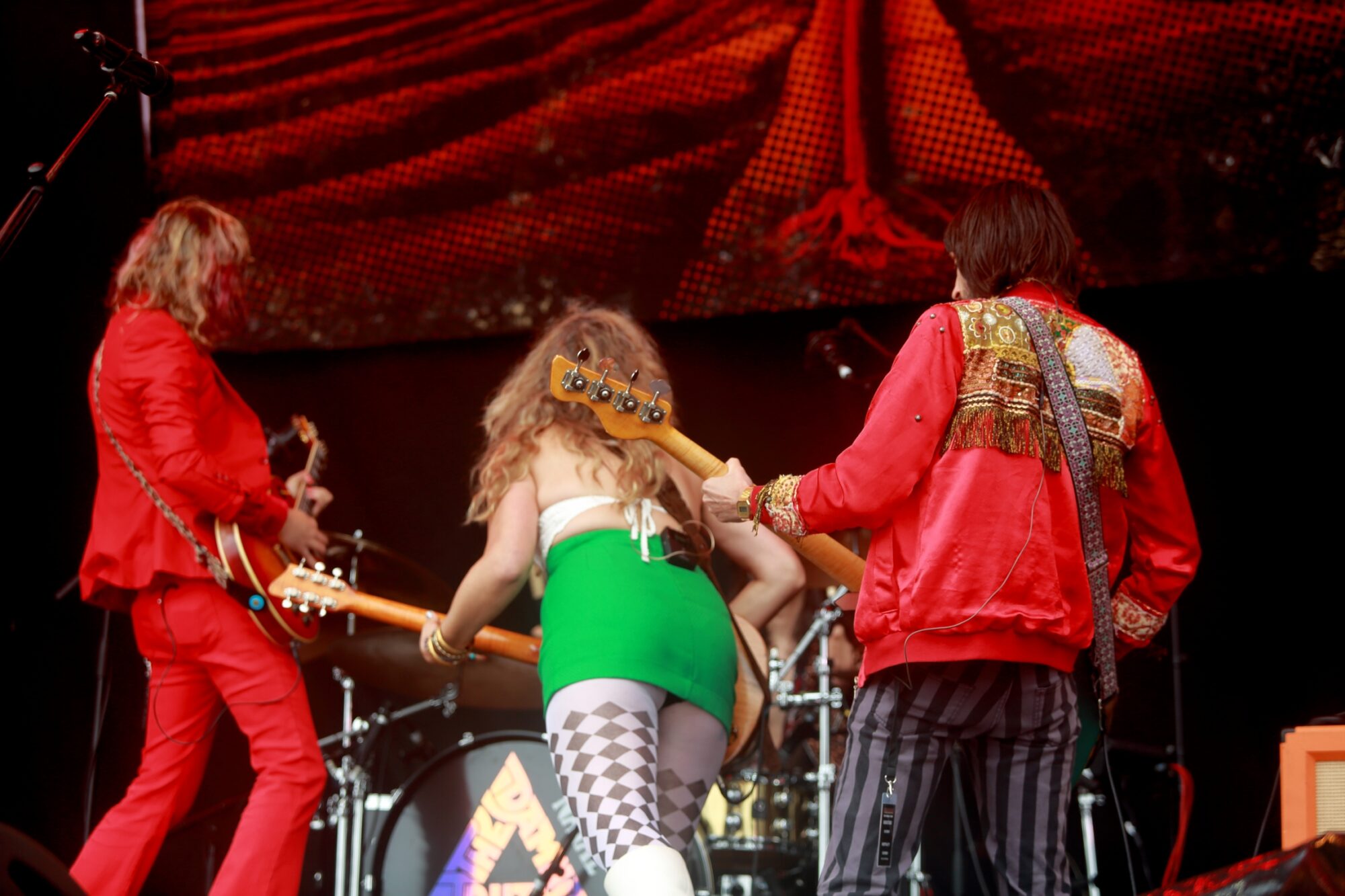
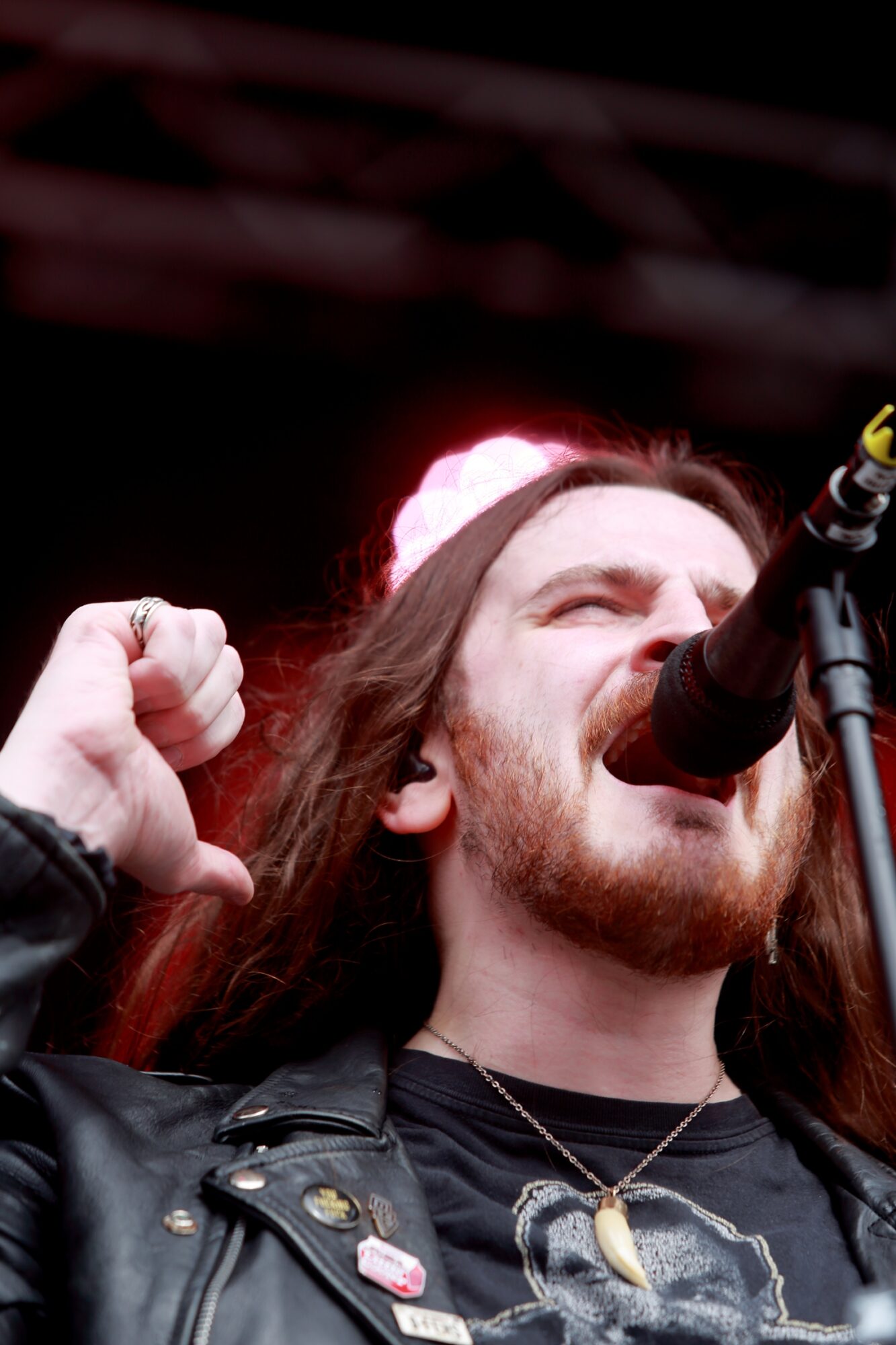
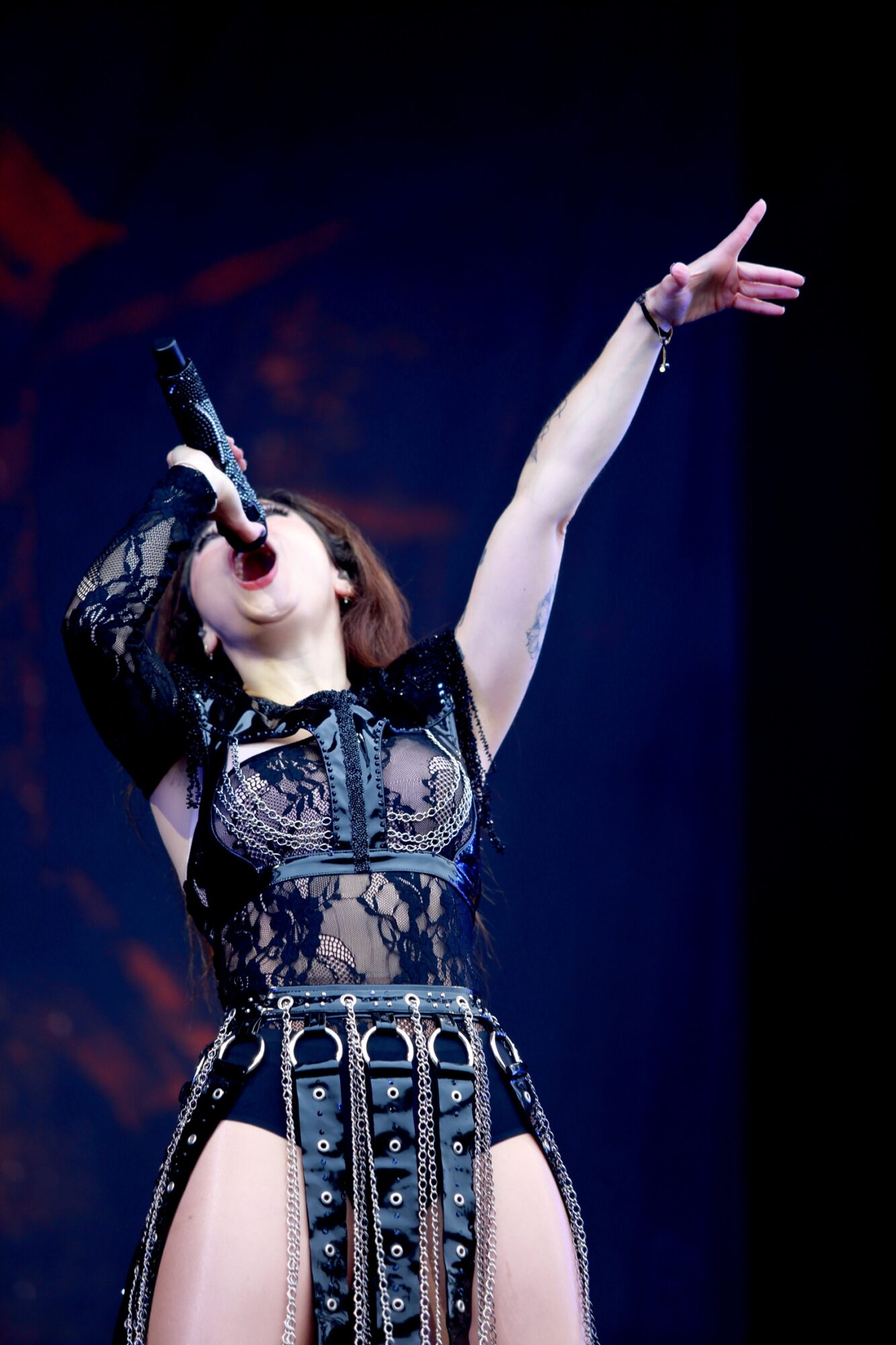
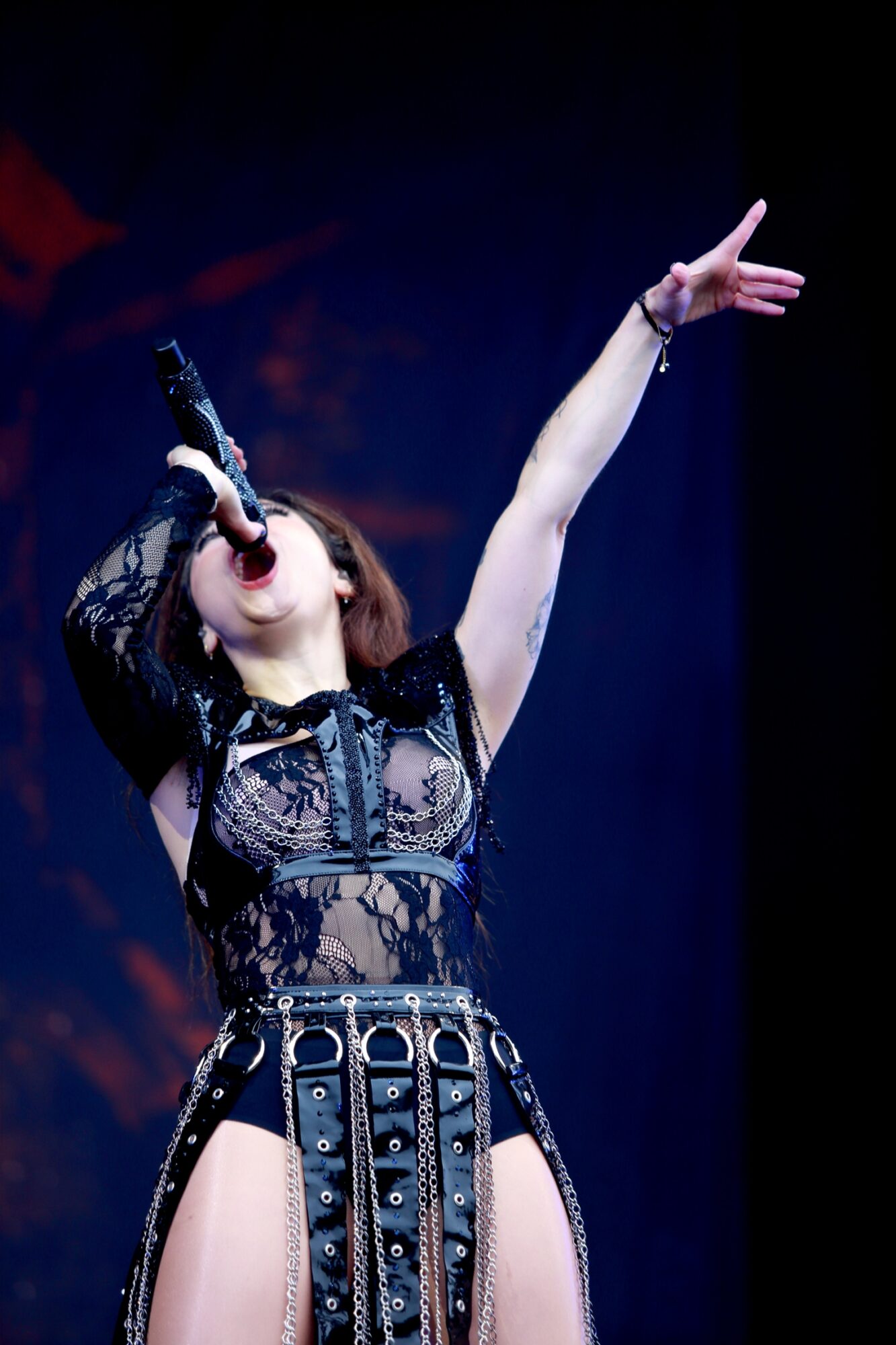
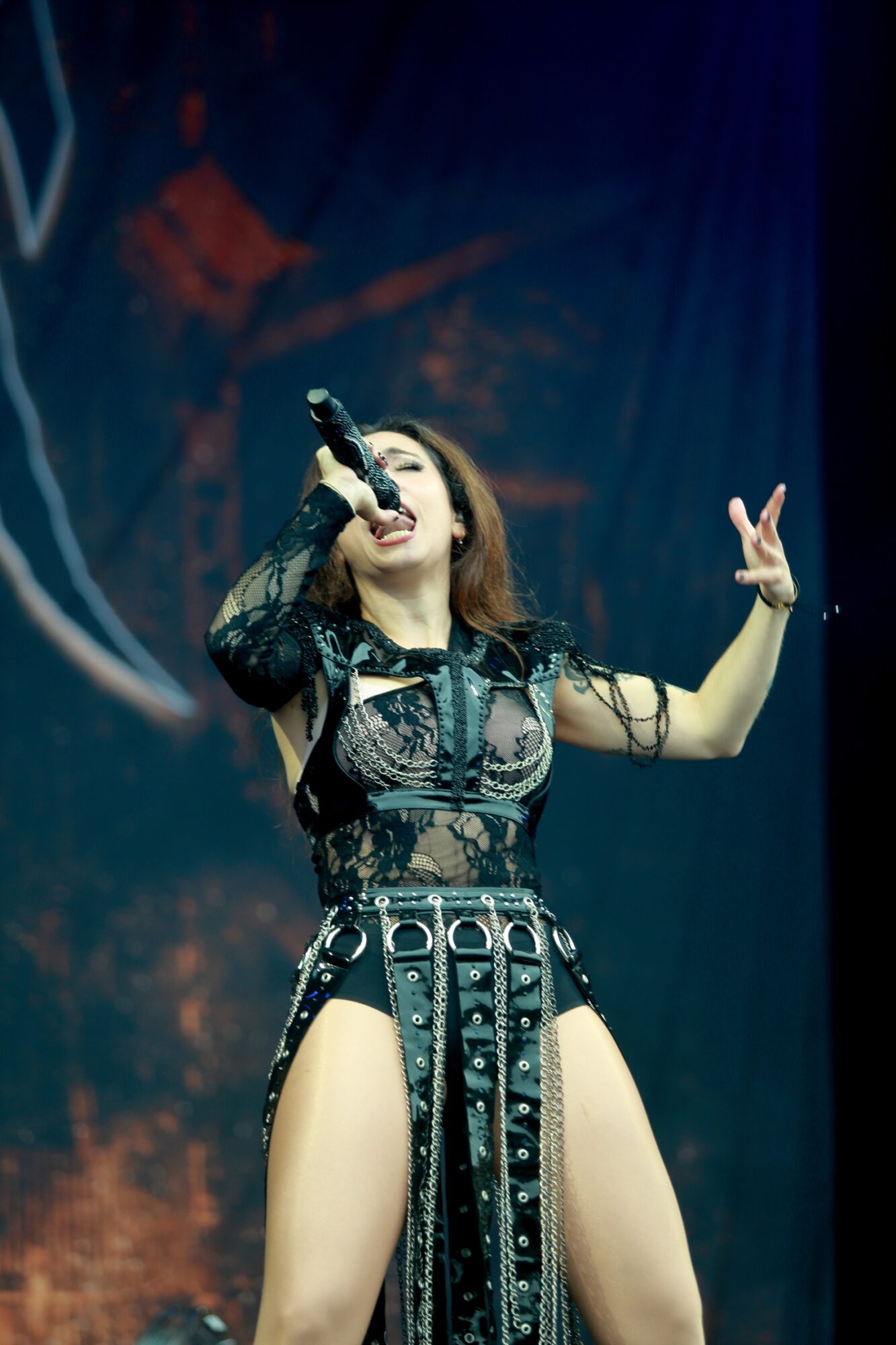
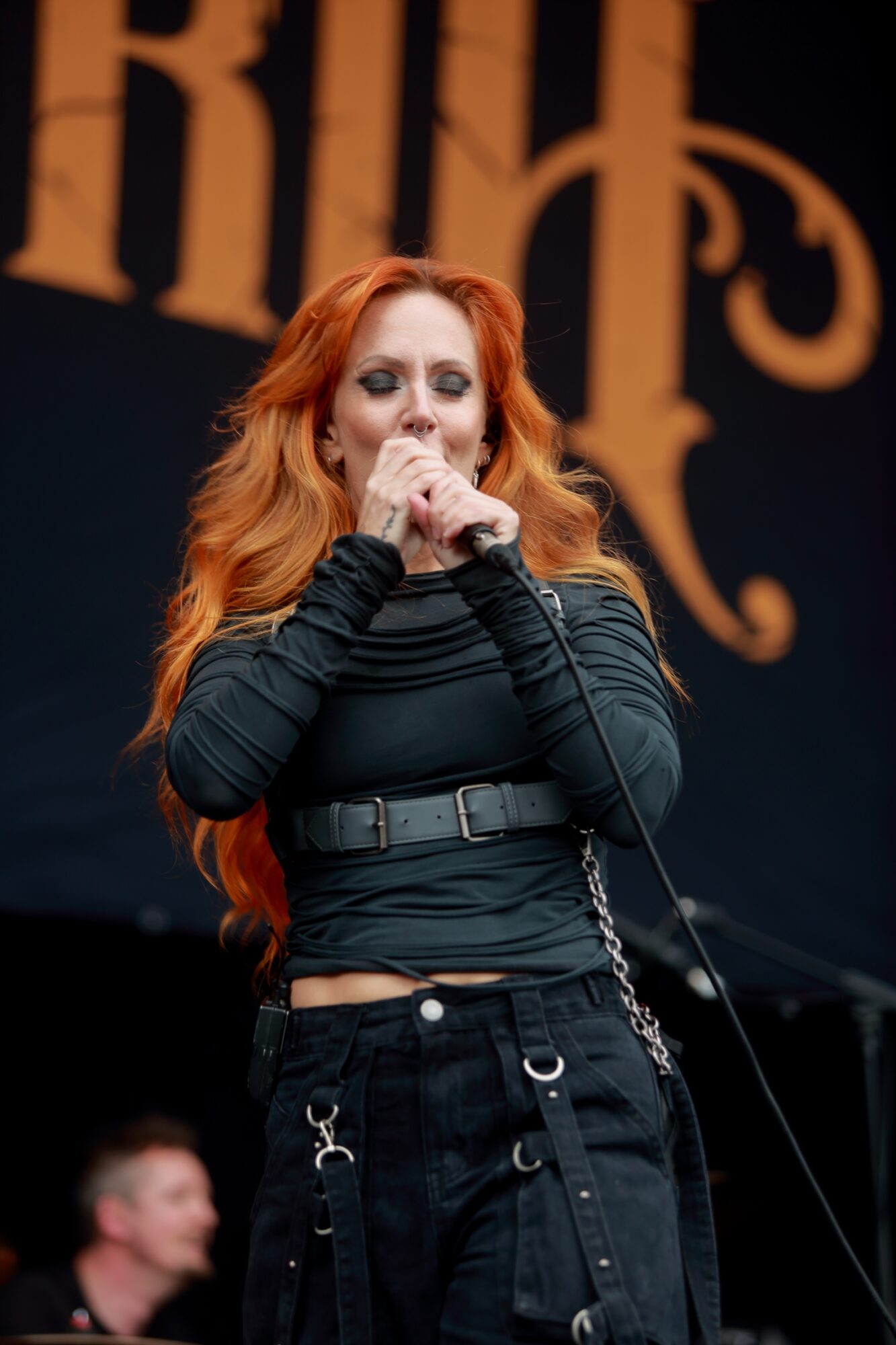
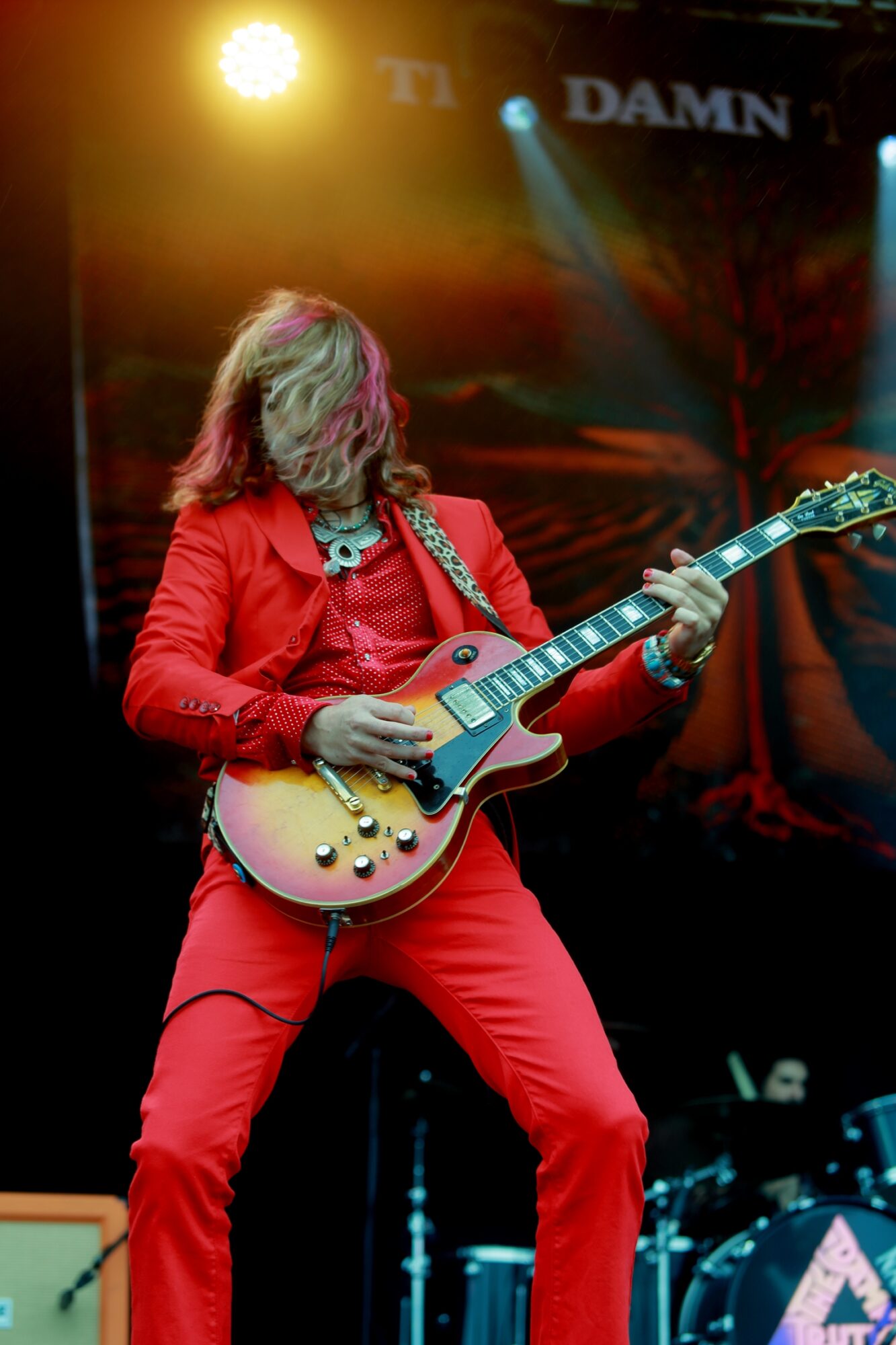
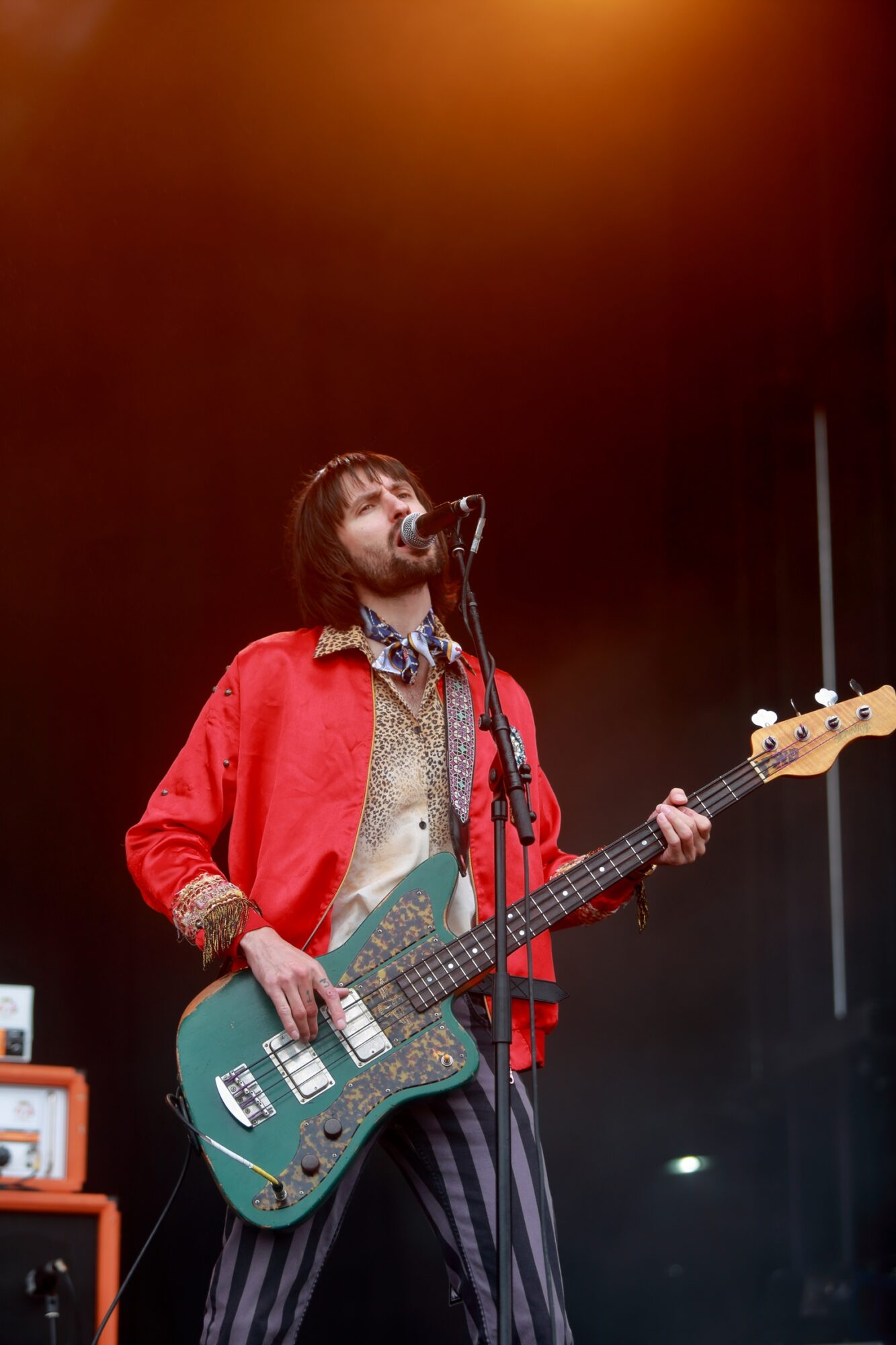
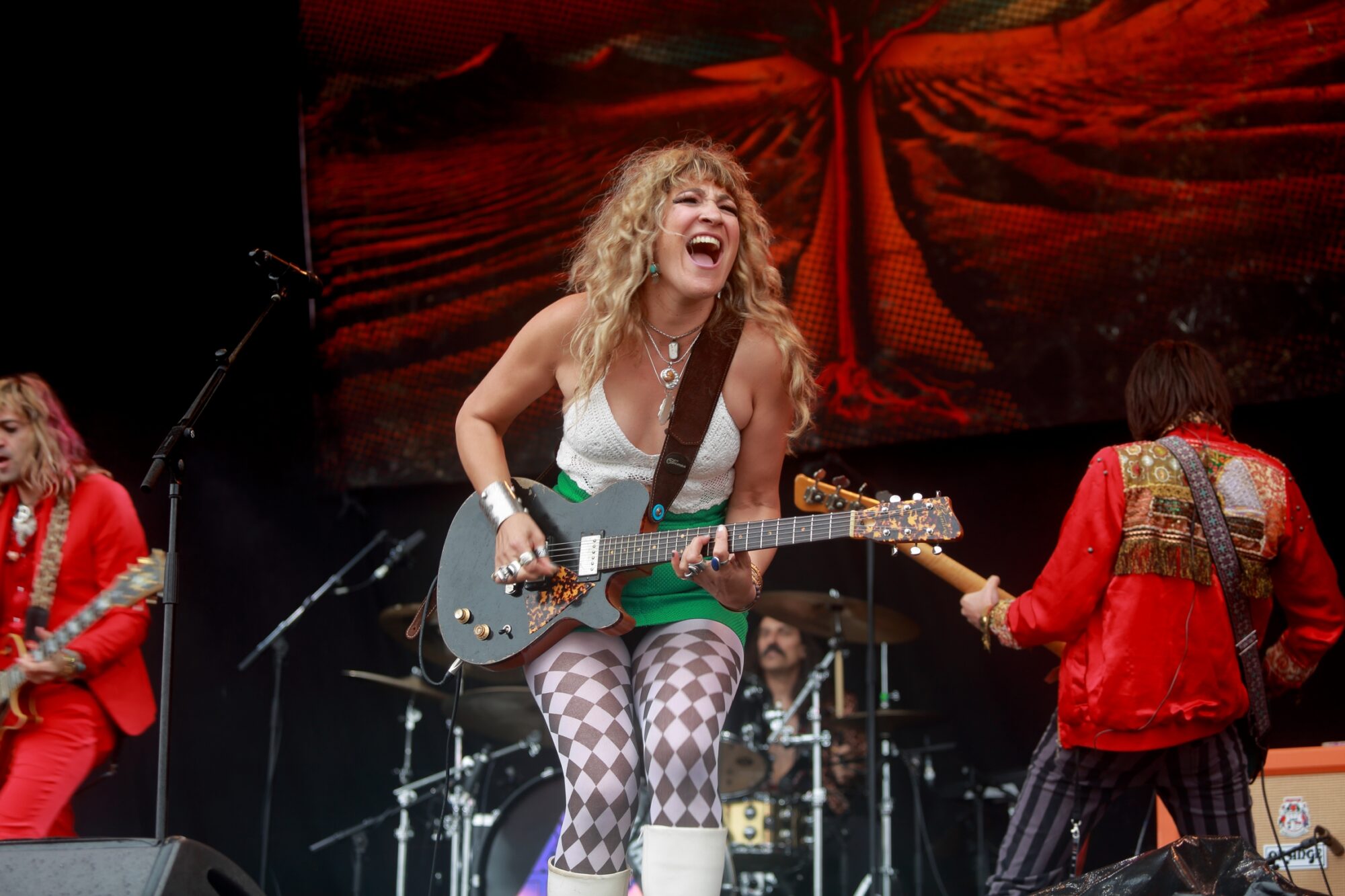
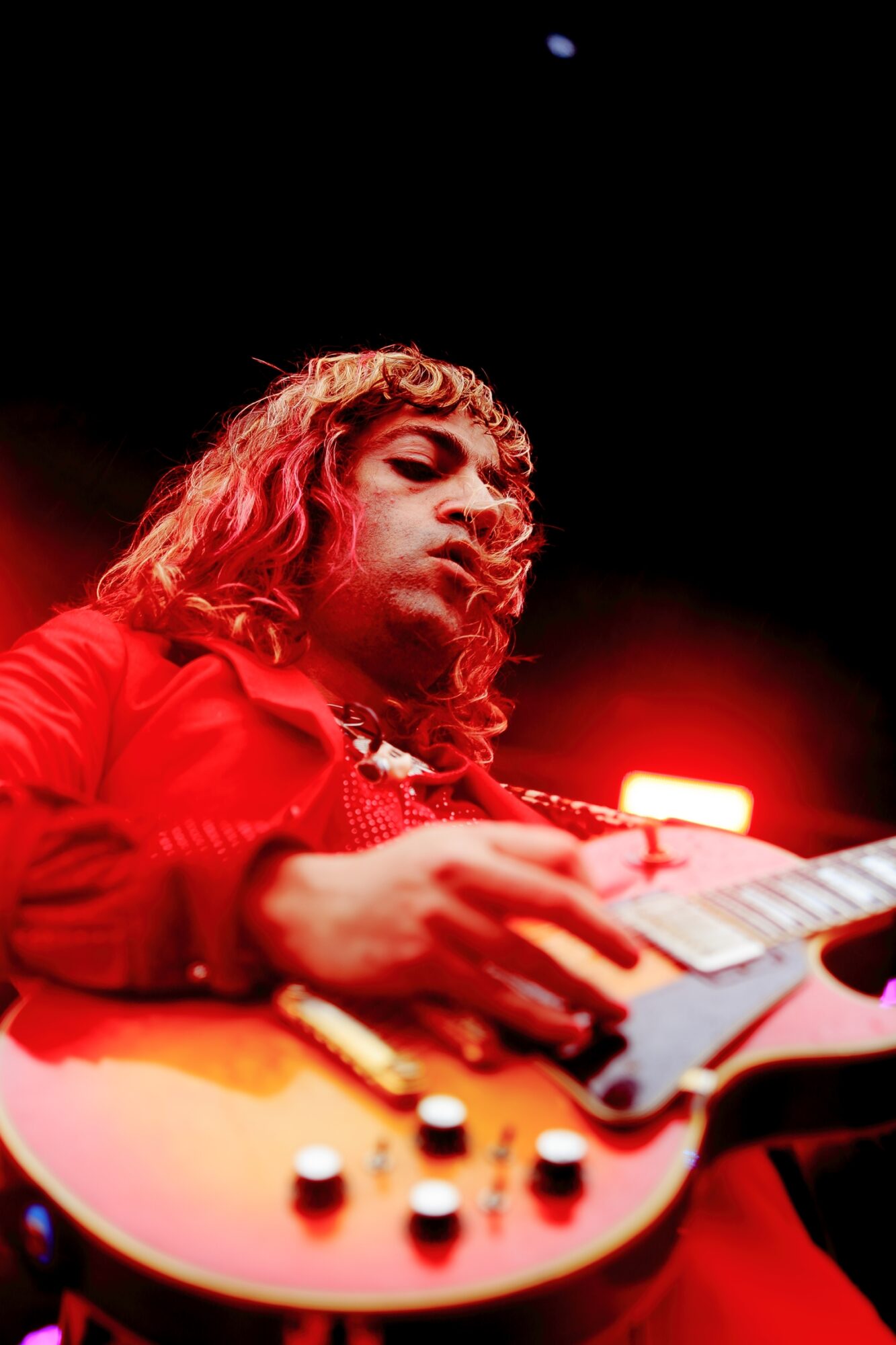
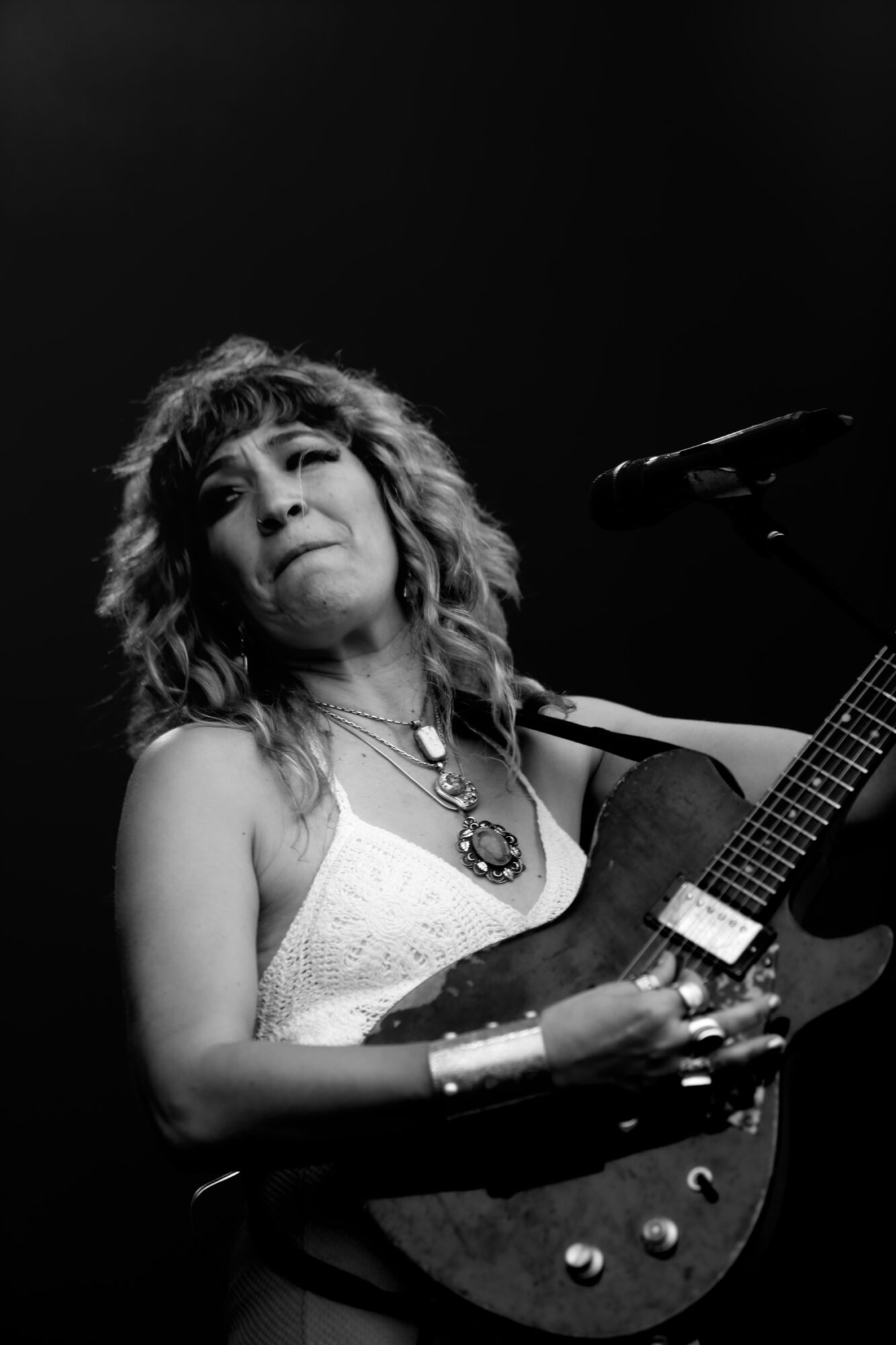
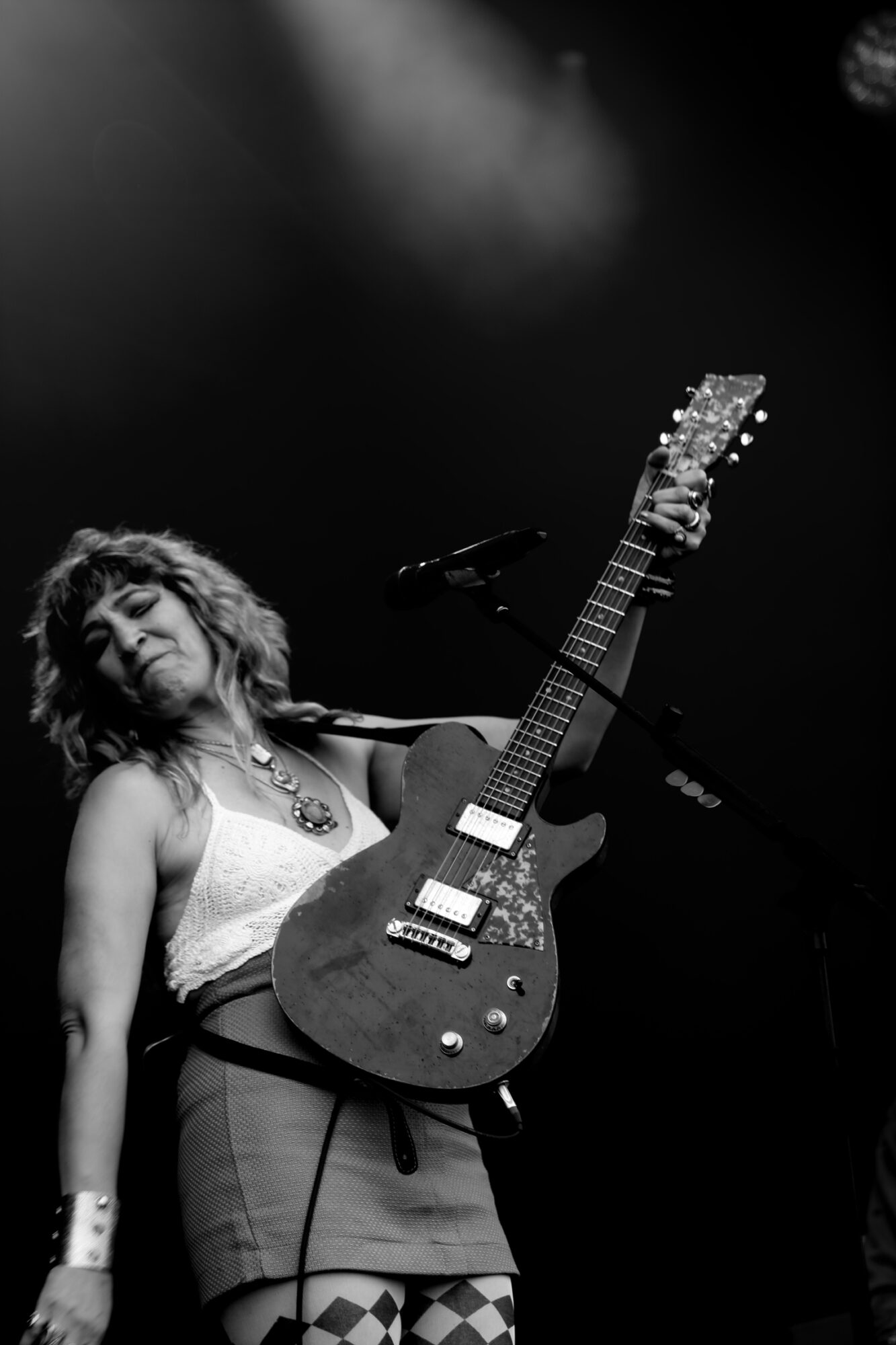
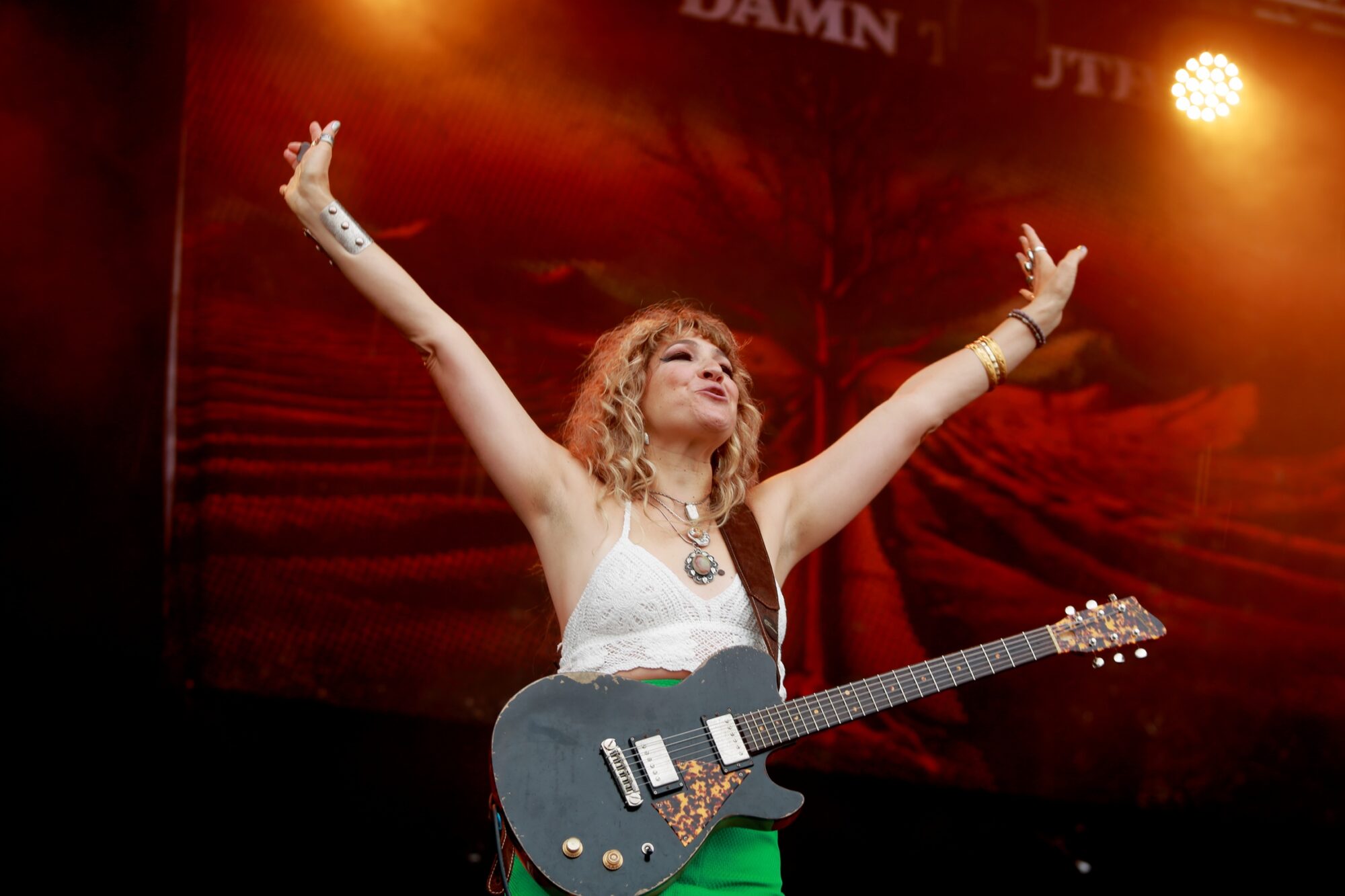
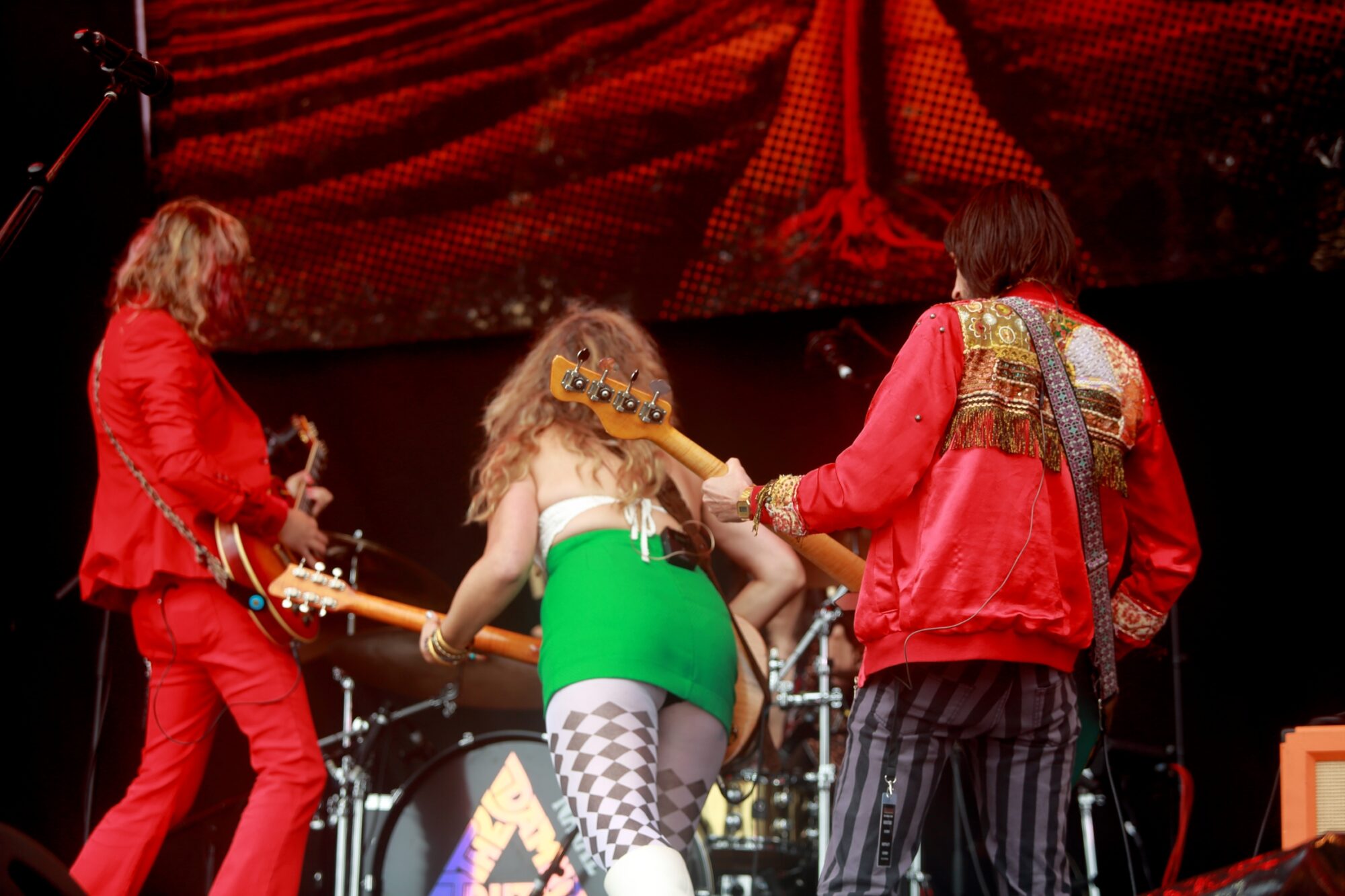
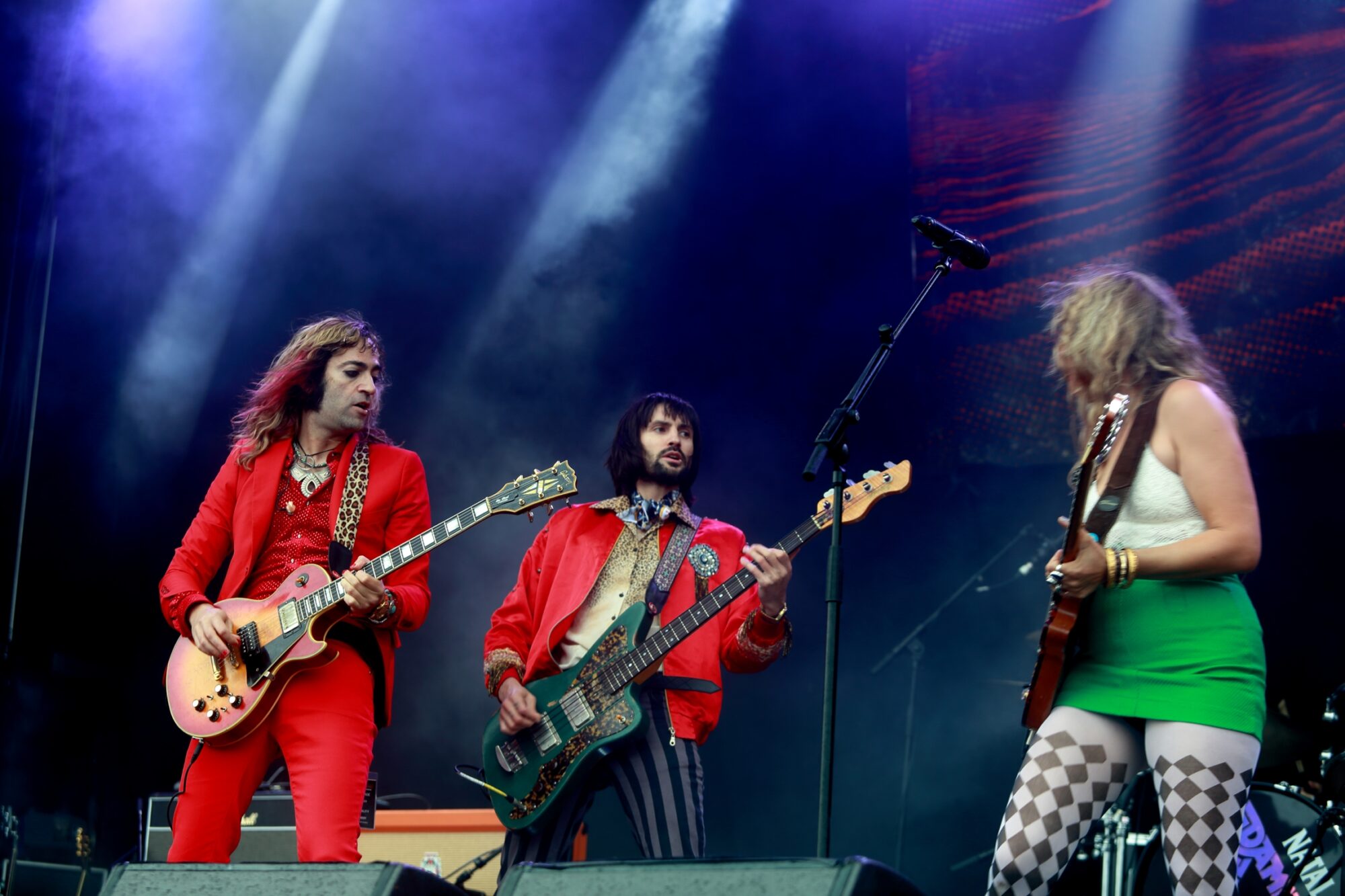
By mid-afternoon, The Damn Truth delivered one of the weekend’s most captivating performances. The Canadian quartet possess a chemistry that simply can’t be faked. Every movement felt natural, every song seemed to breathe, and every interaction between band members reinforced the feeling that this was a group genuinely enjoying themselves. Frontwoman Lee-la Baum proved impossible to ignore, commanding attention without ever appearing to demand it. The crowd’s reaction grew with each passing song, and by the conclusion of the set it was obvious that many people had just discovered a band they’ll be making a point of seeing again.
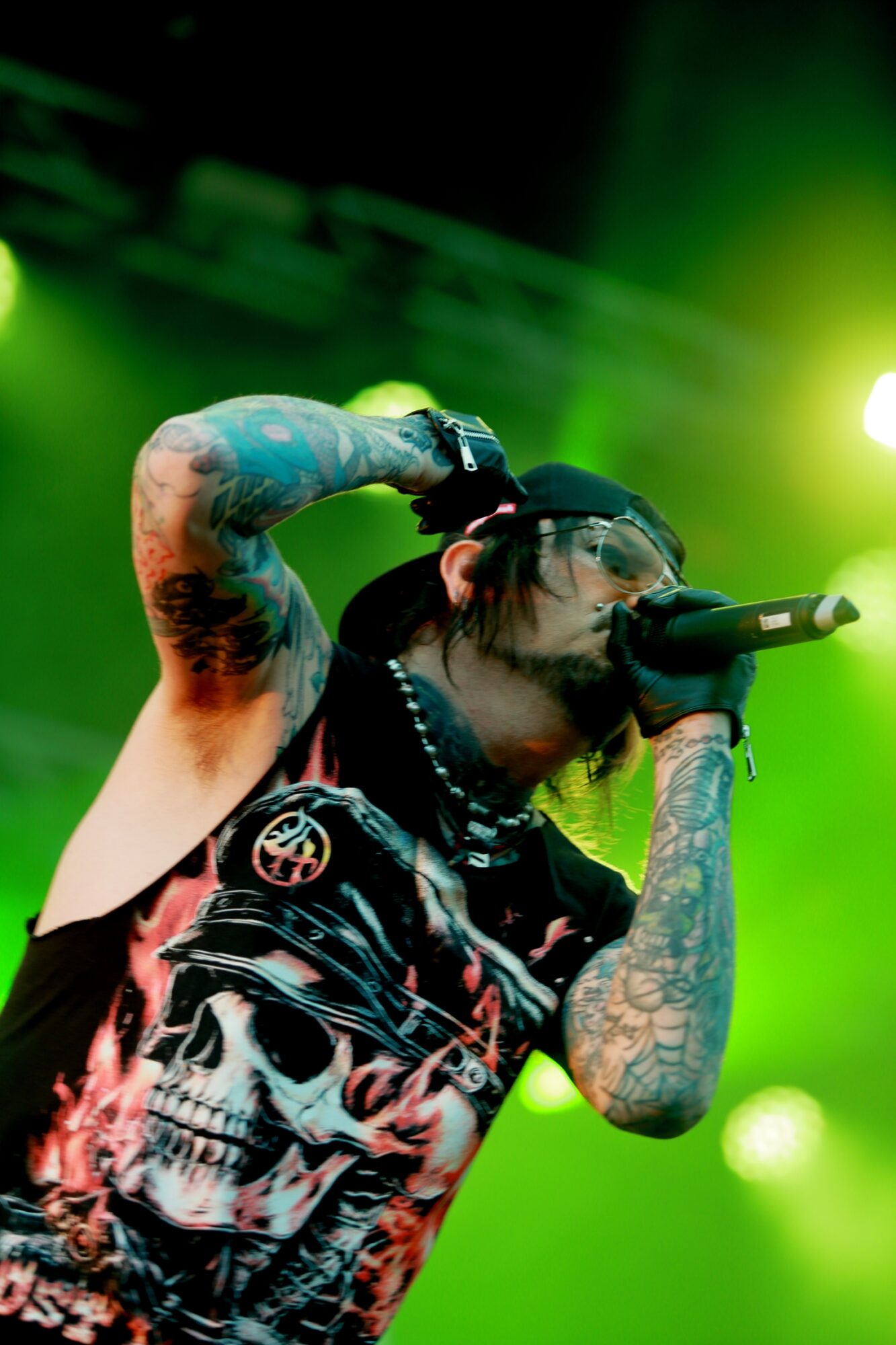
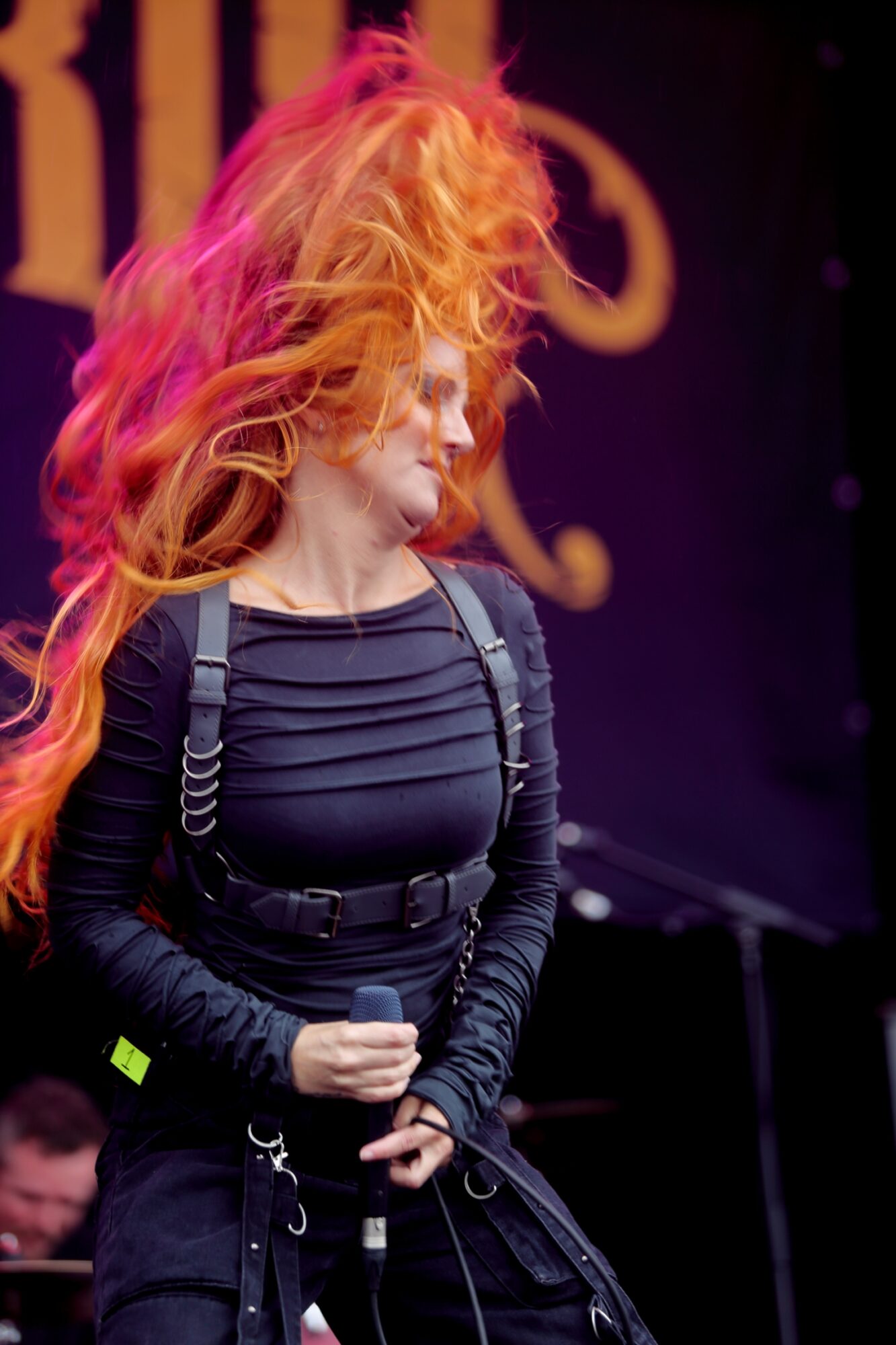
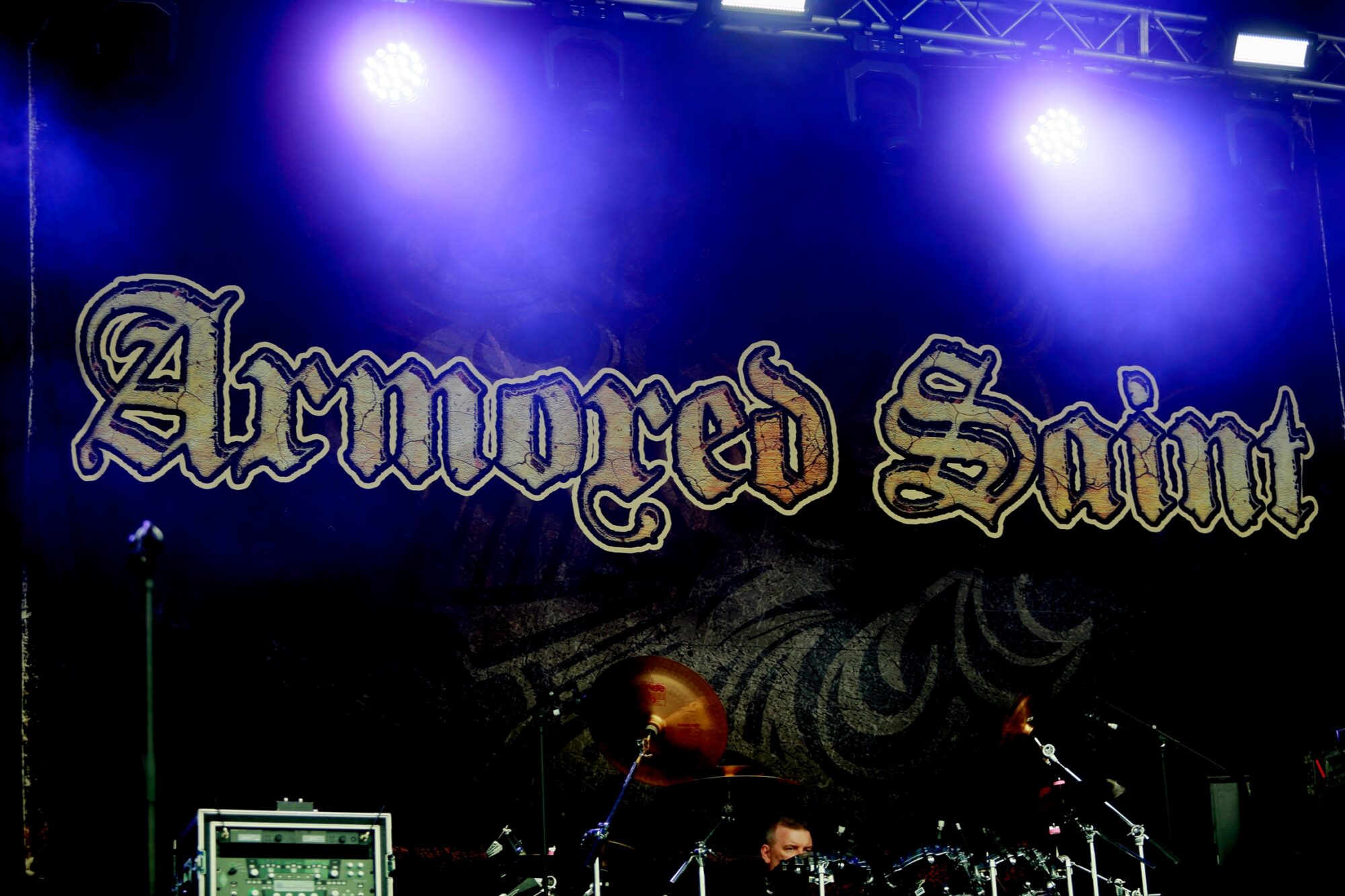
Armored Saint arrived carrying the weight of decades of experience, but there was nothing nostalgic about their performance. Instead, what unfolded was a demonstration of why they’ve remained such a respected force within heavy metal for so long. Their set was delivered with confidence, authority and an effortless professionalism that only comes from years spent mastering the craft.
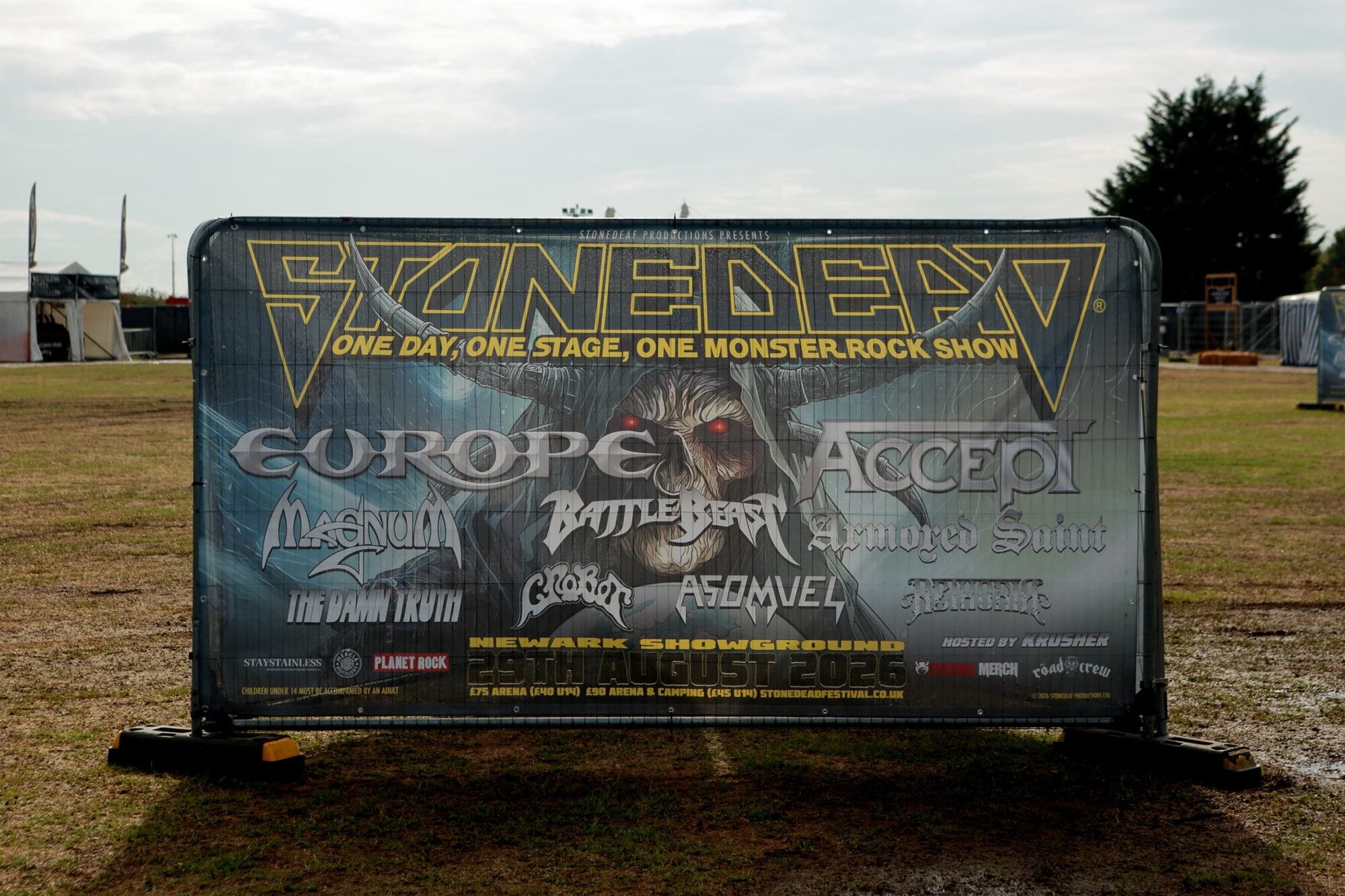
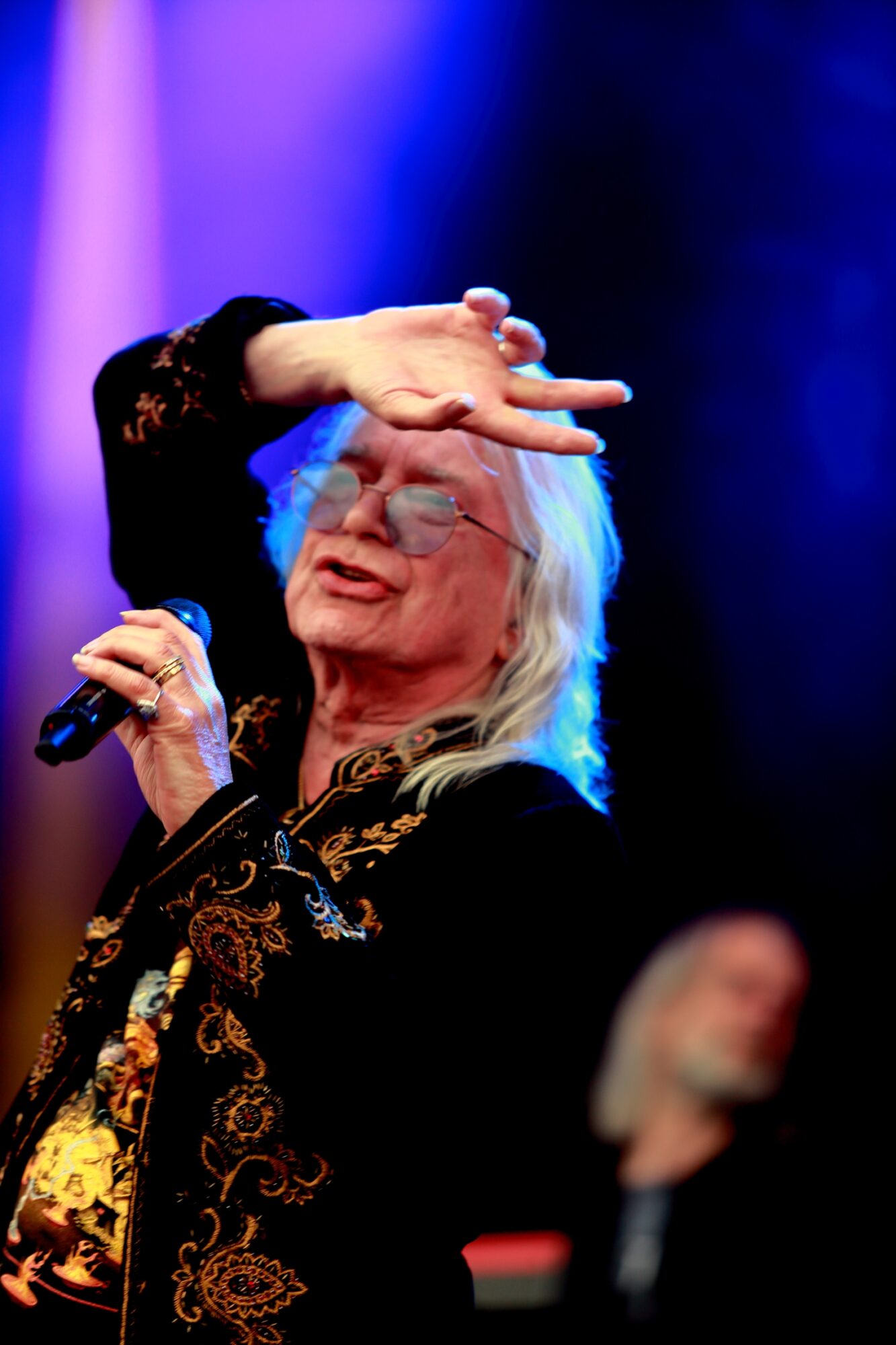
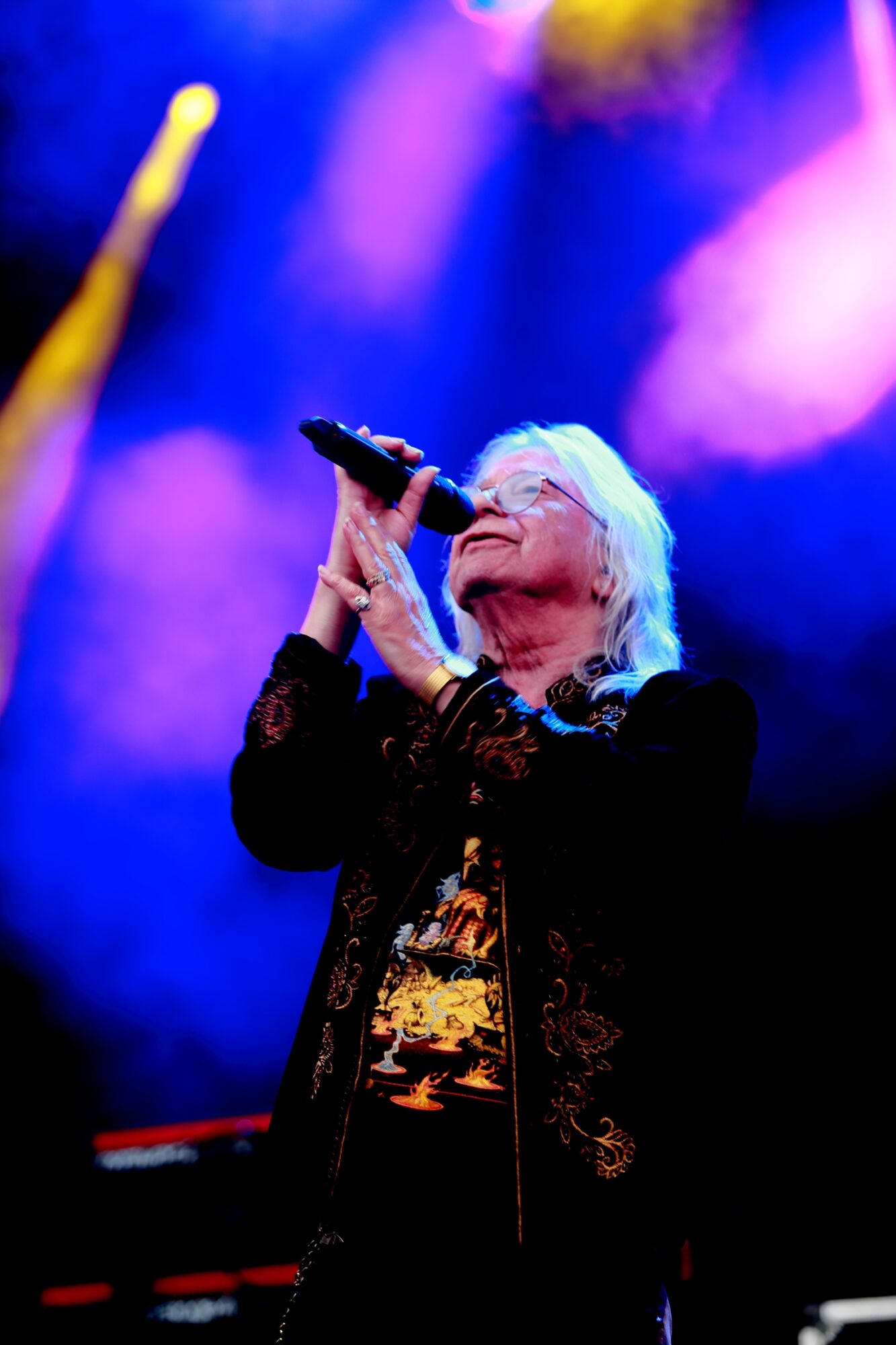
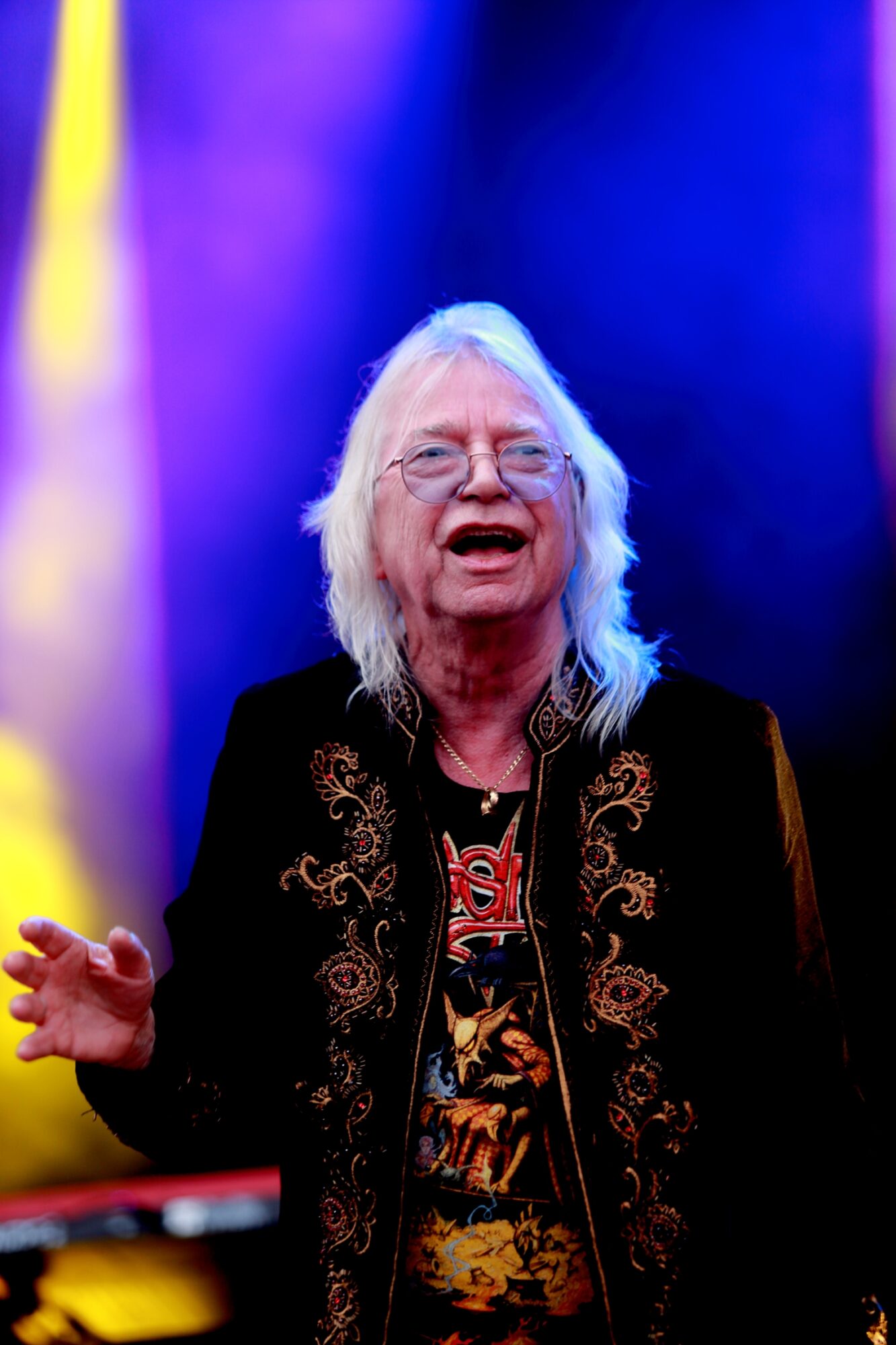
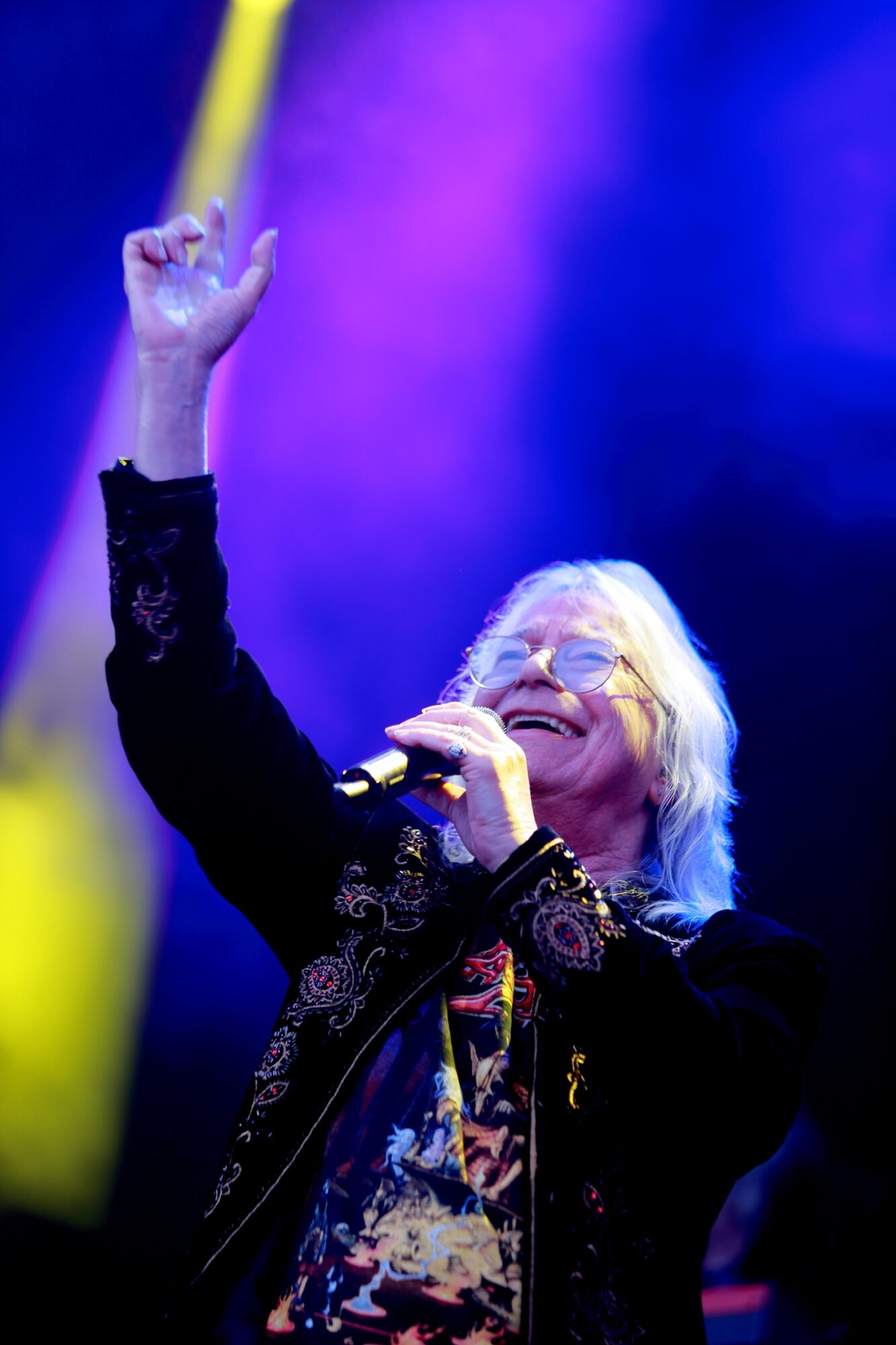
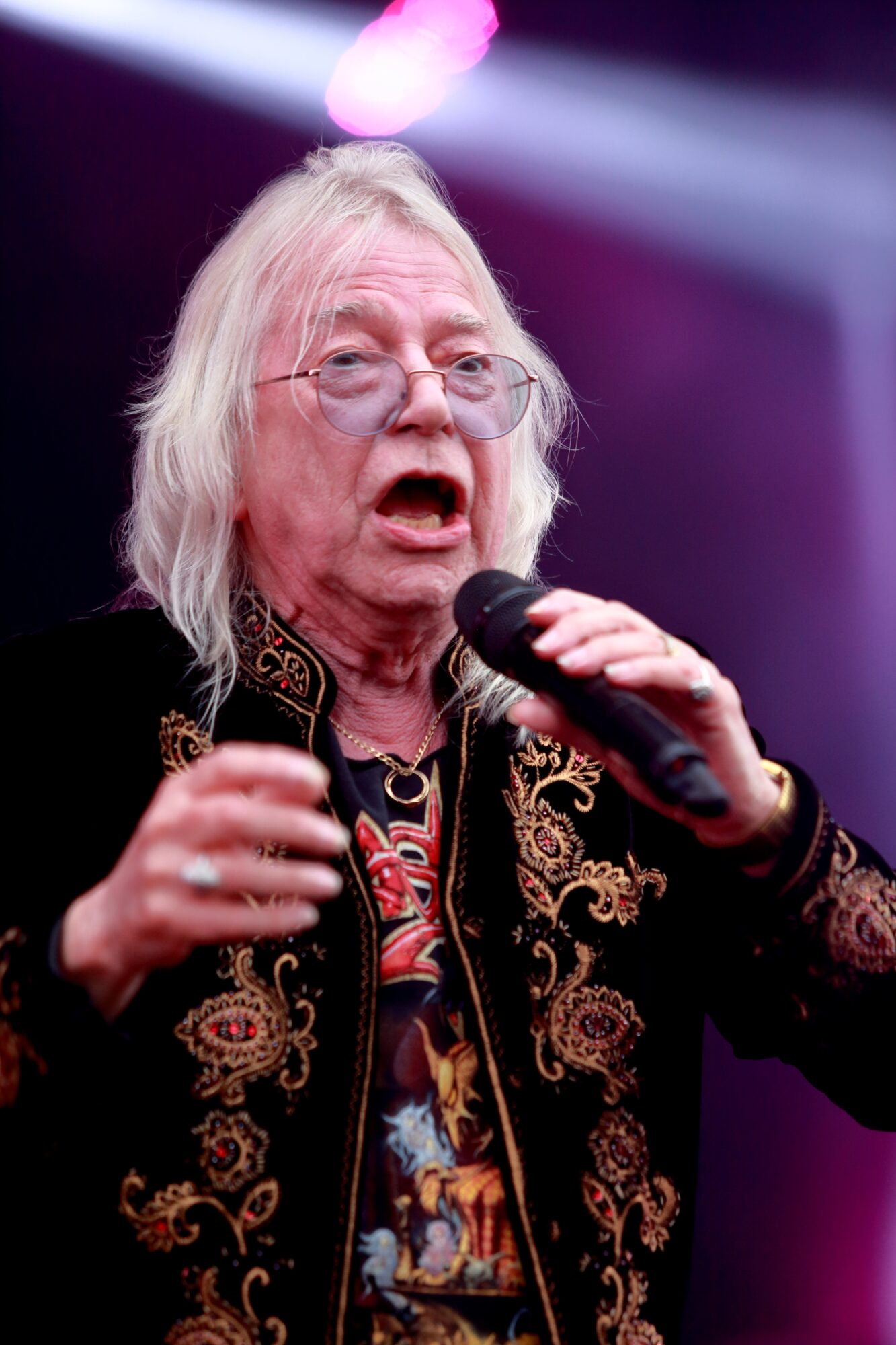
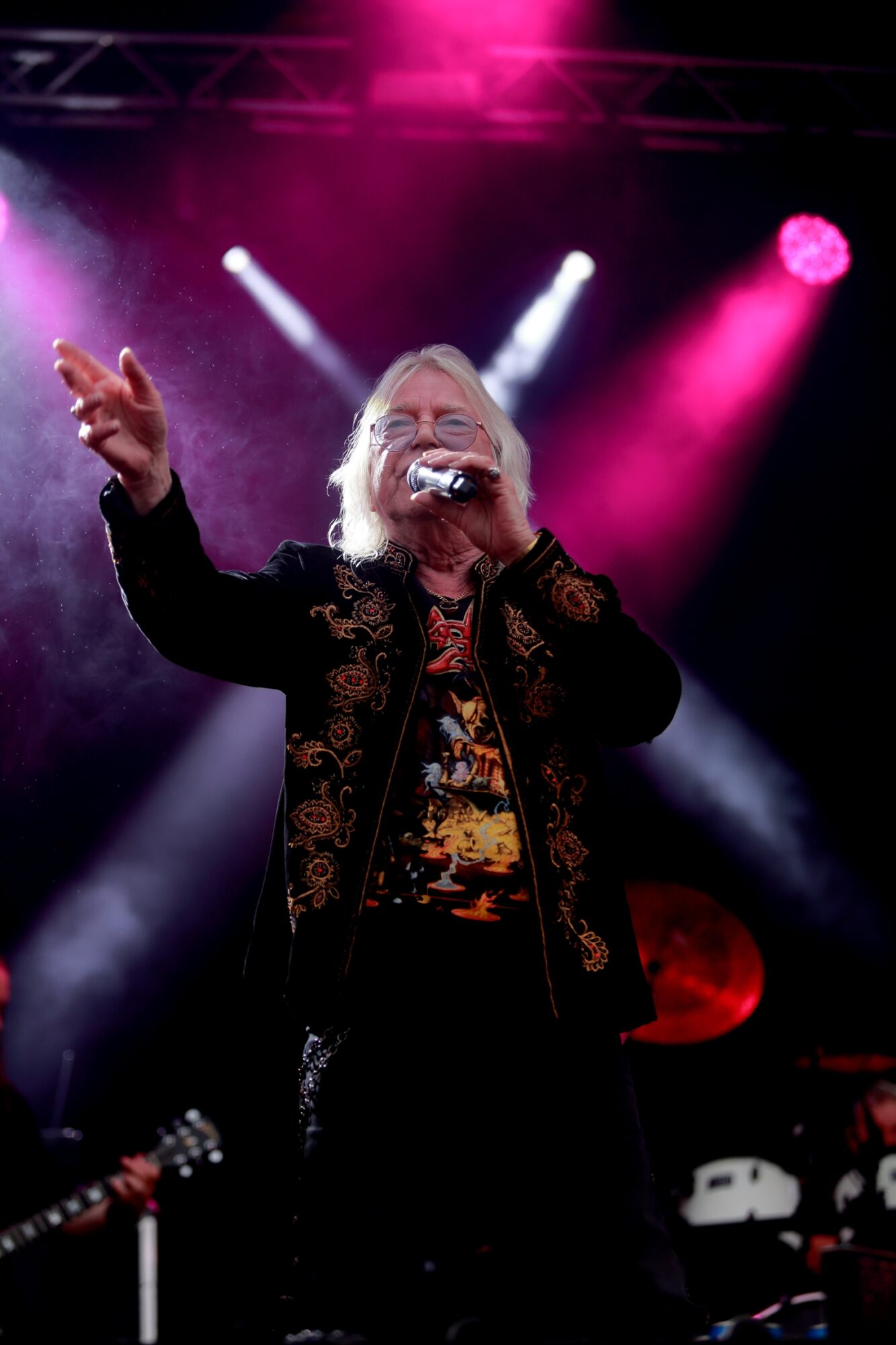
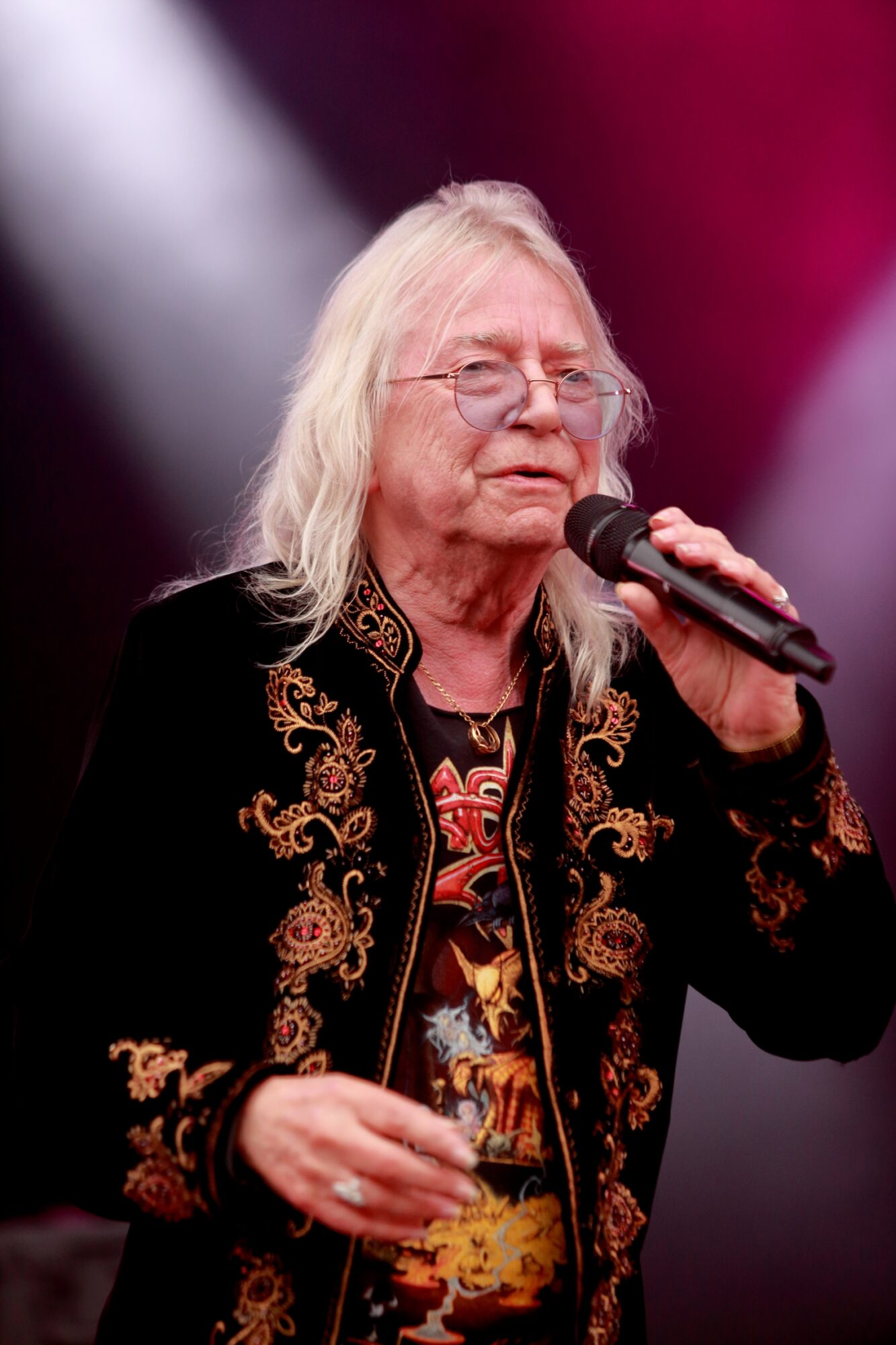
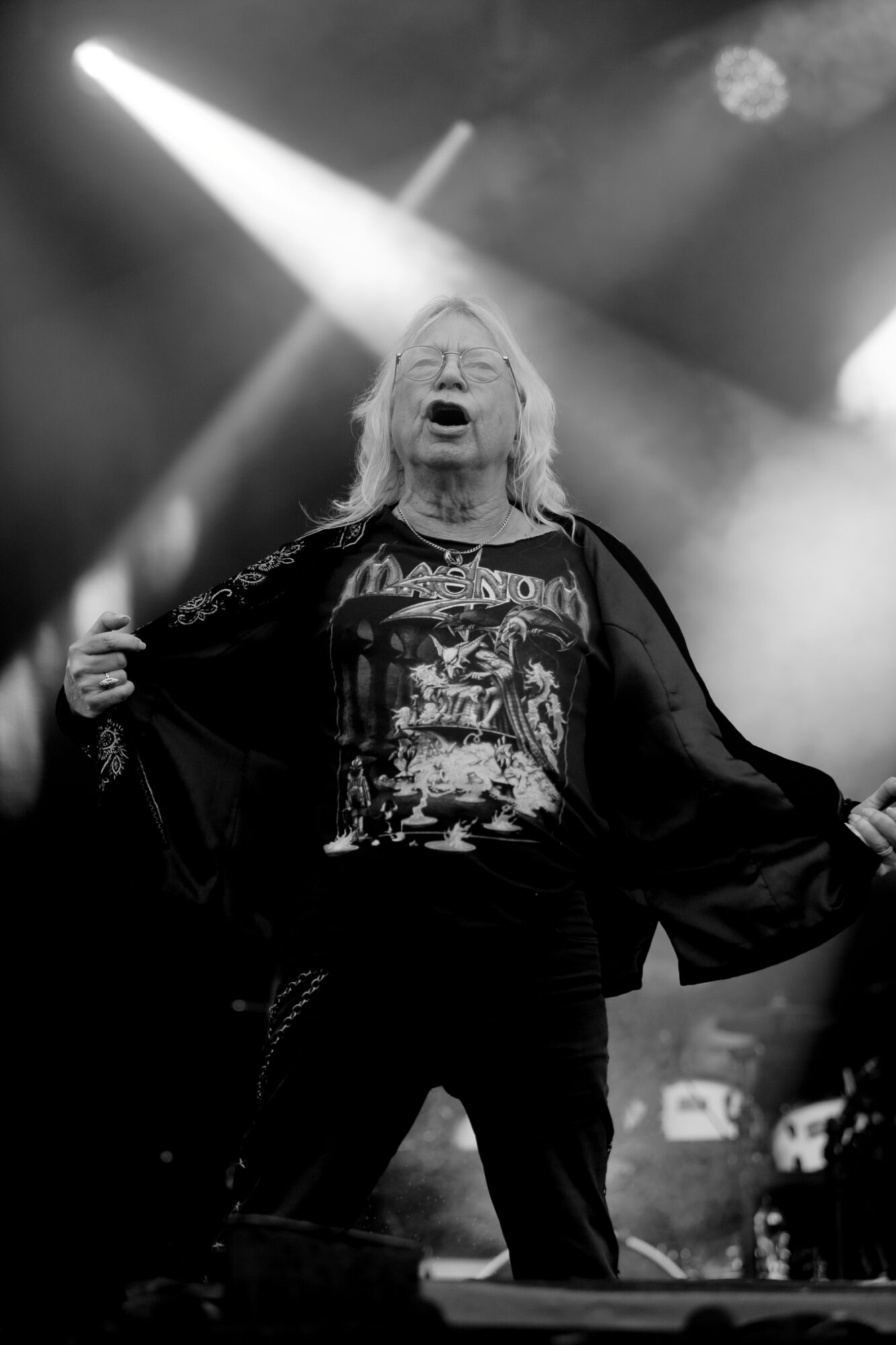
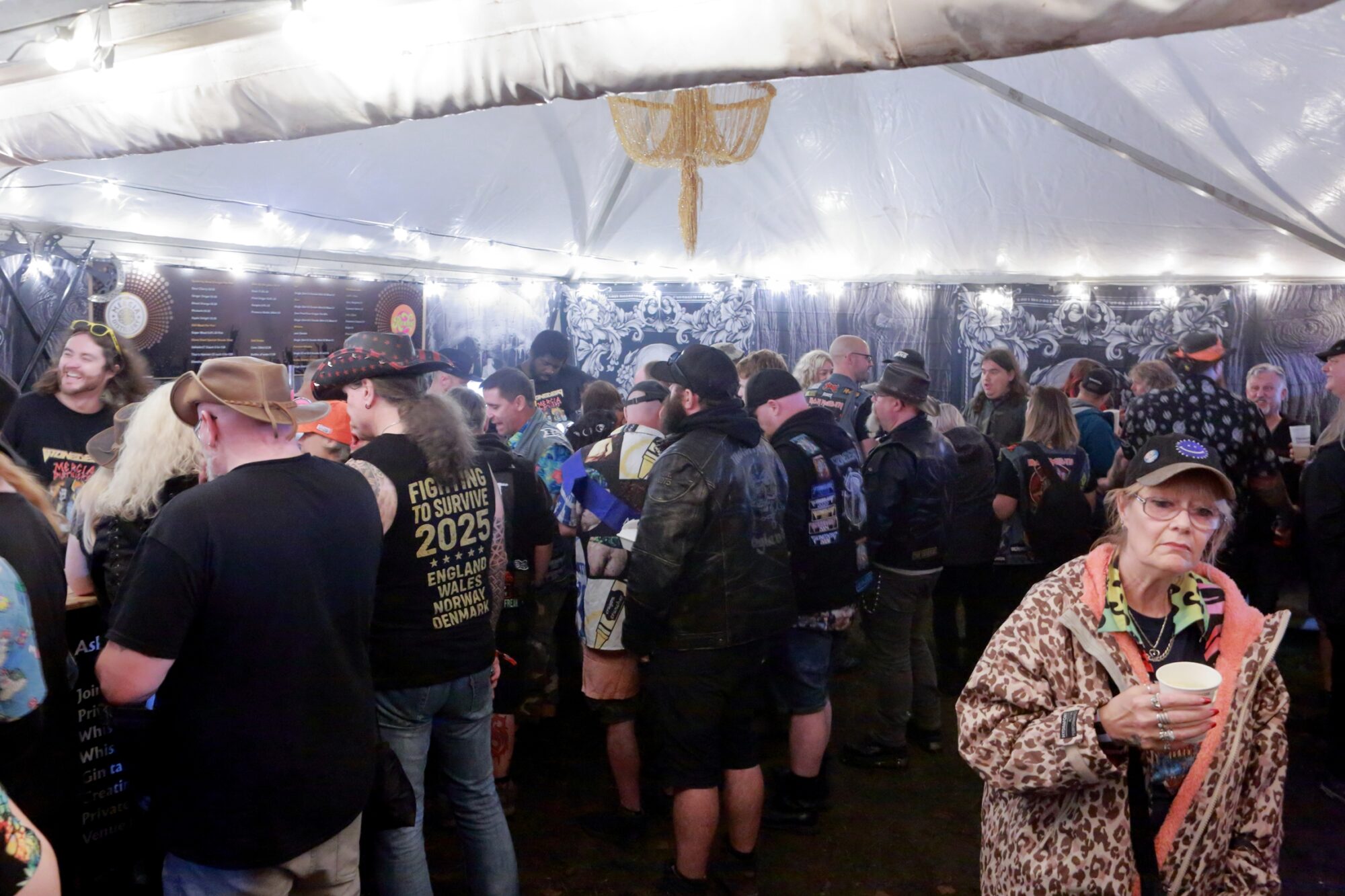
Every festival has one set that feels different to the rest. For Stonedead 2026, that moment arrived when Magnum took to the stage. There was an emotional weight hanging over the performance, but the band never allowed it to become overwhelming. Instead, they celebrated an extraordinary catalogue of songs that has soundtracked countless lives over the decades. Looking across the arena, it was impossible not to notice the connection between band and audience. Faces lit up as familiar melodies drifted across Newark Showground, while others simply stood and absorbed every moment.


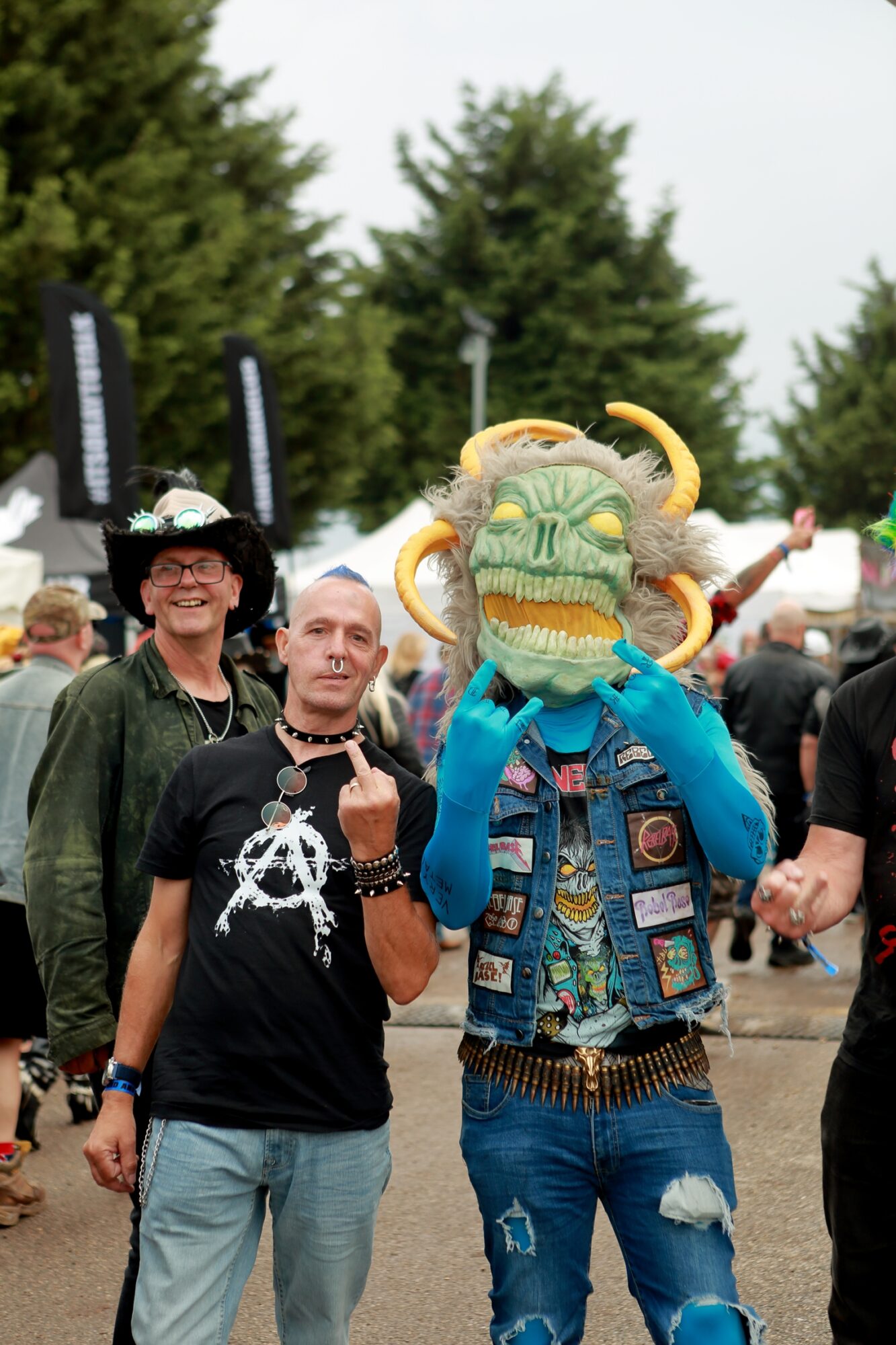
As daylight slowly surrendered to evening, Accept delivered a performance of unrelenting power. The German veterans wasted no time making their intentions clear. From the opening moments onwards, they pummelled the audience with a barrage of crushing riffs, thunderous rhythms and enough energy to shake the arena foundations. The atmosphere in front of the stage grew increasingly intense as the set progressed. Raised fists became a permanent feature, while every chorus seemed to draw an even louder response from the crowd. This was heavy metal exactly as it should be: loud, proud and impossible to ignore.
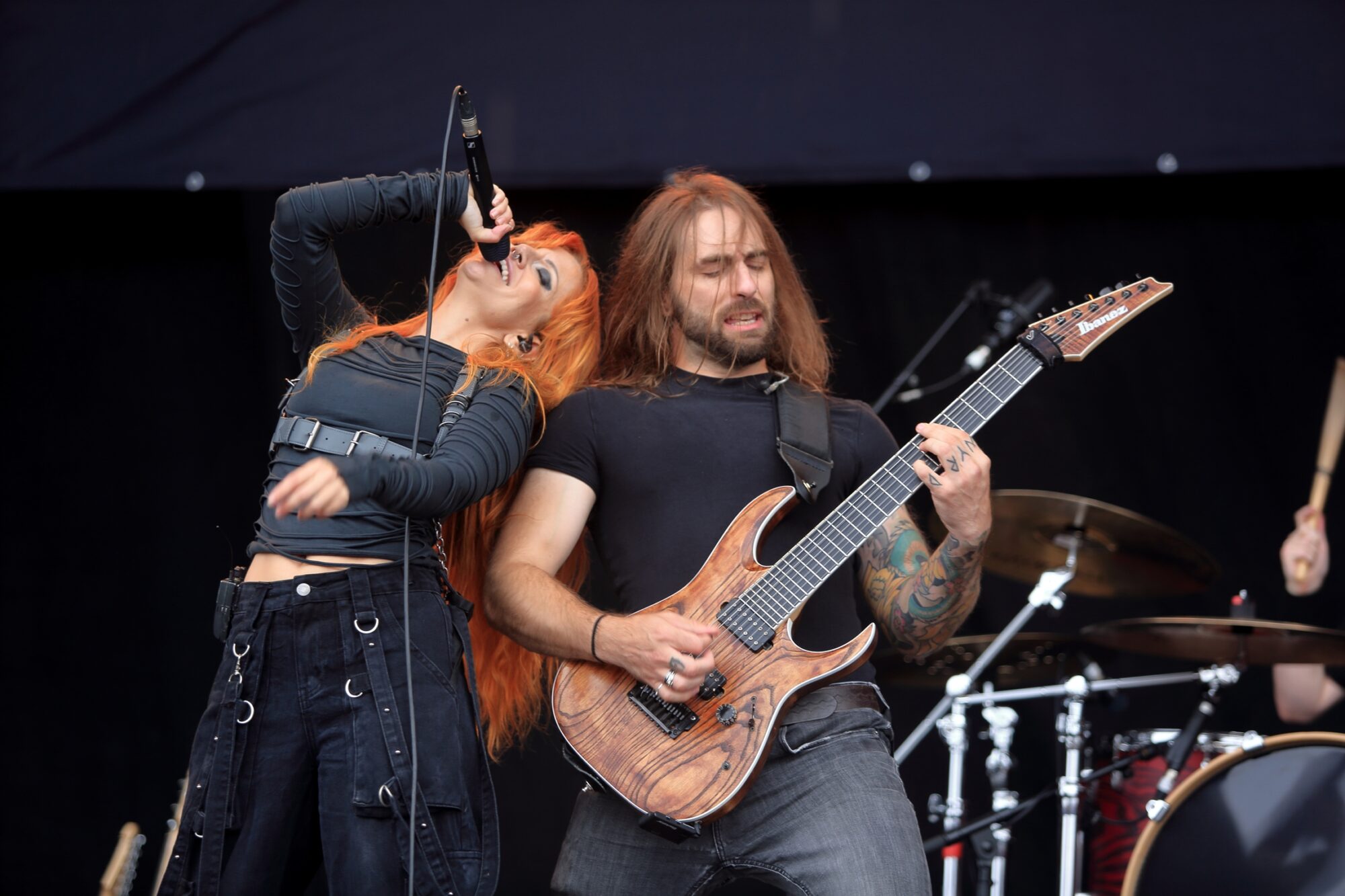

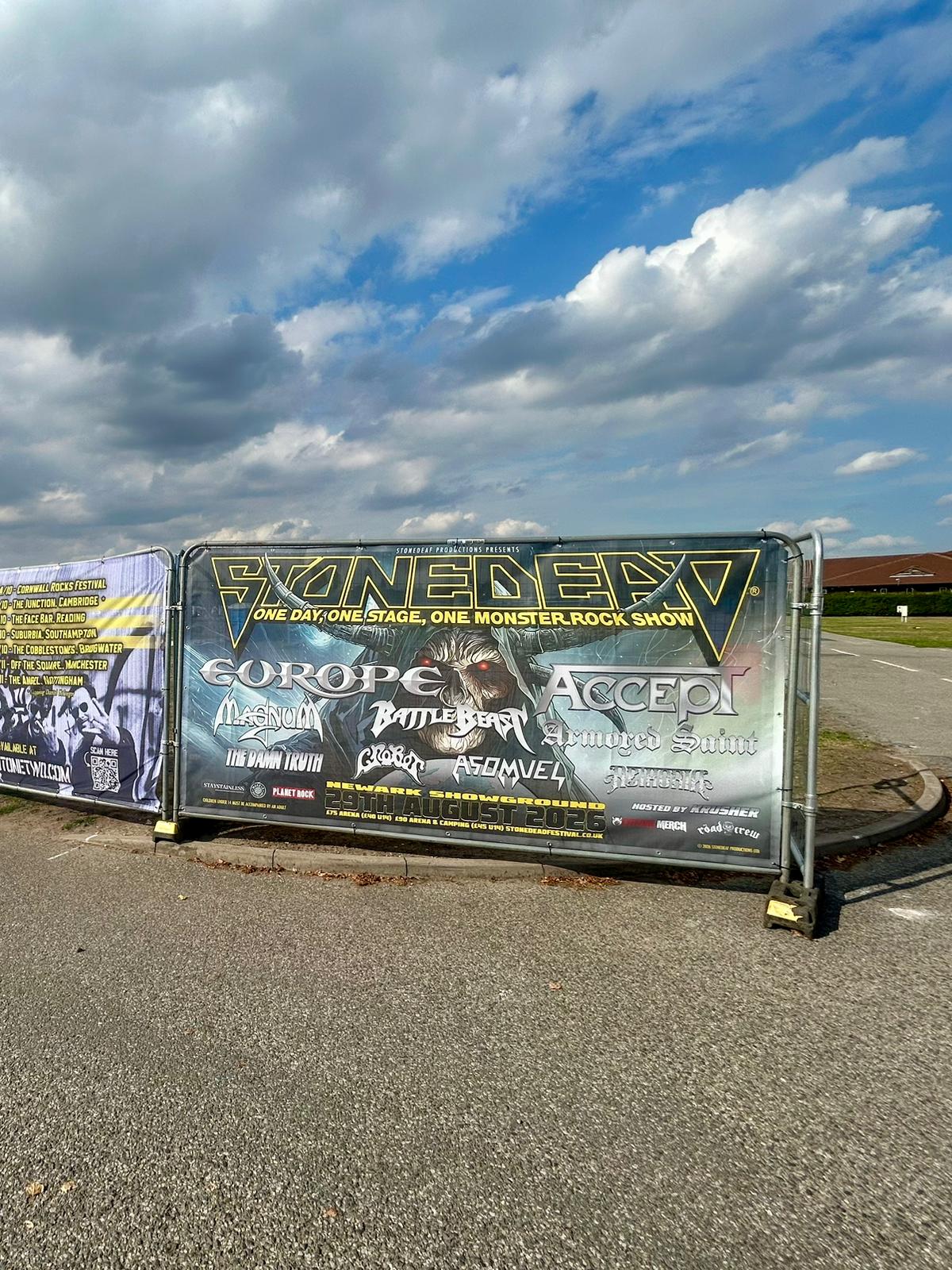
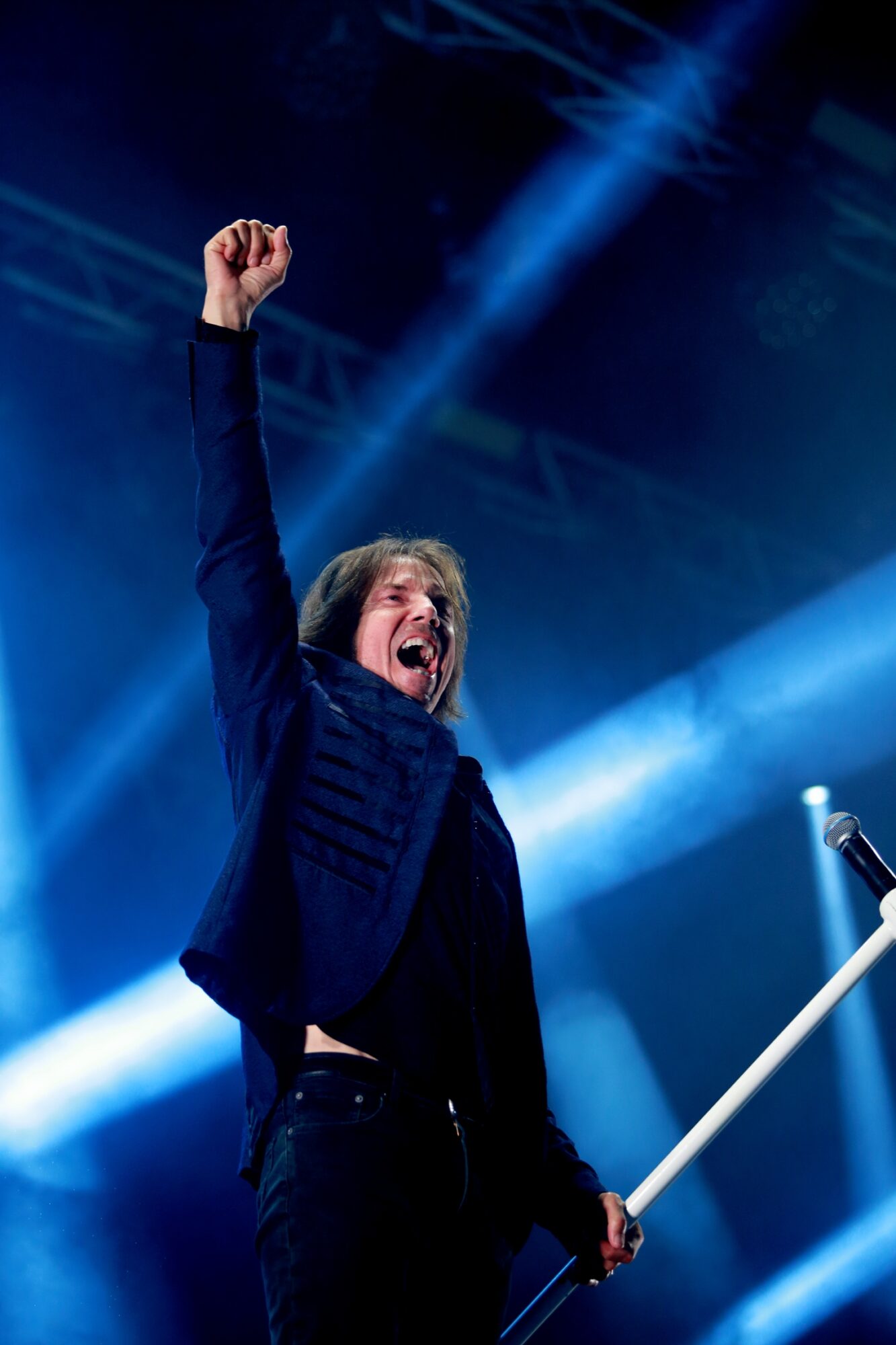
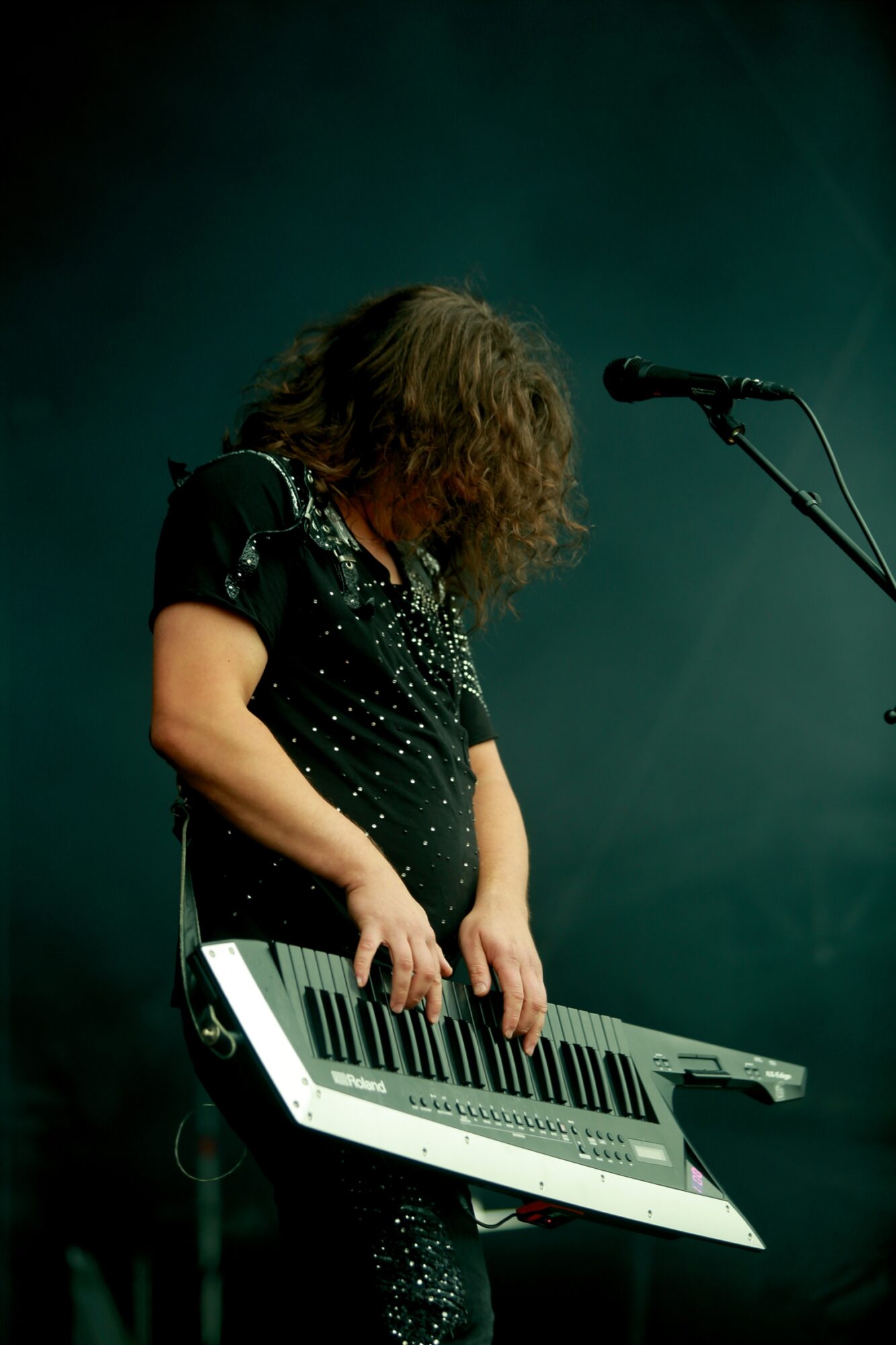
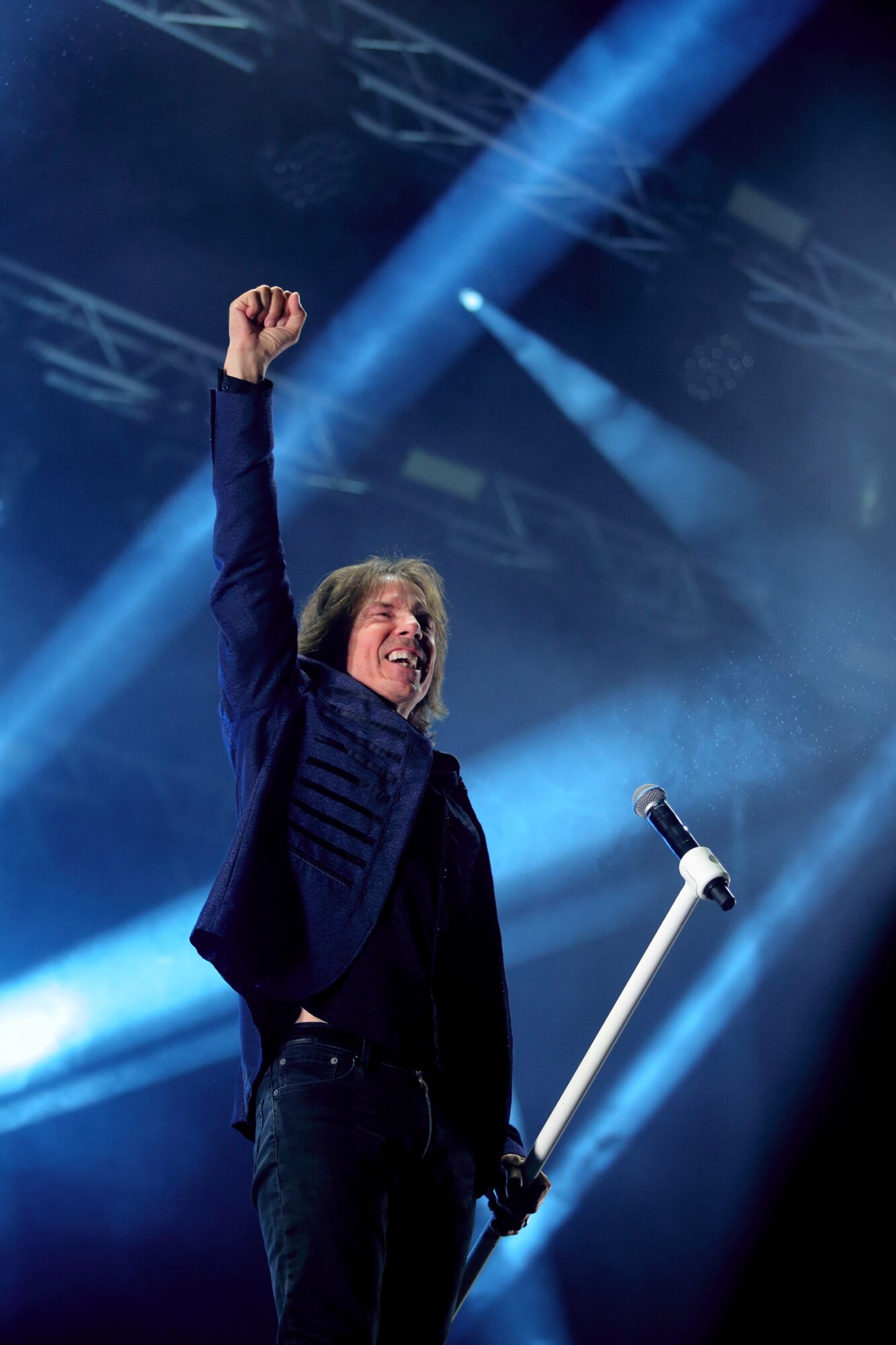
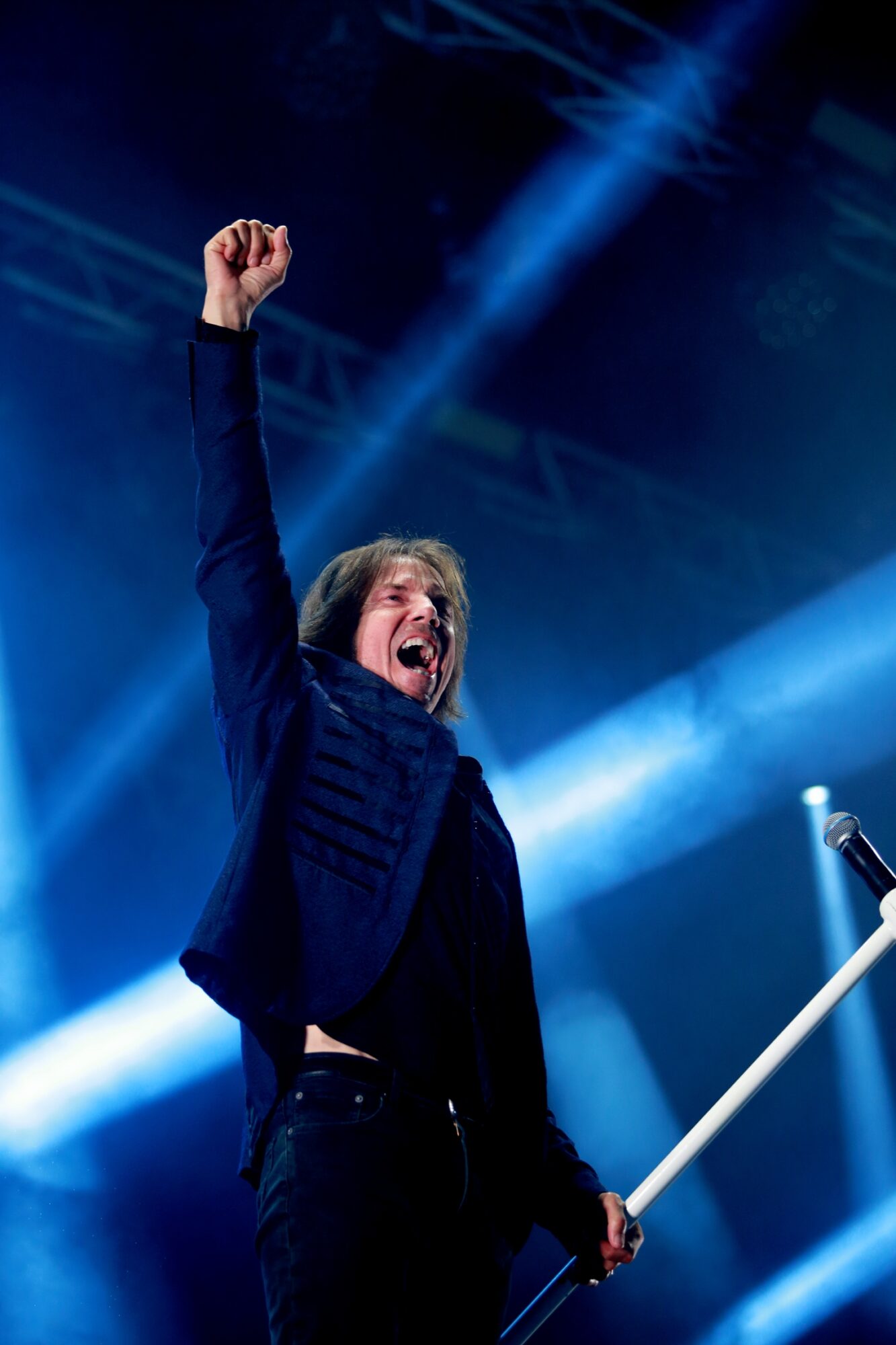
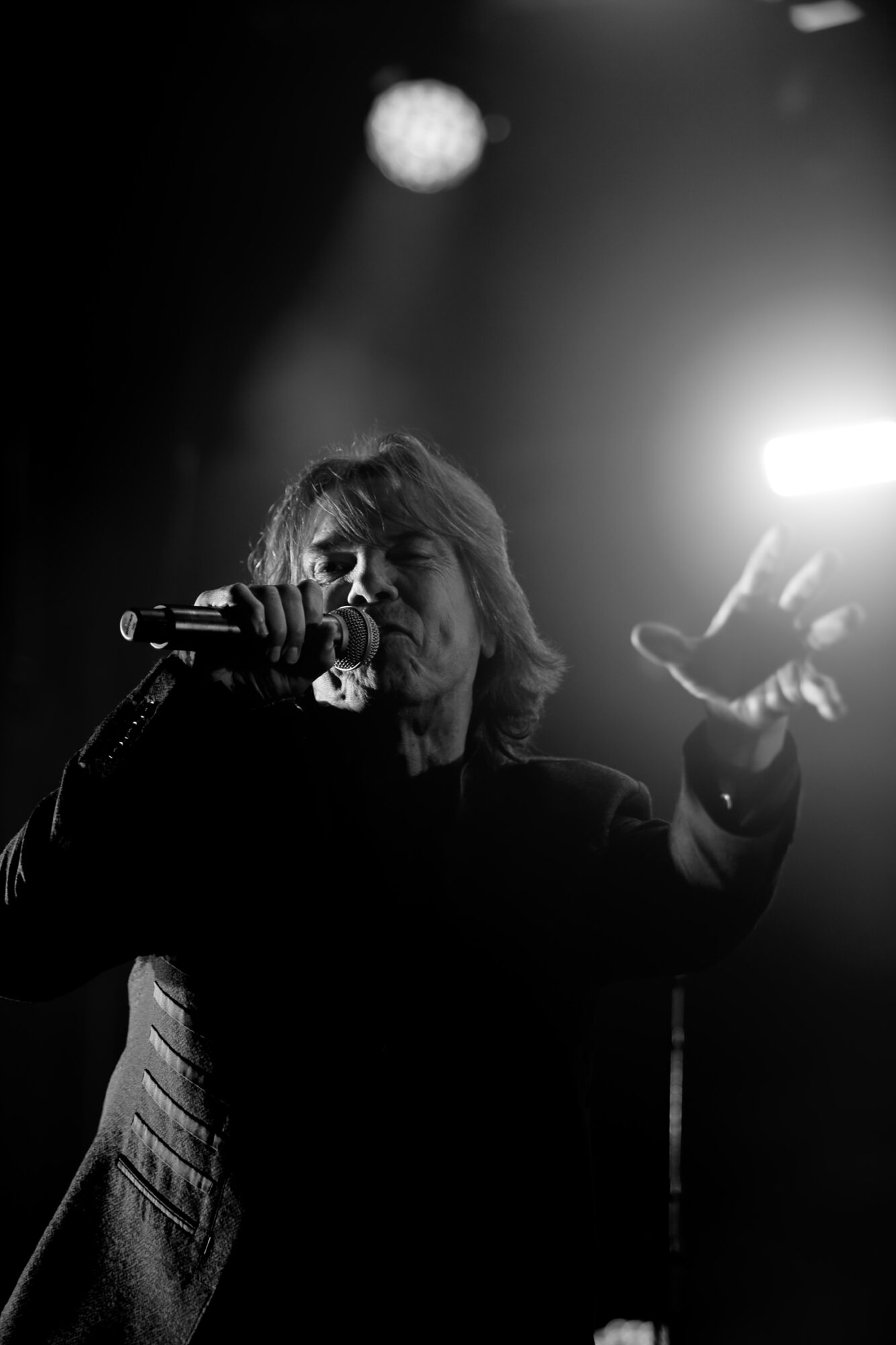
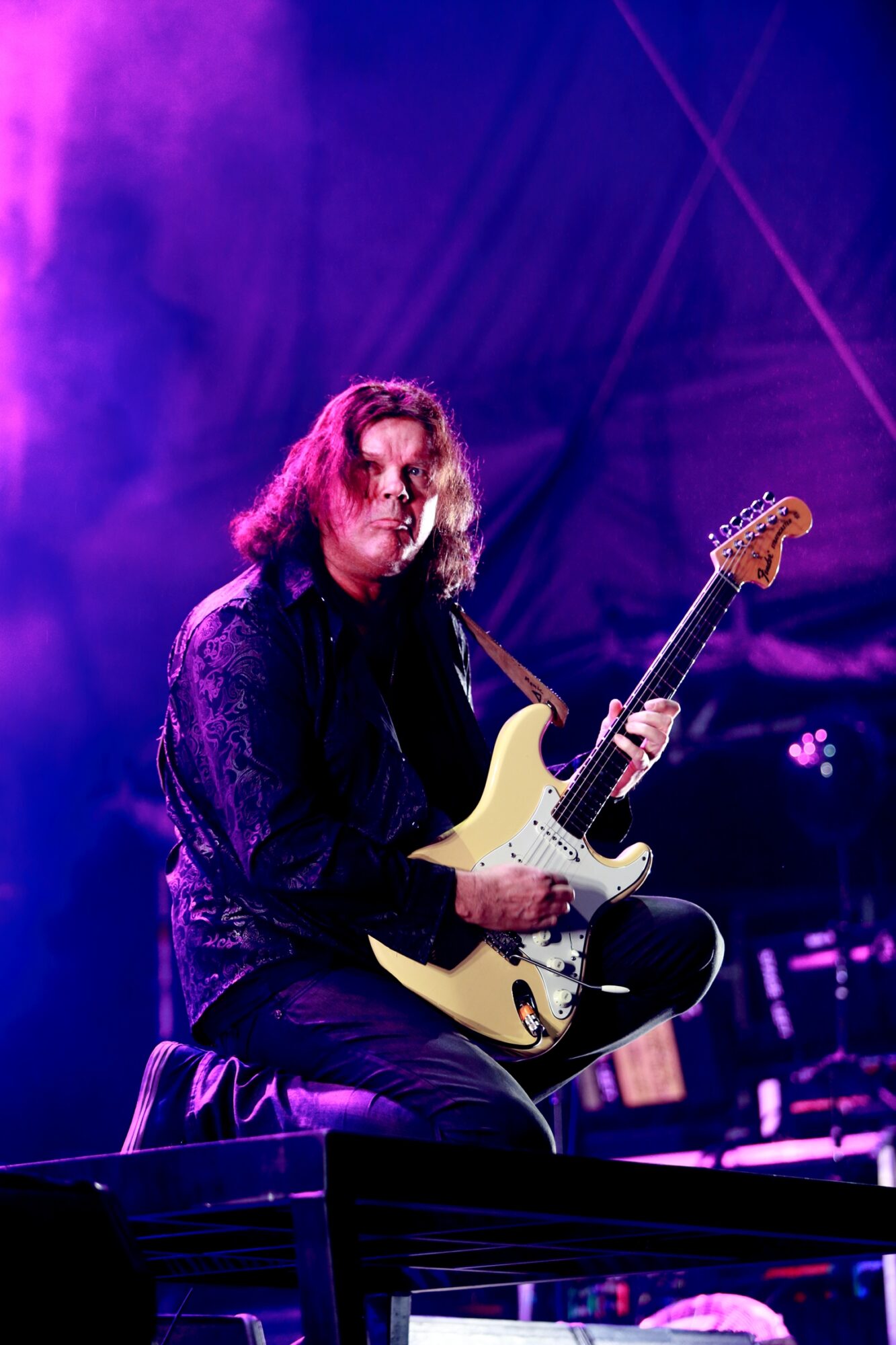
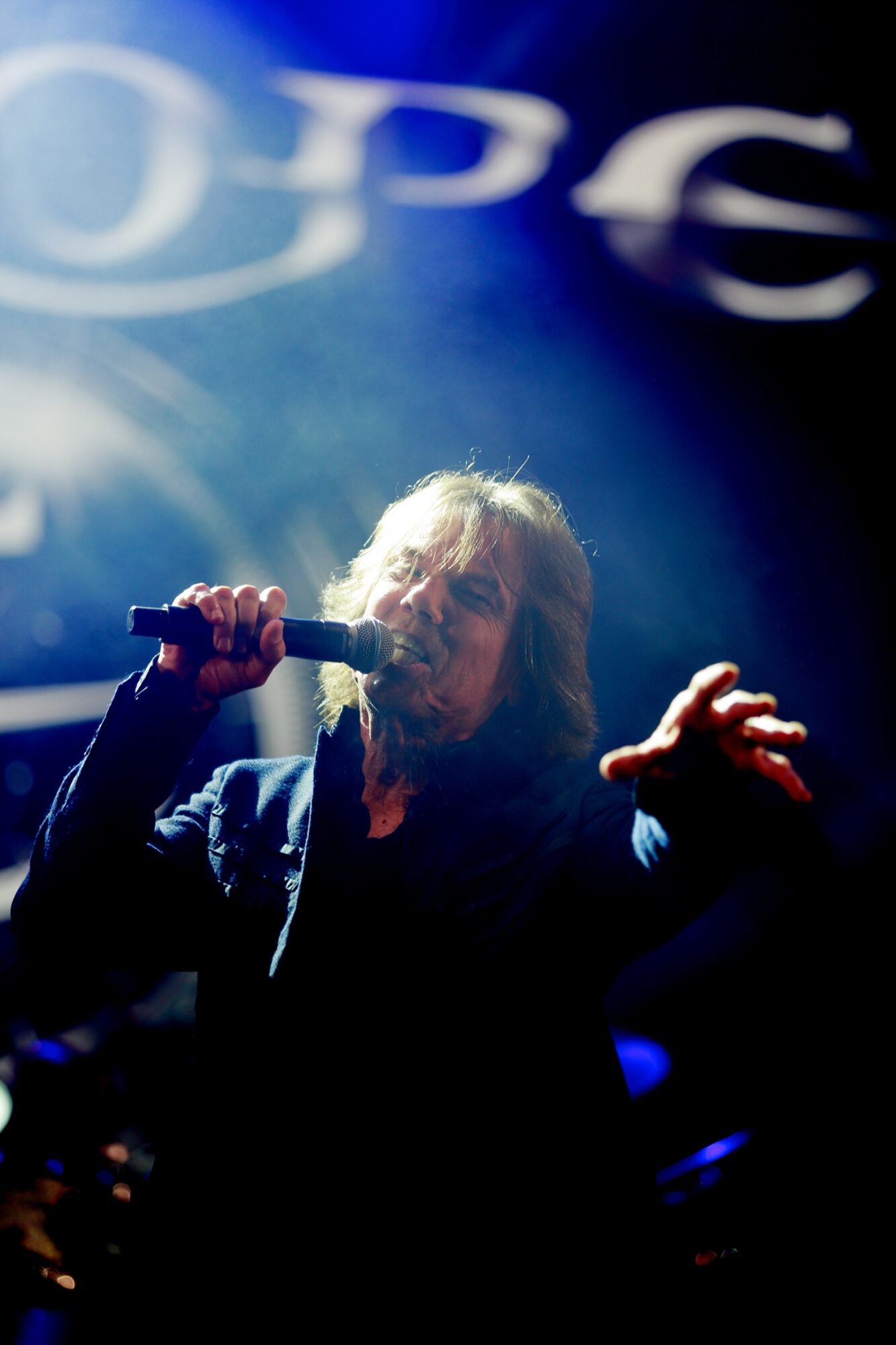
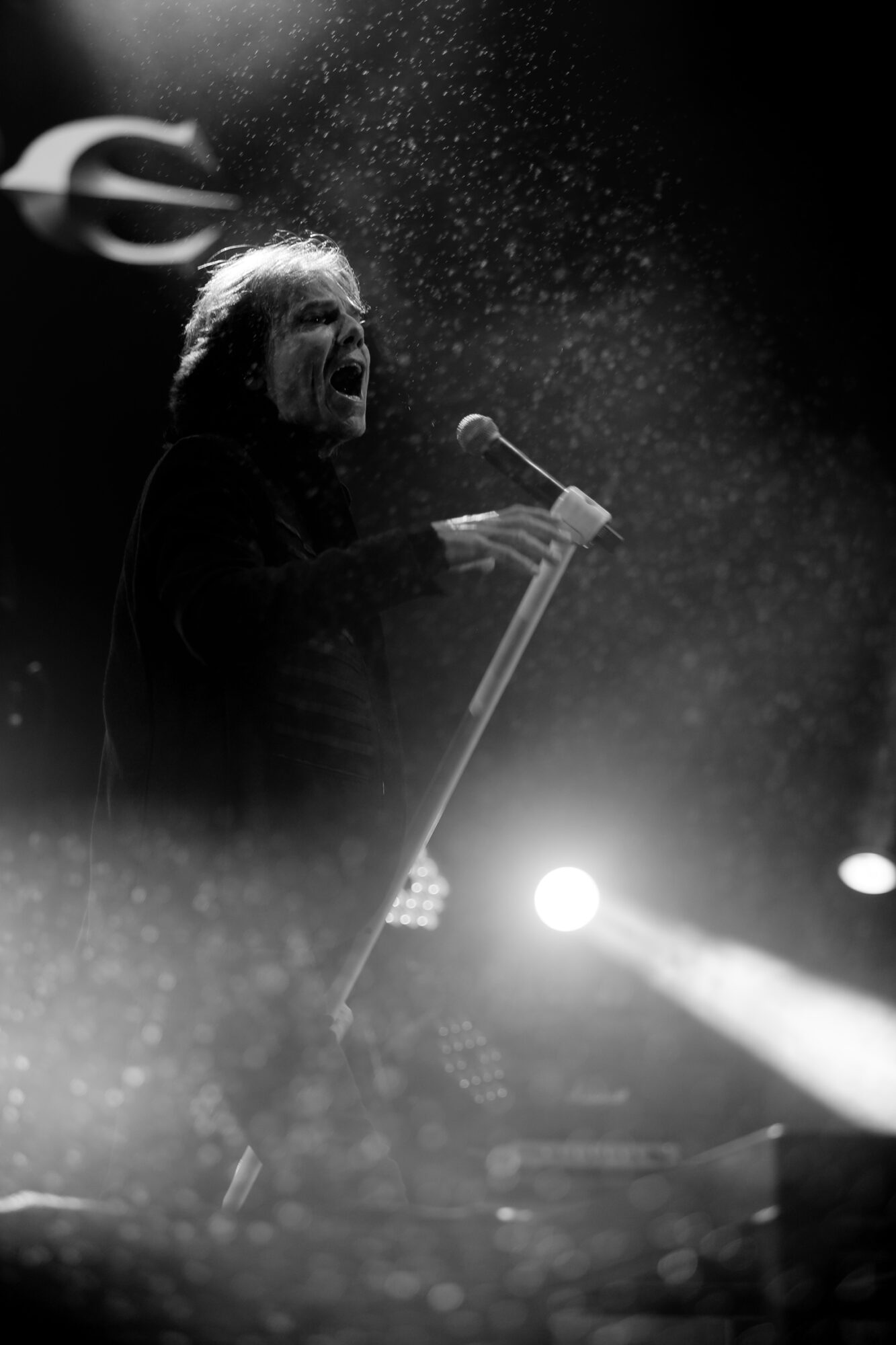
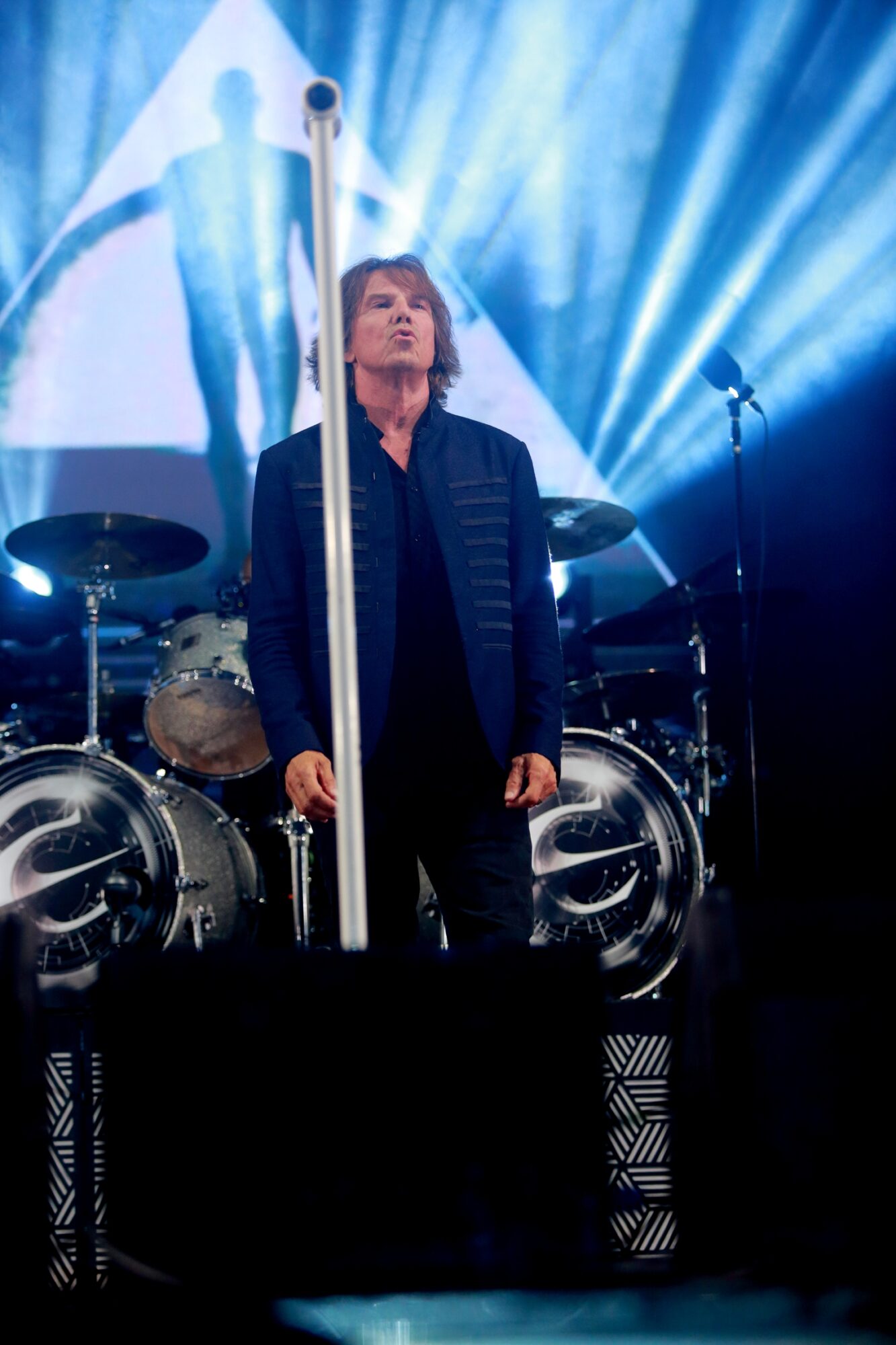
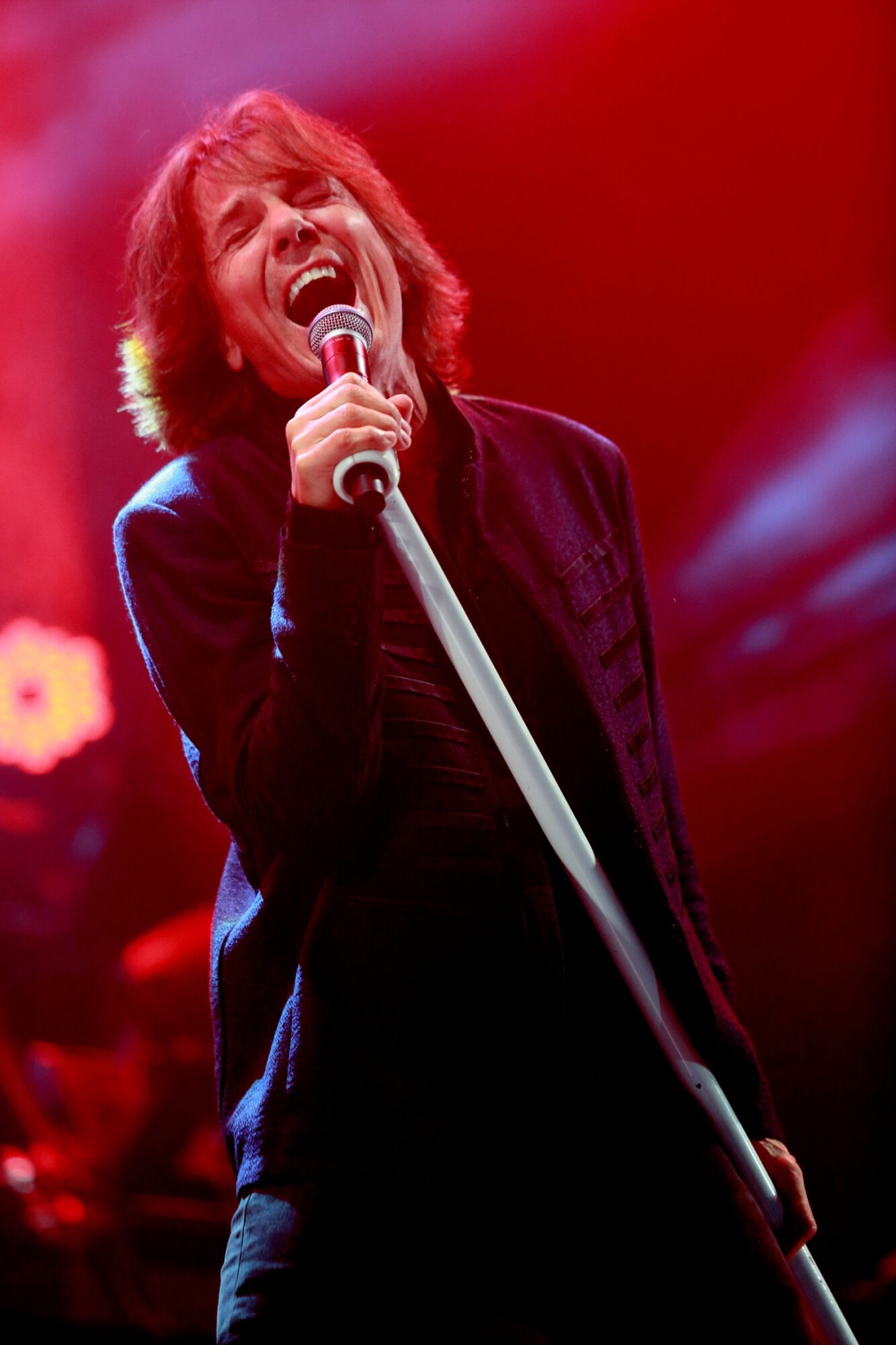
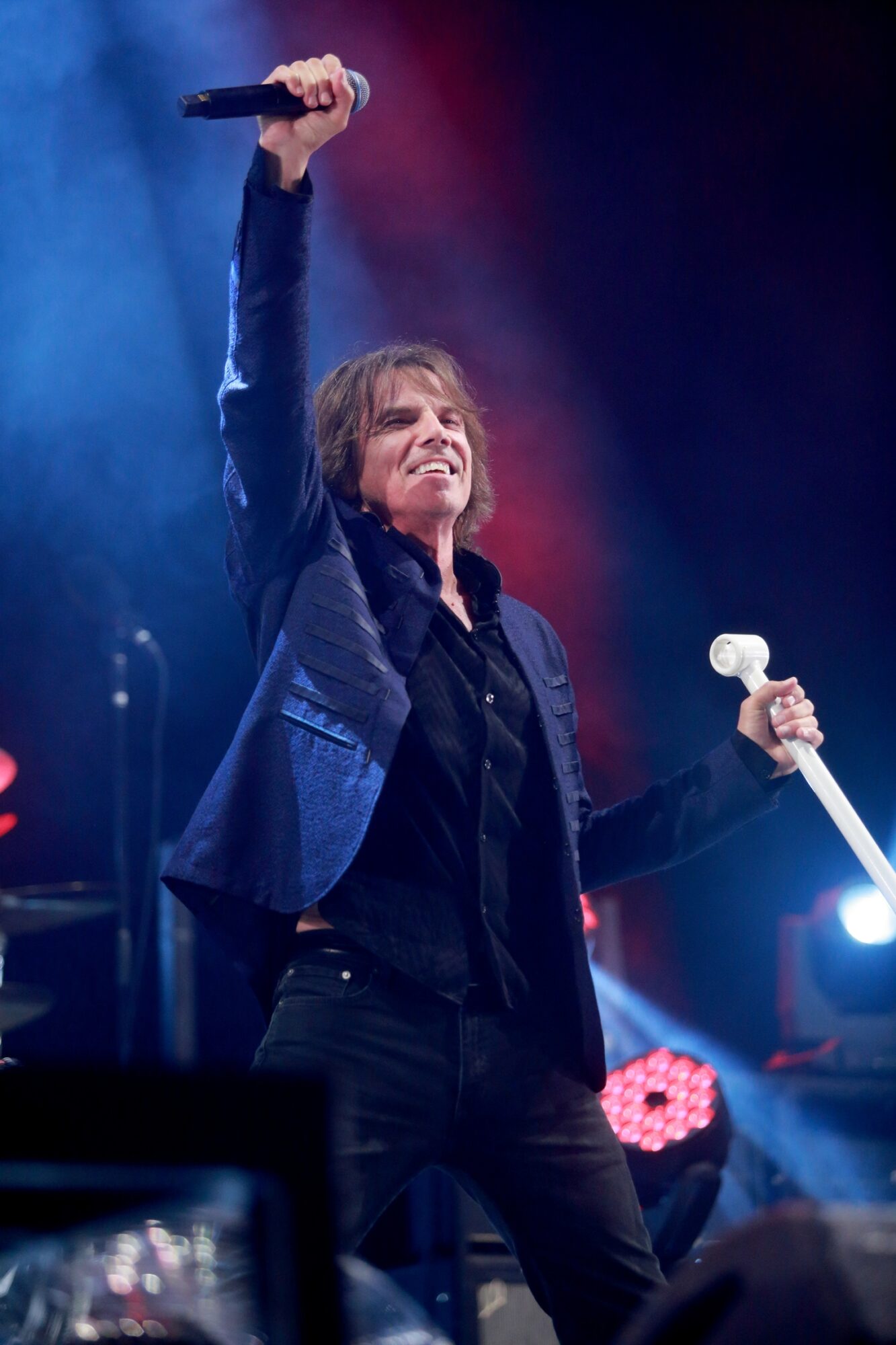
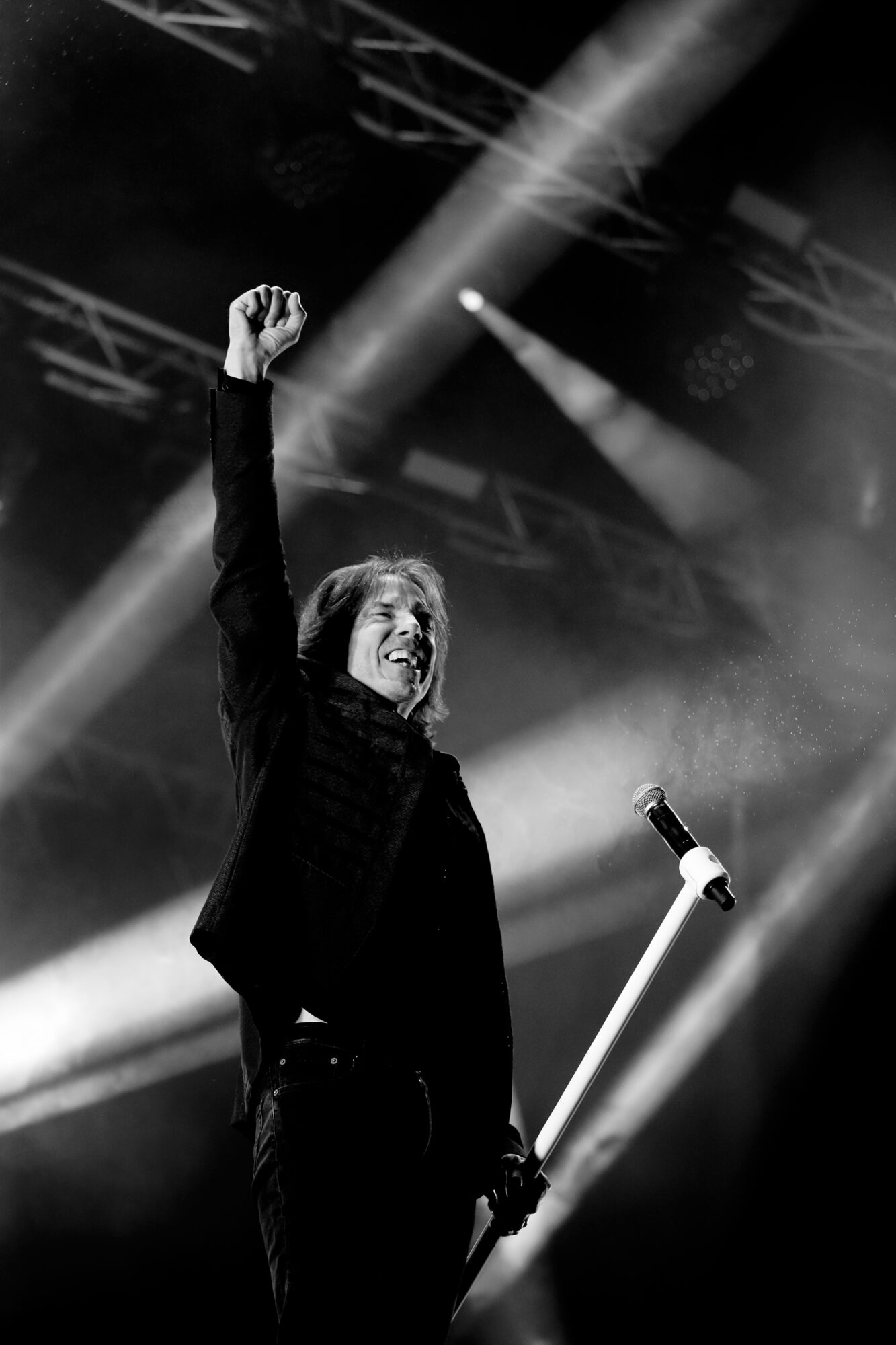
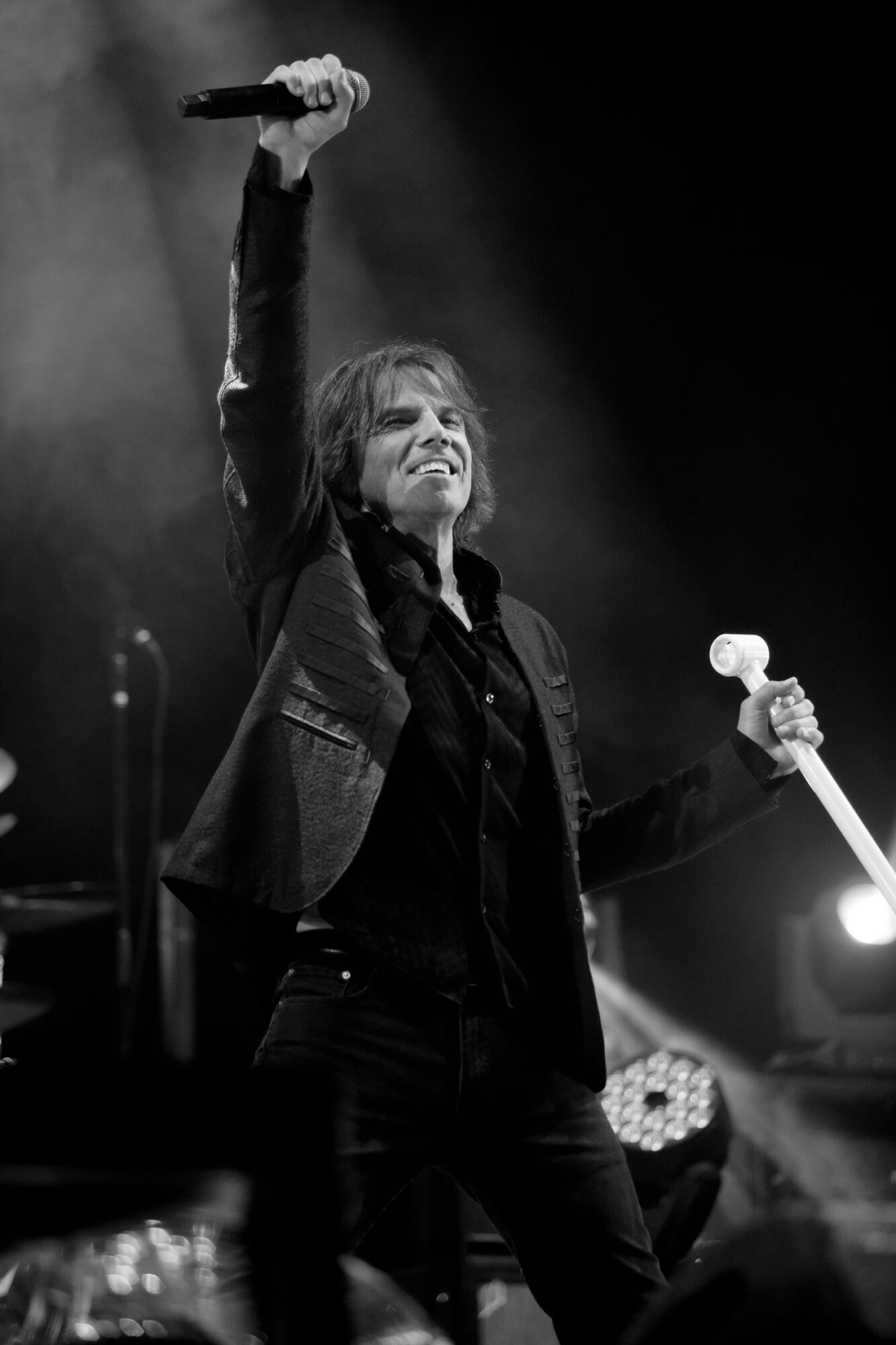
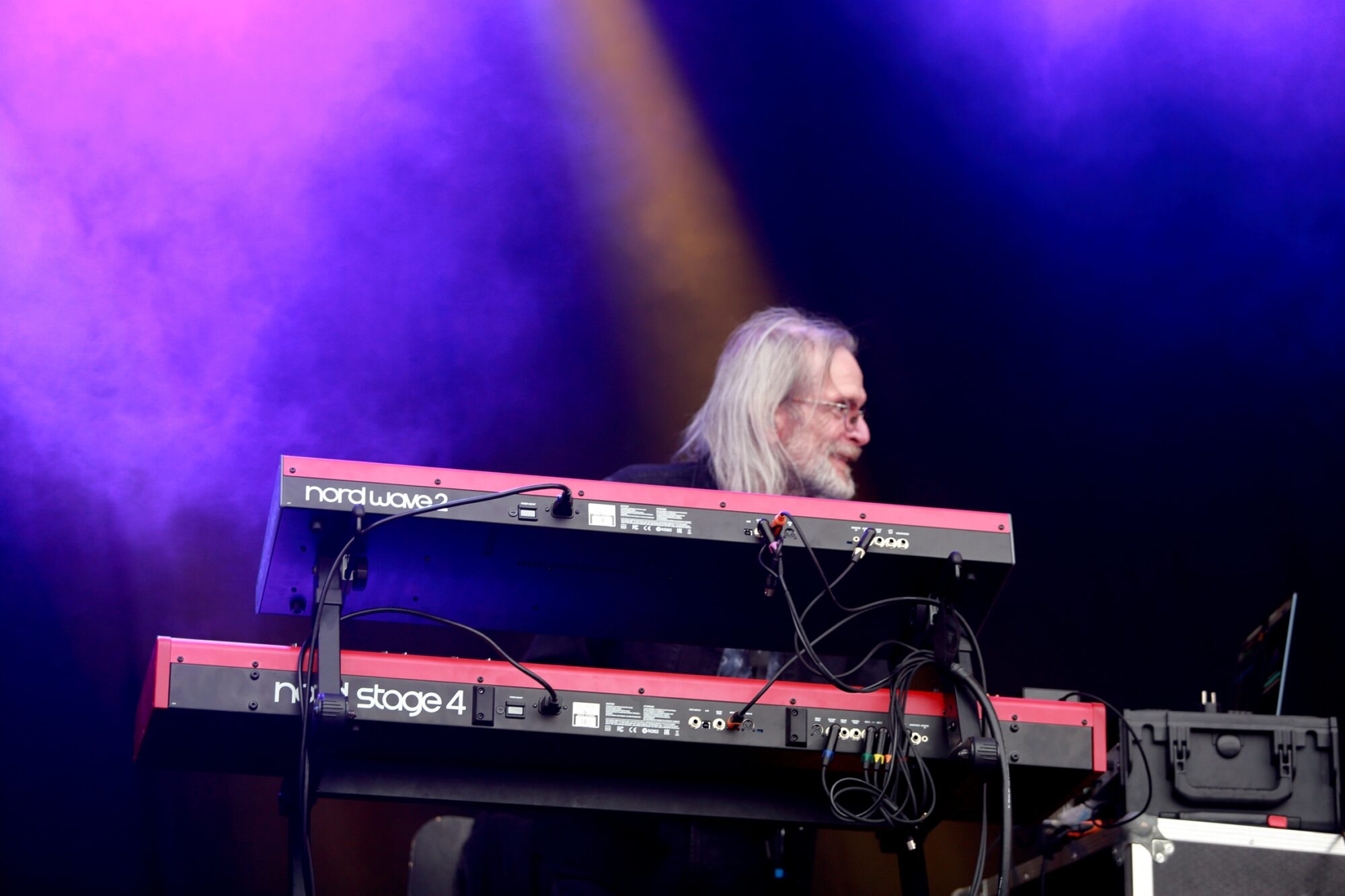
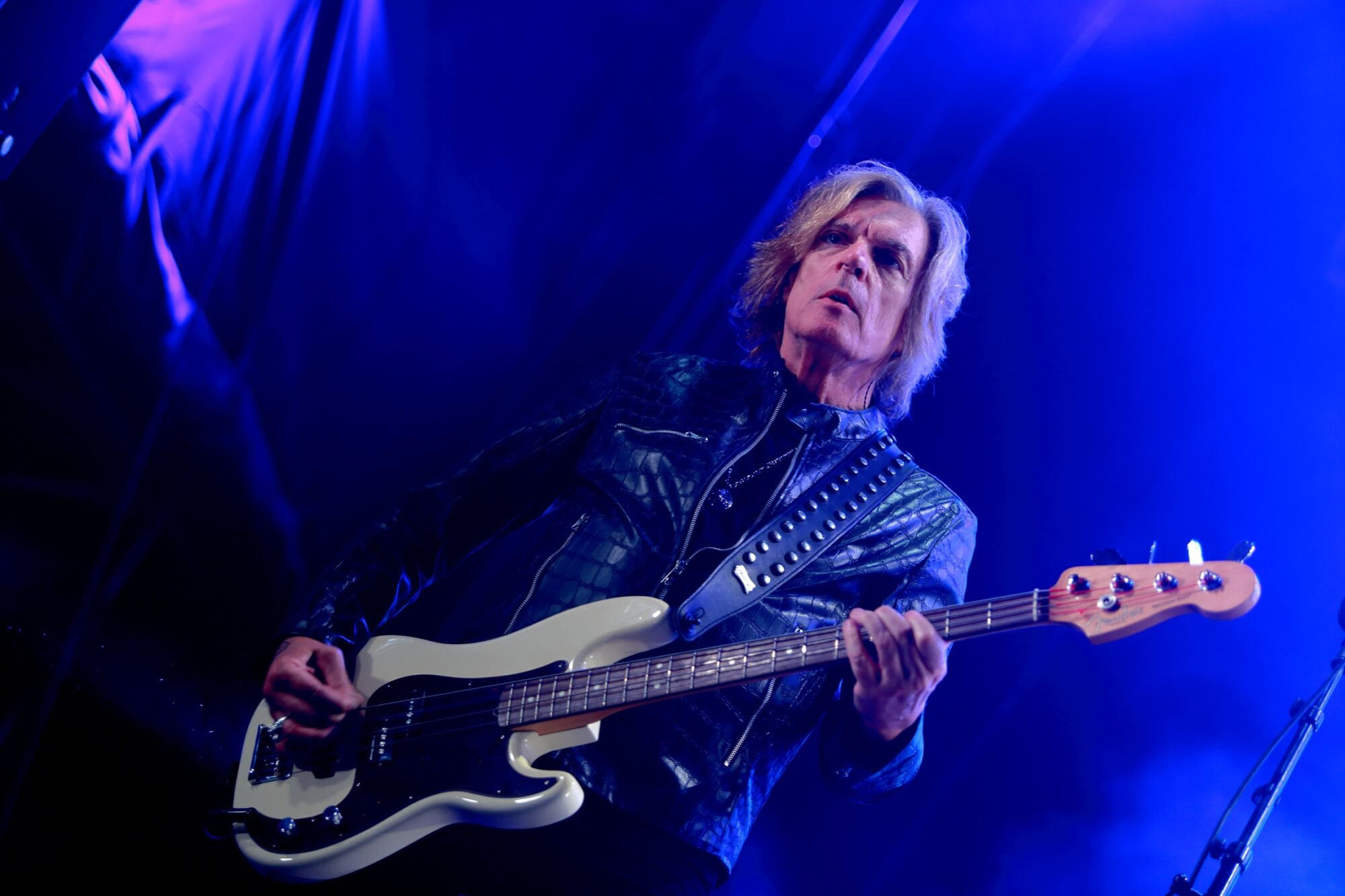
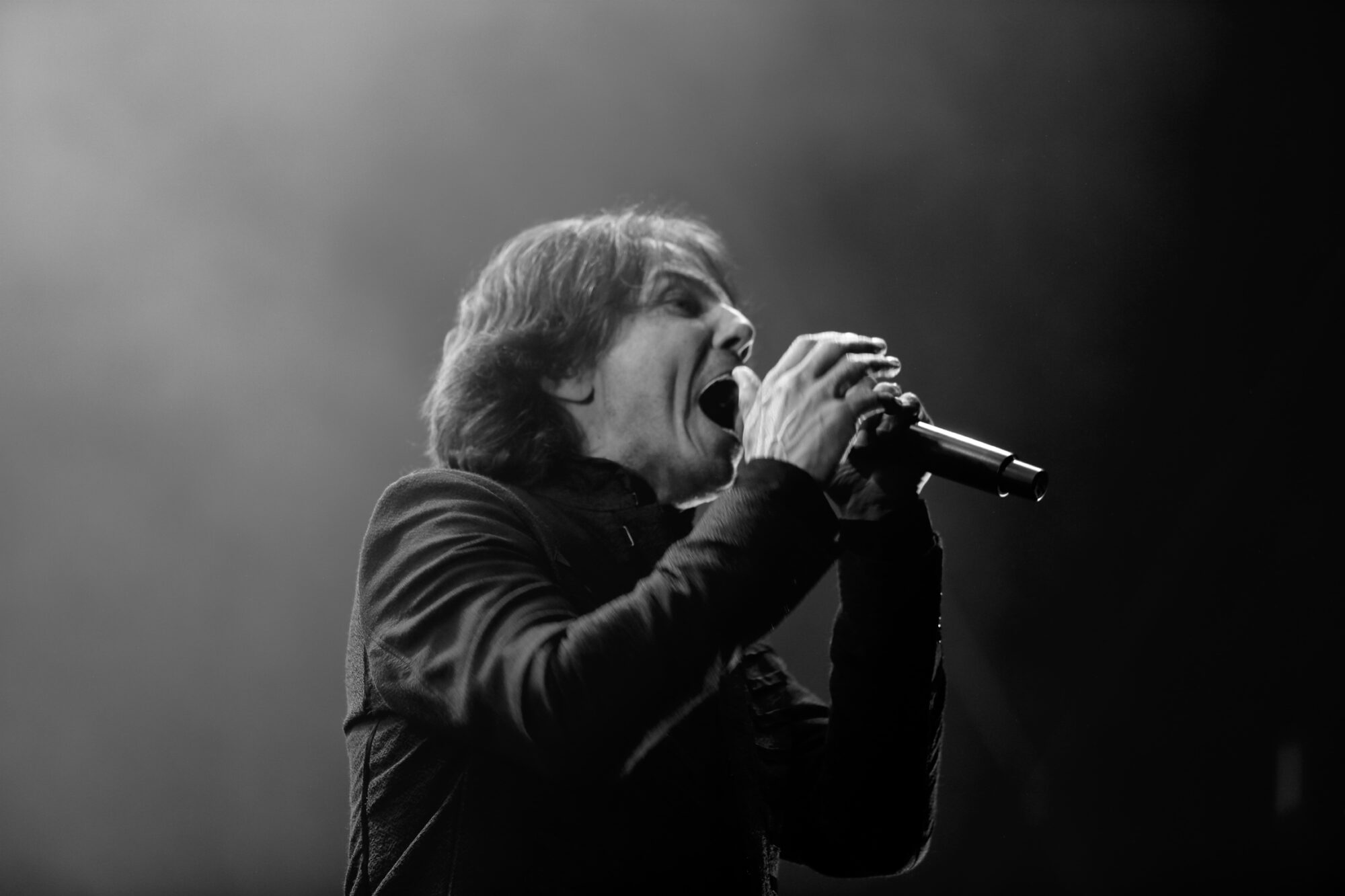
As darkness settled across Newark Showground, attention turned towards the festival’s headliners. For many casual observers, Europe remain forever associated with a single song. However, anyone expecting a one hit wonder relying on nostalgia was quickly reminded just how much depth exists within their catalogue. The Swedish rock legends delivered a headline performance built on confidence, musicianship and songs that have stood the test of time. Joey Tempest was exceptional throughout, effortlessly commanding the vast audience while the rest of the band performed with the ease and assurance that only decades of experience can provide. As the set unfolded, the crowd hung on every moment. Then, eventually, came the song everyone knew was waiting. The unmistakable opening notes of The Final Countdown sparked one final explosion of energy across the arena. The only thing missing was a burst of pyrotechnics to accompany it. Thousands of voices joined together beneath the Nottinghamshire night sky, creating one of those festival moments that lingers long after the lights go down and the journey home begins. It was the perfect ending to a remarkable day and a fitting conclusion to another successful Stonedead Festival.
Sunday: The Long Walk Home.
By Sunday morning, the atmosphere around Newark Showground had changed once again. The crowds that had filled the arena less than 24 hours earlier were now packing tents, loading campervans and beginning their journeys home. For the festival goers, Stonedead 2026 was drawing to a close. For the Arena Team, however, there was still plenty of work to do.
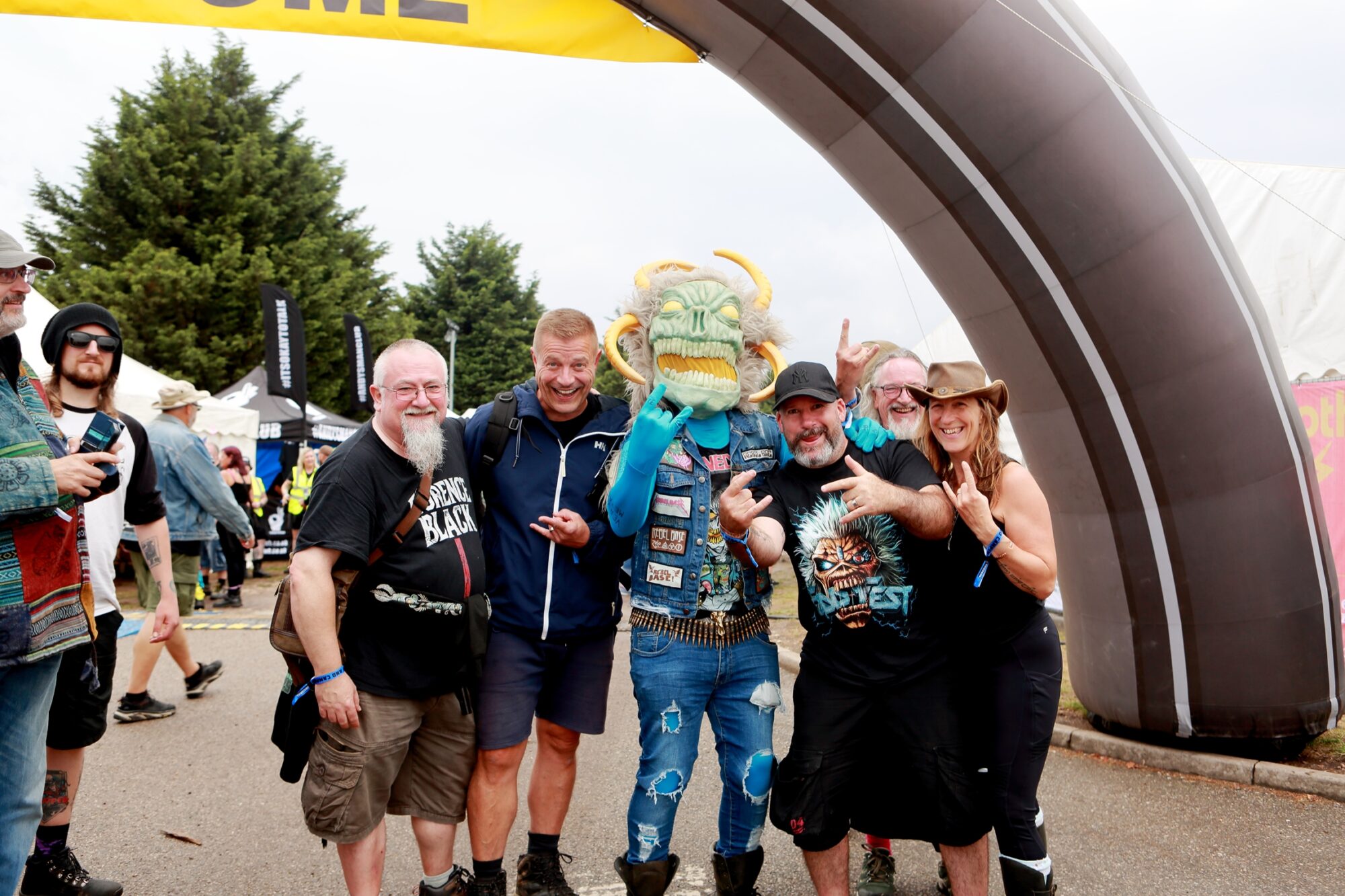

Almost as soon as the final campers started drifting towards the exits, we began dismantling the infrastructure we’d spent the previous week constructing. There’s something almost surreal about watching a festival disappear. The same fencing runs that had taken days to position and secure were soon being unclipped, stacked and loaded away. Routes that had guided thousands of people around the site gradually vanished, while compounds, vendor areas and security zones quickly reverted to open space. What struck me most was just how quickly it all came down compared to how long it had taken to build. Piece by piece, the framework of the festival disappeared until Newark Showground once again began to resemble the empty venue that had greeted us on arrival a week earlier. By then, the miles were beginning to catch up with us.

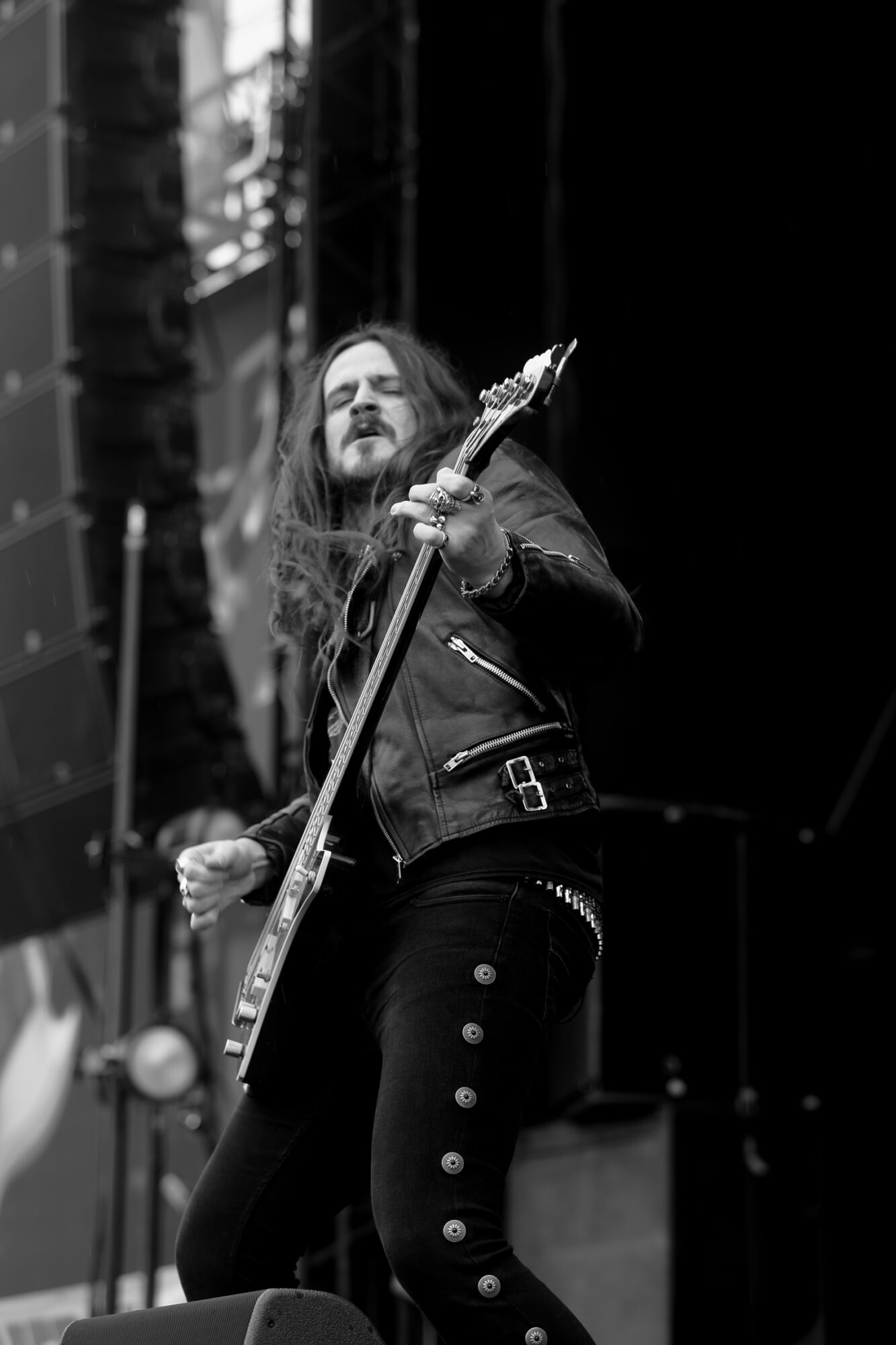
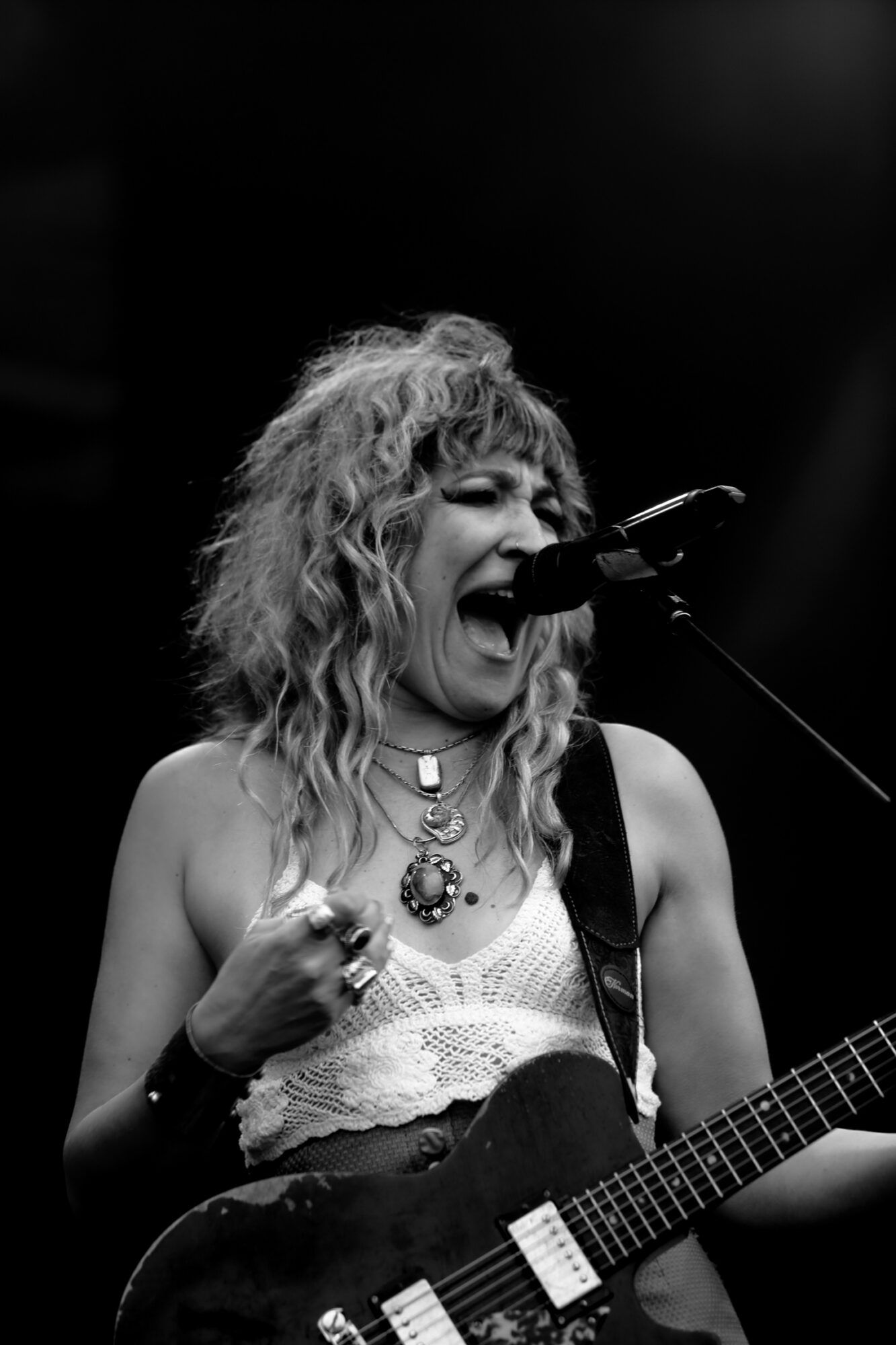
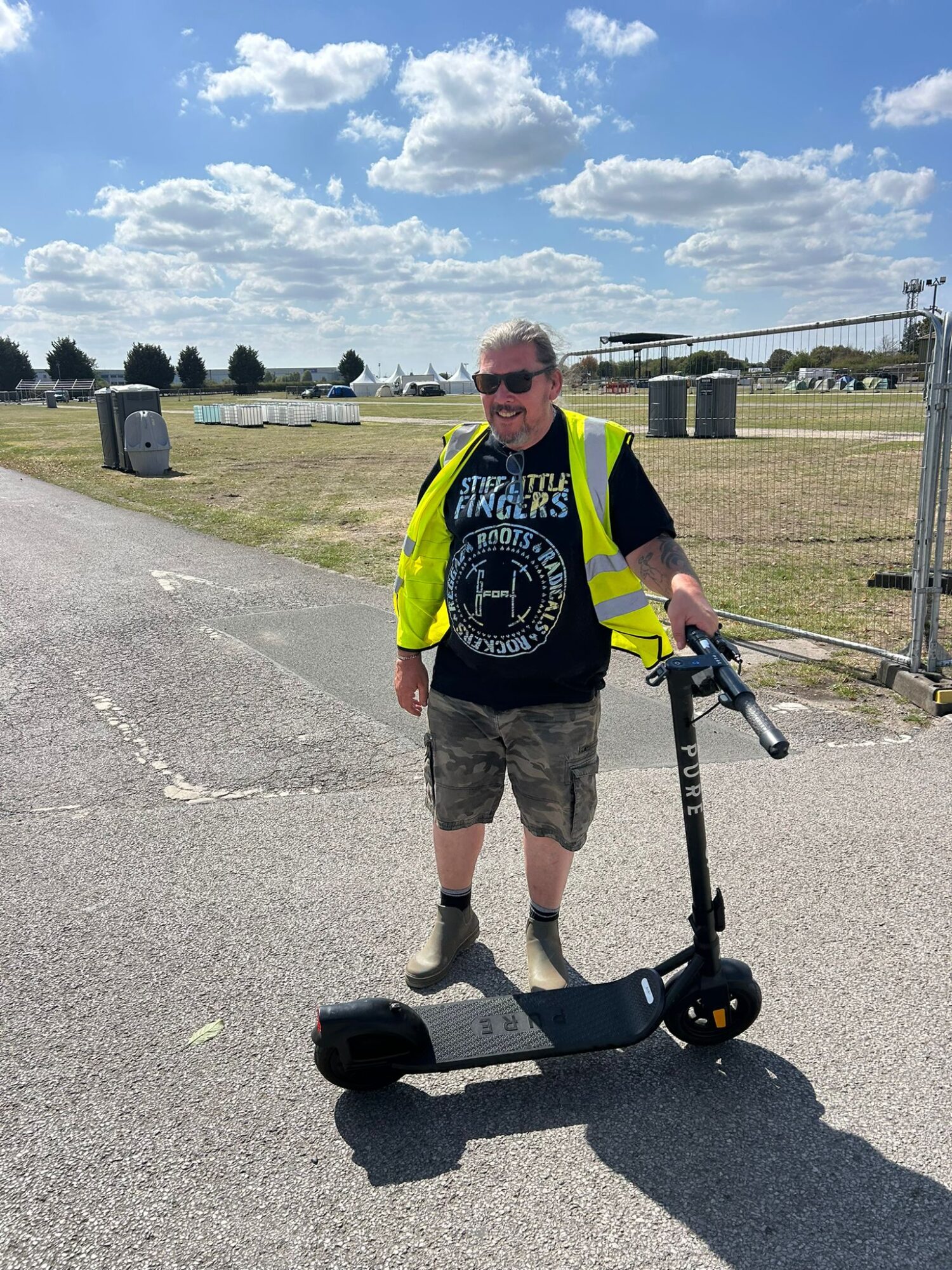
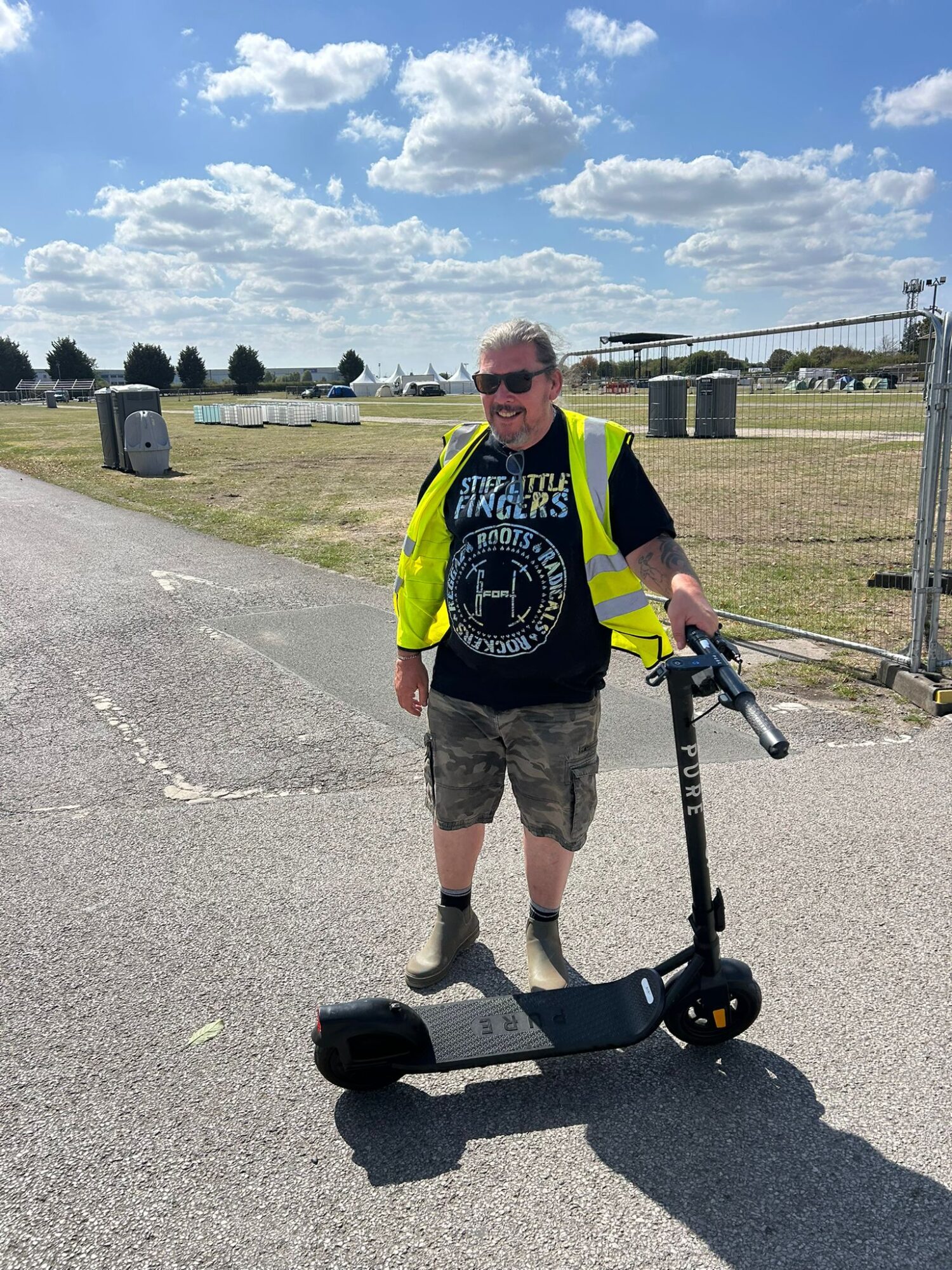
After seven days on site, our legs were certainly feeling the effects. Fencing panels don’t move themselves, and it often felt as though the Arena Team was constantly on the move from one side of the site to the other. Even with occasional assistance from an electric golf buggy, I still managed to average around 18,000 steps a day across the festival week, which gives some idea of the distances involved in keeping a site of this size running smoothly. The numbers might not sound spectacular to seasoned hikers, but when many of those steps involve carrying fencing panels, moving equipment, servicing bins or responding to requests from across the site, they soon add up.
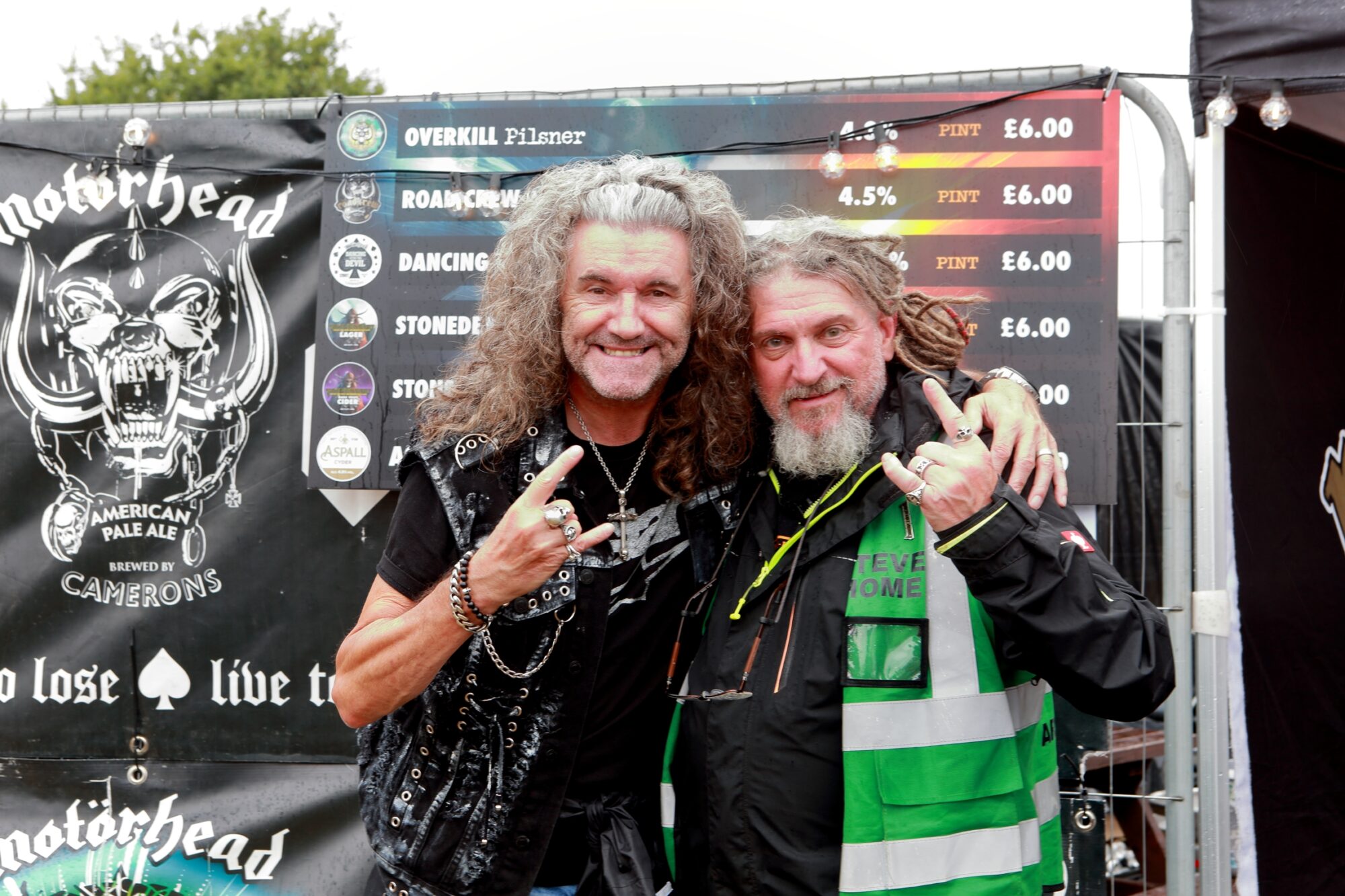
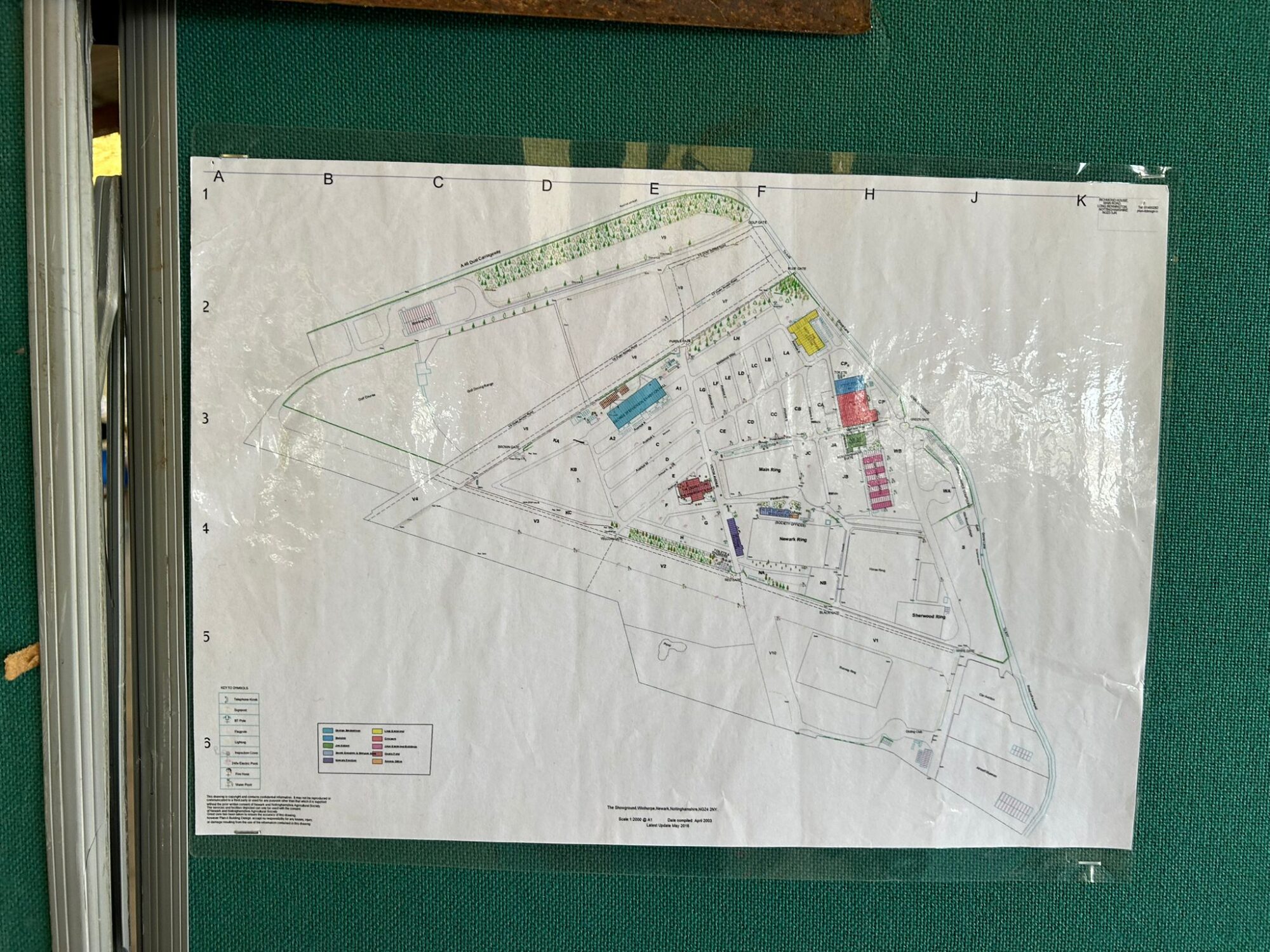
Out of all the volunteer teams at Stonedead, I’d argue we probably cover more ground than most. Whether it was establishing vendor compounds, positioning toilets, creating VIP areas, creating vehicle and pedestrian access routes, securing walkways, servicing bins during the live event or responding to last-minute requests or issues, it seemed the next job was always at the opposite end of the festival.
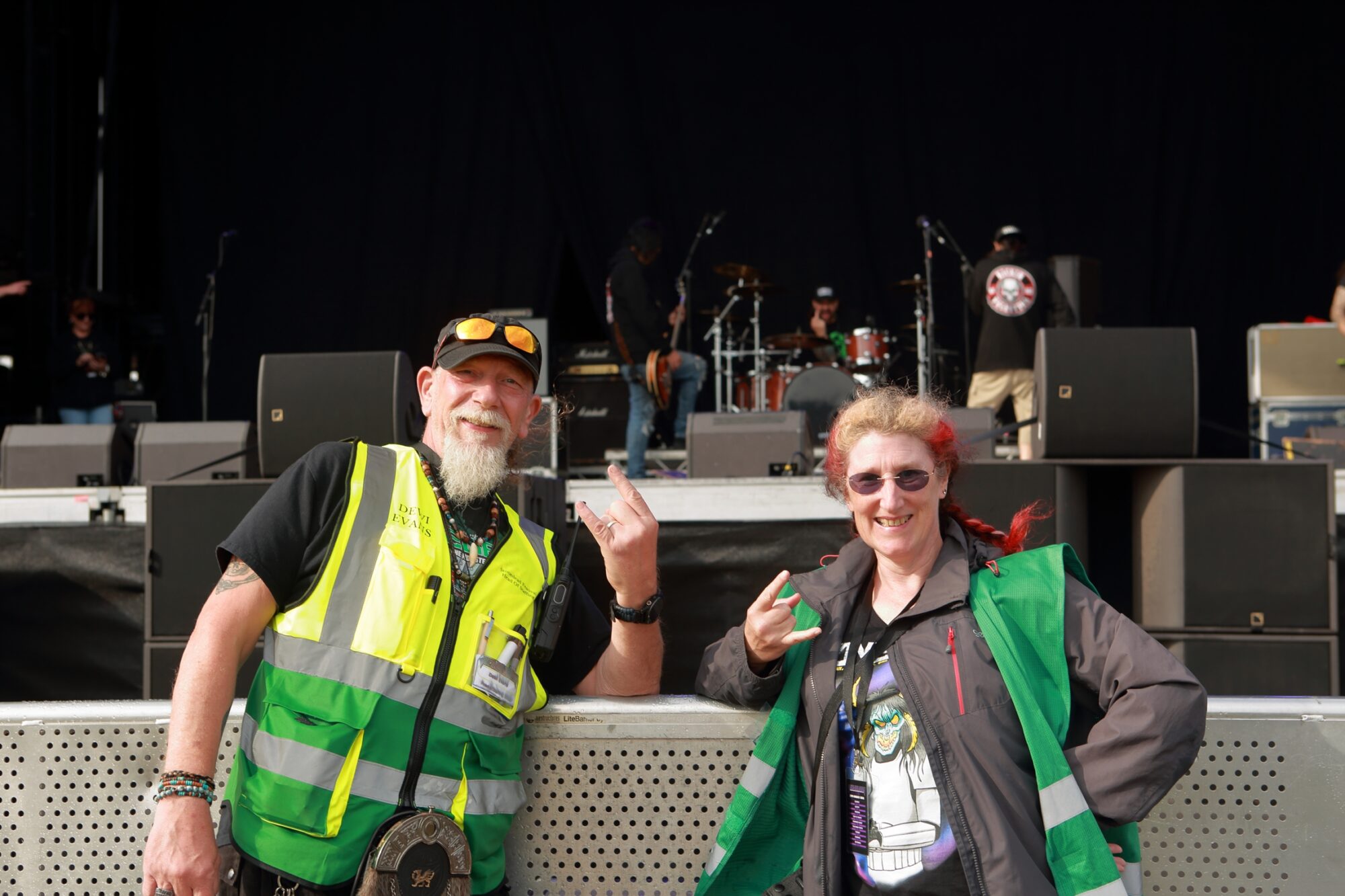
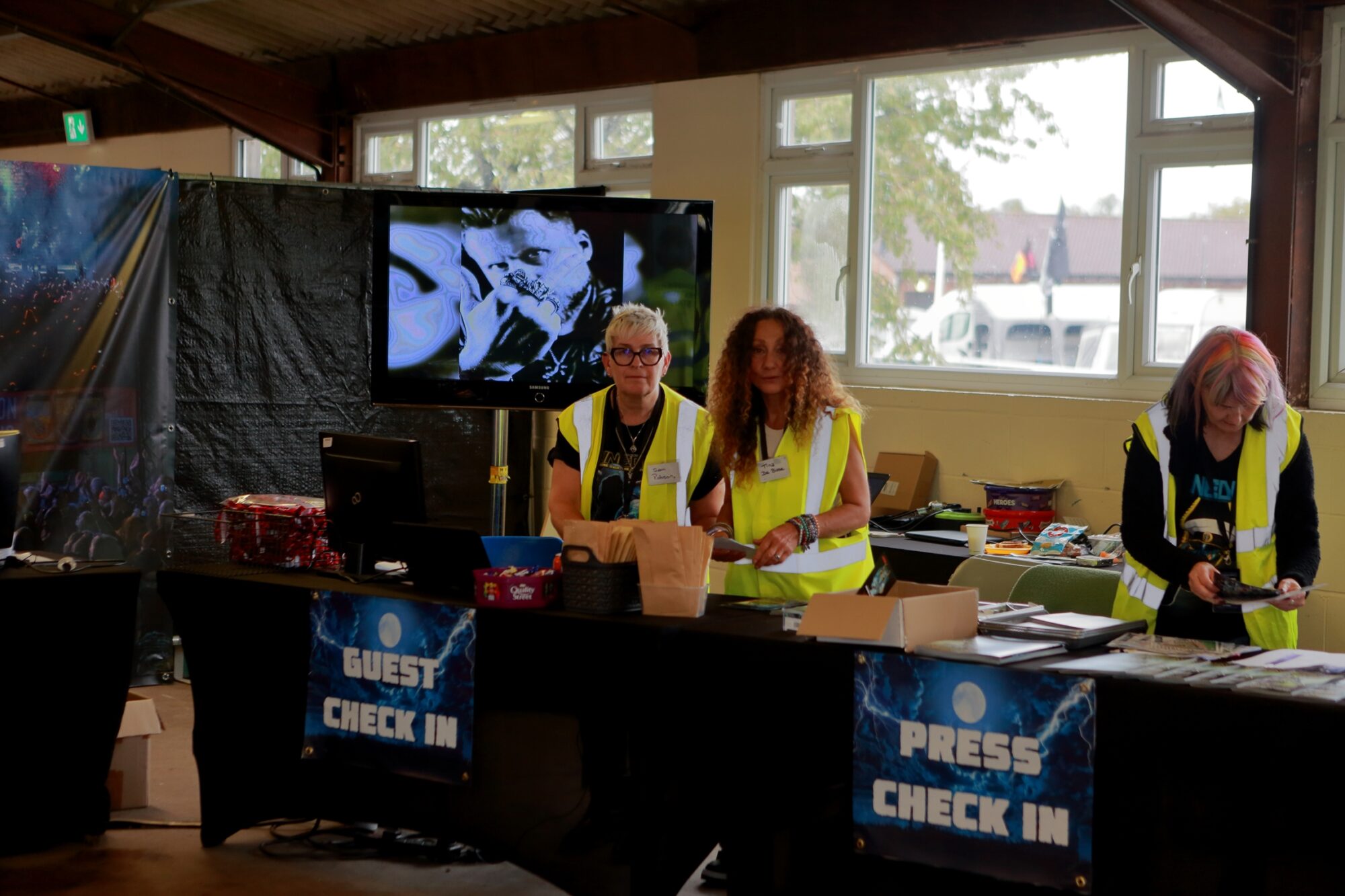
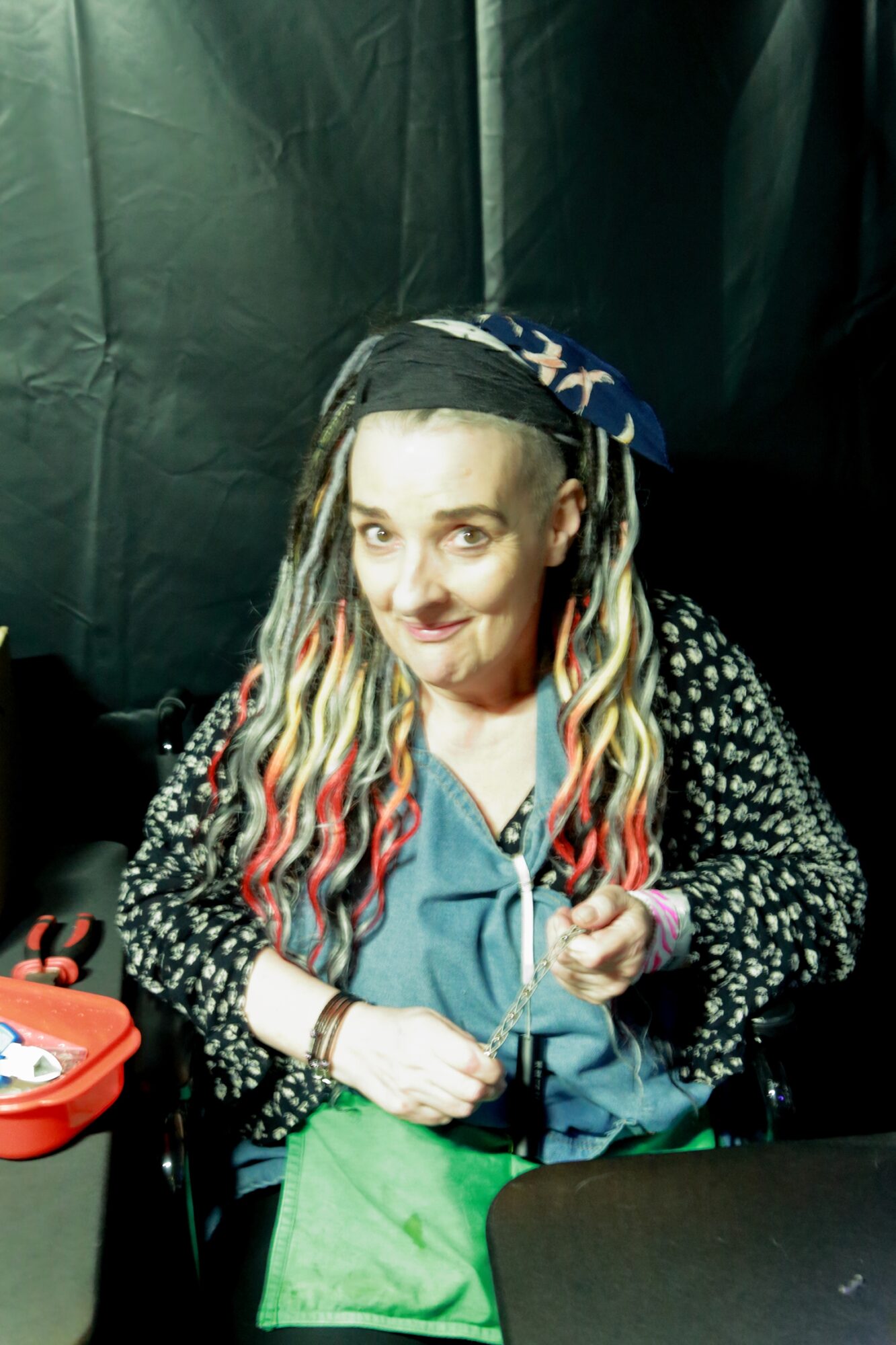
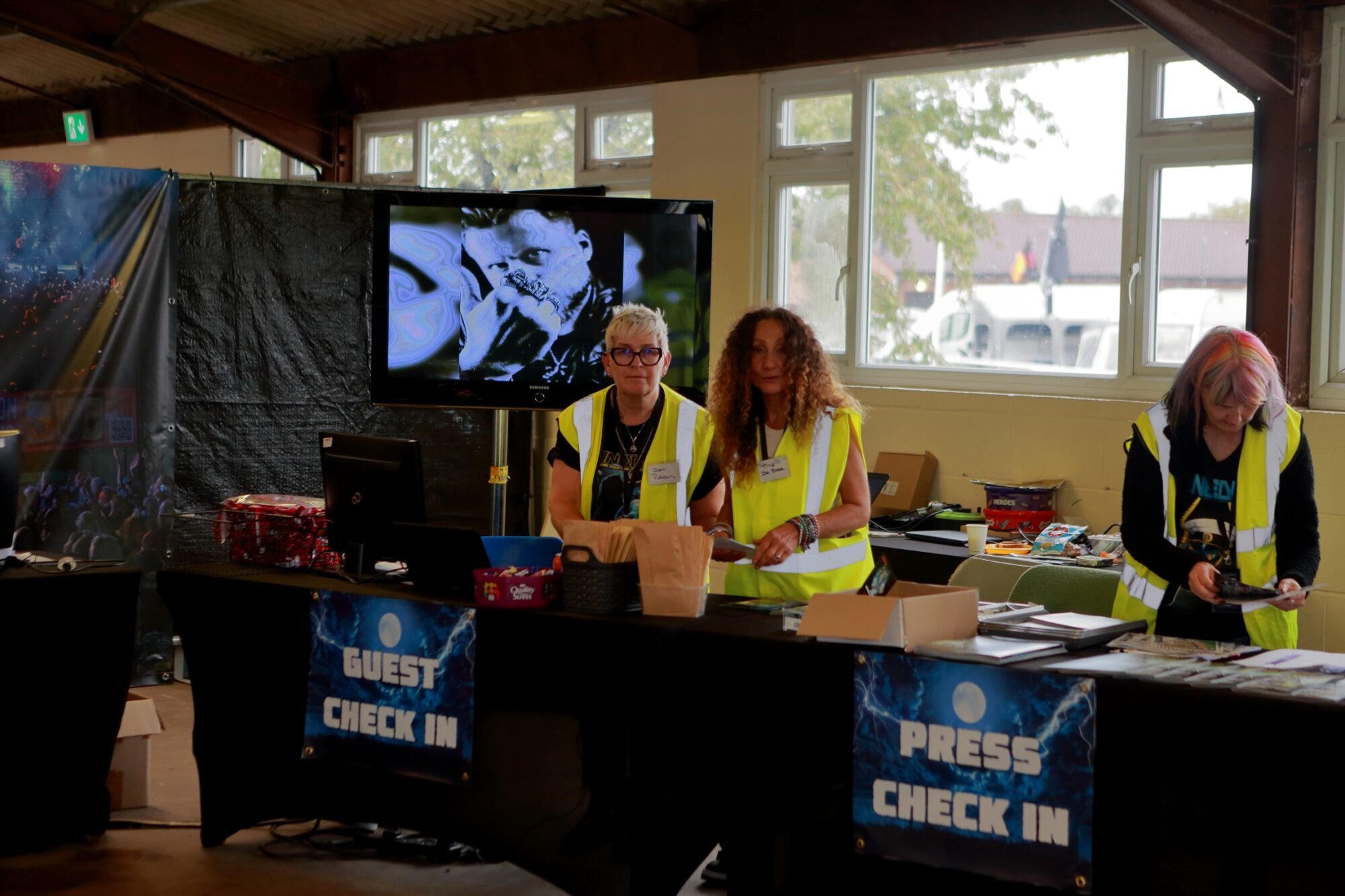
While I spent the week with the Arena Team, my wife experienced Stonedead from a very different perspective. She worked throughout the build and festival weekend in the Production Office, one of the busiest and arguably most important areas on site. Her role was to manage and distribute VIP tickets, wristbands and guest passes as artists, crew members, media representatives and invited guests arrived throughout the week. It sounds straightforward on paper, but during a festival build there is a constant stream of people checking in, collecting accreditation and requiring access to different parts of the site. Accuracy is essential, and as the weekend approaches the Production Office becomes a hive of activity. While we were walking miles across Newark Showground erecting fencing, positioning infrastructure and responding to requests from around the site, the Production Office was ensuring that the right people had the right access at the right time. It’s another one of those roles that festival goers rarely see, yet one that is absolutely vital to the smooth running of the event.
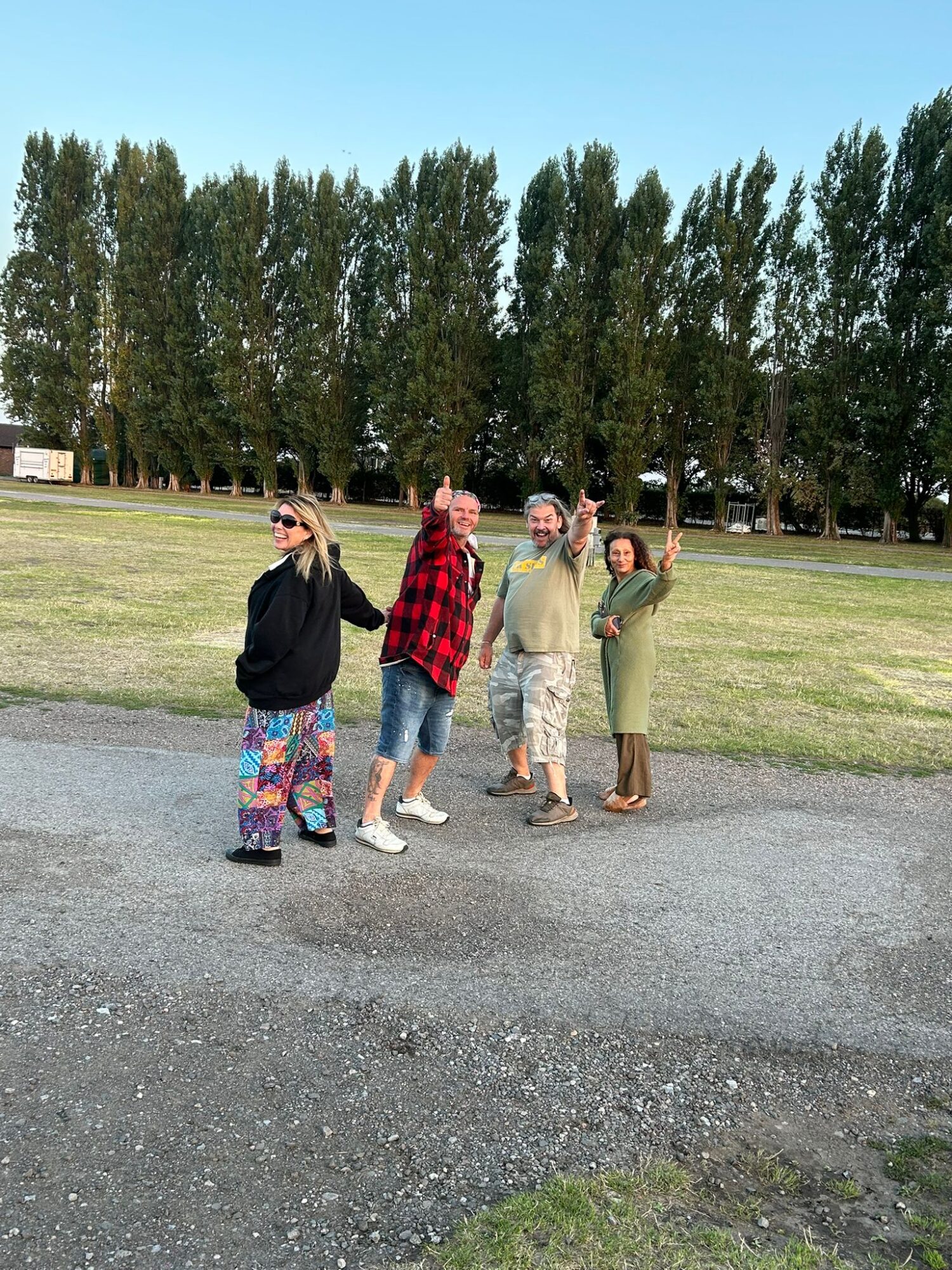
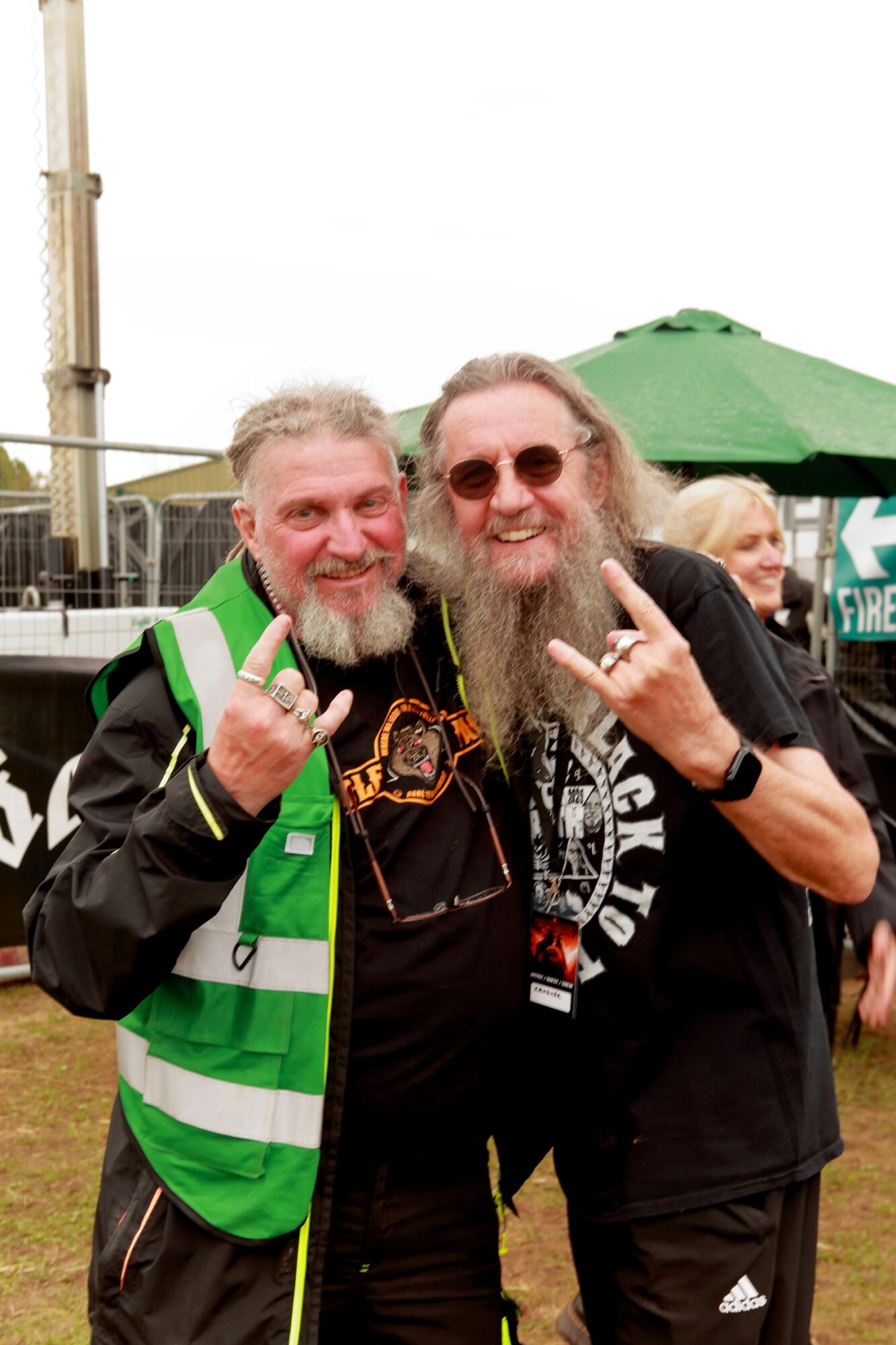
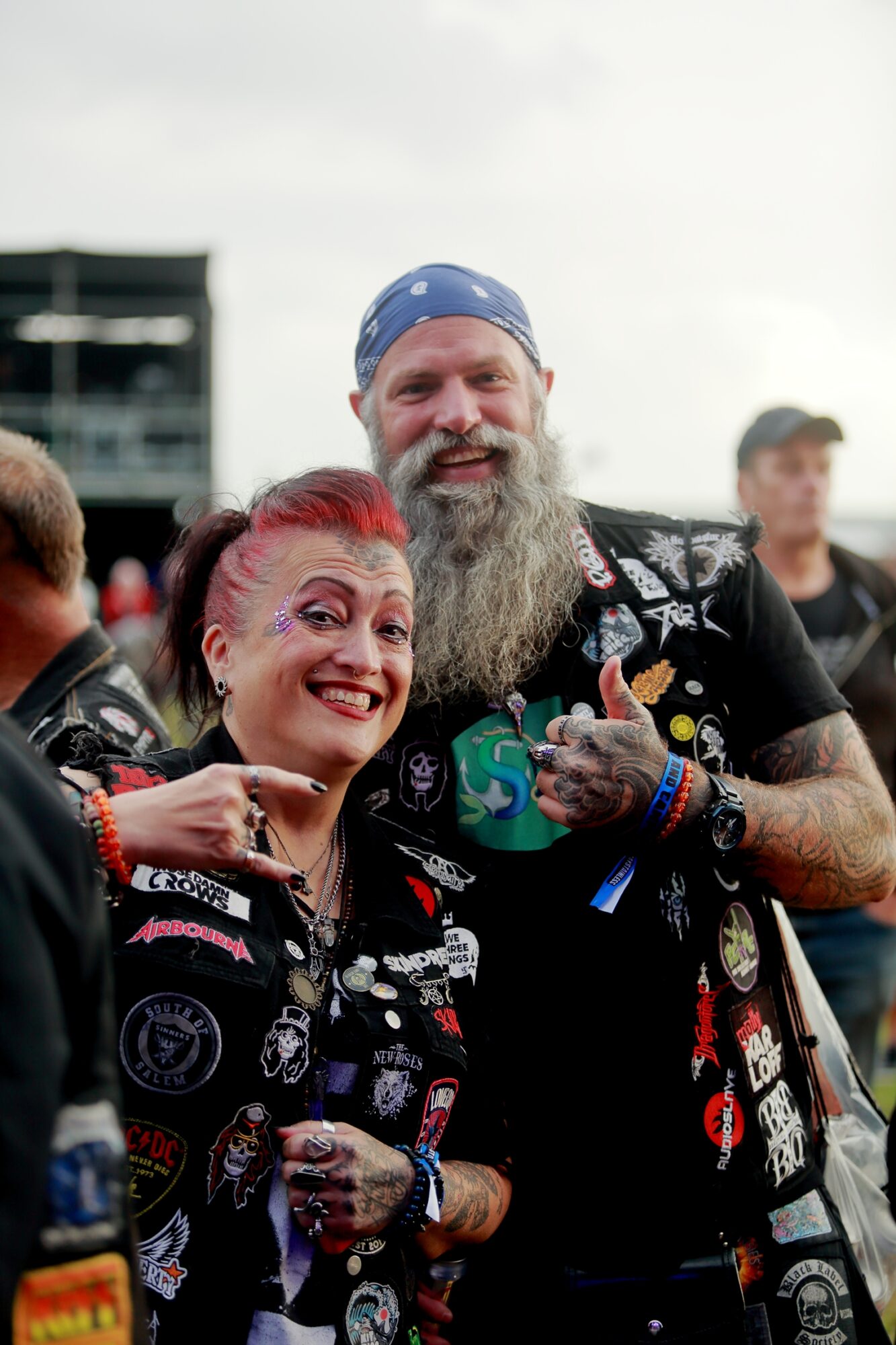
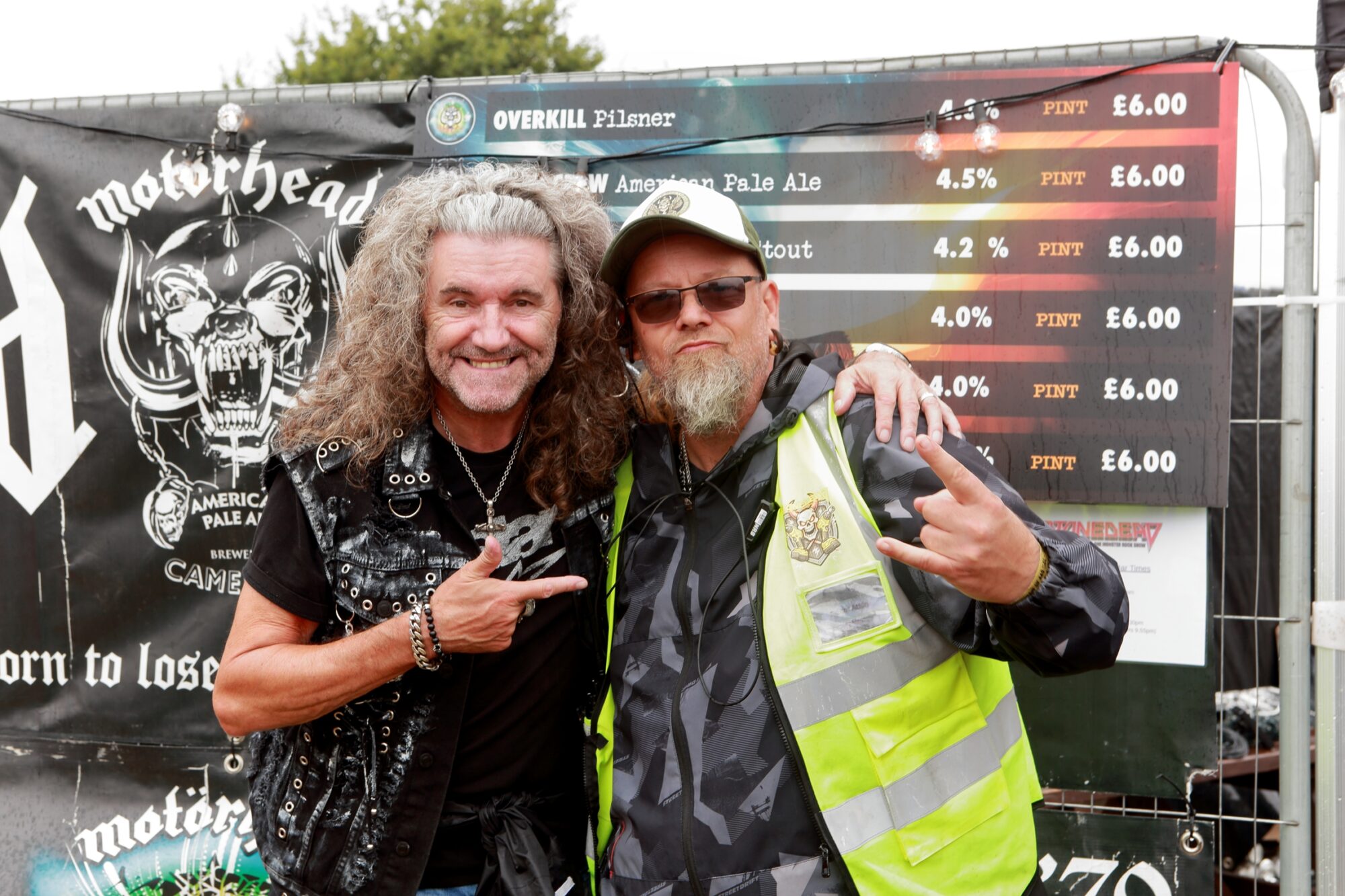
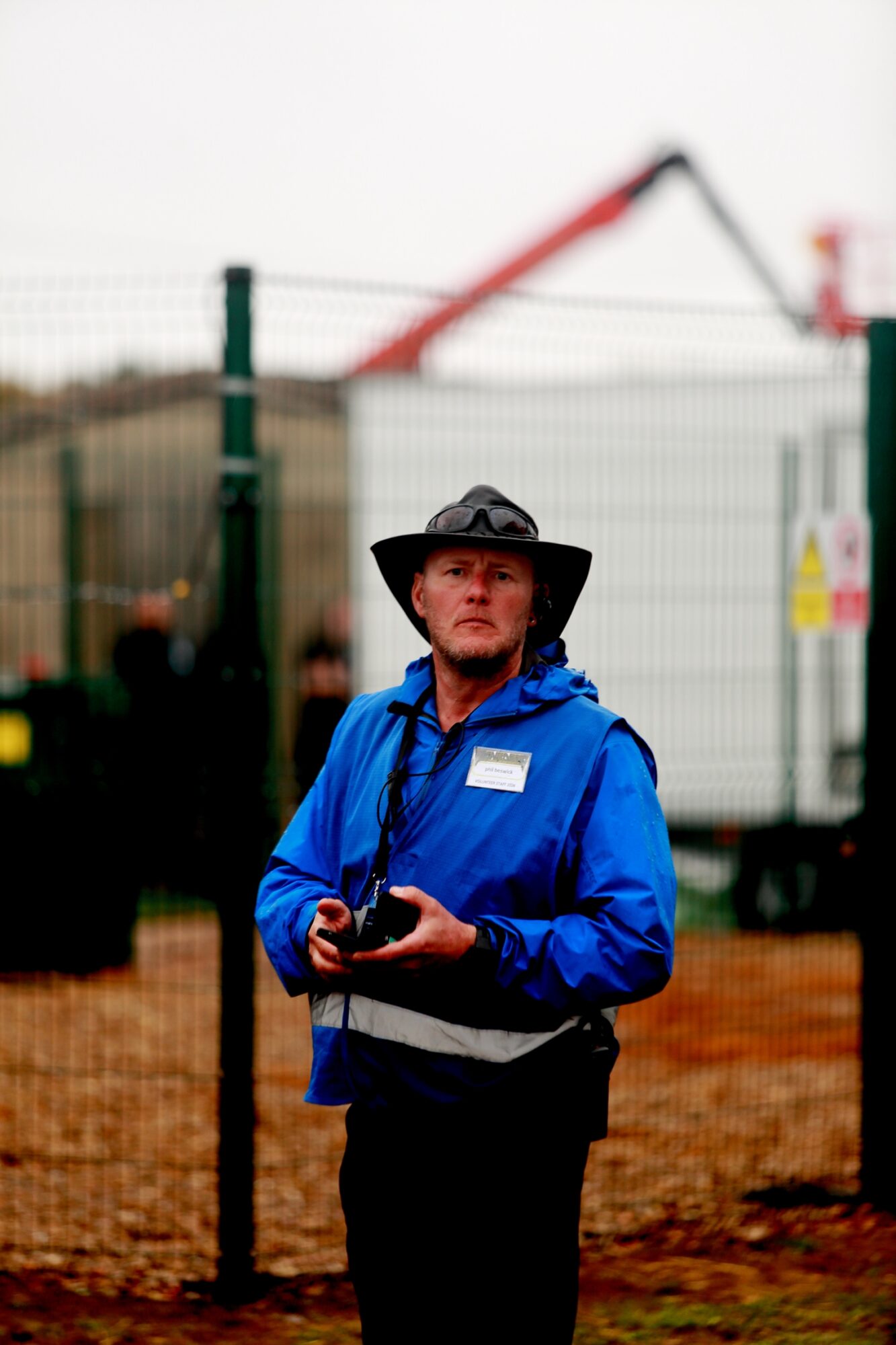
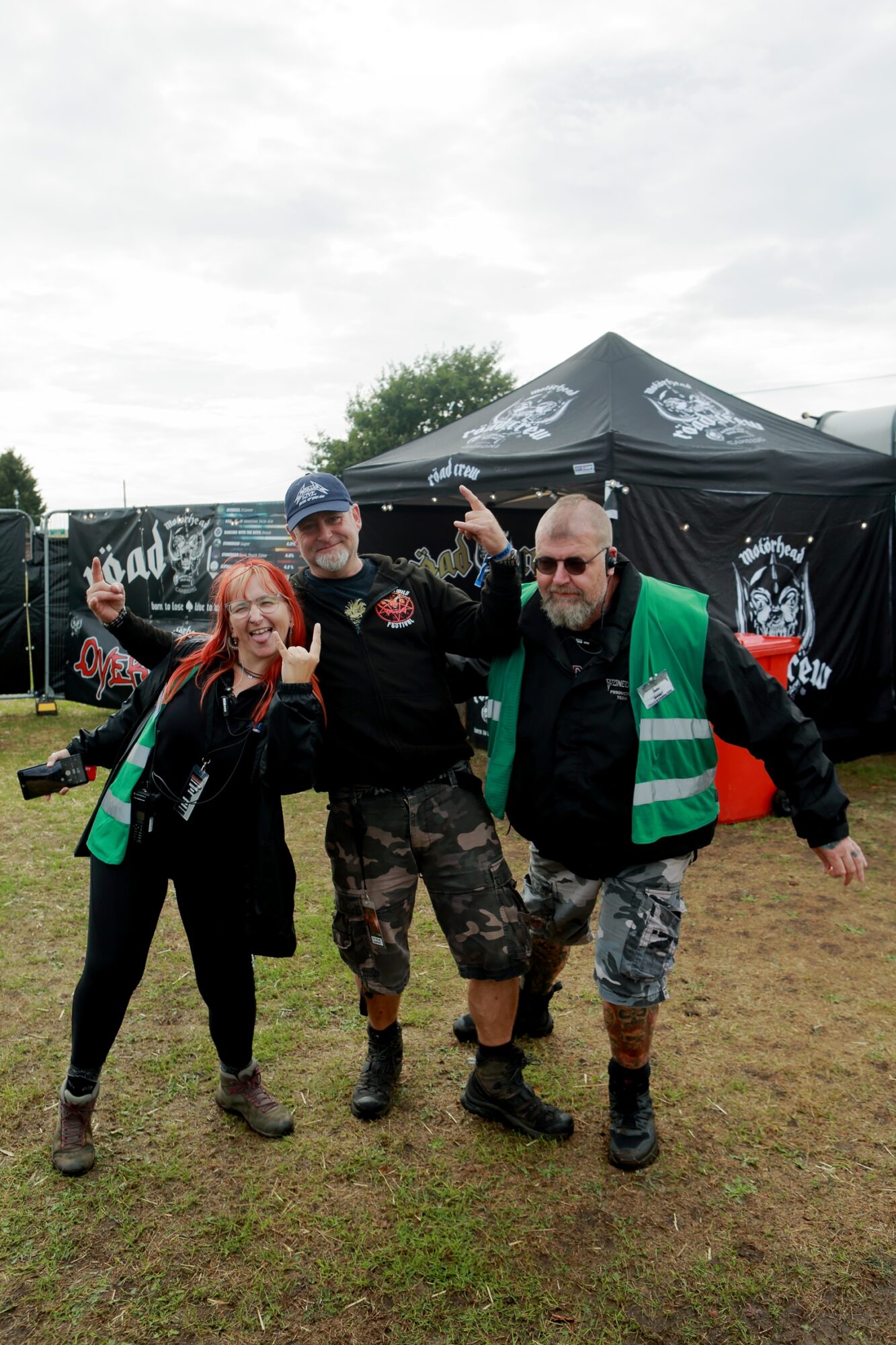
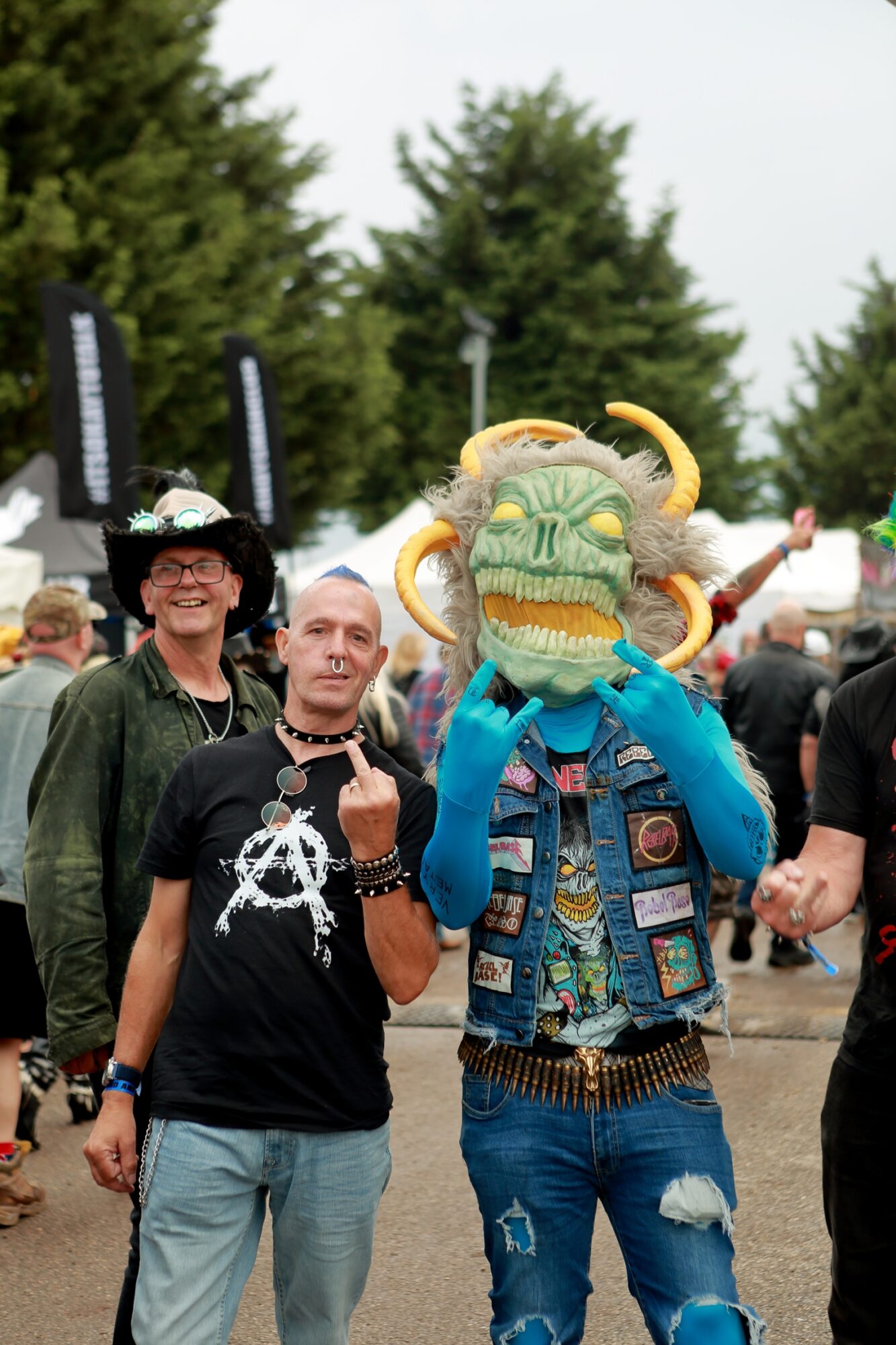
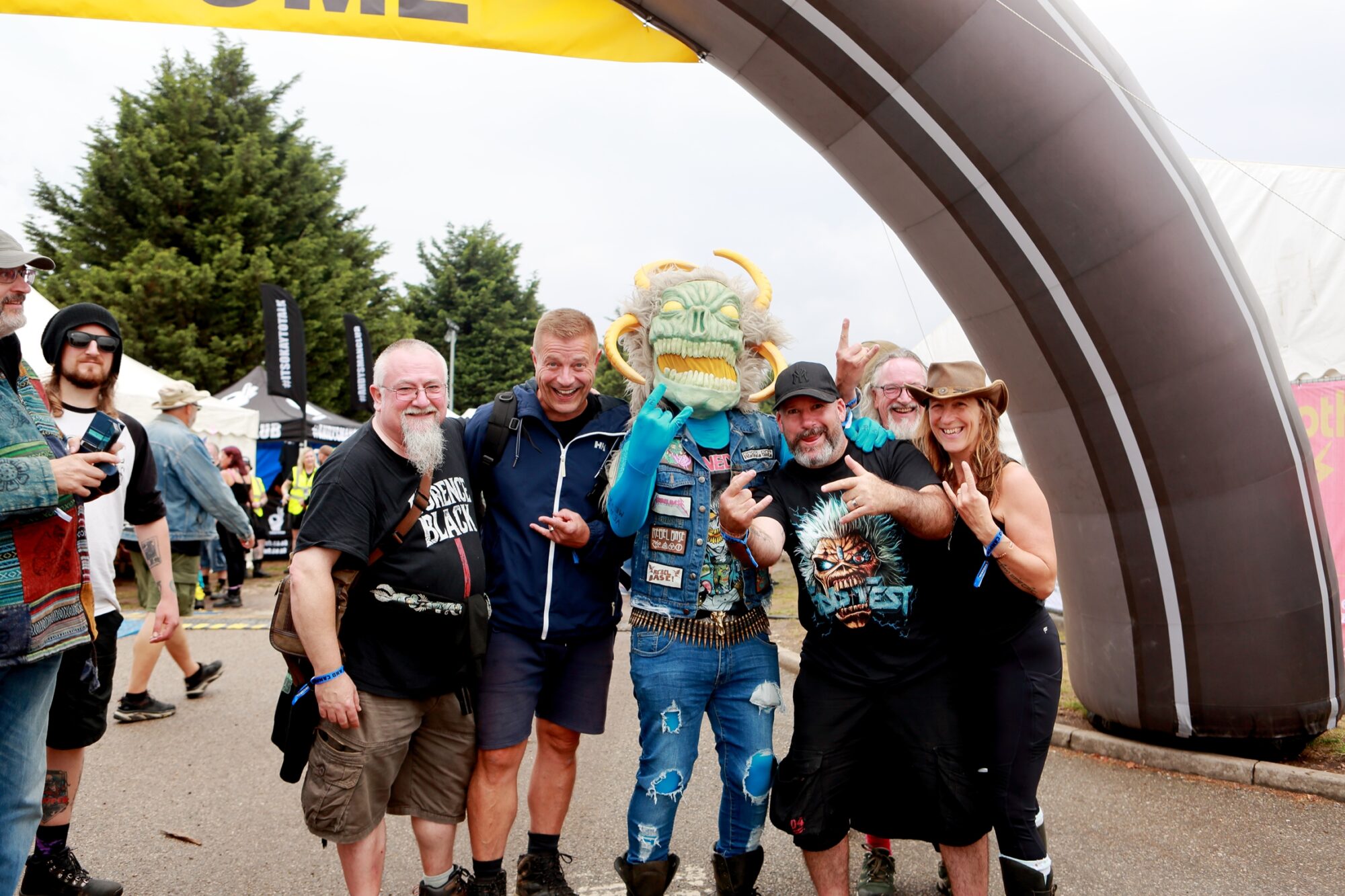
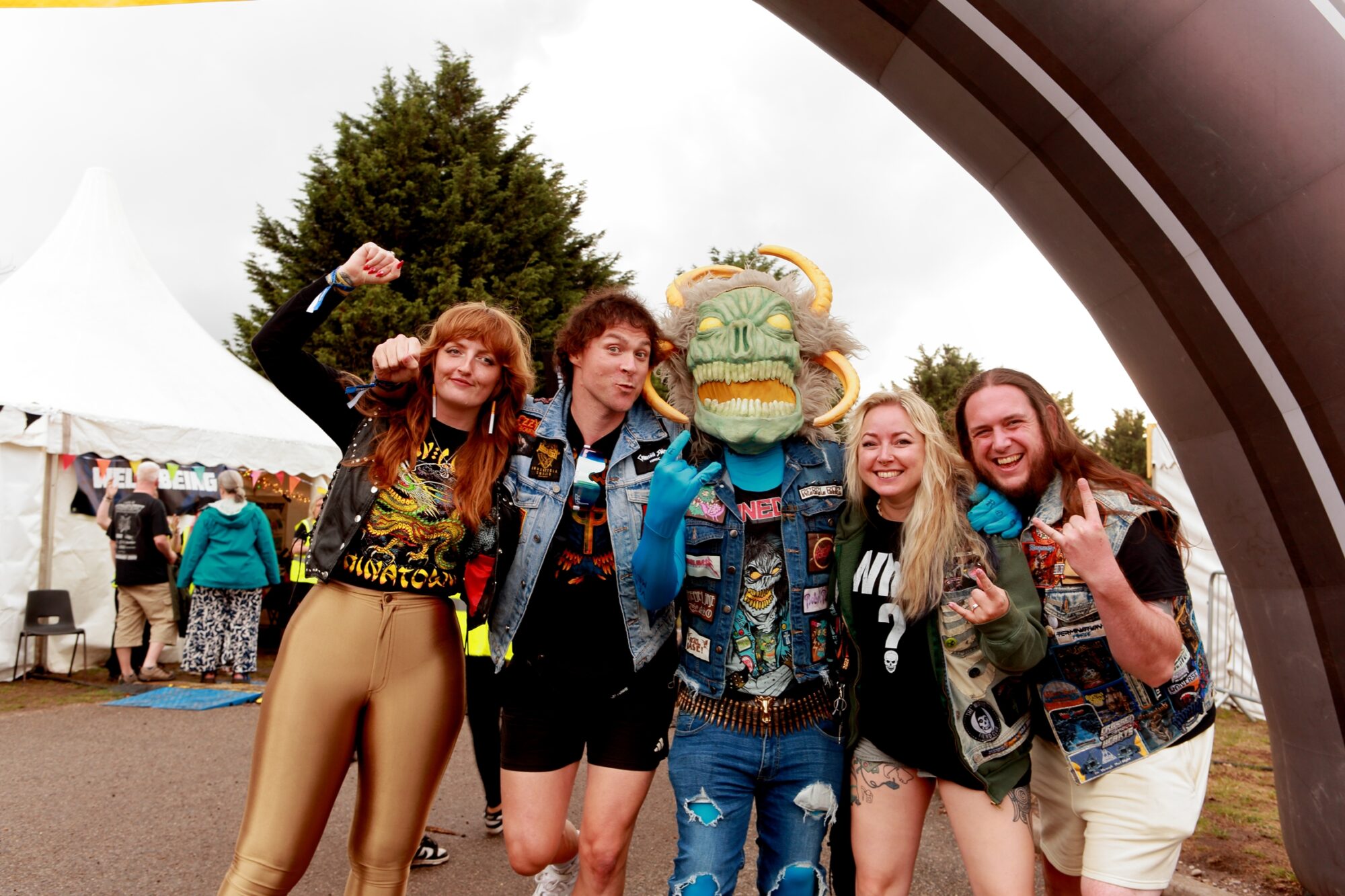
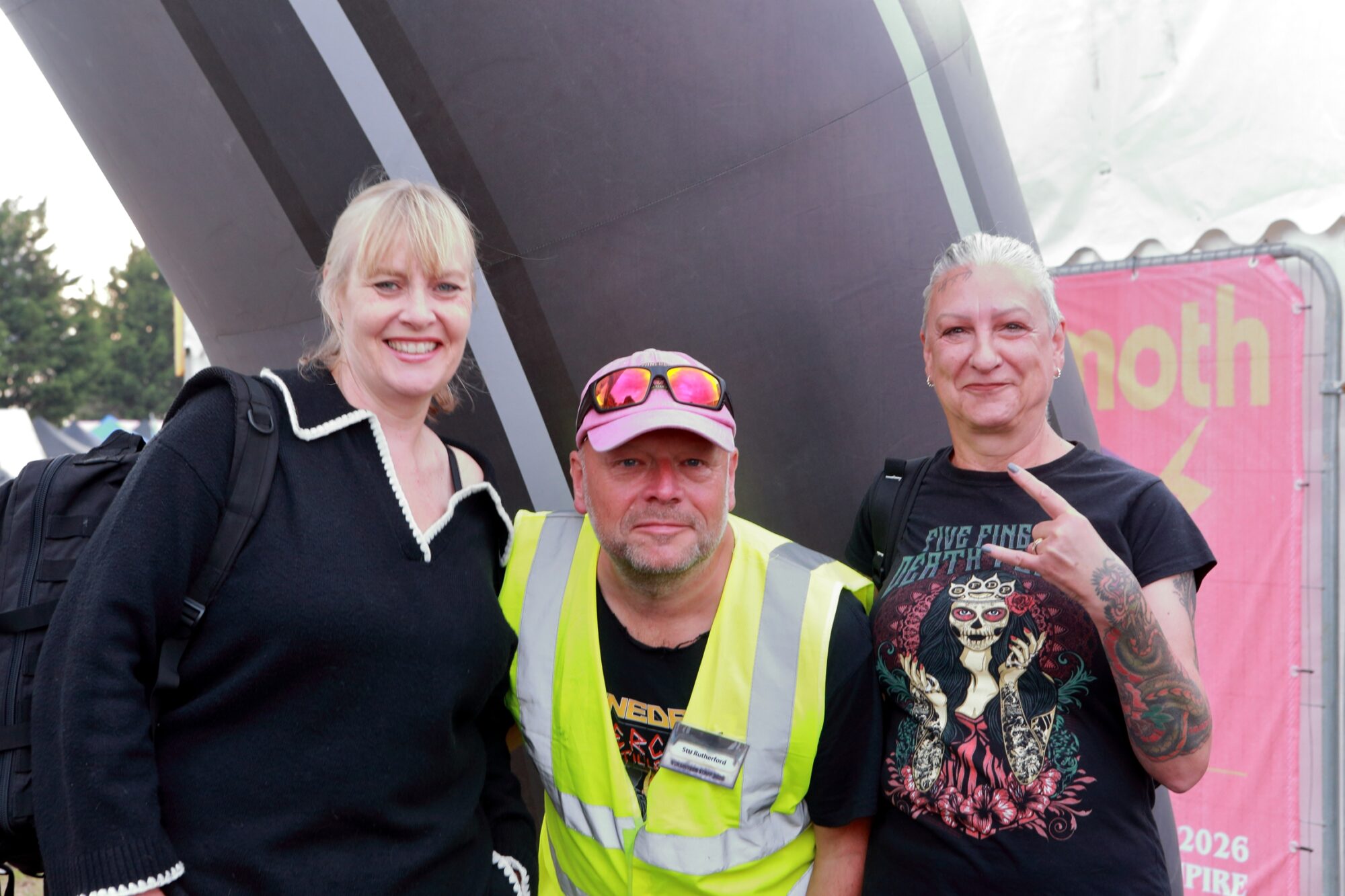
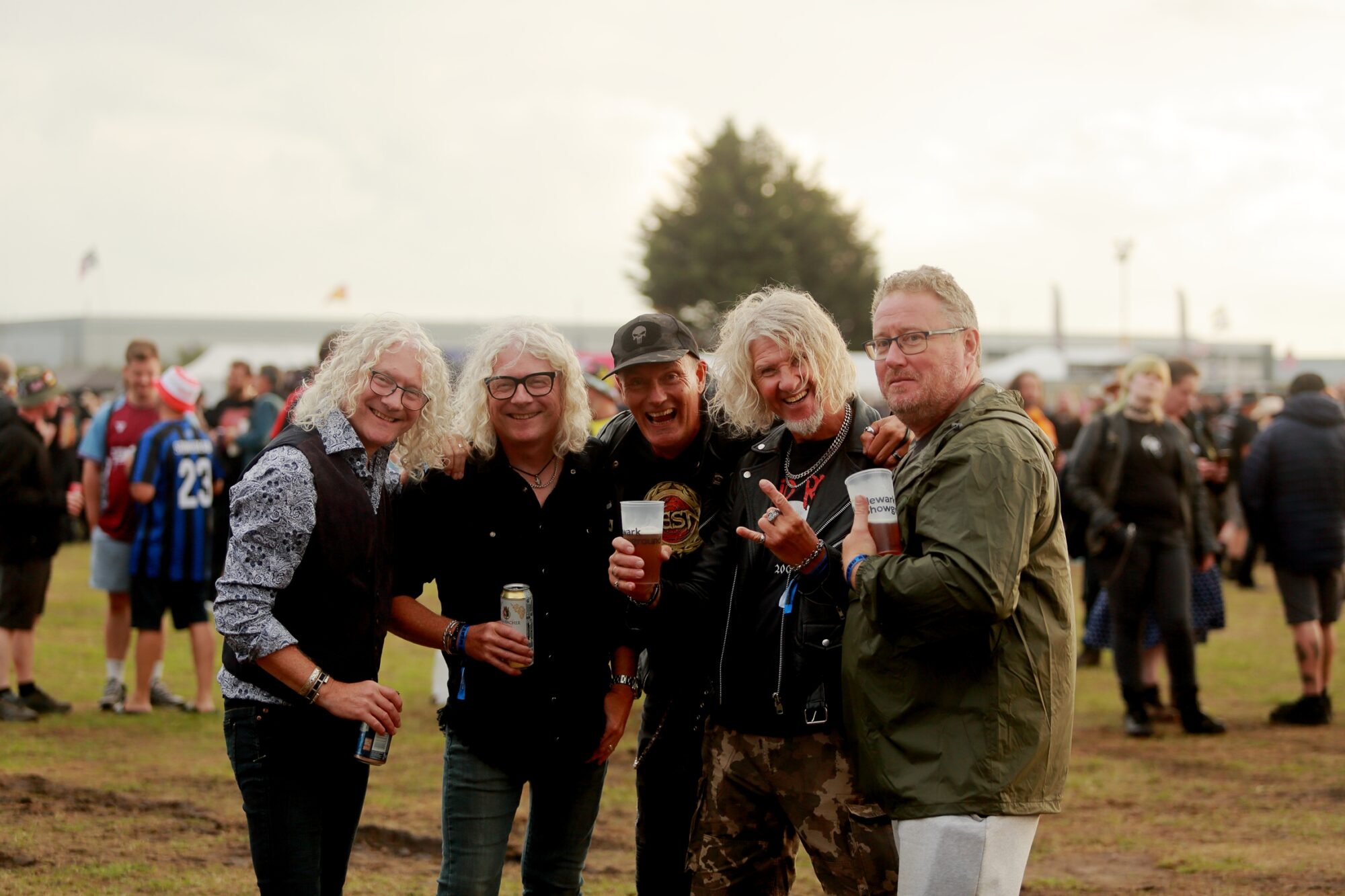
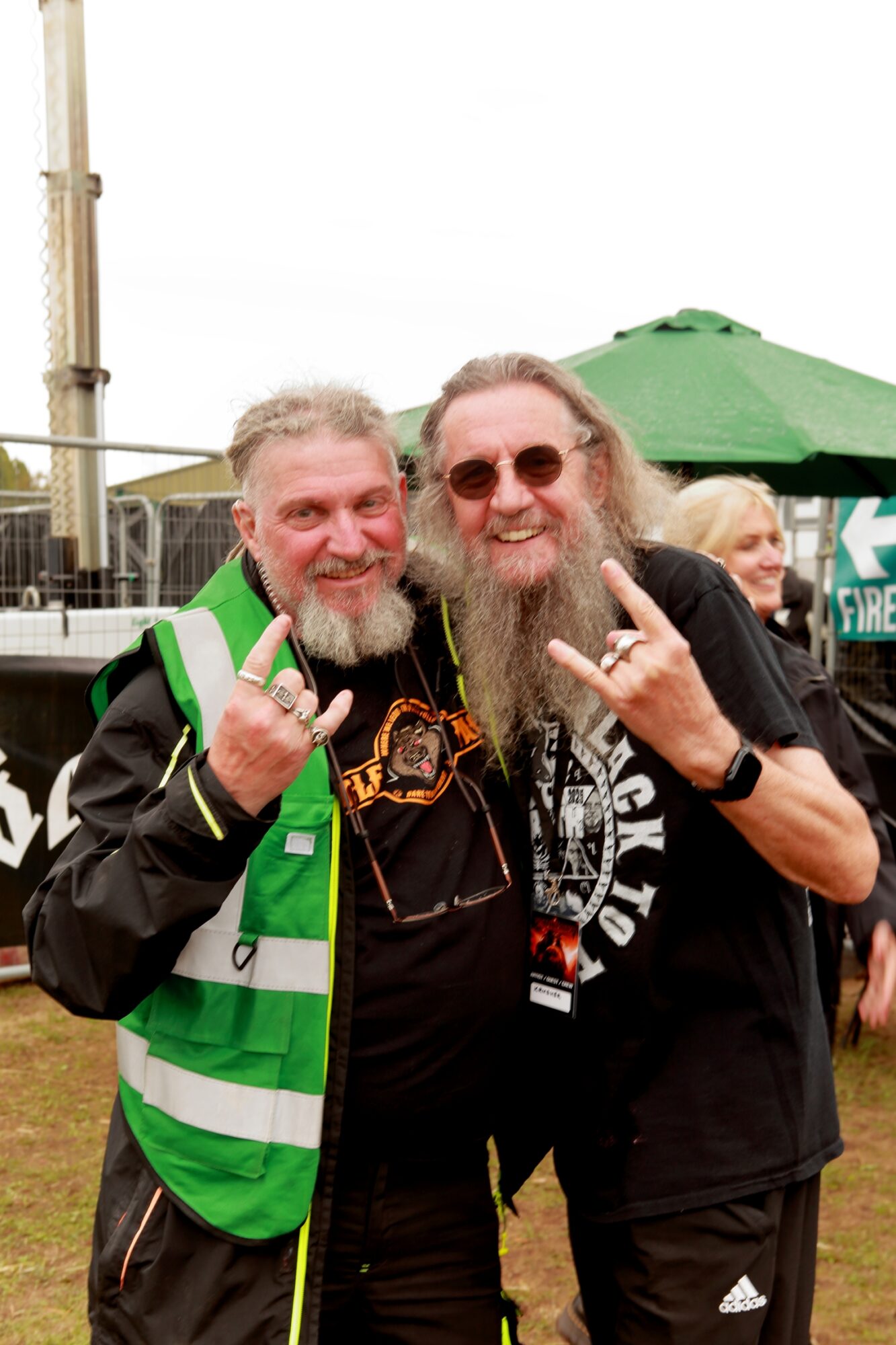
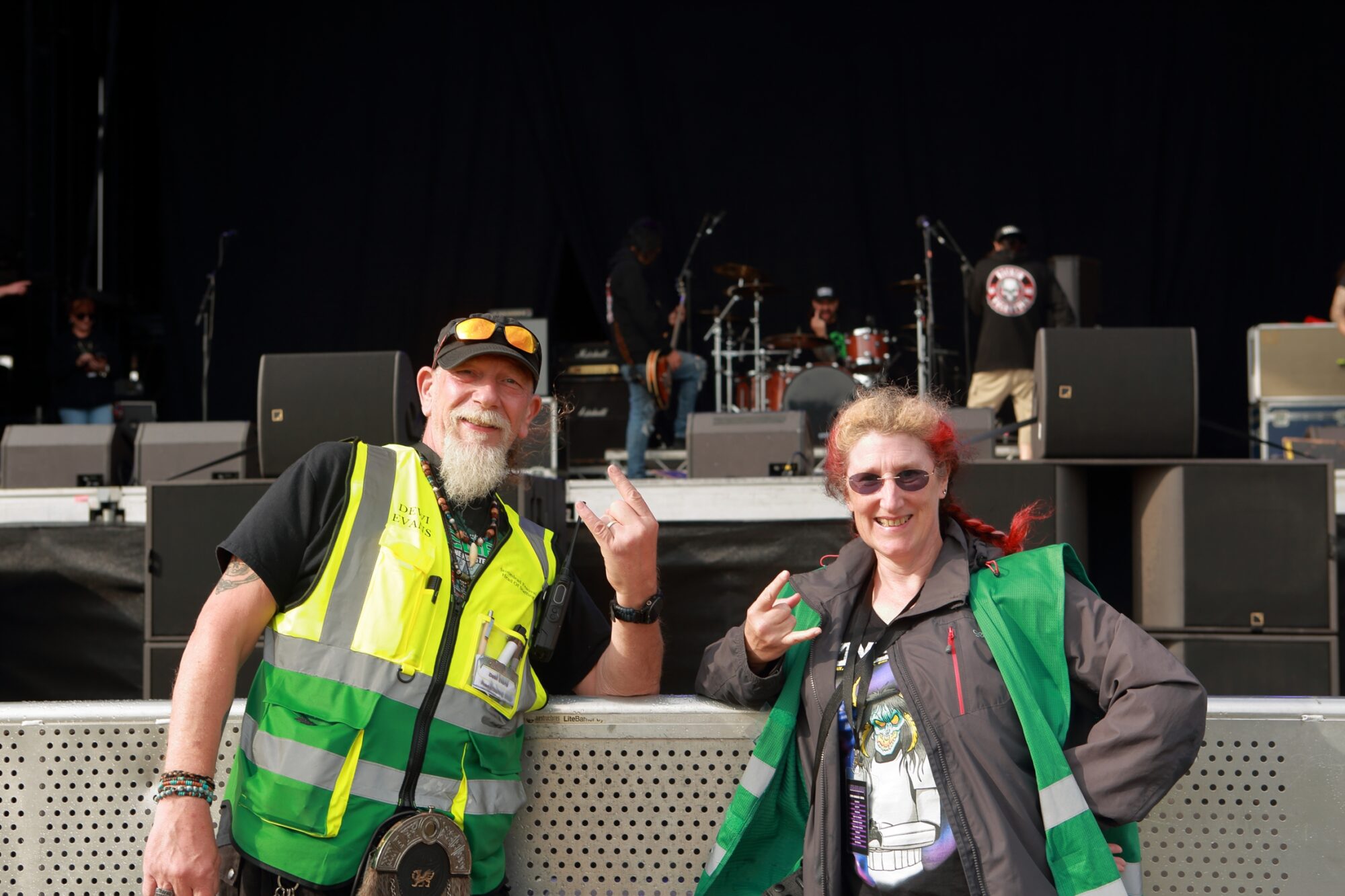
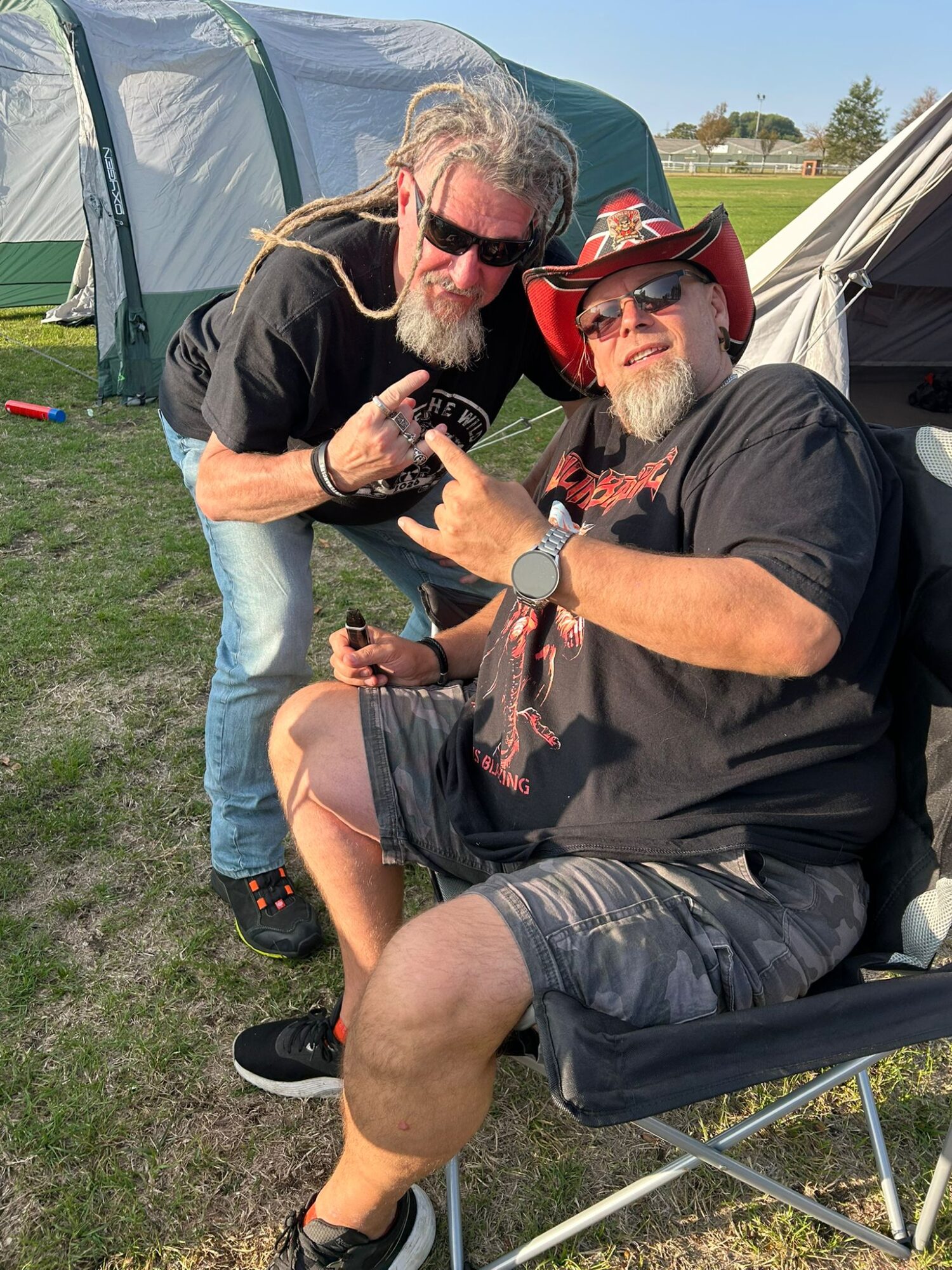
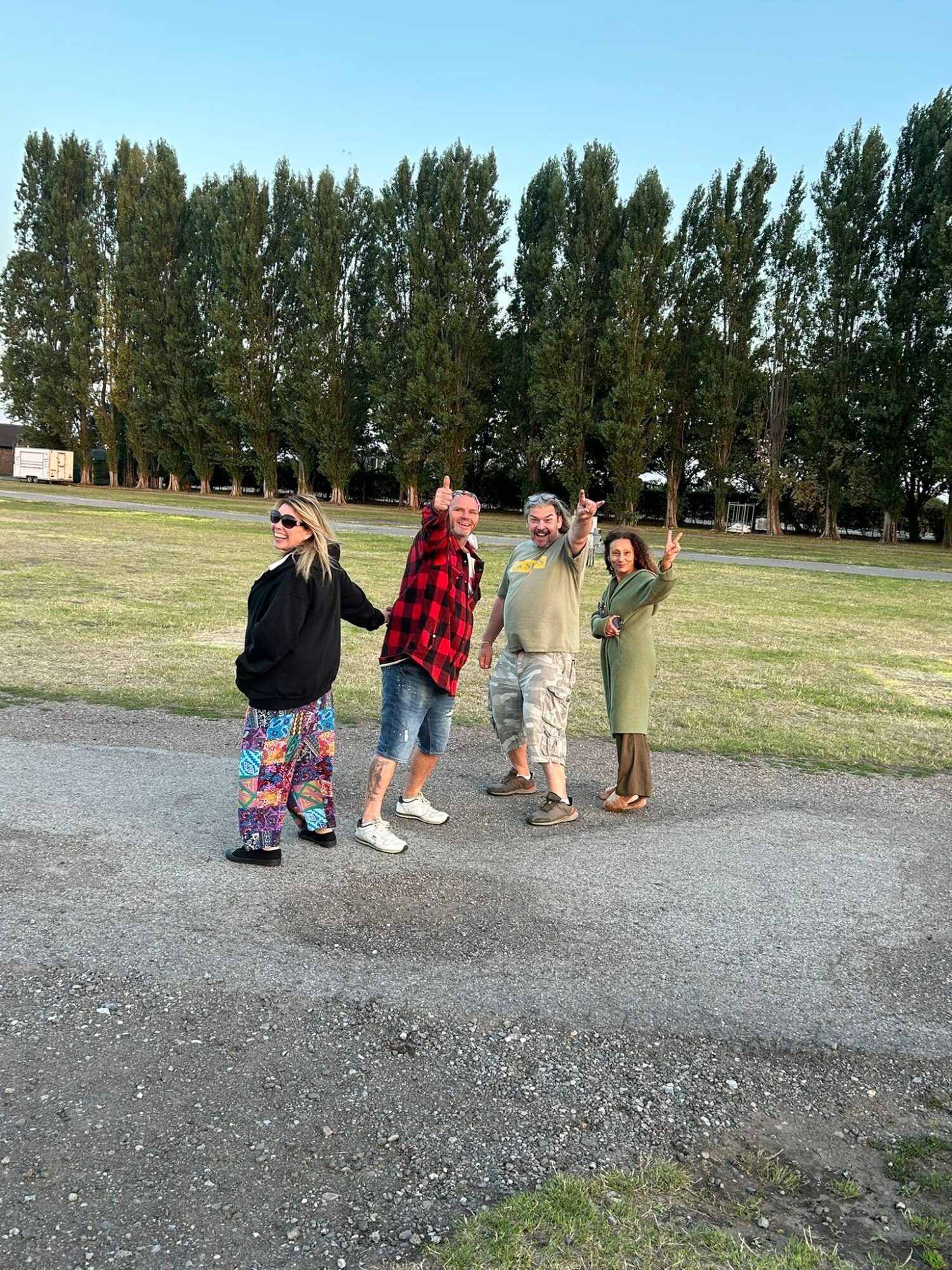
Stonedead is built on the efforts of volunteers. Throughout the week, people from all walks of life give up their time to help create something genuinely special. Some work in production, some in welfare, some in security, some on the Arena Team and countless other roles across the site. By the end of the week, many arrive as strangers but leave as friends, united by a shared sense of achievement and a common love of live music.


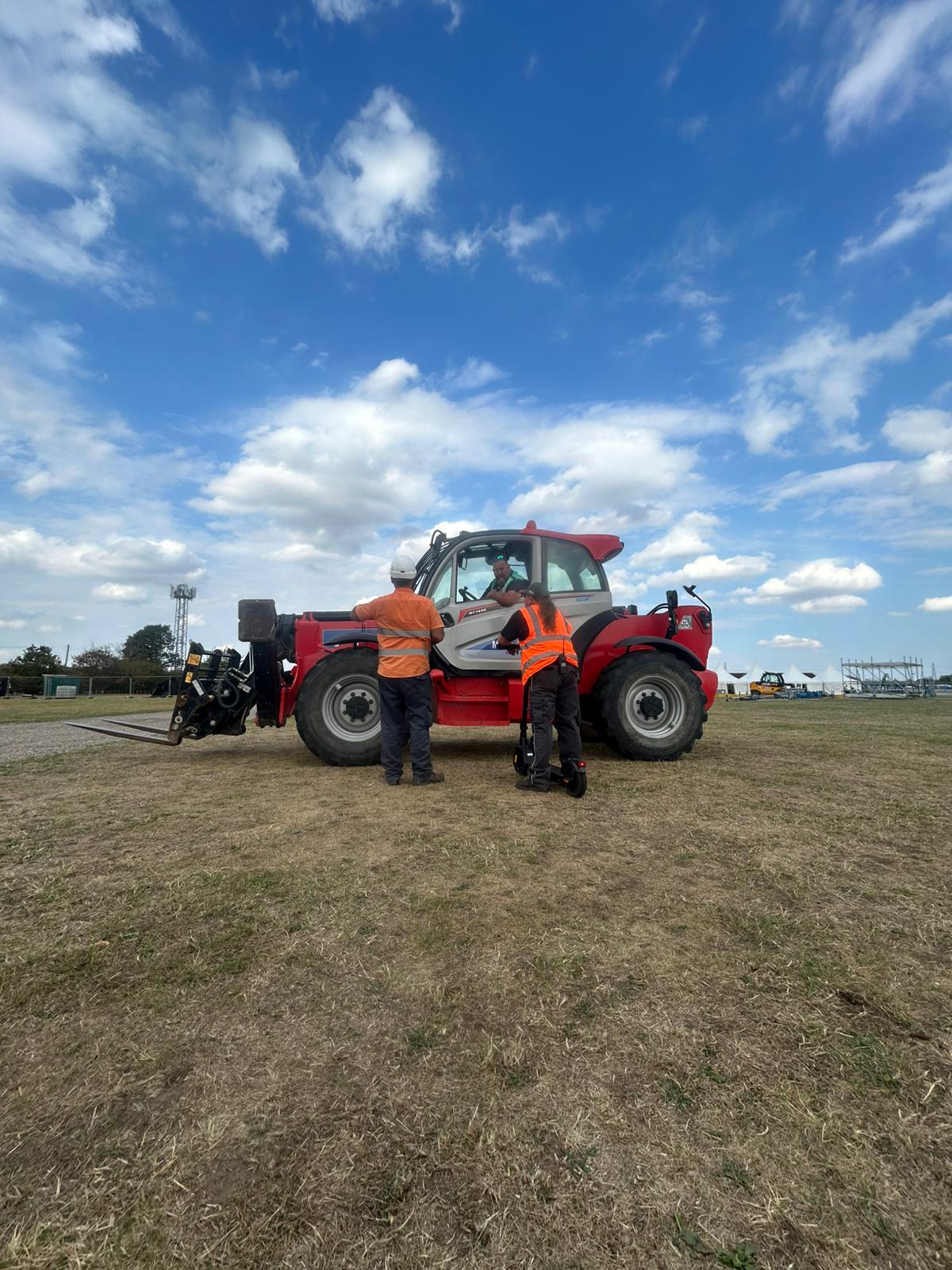
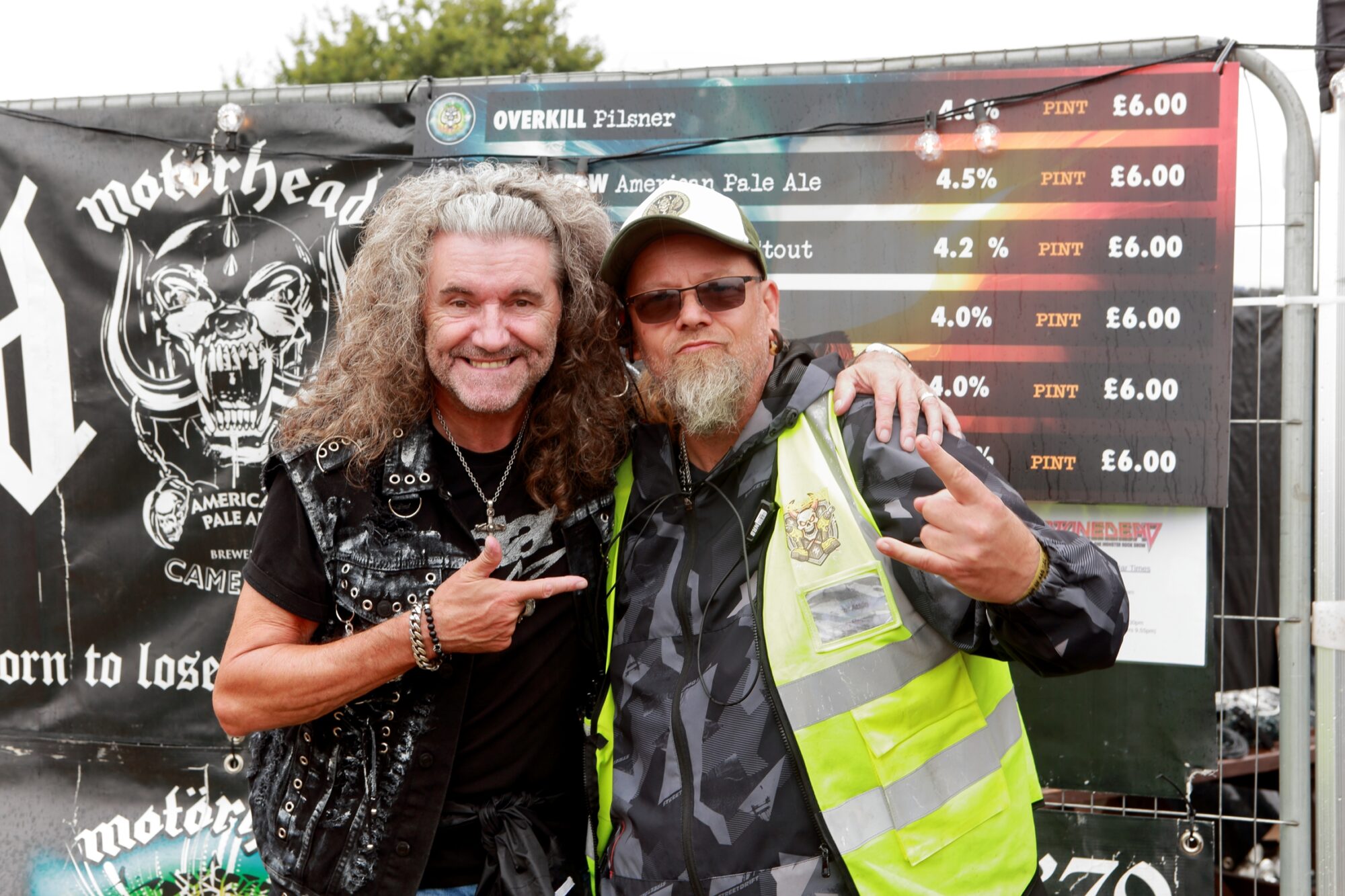
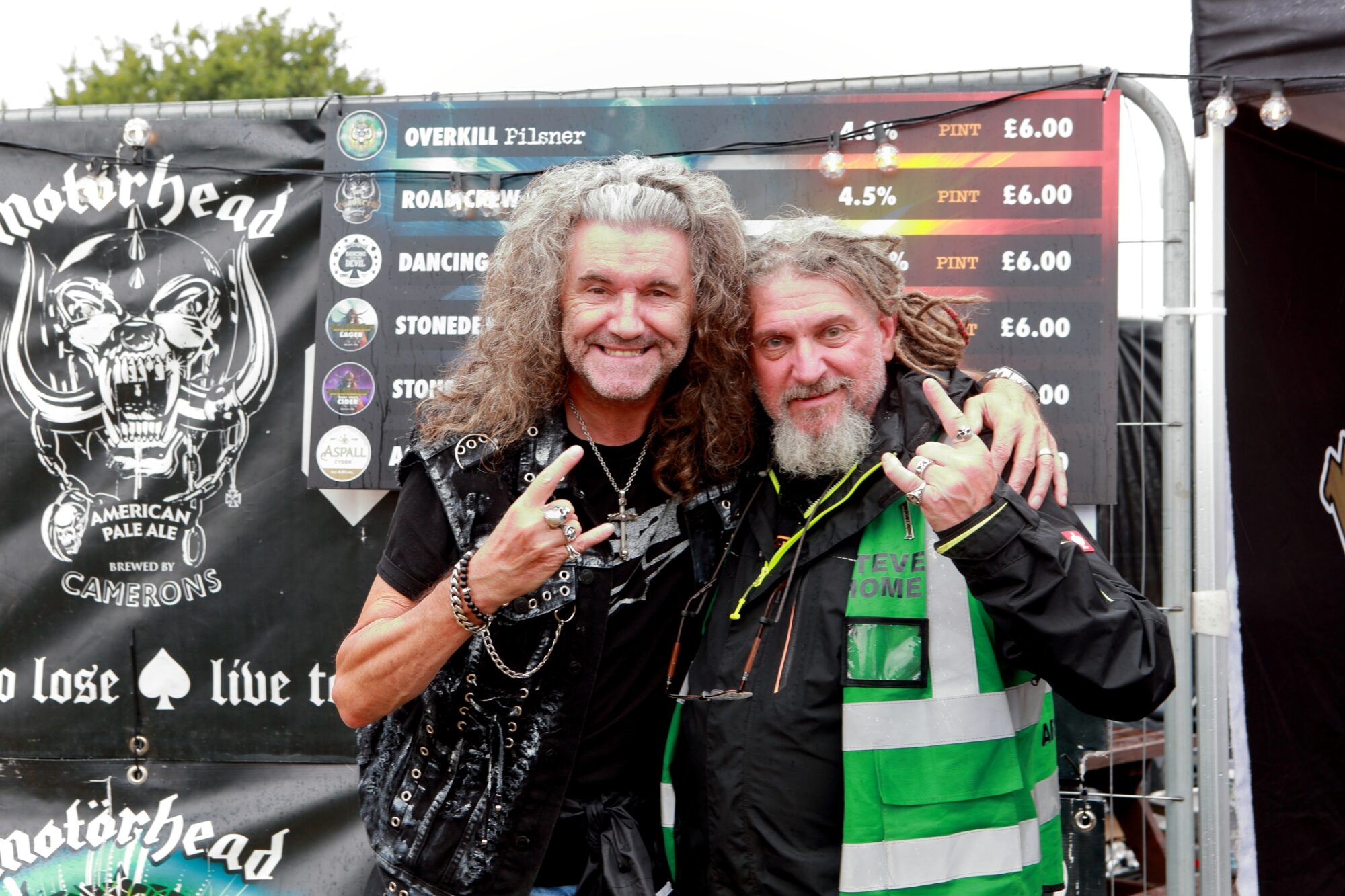
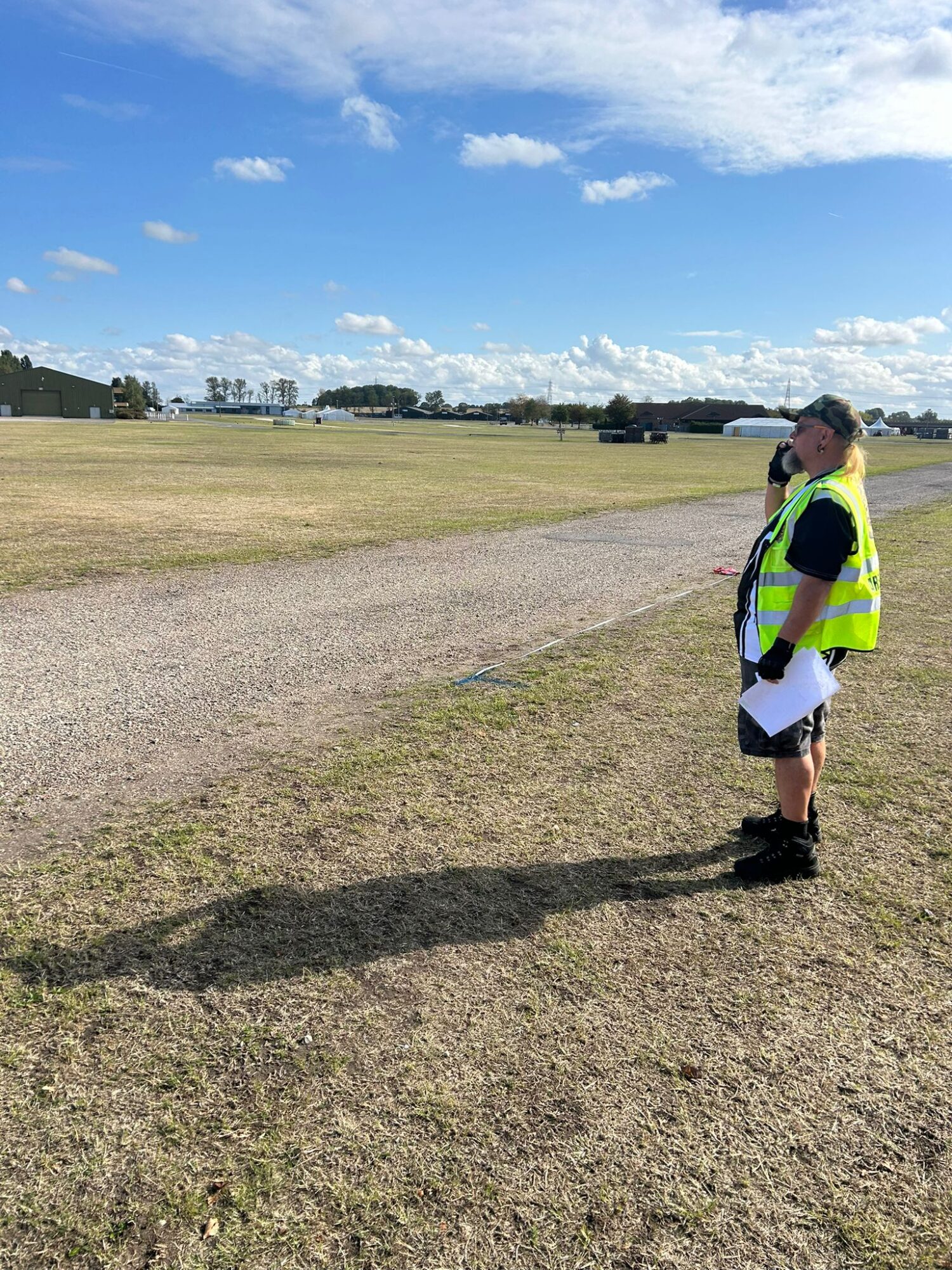
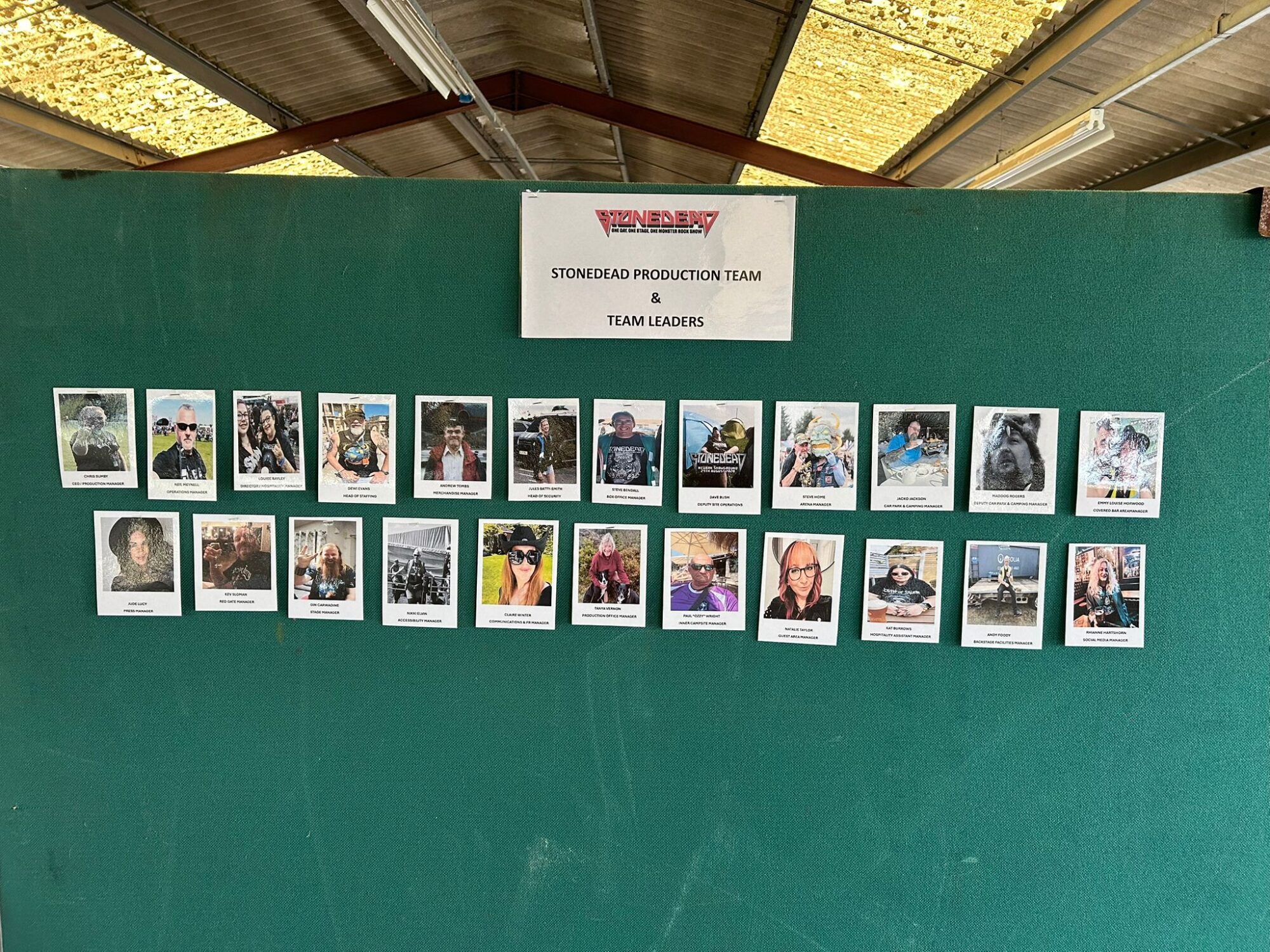
Every team needs a good leader, and the Arena Team is very fortunate to have Steve Home. Calm, organised and endlessly patient, he somehow manages to keep everything moving while maintaining a sense of humour throughout. A lot of what the Arena Team achieved over the week was only possible because of the planning, coordination and leadership he provided behind the scenes. Supporting Steve is his 2IC, Adam. Whenever a job required two pairs of hands, there was a good chance we’d end up working together. Whether it was erecting fencing around toilets and urinals, installing signage in the car parks and campervan areas, or tackling some of the larger infrastructure jobs around the site, Adam was invariably there getting stuck in alongside the rest of the team. Like many of the volunteers at Stone Dead, he’s the sort of person who simply gets on with whatever needs doing, helping ensure the build progresses smoothly from one task to the next. Equally important is Tina, our vendor liaison. One of the biggest logistical challenges on a festival site is ensuring that every trader ends up exactly where they’re supposed to be and has everything they need to operate successfully throughout the weekend. It’s a task that involves constant communication, problem solving and organisation, yet Tina somehow makes it look effortless. Watching her work, you’d be forgiven for thinking it’s easy. The reality is that a huge amount of planning and coordination goes on behind the scenes, and the vendor areas simply wouldn’t come together as seamlessly without her. Then there are Matt and Boxy, our telehandler operators. Anyone who has spent time on a festival build knows just how important those machines are, but what really makes the difference is the people behind the controls. I’ve seen plenty of telehandler drivers over the years, but Matt and Boxy are genuinely the best I’ve worked alongside. Whether it was moving fencing, toilets, equipment or supplies, they always seemed able to put exactly the right thing in exactly the right place, often in spaces that looked far too tight to be possible. They make a demanding job look remarkably easy. One thing that has become increasingly apparent over the years is just how strong the Arena Team has become. We now have a group of volunteers who understand what’s expected of them, know how the site works and can often anticipate what needs doing before they’re even asked. That level of experience makes a huge difference during both the build and breakdown, particularly when the weather decides not to play ball. I could sit here and name every single member of the team individually, but they know who they are. More importantly, they know what they mean to me, both collectively and individually. What we achieved this year was only possible because of the effort, commitment and attitude shown by every member of the team throughout the week. It certainly wasn’t the easiest build we’ve experienced. The weather tested us more than once, there were challenges to overcome along the way, and plenty of occasions when it would have been easier to complain than simply crack on with the job. Instead, everyone rolled their sleeves up and got on with it, and put simply, they smashed it, and I think weeks like this let you know you’ve joined the right team. This year marked our third full year volunteering at Stonedead, and experiences like that are a big part of why we keep coming back. One moment you’re helping maintain the site for thousands of festival goers, the next you’re chatting to photographers in the pit, catching up with traders you’ve got to know over the years, or working alongside volunteers who have become friends. It’s hard work, but it’s never “just” work, because what started as an opportunity to get involved behind the scenes has become something we genuinely look forward to each year. The work can be demanding, but the friendships, experiences and sense of achievement more than make up for the sore feet and early starts. It isn’t always glamorous. There are early starts, long days, aching legs, muddy boots and the occasional soaking from the British weather. Yet those challenges become part of the experience. Few volunteers return home talking about how tired they were. Most talk about the people they met, the memories they made and the satisfaction of knowing they played a part in bringing a festival to life. Looking back on the week, it was interesting that we both experienced Stonedead from completely different perspectives. One of us spent the week erecting nearly two kilometres of Heras fencing, creating vendor compounds and VIP areas, servicing bins during the live event and covering countless miles on foot around the showground. The other was helping manage the flow of VIPs, guests and accredited personnel through the festival’s operational hub. Different roles, different challenges, but both contributing towards the same goal. Even so, there was a real sense of satisfaction in watching the site return to normal.
A week earlier we’d arrived at a largely empty showground. Since then, we’d helped transform it into a fully functioning festival, welcomed thousands of rock fans through the gates, watched some outstanding performances, and then dismantled the entire operation once the final encore had faded. It had been hard work, frequently exhausting, occasionally wet, and involved more walking than I care to think about. Yet seeing Stonedead come to life from behind the scenes, and knowing that both of us had played a small part in making it happen, made every step worthwhile. Before we’d even left Newark Showground, conversations had already begun about doing it all again next year.

















































Words by Gregg Howarth
Photography by Gregg Howarth & Andy Hough
